
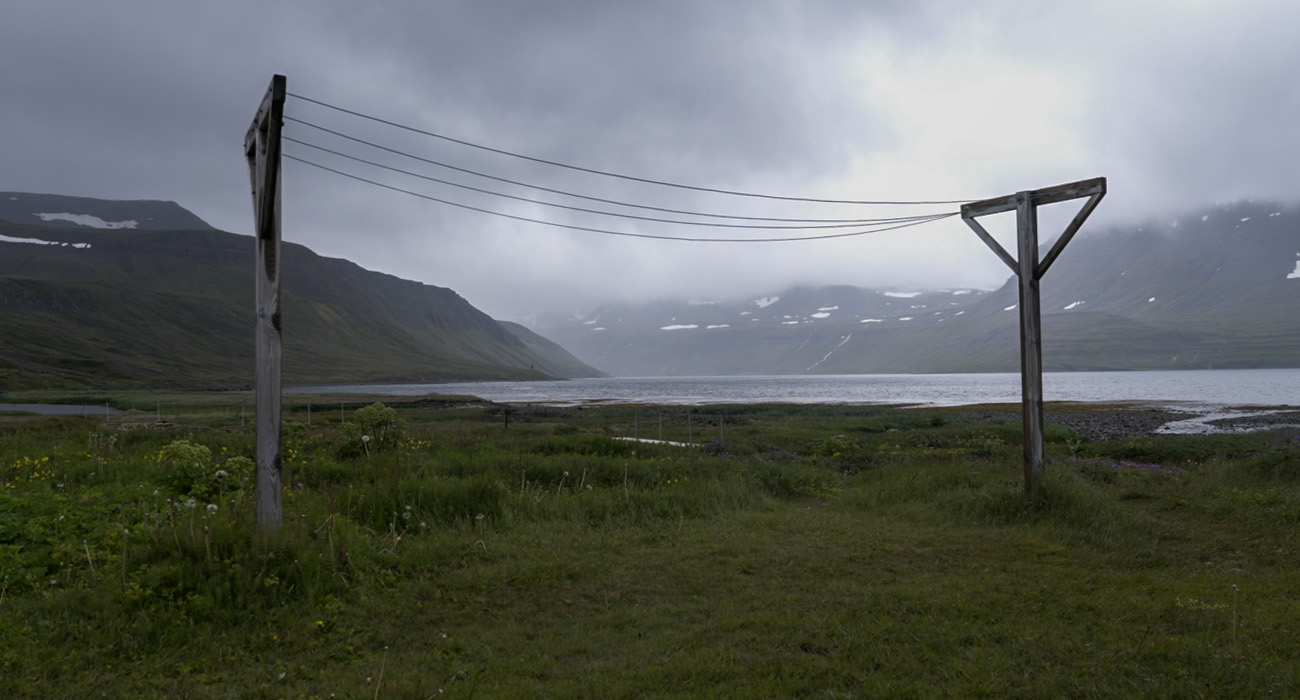
Hesteyri can only be reached by boat. The abandoned village sits on the edge of the Hornstrandir nature reserve in Iceland’s Westfjords, about 70 minutes by boat from Ísafjörður, and the crossings run only in summer. There are no roads, no shops and no mobile signal — what is there is a dozen houses kept up as summer places, the ruins of a factory, and a quiet that is the whole point of going. Most visitors come on a guided day trip; on a cruise call, the ship’s own excursion is, unusually for this series, often the only version that fits.
Where is Hesteyri?
Hesteyri lies in Jökulfirðir, the northern group of fjords in the Westfjords, across the water from the Hornstrandir peninsula. Ísafjörður — the economic and cultural centre of the region, and the harbour where cruise ships tie up — is to the south. Between the two lie steep coasts, glacier-cut fjords and Drangajökull, the only glacier in the Westfjords, which comes into view on the crossing.
Hornstrandir has been a nature reserve since 1975. There are no roads anywhere in it.
How to get to Hesteyri from Ísafjörður
Three ways, and they are not interchangeable.
The scheduled boat. Sjóferðir, booked through West Tours, runs crossings to Hesteyri on a handful of days each week at fixed times in the summer season. These are built for hikers going into the reserve and coming out again days later, not for a neat few hours ashore. Check the current timetable for your date before you count on it.
The guided day trip. Borea Adventures runs a full day from the service centre at Ísafjörður harbour, leaving at 09:00 and lasting around ten hours: the crossing both ways, a guide, time to walk, and fish soup with Icelandic pancakes at the Doctor’s House.
The ship’s excursion. Cruise lines calling at Ísafjörður sell a Hesteyri trip of roughly four and a half hours — 70 minutes over, time ashore with a local guide, refreshments at the Doctor’s House, 70 minutes back. Holland America lists it from around $239 per person.
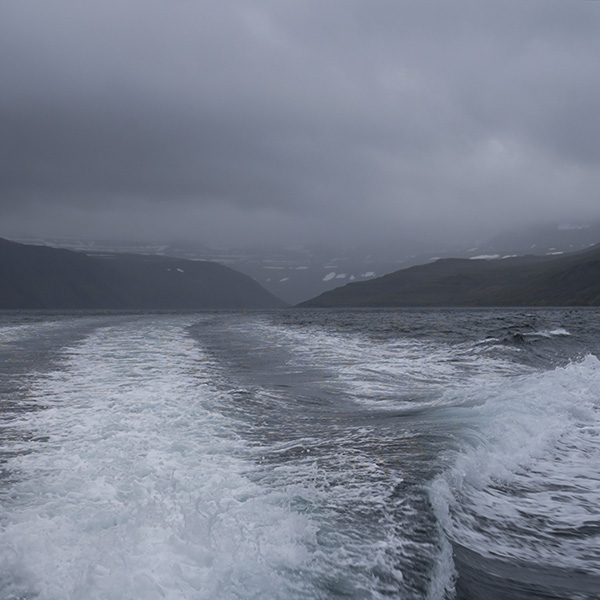
Whichever you take, the boats are small and the run out of Ísafjarðardjúp gets lively in a northerly. Sailings depend on the weather and are cancelled when it turns.
Can you do Hesteyri on your own from a cruise call?
This is the one port in this series where the answer usually goes the other way.
The arithmetic is unforgiving: 70 minutes out, 70 back, two to three hours ashore — five to six hours with no slack at all. The scheduled boats run on their own timetable, a few days a week, and there is no second way back. The guided day trip is ten hours and starts at nine in the morning, which is longer than most calls.
So: if your ship lies eight hours or more and you have written confirmation from the operator that the departure and the return fit inside your window, going independently works. If the call is shorter, the ship’s excursion is the sensible money here — it is cut to the length of the call, and the ship waits for it. If neither fits, stay in Ísafjörður. The town is small enough to take on foot, and the museum in the old harbour buildings is a short walk from the pier.
What happened to Hesteyri
Hesteyri was never big. At its height around eighty people lived there — enough for a doctor, a telegraph station and a local assembly, which for this coast counted as a town.
The reason stood a few hundred metres away at Stekkeyri. In 1894 the Norwegian firm Brødrene Bull built a whaling station there called Hekla; the spit took the name Heklueyri. Whaling ran until 1915, and the buildings were converted to process herring. In 1940 the herring came to an abrupt end, and with it the reason for anyone to live in the fjord. People left gradually. By 1952 the village stood empty.
The factory walls are still standing, an easy walk along the bay.
Twelve of the houses survive and are kept as summer places. Their owners are mostly descendants of the people who left: they come in July, open the shutters, and close them again in August. Between the houses the grass grows high and changes direction in the wind.
The church did not survive. In 1962 it was taken down and moved to Súðavík — without asking the former residents or the landowners, which is still remembered as a grievance. The village lost its last public building thirty years after it lost its work.
The Doctor’s House
Læknishúsið, the old doctor’s residence, is the only building in Hesteyri that is worked. It runs as a small family café and guesthouse through the summer, roughly mid-June to late August, with sleeping-bag places for hikers and food for whoever has just come off a boat — fish soup, coffee, Icelandic pancakes. Day visitors end up here, at a window, looking out over the fjord, and notice after a while that they have not heard an engine in two hours. Then the boat goes back.
Walking beyond the village
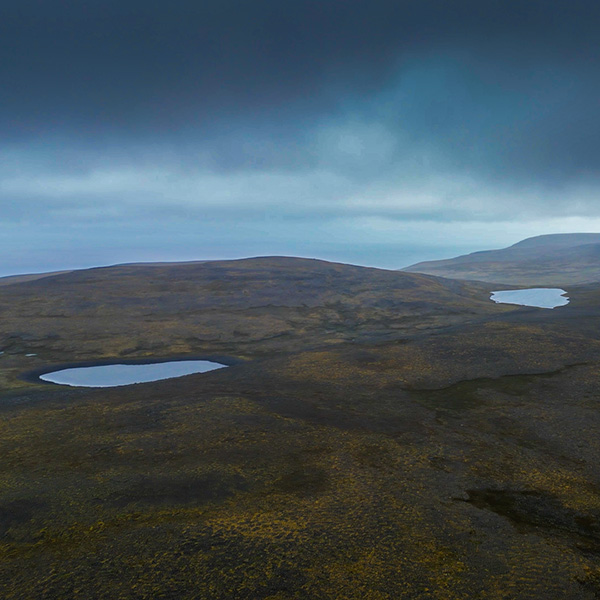
Most people see Hesteyri as a day trip. The village is also the main gateway into Hornstrandir. Marked routes lead from the bay over the pass to Aðalvík and on to Kjaransvík, through country that has been left almost entirely to itself since the last residents went.
Anyone going past the village has to be self-sufficient: boots, waterproofs, food, and a plan that allows for fog arriving without warning. There are no roads, no huts serving meals and no way to call anyone.
Even without the long routes, the walk between the houses and up the low slopes behind them is worth the time. From up there you see how small the settlement is against the fjord.
Arctic foxes
Hornstrandir is one of the few places in Iceland where the Arctic fox is protected rather than hunted, and the animals are correspondingly unbothered by people. Sit still near the shore for a while and you will usually see one. They will come close enough to ask for food; do not give them any.
Photographing Hesteyri
The flat northern light and the muted greens and greys of the abandoned buildings suit restrained pictures, not dramatic ones. Wide angles and hard contrast miss the place. What it gives you is texture: timber, grass, corrugated iron, water — and the absence of everything else.
Practical notes: there is no power and nowhere to shelter. Take a second battery, rain protection for the camera, and a cloth, because spray reaches the foredeck on the crossing.
What to take
- A windproof and waterproof jacket, even in July — on the water it is easily ten degrees colder than in Ísafjörður
- Proper shoes: the ground in the village is grass and gravel, not pavement
- Water and something to eat for the time ashore, unless you have booked food at the Doctor’s House
- Insect repellent for windless days
- No cash needed, but no signal either — download the timetable and the operator’s contact details before you go
Is Hesteyri worth the trip?
If you are in Ísafjörður with the time, yes — but not for a sight, because there is none. Hesteyri is a place to see what happens when the work goes and nobody stays: not picturesque decay, but a dozen carefully maintained houses standing in grass, on a fjord that has no road to it. It is the quietest hour this coast has to give.
Related: All cruise ports on your own · Hiking to Hengifoss · Iceland’s Golden Circle · Into the Heart of Ice · All Iceland articles
Sources for planning: Sjóferðir / West Tours ferry schedule · Borea Adventures day tour · Doctor’s House, Hesteyri. Times and prices checked September 2026; confirm before you travel.
Written by Jan Madeus — ship’s videographer at sea since 2008. I go ashore in the same ports as the passengers, with the same few hours and the same deadline. More about me.