
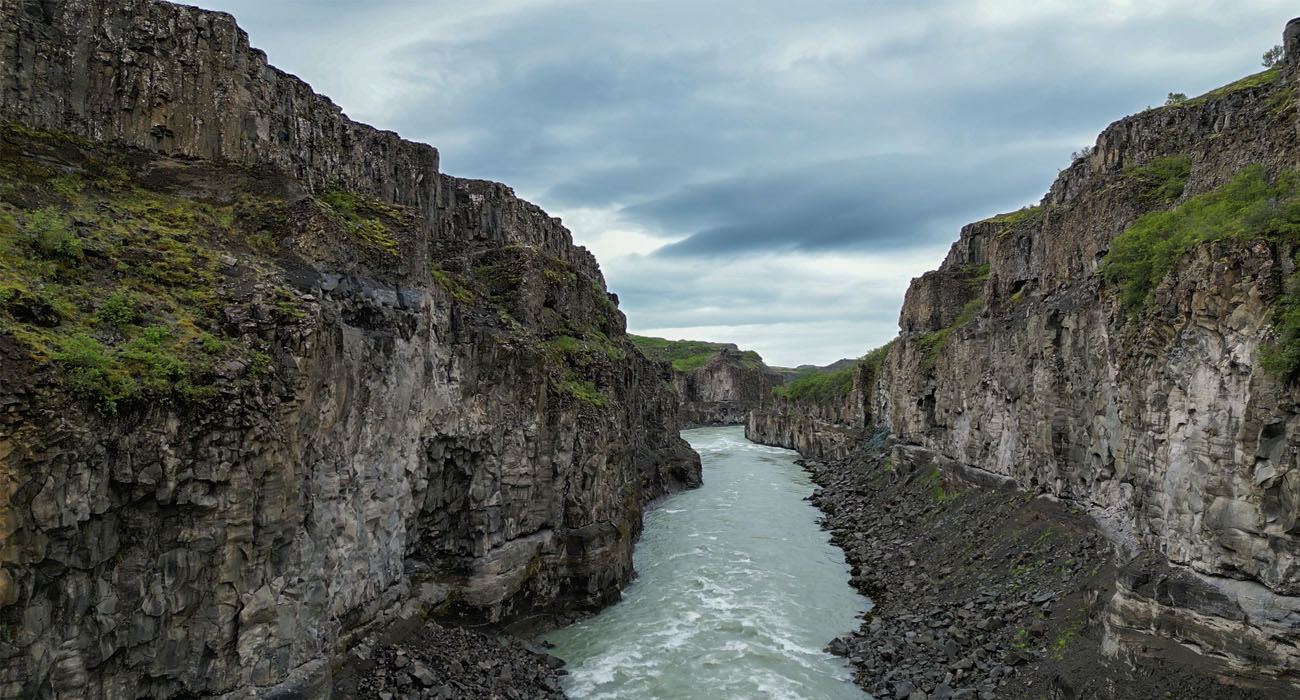
Iceland’s Golden Circle on a Budget
Iceland has a reputation for being expensive, and the reputation is earned. But the Golden Circle — the loop east of Reykjavík that takes in Þingvellir, Geysir and Gullfoss — is one of the few headline experiences in the country that can be done cheaply if you plan it properly. This is the practical side of that day: what it costs, where to sleep, what to eat, and how to get around without handing over more than you need to.
If you are after the route itself — what each stop looks like, how long to spend, where the light is good — that is covered separately in Iceland’s Golden Circle: Þingvellir to Gullfoss.
Car or Tour: The Real Cost Difference
| Ship’s excursion from Reykjavík | Duration | Price |
|---|---|---|
| Gullfoss waterfall and Geysir | about 8 hrs with a meal | €185 |
| Reykjavík panoramic drive | about 2.5 hrs | €49 |
Phoenix Reisen, MS Amadea 2027 programme, prices checked April 2026. €185 per person is the number to hold against everything below: two people in a small hire car cover the same loop for a fraction of that, and keep the day to themselves.
A rental car is the cheaper option the moment there are two or more of you, and it is the only way to be at Gullfoss before the coaches arrive. Split between three people, a small car plus fuel usually undercuts three tour seats comfortably. Solo, the maths reverses and an organised day trip wins.
Combo tours — Golden Circle plus a glacier walk, snowmobile or hot spring — are priced better per hour than the plain loop, because operators sell the add-on at a margin and the transfer close to cost. If you want one of those activities anyway, book them together rather than separately.
All three main stops are free to enter. Parking at Gullfoss and Þingvellir is charged; the Geysir area is not.
Where to Sleep in Reykjavík
Almost everyone runs the Golden Circle out of Reykjavík, so a bed in the city is the thing to get right.
- Reykjavík Downtown HI Hostel — central, clean and sociable; the reliable default for solo travellers.
- Guesthouse Sunna — affordable private rooms within walking distance of the tour pickup points.
- Campsites — in summer, Iceland’s campsites are well kept, cheap and spread along the whole route. With a car this is by far the lowest-cost option.
Book for proximity to a pickup point, not just for price. Most tours collect from designated stops rather than individual hotels, and a twenty-minute walk at half past seven in February costs more in morale than it saves in krónur.
Eating Without Overspending
- Bæjarins Beztu Pylsur — the hot dog stand in Reykjavík that has outlasted every food trend to reach it.
- Petrol station cafeterias — genuinely good soup and sandwiches at fair prices, and often the only hot food on long stretches of the route.
- Bónus supermarkets — stock up before leaving the city. A packed lunch eaten at Þingvellir beats a queue at Gullfoss.
Carry a reusable bottle. Icelandic tap water is among the cleanest in the world, and buying it bottled is money set on fire.
Small Things That Save Money
- Travel in the shoulder seasons — May and September hold most of the daylight at a fraction of the summer price.
- Check your own insurance before declining the rental company’s gravel-and-ash cover; Icelandic roads do damage cars.
- Skip the paid Blue Lagoon slot and use a municipal geothermal pool instead. Locals do.
Where to Go Next
The Golden Circle is a first day, not a trip. If you have longer, the Snæfellsnes peninsula delivers a comparable range of landscape in a day’s drive with a fraction of the crowds, and the Langjökull ice tunnel sits close enough to the loop to bolt on. Further out, Akureyri and Lake Mývatn are the north’s answer to all of it. For the wider budget question, see How to Travel Cheaply.
Ports on this route — Iceland and Greenland: Hesteyri in the Westfjords · Snæfellsnes: Kirkjufell and Arnarstapi · Iceland’s Golden Circle · Inside the Langjökull ice tunnel · Akureyri to Lake Mývatn · Hiking to Hengifoss · All cruise ports on your own