
Malmö and Lund fit into a single day, and they are best taken together — twenty kilometres apart, and about as different as two Swedish cities can be. Malmö is the country’s third-largest city, maritime and modern, at ease with itself; Lund is a cathedral town founded around the year 990 that thinks like the university it houses. Trains connect the two in roughly a quarter of an hour. We did the pairing on a cruise call, and it worked without hurry: Malmö in the morning, Lund after midday, and time left over before heading back to the ship.
Visited: 1 June 2026.
Malmö: A City That Knows Who It Is
Malmö lies at the southernmost tip of Sweden — a city that knows who it is. With around 350,000 inhabitants it is the country’s third-largest, after Stockholm and Gothenburg. A maritime past, Scandinavian restraint, and, in between, moments that still manage to surprise. Since 2000, the 16-kilometre Øresund link — its cable-stayed bridge among the longest in Europe — has tied Malmö to Copenhagen, but the city has long since found its own rhythm.
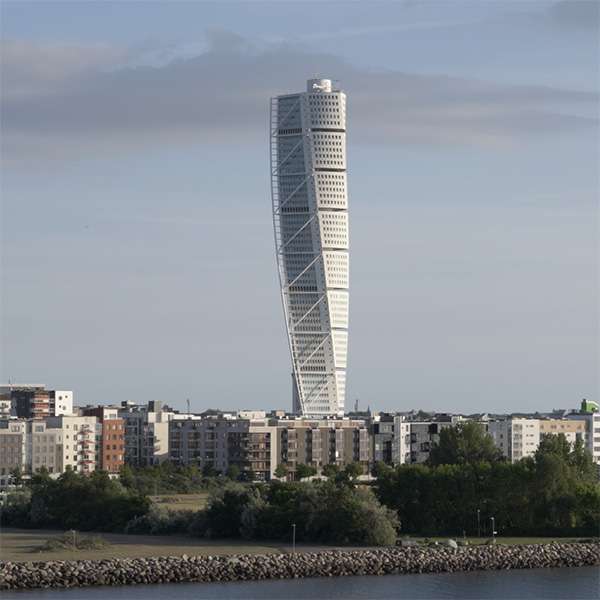
Our tour took us through the city’s many faces: Wilhelminian-era neighbourhoods, the waterfront, and the modern districts that show what Malmö has become over the past few decades. Seen from the water, one building stands for that transformation on its own — the Turning Torso, Santiago Calatrava’s 190-metre twisting tower from 2005, rising out of the low-built Västra Hamnen district where the shipyards used to be.
Lilla Torg: Everyday Life on 16th-Century Cobbles
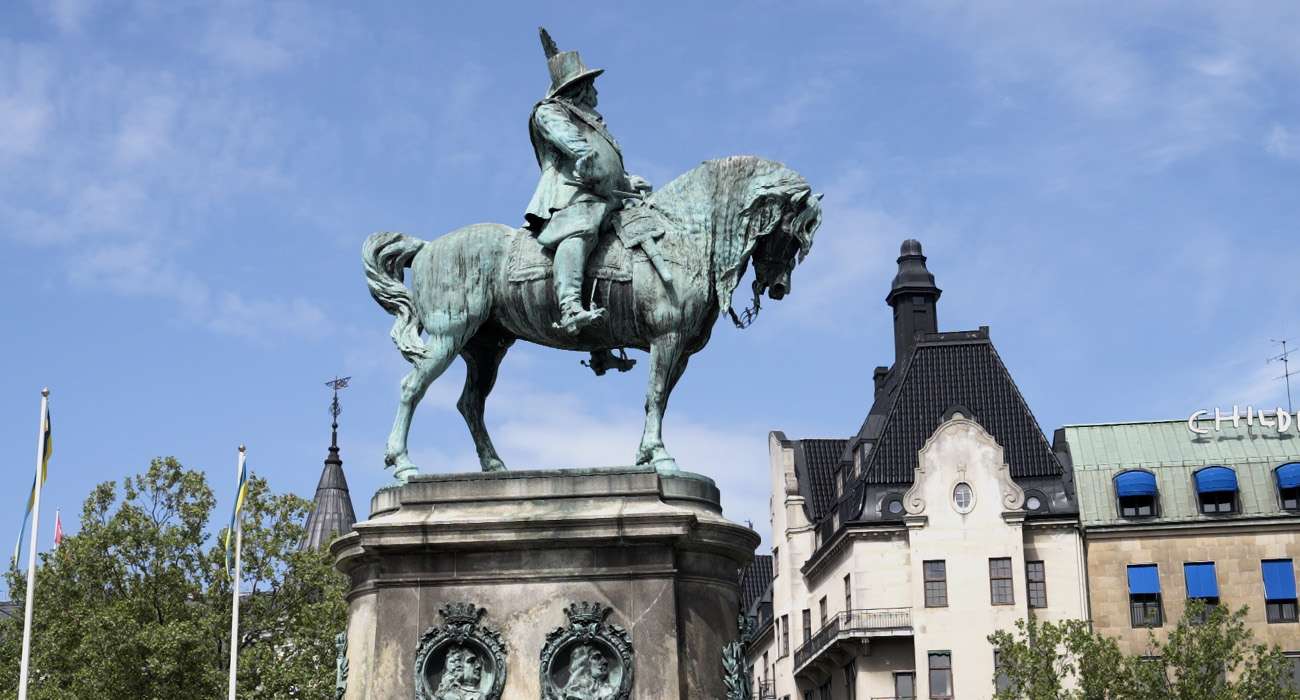
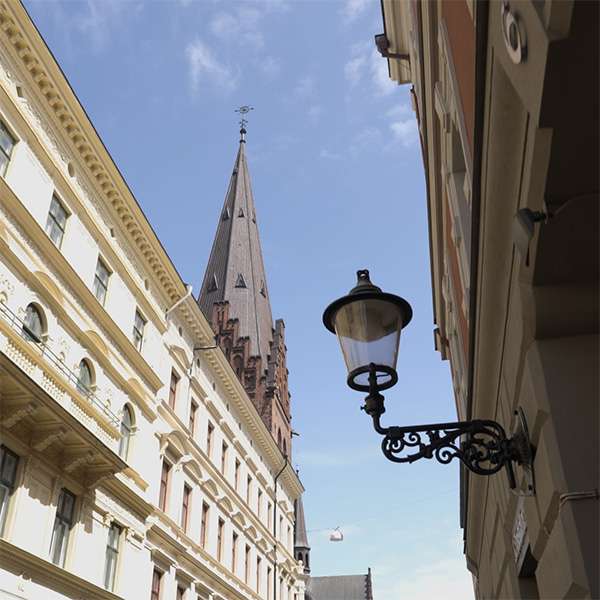
We stopped at Lilla Torg, a small square laid out in the 16th century, with half-timbered houses and cobblestones. It is not a museum but a place where everyday life unfolds — cafés, conversations, and the midday sun warming the old wooden facades. A few streets away, the spire of St Petri, Malmö’s oldest church, keeps appearing between the rooflines: the old town is compact enough that nothing is more than a few minutes from anything else. Next door, on the much grander Stortorget, King Karl X Gustav sits on horseback in weathered bronze — the man who took this whole province from Denmark in 1658, surveying a square that was Danish for longer than it has been Swedish.
Lund: A Different World, Twenty Kilometres Away
Then Lund. Just a short ride away, but a different world. The city was founded around the year 990 and for centuries was the religious and political centre of Denmark — it became Swedish only in 1658. Today the university, founded in 1666 and home to around 40,000 students, shapes life here, and you can feel it: this is a city that thinks.
The Cathedral and Its Astronomical Clock
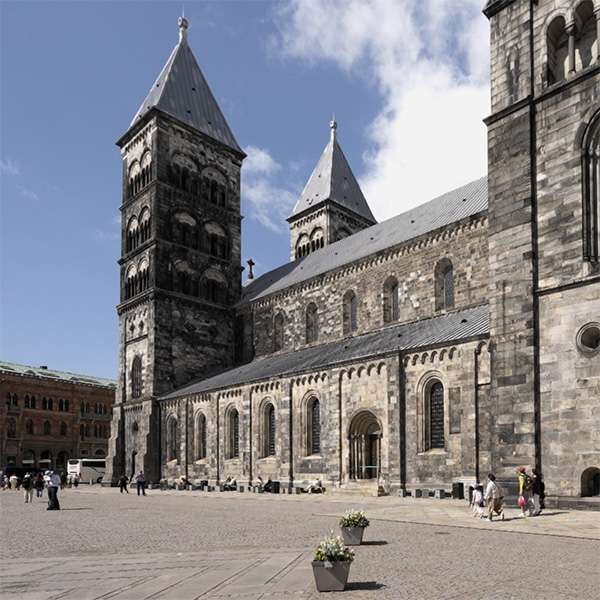
At its heart stands the cathedral. Lund had been an archbishopric since 1104 — the seat of all Scandinavia — and the Romanesque building raised for that role was consecrated in 1145. It remains one of the oldest and most important churches in the North, grey sandstone with twin towers the locals simply call the boys.
Inside, the astronomical clock known as the Horologium Mirabile Lundense has been keeping time since around 1425. It does more than tell the hour — it tracks the planetary constellations, the calendar, the passage of time itself — and twice a day the doors above the dial open and the Three Kings process past the Virgin while a small organ plays the medieval carol In dulci jubilo. Six centuries old, restored once (1909–1923), and still running. We stood there longer than planned.
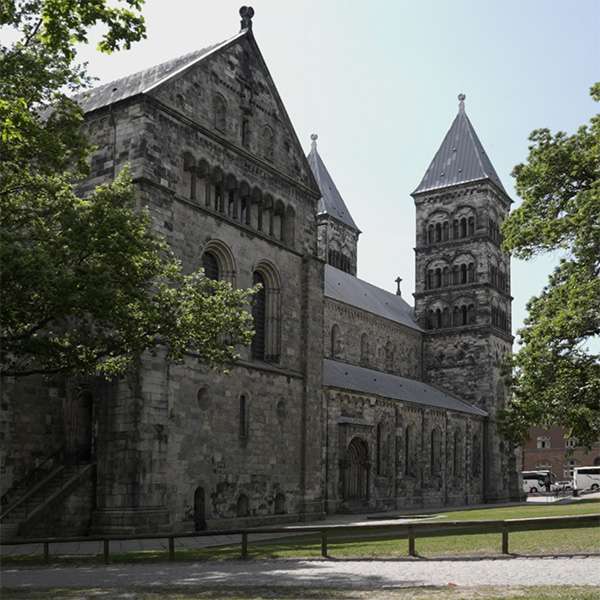
Afterwards there was time to wander — the university quarter and its quiet courtyards begin directly behind the cathedral — before we headed back to the Amadea.
Visitor Tips for Malmö and Lund
Getting between the two: Trains run several times an hour from Malmö Central to Lund, taking 10–15 minutes. Buy tickets in the Skånetrafiken app or with a contactless card — Sweden is effectively cashless, and we never touched a krona in cash all day.
The clock: The Horologium plays twice daily — at 12:00 and 15:00 on weekdays and Saturdays, at 13:00 and 15:00 on Sundays. Time your cathedral visit around it; the performance lasts only a few minutes, and it is worth planning for.
Costs: Both Lund Cathedral and its crypt are free to enter, as is St Petri in Malmö. The whole day can be done on little more than train tickets and coffee.
Time budget: Half a day each is comfortable. If you arrive by cruise ship, Malmö’s old town starts a short ride from the quay; count the Lund round trip at four to five hours door to door, and leave the usual buffer before all-aboard.
When to go: Late spring and summer show both cities at their best — long light, café tables on Lilla Torg, students still in town until mid-June. We had the kind of clear June day that makes southern Sweden look effortless.
Related: Charmed by Honfleur · Kirkwall Cruise Port on Your Own · All Sweden stories