
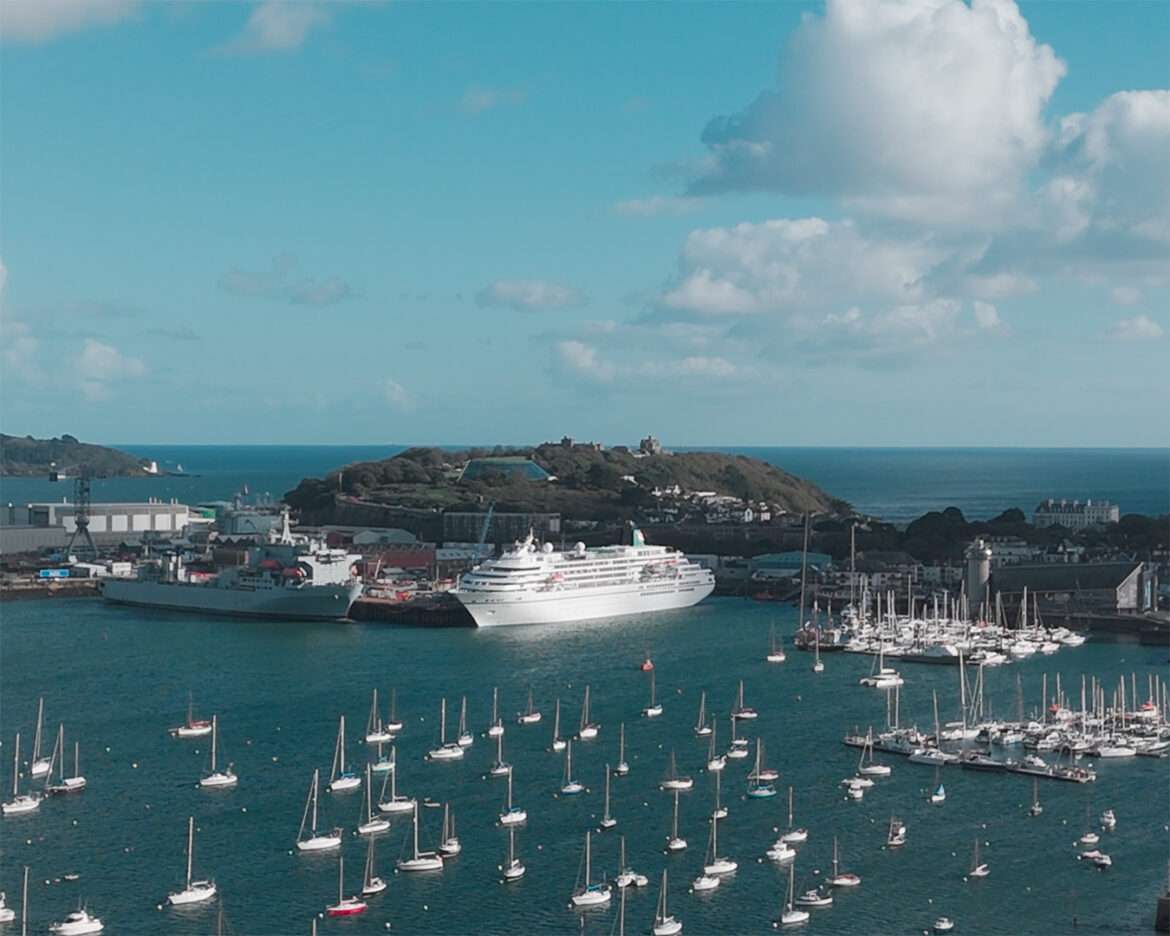
Visited: 16 October 2026, on a call of MS Amadea at Falmouth Docks.
Falmouth does not need a ship’s excursion. A free shuttle runs from the berth in the docks into town, about five minutes’ ride — and the distance is barely a kilometre, which is a quarter of an hour on foot. The old town, the quays and the National Maritime Museum Cornwall stand close enough together that a whole day ashore costs nothing at all. There are exactly two places where you pay: the castle and the museum.
Where does the ship dock in Falmouth, and how do you get into town?
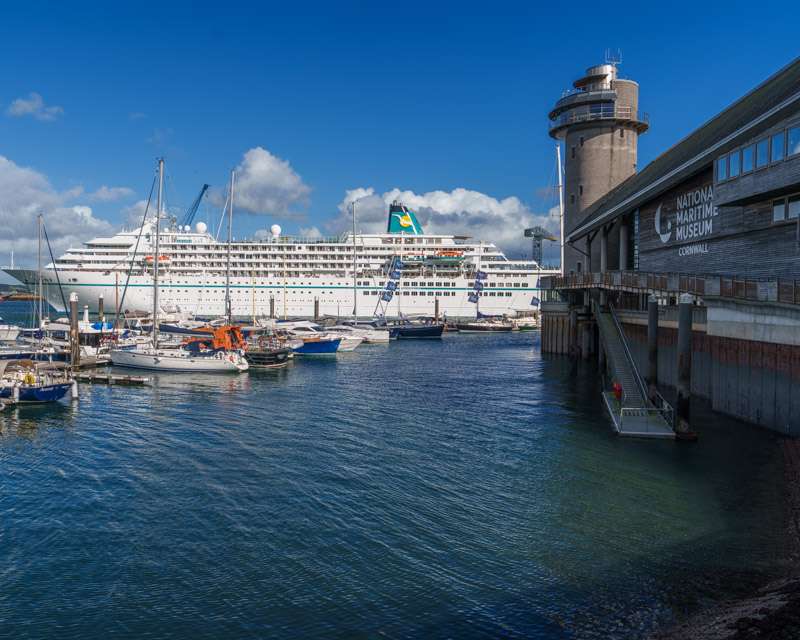
The Amadea lay at Falmouth Docks, the A&P yard and port at the eastern edge of the town. There are four cruise berths — Duchy Wharf, County Wharf, the Queens Wharfs and a pontoon at County Wharf. The limit is around 240 metres length overall and 8.2 metres draught alongside; larger ships anchor off the harbour entrance and tender in. Falmouth is therefore both, and which version applies depends on the ship rather than the port. Several port guides list Falmouth flatly as a tender port — for a ship the size of the Amadea, that is wrong.
The shuttle is a port service: free, wheelchair accessible, and running roughly every ten minutes according to the port’s own guide, with the last departure posted at the stop. Ours ran all day, over a distance you can just as easily walk: the terminal is about a kilometre from the centre, ten to fifteen minutes on foot. For scale, the port quotes ten minutes’ walk to Fox Rosehill Gardens and fifteen to Queen Mary Gardens.
What to see in Falmouth on foot in a day
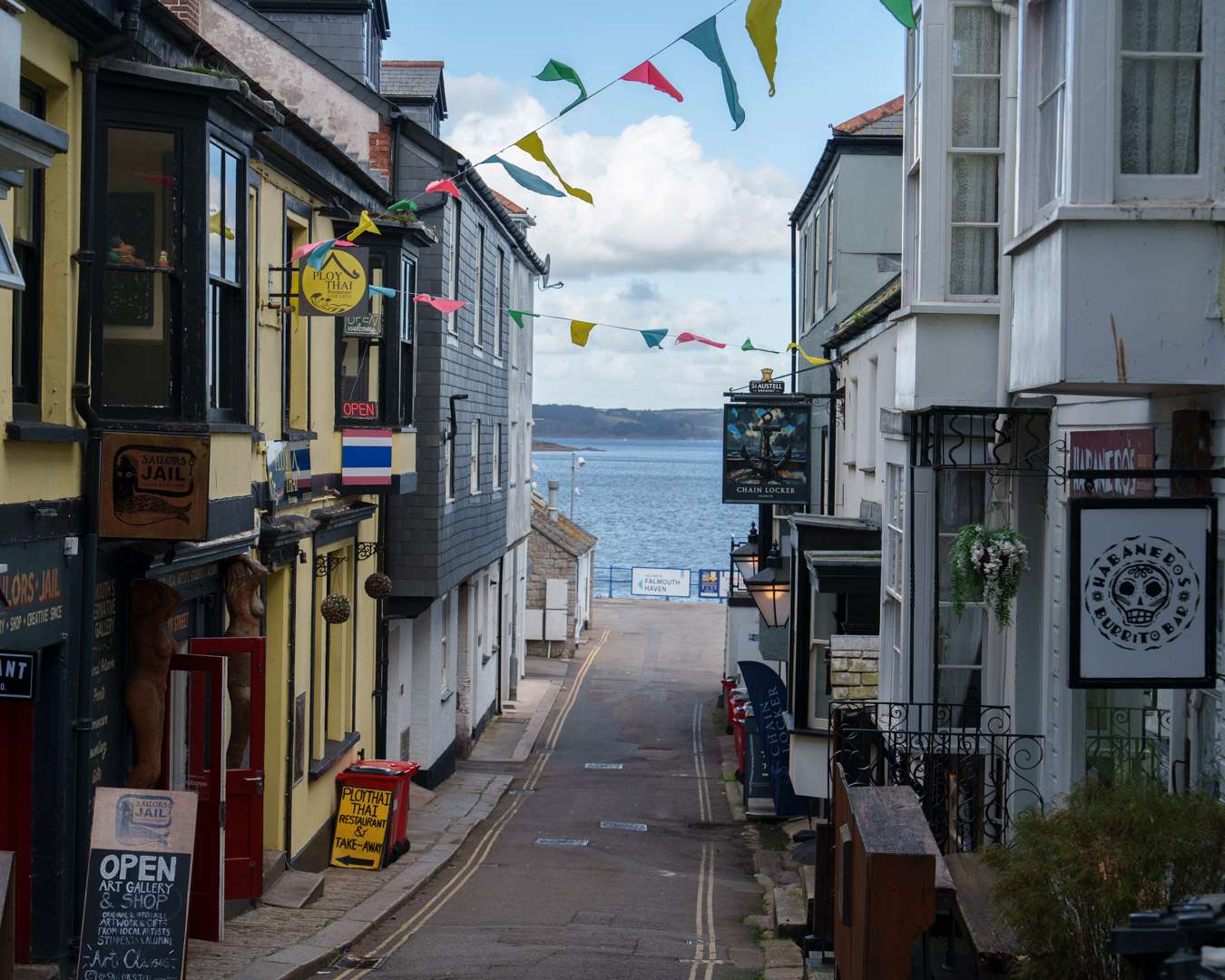
Falmouth is a town built along a single long street. It is called Arwenack Street, Church Street, Market Street and High Street in turn, it runs north-west from the harbour, and it is strung with bunting. Narrow lanes drop away to the water on both sides — opes, they are called here — and at the bottom of each one the sea stands in the frame. That is why Falmouth gives a photographer more than most south-coast harbour towns: the water shows up at every side street.
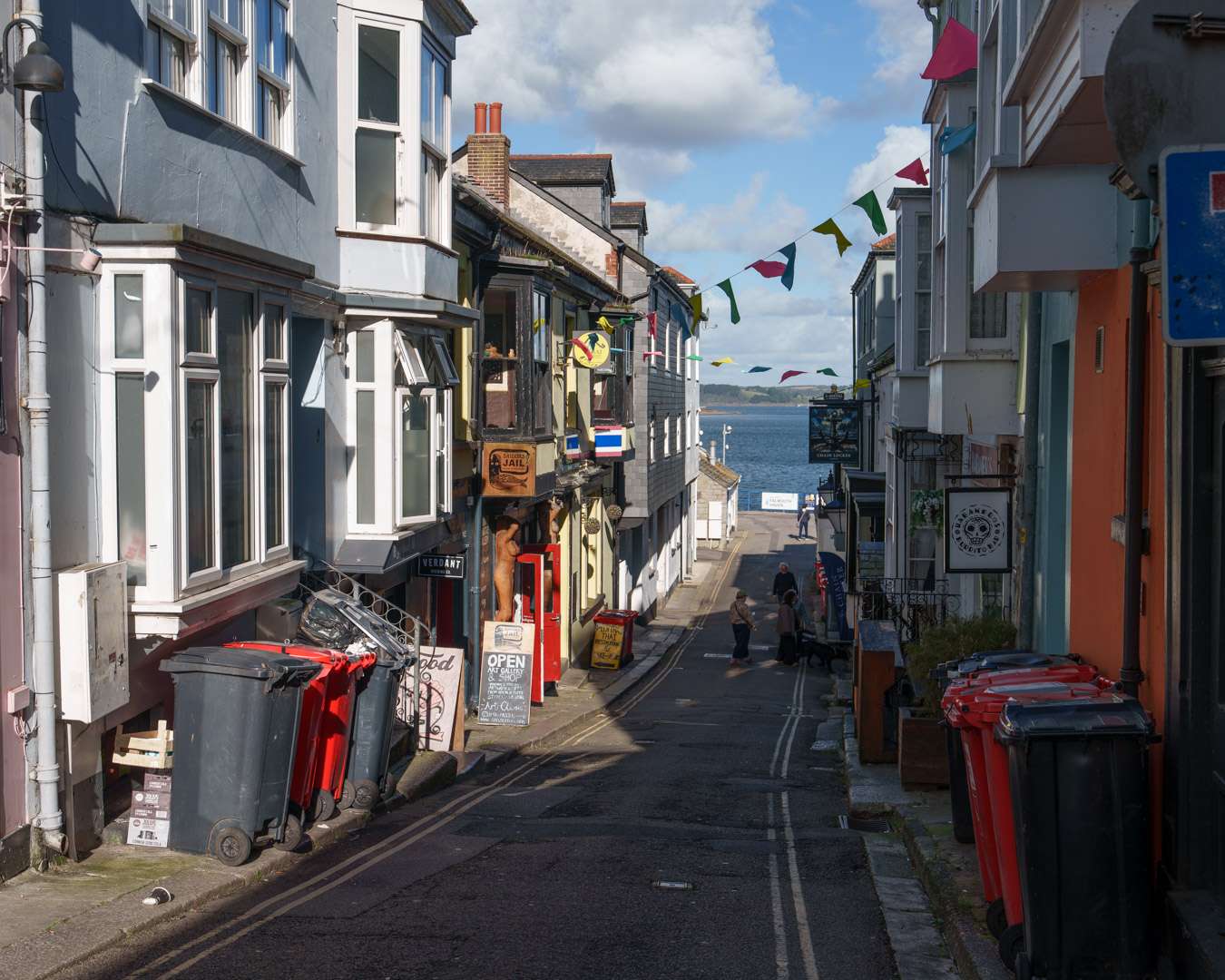
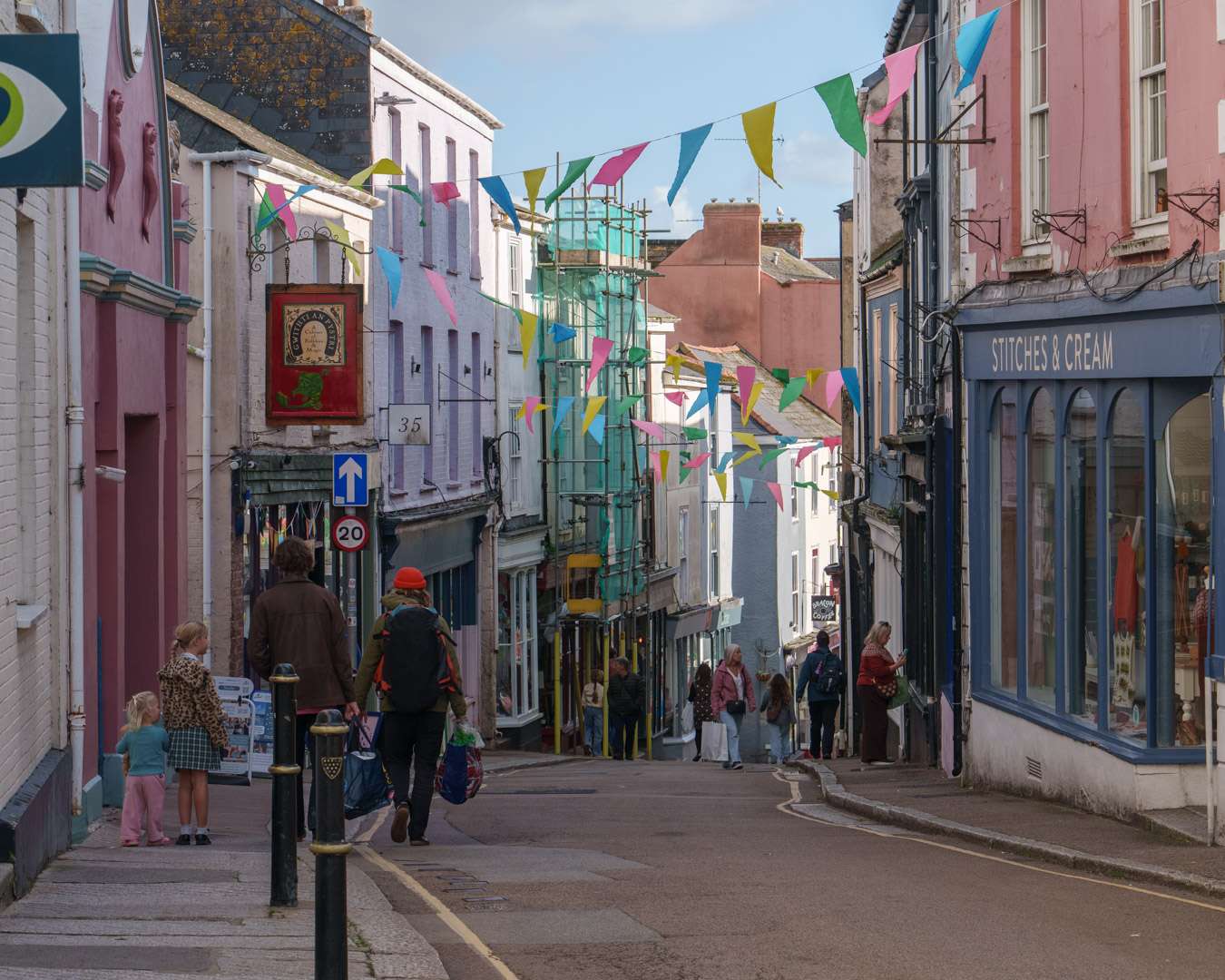
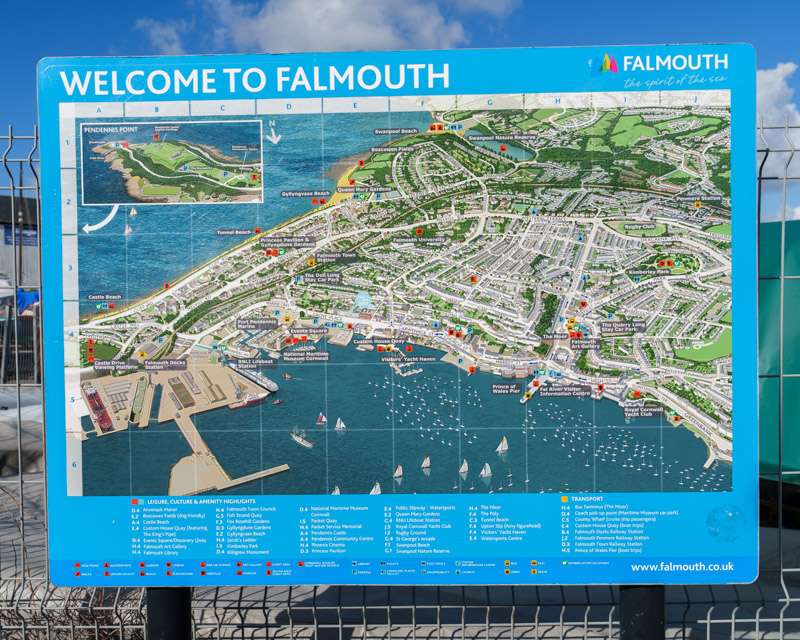
What fits into a day on foot without rushing: the main street end to end, Custom House Quay with the old customs house, Prince of Wales Pier with the ferries, Events Square in front of the museum, and — if you do not mind the climb — the walk up onto the Pendennis headland. Allow close to an hour there and back for the headland, plus whatever time you spend at the castle.
How much does a day in Falmouth cost?
The number that matters on a port day is not the ticket price but the line between what costs money and what does not.
| Item | Price October 2026 | Note |
|---|---|---|
| Shuttle, port to town centre | free | port service, roughly every 10 minutes, about a 5-minute ride |
| Old town, quays, Prince of Wales Pier, Events Square | free | all on foot, about 1 km from the berth |
| National Maritime Museum Cornwall | £19 adults, £10 under 18s, £12 students, under 5s free | daily 10am–5pm; ticket valid twelve months; 10% off online |
| Museum, Twilight ticket from 3pm | £12 adults, £6 children | one visit only; upgradable to the annual pass on the day |
| Pendennis Castle, booked online in advance | £13.60 adults, £6.80 children 5–17, £34.00 family | book by midnight the day before |
| Pendennis Castle, on the day | £16.00 adults, £8.00 children 5–17, £40.00 family | free for English Heritage members |
| Ferry to St Mawes | £5 single, £8 return; children 4–16 £3.50 / £4.50 | from Prince of Wales Pier, crossing about 20 minutes |
| Train, Falmouth Docks to Truro | from about £6 single | Maritime Line, 25–30 minutes, roughly two an hour |
Prices and opening times checked on 16 October 2026 with English Heritage, the museum and the operators. At the castle the gap between advance booking and the gate is about £2.40 per adult — on a port day, when you already know you are coming, that is money given away.
Pendennis Castle: the catch in October
Pendennis Castle stands on the headland above the harbour entrance, built under Henry VIII as the counterpart to St Mawes Castle across the mouth of the Fal. It is the one sight that lifts Falmouth above a pleasant walk through town — and in autumn it carries a catch that no daily programme mentions.
In the week beginning 12 October 2026 the castle opened Friday to Sunday only, 10am to 5pm, and stayed closed Monday to Thursday. Our call fell on a Friday, which worked. A Tuesday call means a walk onto the headland, a look from outside, and back again. If your ship calls at Falmouth in the winter half of the year, check the day of the week against the opening calendar before you plan the climb.
Is the National Maritime Museum Cornwall worth it on a port day?
The museum stands on the water at Events Square, a dark timber building with a tower you can read the tide from. It belongs to the National Maritime Museum at Greenwich, holds some fifteen galleries, a working boatbuilding shop and a lookout tower, and it opens daily from 10am to 5pm — unlike the castle, midweek included.
The honest answer depends on how long the ship stays. Nineteen pounds for two hours between the shuttle and all-aboard is a lot; £19 for a full day that might turn wet is fair, particularly as the ticket runs for twelve months — which does a cruise passenger little good. If you only have an hour and a half, the £12 Twilight ticket from 3pm is the better buy.
Beyond Falmouth: St Mawes, Truro and the rest of Cornwall
Falmouth is also a starting point, and an unusually convenient one, because both ways out begin in the centre. The ferry to St Mawes leaves from Prince of Wales Pier, crossing about twenty minutes, up to three an hour in summer and hourly on the winter timetable; adults pay £5 single and £8 return. It is the excursion with the best ratio of effort to effect: a boat ride across the Carrick Roads, a village at the water, back at the same pier.
The second way begins at the docks themselves. Falmouth Docks station sits on the port side of town, and the Maritime Line runs to Truro in 25 to 30 minutes, roughly twice an hour. Truro has a three-spired cathedral and is the only city in Cornwall. Everything else — St Michael’s Mount, the Eden Project, St Ives — lies an hour or more away by coach and belongs in the ship’s excursion, not in a morning on your own.
Tour or on your own?
For Falmouth itself: on your own. The shuttle is free, the town is a kilometre away, and the most expensive thing about the day is two admission tickets you can buy yourself. A guided walk through a town that is essentially one street adds very little.
For Cornwall beyond Falmouth: usually the tour. St Michael’s Mount, the Eden Project, the Lost Gardens of Heligan and St Ives are reachable by public transport on a port day, but without any slack. Going there, what the excursion really buys is the guarantee of being back in time. The return buffer is the same as everywhere: be back at the terminal 45 to 60 minutes before all-aboard, and with a shuttle, take the longer figure.
Photo spots and light
The 16th of October was clear, with cumulus and hard autumn light. That is not easy light for Falmouth: the main street runs narrow and deep between the houses, and at midday the sun sits on the gable while everything below it goes into shadow. The lanes down to the water work almost regardless, because the bright slot of harbour at the end needs the shadow as a frame.

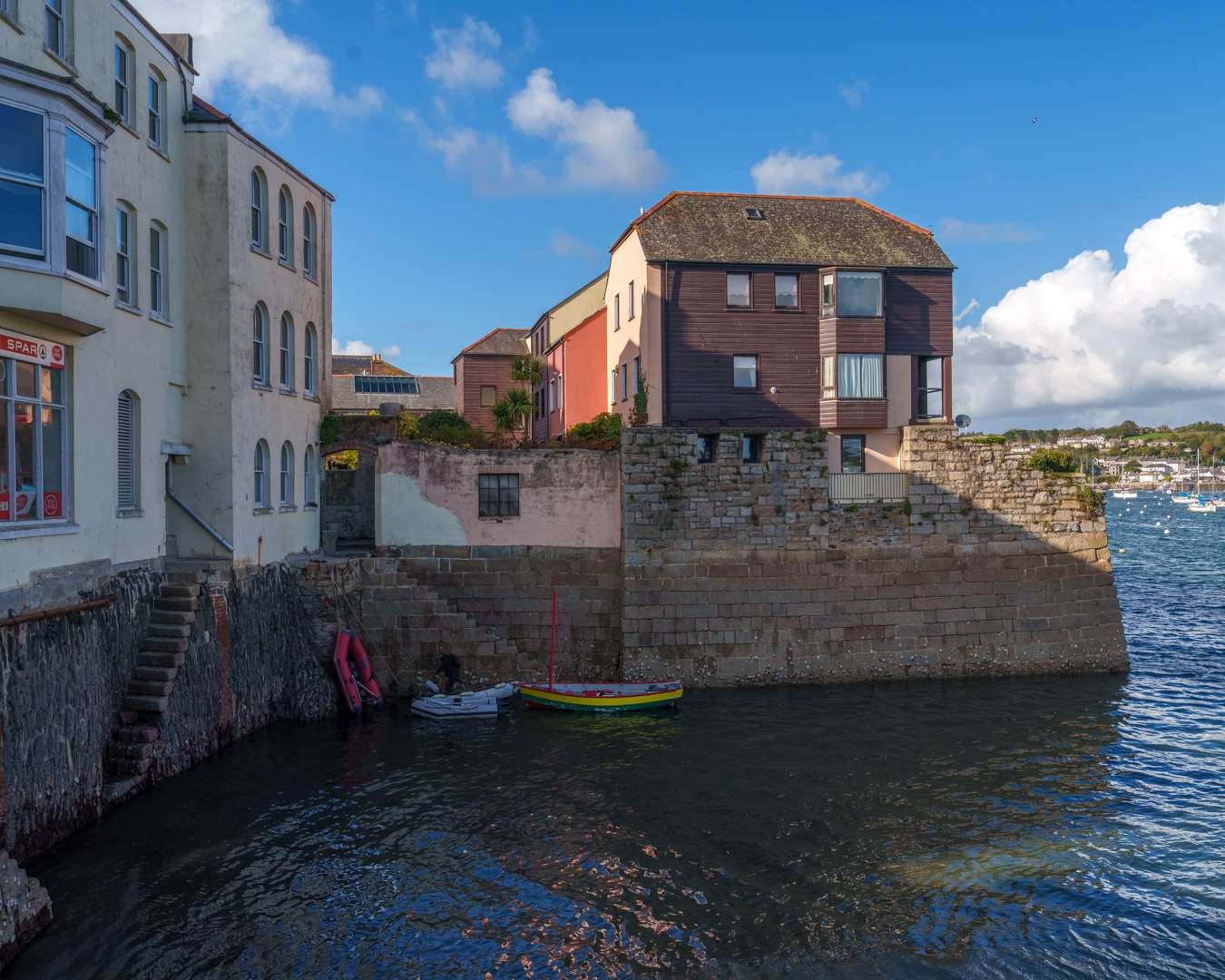
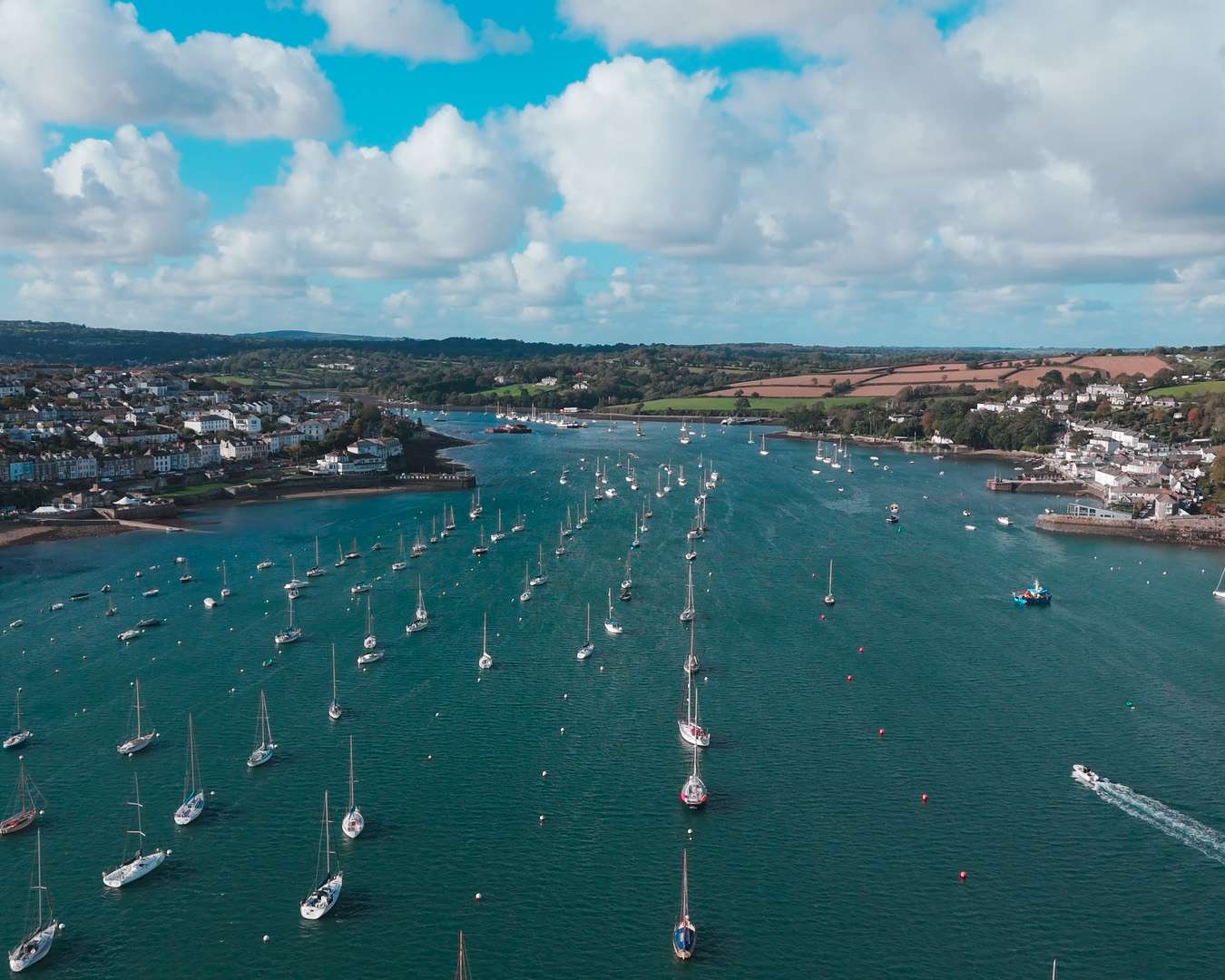
Three places that paid off: the harbour wall at low water, where the dinghies lie on the sand instead of floating — here the tide decides the picture, not the clock; the bunting lanes against the bright harbour; and the basin from above, with the mooring fields of the yachts and the headland behind them.
What I would do differently next time
Check the tide table before setting the alarm. In Falmouth low water changes the quays more than the light does: at ebb the boats sit dry, the slipways are fully exposed, and the harbour looks like a place of work. At high water none of that is left.
And skip the shuttle once. The walk from the dock into town runs past the yard — chains, bollards, hawsers, crates of shackles. For a harbour town that is otherwise mostly pretty, those are the more honest subjects, and they cost only the quarter of an hour you save on the bus.
Practical notes
The shuttle is a port service, not a promise from the cruise line — whether it runs is in the daily programme, not in the port description. The last return is posted at the stop; walk back and you are independent of it.
You pay in pounds sterling and cards work almost everywhere. The dock estate is a working yard: what is visible from the road may be photographed, behind the fences other rules apply. And a word on Cornwall in October — our day was sunny and still, but the headland lies open to the sea. A jacket belongs in the bag even when the morning promises otherwise.
Related: Cruise Ports on Your Own — every port guide · Auf Deutsch lesen: Falmouth auf eigene Faust
Ports on this route — British Isles: Portsmouth Cruise Port on Your Own · St Mary’s Cruise Port on Your Own · Saint Peter Port Cruise Port on Your Own · Kirkwall Cruise Port on Your Own · Invergordon Cruise Port on Your Own · All cruise ports on your own
Written by Jan Madeus — ship’s videographer, at sea since 2008. I go ashore in the same ports as the guests, with the same few hours and the same all-aboard time.