
Prices and times below checked September 2026 — verify before you travel.
Bergen is one of the easiest ports in Norway to do without a tour. If your ship berths at Skolten, the wooden fronts of Bryggen are five to fifteen minutes away on foot, the fish market is beside them, and the funicular up Mount Fløyen leaves from a station in the middle of town. Nothing in the centre needs a bus. The one thing that decides your day is which quay you get.
Where does the ship dock in Bergen?
Bergen has no single cruise terminal. Ships are assigned a quay per call, and the assignment can change late, so check the port’s arrivals list rather than assuming last year’s berth.
Skolten and the central quays
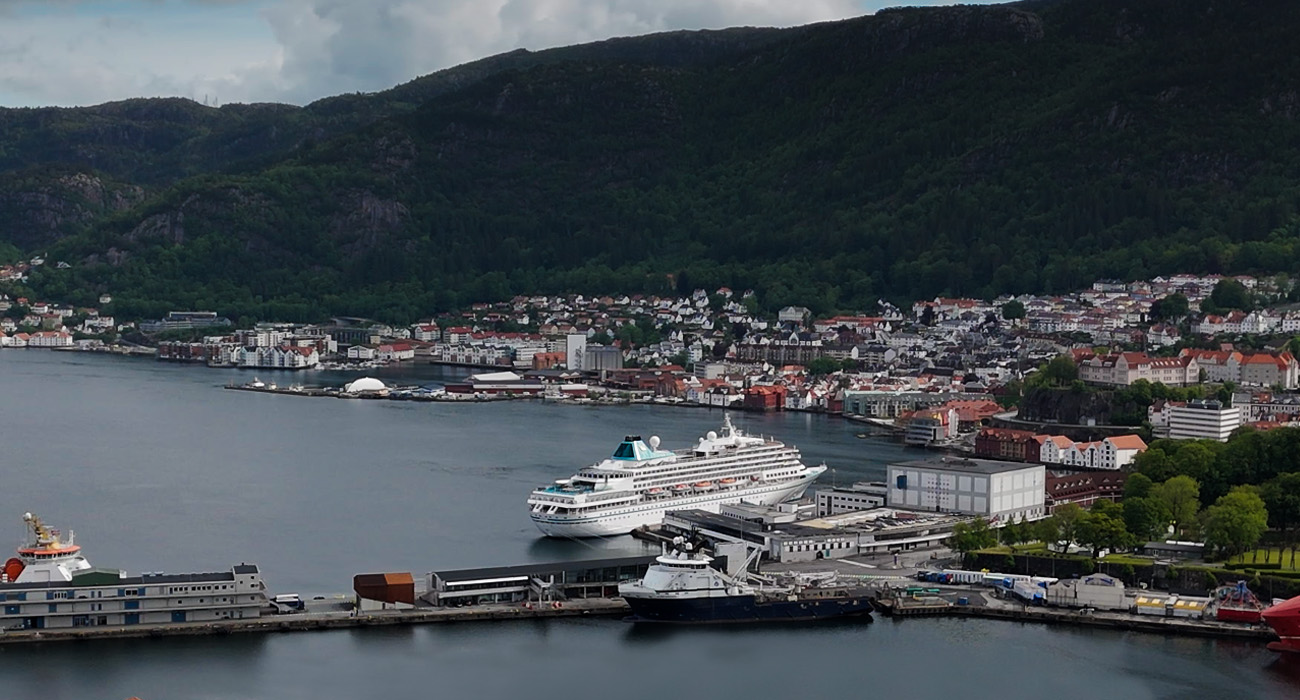
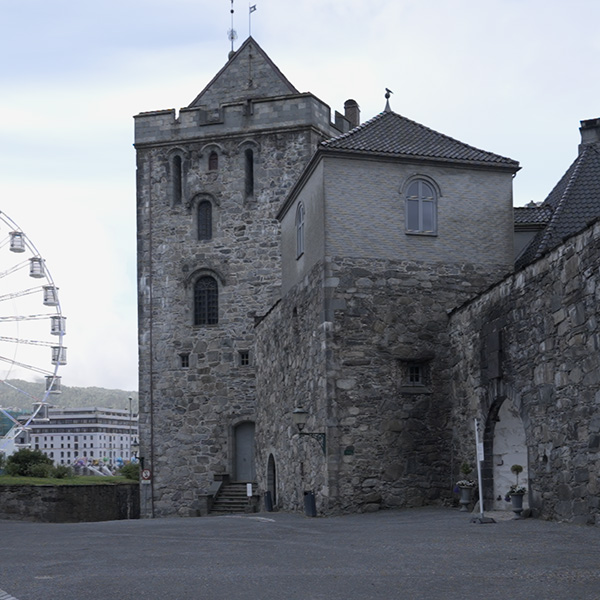
Skolten, Bontelabo and Festningskaien lie on the north side of Vågen, the inner harbour, directly below Bergenhus Fortress. From here you walk out of the gate and along the water: Bryggen is about five to fifteen minutes depending on the berth and the ship’s length, and the fish market sits at the far end of the same quayside. No shuttle, no ticket, no decision to make.
Jekteviken and Dokken
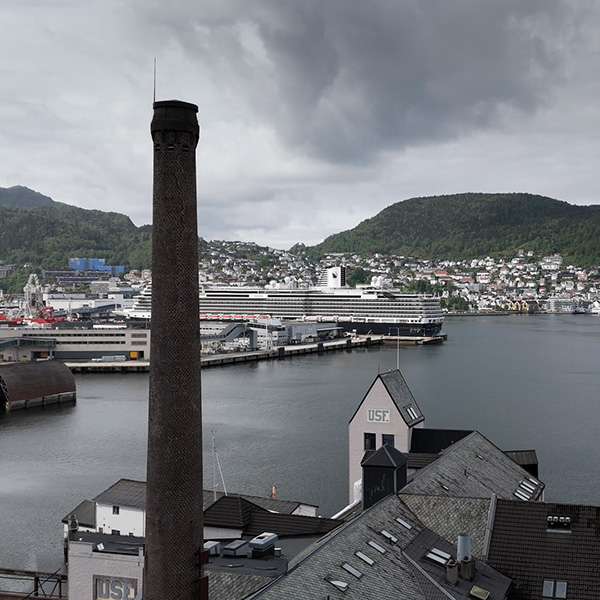
The working harbour south-west of the centre takes the overflow. Jekteviken is roughly half an hour on foot from Bryggen, Dokken about three kilometres out through industrial ground that is not a pleasant walk. Ships normally run a shuttle from these berths into the Bryggen area, five to ten minutes by road. If your ship charges for it, the light rail and the city buses are the alternative; a taxi in Bergen is expensive.
What is walkable from the pier
Bergen’s centre is compact and mostly flat along the water, with everything worth seeing inside a rectangle you can cross in twenty minutes. Times below are from Skolten.
| From Skolten | On foot | Cost |
|---|---|---|
| Bergenhus Fortress and the Rosenkrantz Tower | at the quay | grounds free |
| Bryggen, the Hanseatic wharf | 5–15 min | free to walk |
| Mariakirken, St Mary’s Church | about 10 min | small entry fee |
| Fisketorget, the fish market | about 15 min | free to look |
| Fløibanen lower station | about 15 min | see below |
| Troldhaugen, Grieg’s house | not walkable — light rail plus a walk | half a day |
Bryggen: what you are actually looking at
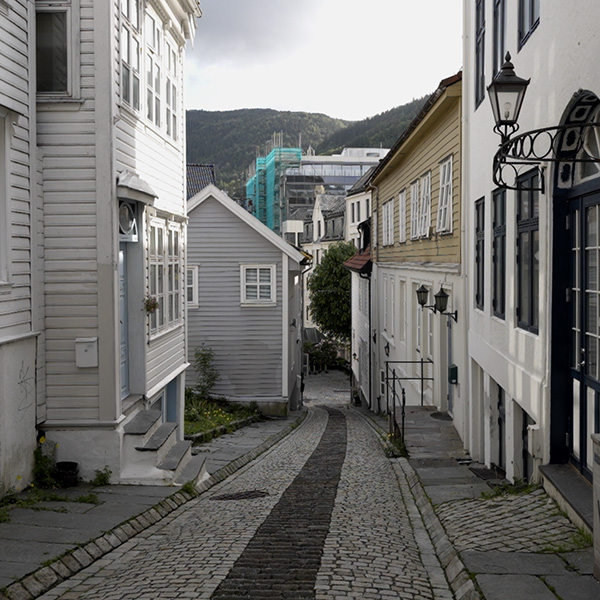
Bryggen is the old Hanseatic wharf, on the UNESCO World Heritage list, and the row of gabled wooden fronts facing the harbour is the photograph everyone takes. The part most visitors miss is behind them: narrow passages run back from the quay between leaning timber warehouses, dark, uneven underfoot, and almost empty while the crowd stays on the front. That is where the buildings look their age.
Nothing here costs anything. Walking the passages takes twenty minutes and is the single best use of a short call.
Fløibanen: the funicular up Mount Fløyen
The Fløibanen climbs from the town centre to Mount Fløyen in a few minutes and gives you the standard view over Bergen, the harbour and the islands. It runs every ten minutes from 08:00 to midnight, so there is no timetable to plan around — you simply turn up.
Fares from the operator’s own price list, 2026:
| Ticket | Summer, 1 Apr – 30 Sep | Off-season |
|---|---|---|
| Adult return | 200 NOK app or machine, 220 NOK at the counter | 145 NOK |
| Adult single | 105 NOK app or machine, 120 NOK at the counter | 80 NOK |
| Child 4–15, return | 100 NOK app or machine, 120 NOK at the counter | 70 NOK |
| Senior 67+, return | not offered in summer | 100 NOK |
Buy in the app before you queue; it is cheaper and the line at the lower station is the longest in Bergen on a two-ship day. Walking down instead of riding back takes about 45 minutes on a good path through the trees and saves the return half of the fare.
What fits into six hours ashore
A workable shape for a normal call: out of the gate at Skolten, along the quay past Bergenhus, into the Bryggen passages, up the hill behind Bryggen to Mariakirken, back down to the Fløibanen station and up Fløyen, then down again to the fish market for something to eat before you walk back. That is roughly four and a half hours at a slow pace and leaves a real buffer.
What does not fit: Troldhaugen, Grieg’s house outside the city, which needs the light rail and a walk at each end and turns into a half-day of its own. The fjord trips advertised on the quay do not fit either unless your ship is in for nine hours or more — check the return time against all-aboard before you buy, not after.
Is the ship’s Bergen excursion worth it?
For the city itself, no. Bergen is one of the ports where an independent day is simply better: everything is inside walking distance from the central quays, the funicular needs no booking, and a coach tour of a town this size spends most of its time parking.
The excursions that do earn their price are the ones that leave Bergen — a fjord boat, Troldhaugen with a recital, the Fløyen trip combined with a guide who can explain what you are seeing. And if your ship is at Dokken or Jekteviken, the shuttle alone can be reason enough to take the ship’s arrangement.
Rain, and what it does to the pictures
Bergen’s reputation for rain is earned. Plan the day as if it will rain for part of it, because it very likely will, and take a jacket rather than an umbrella — the wind off the harbour makes an umbrella useless.
The rain is not the enemy of the photographs. Wet cobbles in the passages behind Bryggen hold the light, the colours of the wooden fronts saturate, and the crowd thins. The flat grey hour after a shower is better on Bryggen than bright sun, which blows out the pale gables and puts the passages in black shadow.
Questions people ask about Bergen
Where is Bergen? On Norway’s west coast, between seven hills and the mouths of several fjords, about 460 kilometres north-west of Oslo. It is Norway’s second city and the usual starting point for the fjord region.
Is Bergen walkable from the cruise port? From Skolten, Bontelabo and Festningskaien, yes — the whole centre is on foot. From Jekteviken it is about half an hour; from Dokken, take the shuttle.
How much does the Fløibanen cost? 200 NOK return for an adult in summer if you buy in the app, 220 NOK at the counter, 145 NOK off-season. It runs every ten minutes.
What is Bryggen? The old Hanseatic wharf on the north side of Bergen’s inner harbour, a UNESCO World Heritage site. The wooden merchant houses date in their present form from after the fire of 1702, on foundations that are far older.
How much time do you need in Bergen? Four hours covers Bryggen and the fish market. Six covers those plus Fløyen without hurrying. Anything beyond the centre — Troldhaugen, a fjord trip — needs a nine-hour call.
Does it always rain in Bergen? Not always, but often enough that the locals treat it as a fact of life rather than weather. Take a waterproof jacket in any month.
Related: All cruise ports on your own · Stavanger and the Lysefjord on your own · Flåm and the Stegastein viewpoint · Things to do in Måløy · All Norway stories
Written by Jan Madeus — ship’s videographer at sea since 2008. I go ashore in the same ports as the passengers, with the same few hours and the same deadline. More about me.