
Visited: July 2025, on a call of MS Amadea.
Yes — the Lysefjord is one of the easiest Norwegian fjords to do without a ship excursion. Stavanger is a walk-off port in the middle of town, and the fjord boats leave from Strandkaien, a few minutes along the same quayside. The round trip takes 3 to 3.5 hours and costs NOK 890 for adults. You stay on board throughout: the boat turns below Preikestolen and comes back. Difficulty: 1 out of 5, as long as your call is long enough.
Prices and departures checked September 2026 — verify before you sail.
Where does the ship dock in Stavanger?
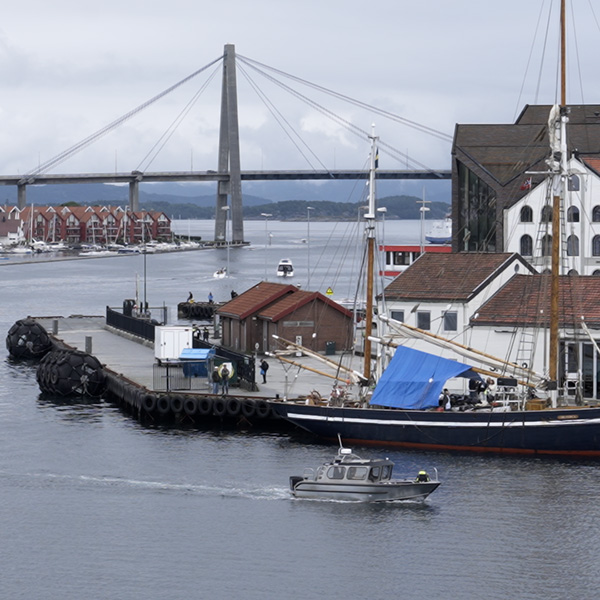
Cruise ships tie up at Skagenkaien, Strandkaien or Skansekaien — all three lie directly in Vågen, the inner harbour, with the old town on one side and the shops on the other. There is no tender, no shuttle and no industrial approach road. You walk off the gangway into the city.
That also means the fjord boats are not somewhere else. The quays run one after another along the same flat promenade, so wherever your ship lies, Strandkaien and the fish market are a few minutes on foot.
Lysefjord cruise or Pulpit Rock hike: what fits into a port day?
These are two different days, and the mistake is to think one leads to the other.
| Time needed | Price | Fits a port call? | |
|---|---|---|---|
| Fjord cruise from Stavanger | 3–3.5 hours | NOK 890 adult · NOK 445 child 4–15 | yes, with a call of six hours or more |
| Boat plus Preikestolen hike | 8–9 hours | about NOK 1,415 | only on a very long call |
| Ship’s excursion to the fjord | similar | usually well above the local price | yes, with the back-to-ship guarantee |
| Stavanger old town on foot | 1–2 hours | free | always |
The hike up to Preikestolen is about four hours on the mountain plus the transfer, and the cliff is where the final fight of Mission: Impossible – Fallout was filmed in 2018, standing in for Kashmir. That has made it busy. From the water you see the same rock from 604 metres below, without the queue on the path.
What you actually see on the boat
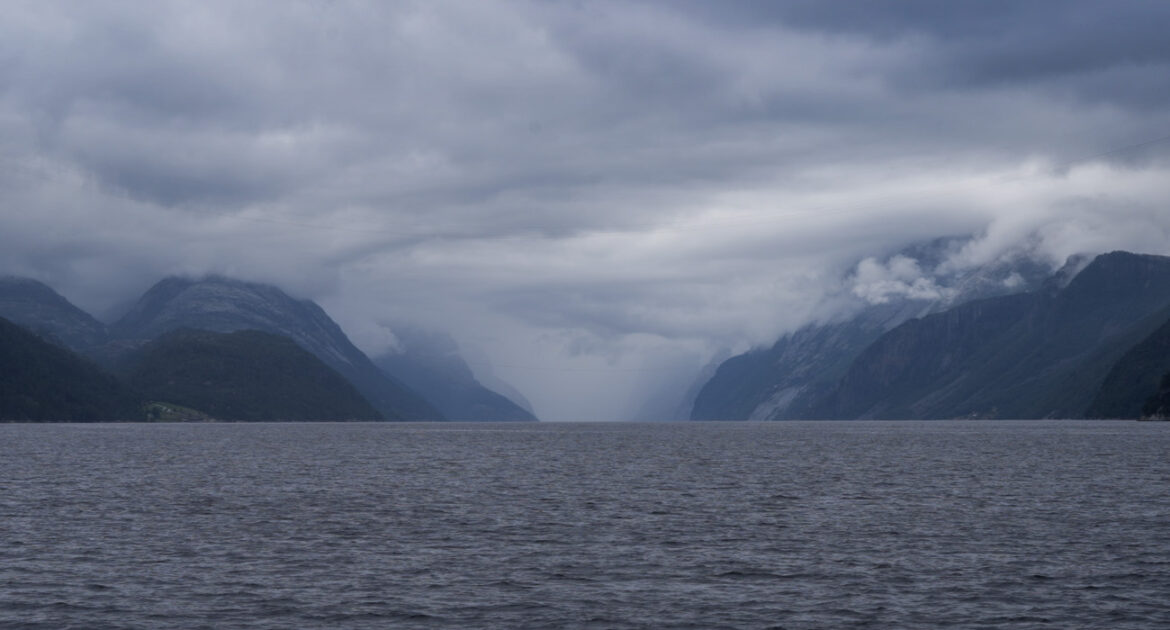
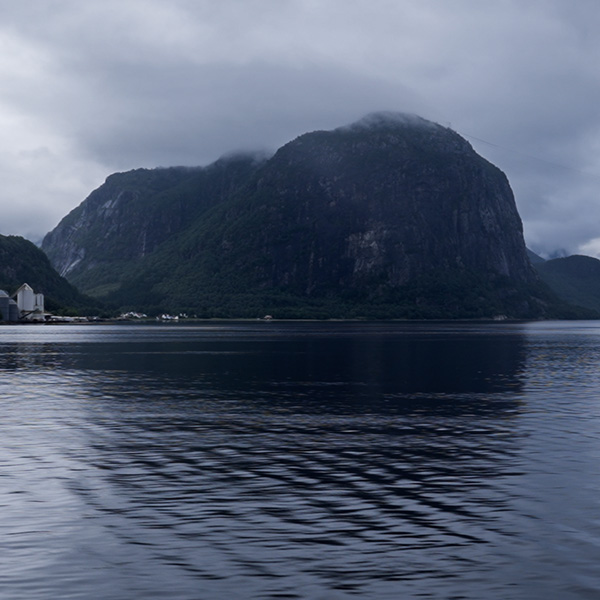
The Lysefjord runs about 42 kilometres inland. Its name means “light fjord”, after the pale granite walls that give the water its colour on a bright day — and its character on a grey one, which is what we had.
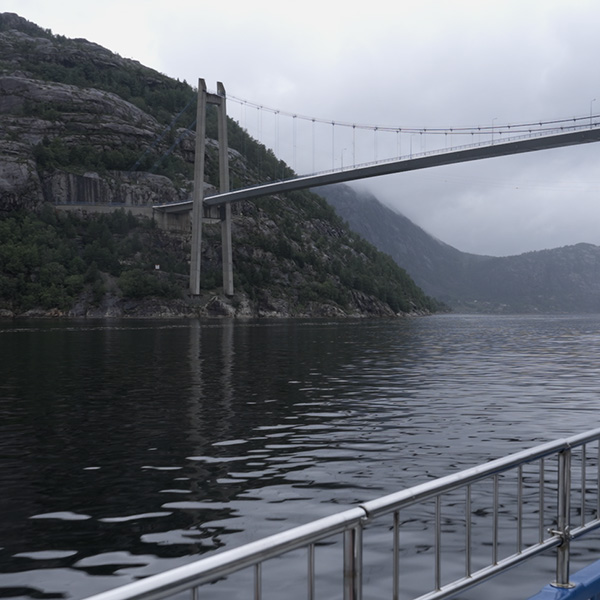
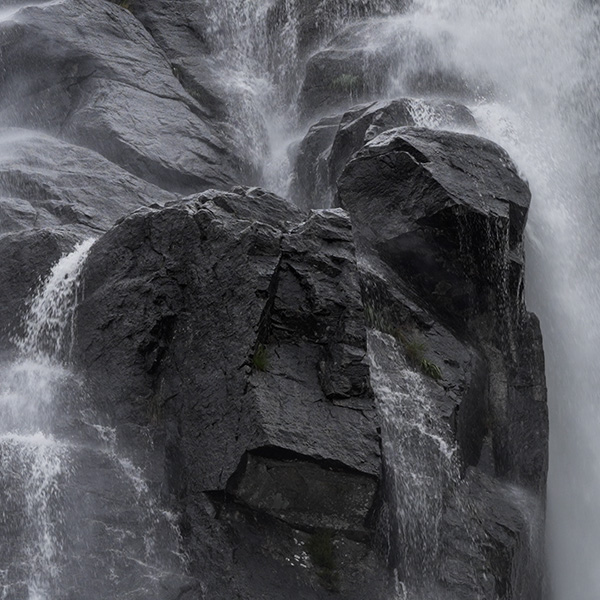
The route takes in the Vagabond’s Cave at Fantahålå, a cleft in the rock where, by local account, people once hid from the law; the Lysefjord bridge at the mouth; the sheer wall below Preikestolen; and the Hengjanefossen waterfall, where the skipper noses in close enough for the spray to reach the deck.
The boat on the route now is a silent electric catamaran. That is worth knowing for two reasons: without an engine under the deck you hear the water and the birds, and there is no vibration in the footage. It also runs without stopping — no going ashore at any point.
That last detail has changed. On our trip the boat pulled in at a hut where Norwegian waffles with cream and jam were served; the current cruise stays on the water the whole way and sells food on board instead. Neither is wrong, but if the waffles are the reason you are going, check before you book.
How much return buffer should you plan?
Take a departure that puts you back at Strandkaien at least 90 minutes before all-aboard. The boat runs to its own timetable, not to your ship’s, and the fjord has no shortcuts: once you are an hour in, you are an hour from the quay. Book online in advance in high season — on a two-ship day the counter sells out.
What to do with the hour that is left
If the fjord trip ends with time to spare, three things are within ten minutes of the quay and cost nothing.
Gamle Stavanger, on the western side of Vågen, is a lane of white wooden houses from the eighteenth and nineteenth centuries — narrow, cobbled, and almost entirely without shopfronts. It is the quietest part of the centre when a ship is in.
Øvre Holmegate is the opposite: one short street painted in strong colours end to end, cafés at street level. It is the town’s most photographed street and it earns it, though it wants flat light rather than sun.
Fisketorget, the fish market at the head of the harbour, is where you end up anyway on the way back from Strandkaien.
Photo notes
The fjord is a scale problem, not a light problem. Nothing in the frame tells you how big the walls are unless you put something in it — the bow rail, another boat, the bridge. Preikestolen from below is the same trap: from the water it reads as a ledge, and it takes a long lens and a person on the edge to make 604 metres visible.
A grey day is not a lost day here. The pale granite holds its tone under cloud, and the waterfalls stand out better against wet rock than against sunlight.
Tips
Dress for the water, not for the town. The fjord is several degrees colder than the quay and the deck is where you want to be for the whole three hours.
Take the bow, not the saloon. The boat fills from the inside out, and on the return leg the light is behind you.
Best season is May to September — for daylight, for the timetable, and because the waterfalls carry more water earlier in that window.
Related: All cruise ports on your own · Tromsø · A Day in Åndalsnes · Discovering Bergen
Written by Jan Madeus — ship’s videographer at sea since 2008. I go ashore in the same ports as the passengers, with the same few hours and the same deadline. More about me.