
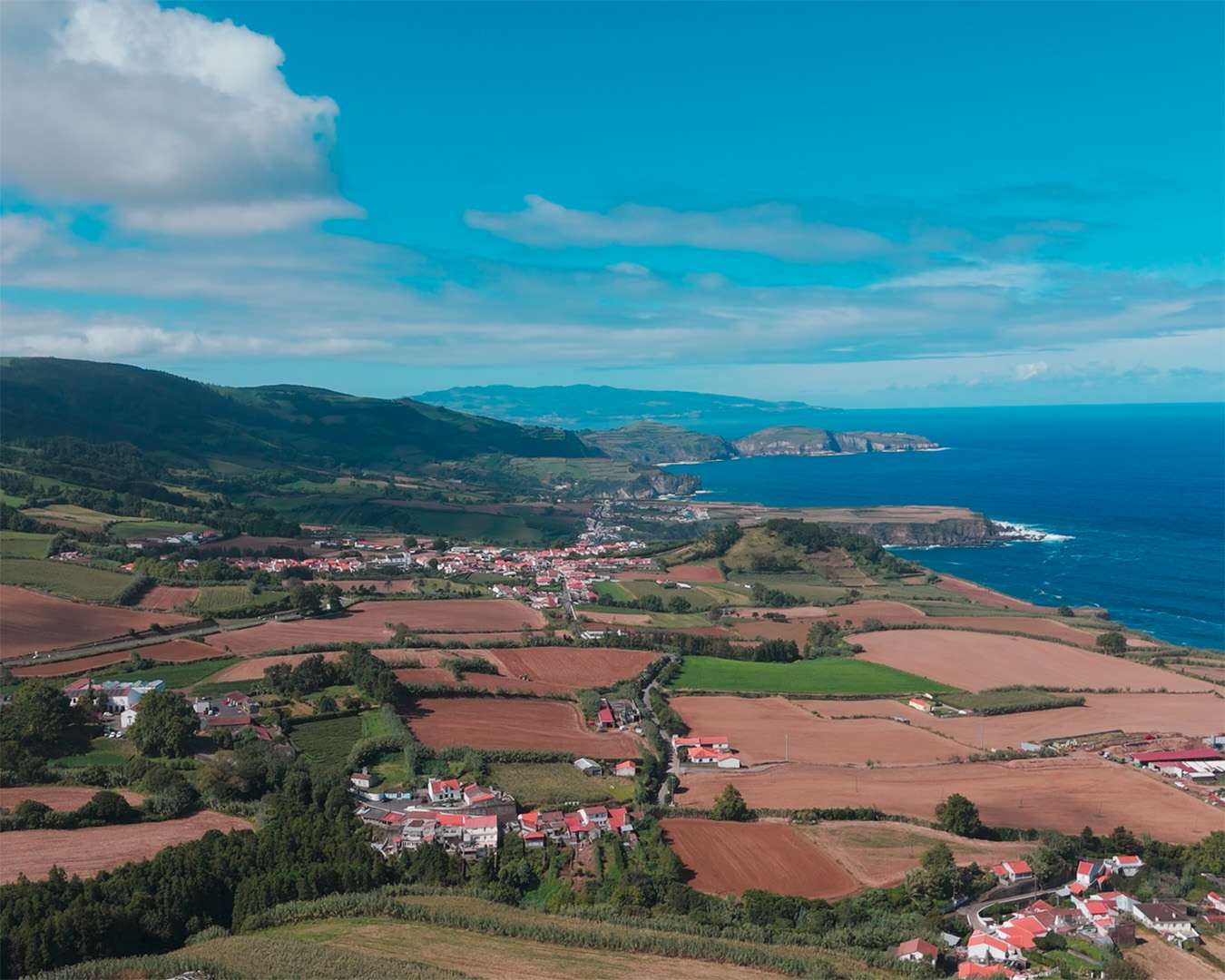
Visited: 30 September 2026, on a call of MS Amadea at Ponta Delgada. We left the terminal at about 09:20 and were back at the ship by 13:30. Prices and opening times checked October 2026 — verify against the linked sources before you travel.
Four stops, one mountain. Lagoa do Fogo fills the inner caldera of the Água de Pau massif; Caldeira Velha sits on its northern flank, where the same heat reaches the surface as warm water instead of lava; the Gorreana tea plantation grows on the volcanic soil below; and the Miradouro de Santa Iria looks down on the slope where the Portuguese civil war was decided on the Azores. All of it fits into about four hours from the cruise terminal — and the whole route is drivable, which matters, because Ponta Delgada is a port where an independent day is genuinely possible.
The route at a glance
| Berth | Portas do Mar cruise terminal, in the town itself. About 200 m to the port gate, another 350 m to the centre. |
| Time needed | Four hours ten for all four stops, unhurried — our own run was 09:20 to 13:30 |
| Miradouro da Serra da Barrosa | 899 m, on the ridge of the Serra de Água de Pau. The summit above it, Pico da Barrosa, is 947 m. |
| Lagoa do Fogo | About 30 m deep, protected since 1974, part of the Parque Natural da Ilha de São Miguel. Swimming is not allowed. |
| Caldeira Velha | Pools between about 25 and 38 °C. October 09:00–18:30 daily. €10 with the thermal pools, €3 without, locker €2. Timed slots, booked online. |
| Chá Gorreana | Free to enter, free tour, free tasting. Founded 1883, still worked by the same family. |
| Miradouro de Santa Iria | 221 m above the north coast |
| On your own | Taxi or hire car. In the summer months the road past Caldeira Velha is closed to general traffic and a shuttle runs instead — check whether it is operating on your call day. |
| Difficulty | 2 out of 5 by hire car or taxi, 4 out of 5 if you depend on the shuttle timetable |
Where the ship berths in Ponta Delgada
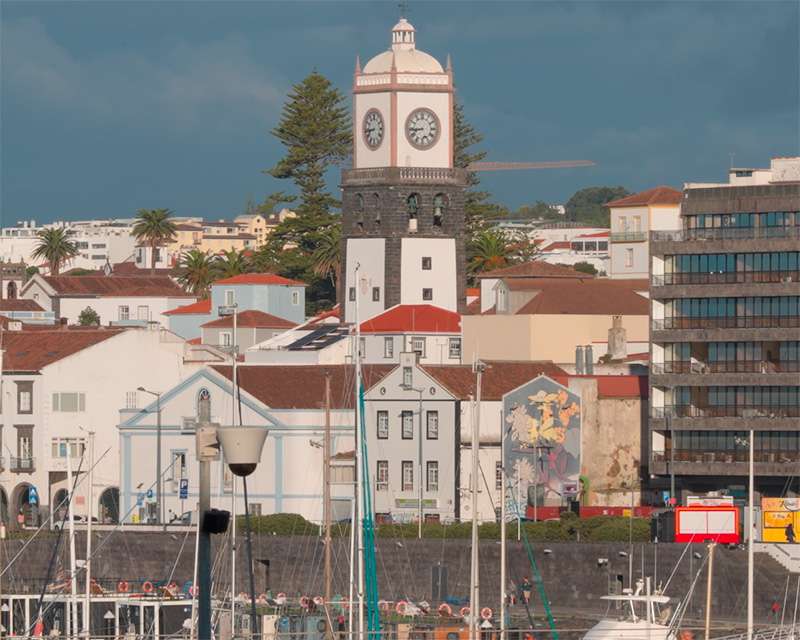
Ships lie at Portas do Mar, the cruise terminal built into the seafront of Ponta Delgada itself. From the gangway it is about 200 metres to the port gate and another 350 metres into the centre — there is no shuttle because there is nothing to shuttle. The commercial harbour, about two kilometres out, takes cargo rather than passengers.
That is the first reason this island rewards an independent day: you start in the middle of town, with taxis at the gate and hire-car desks within walking distance, instead of a coach park on an industrial quay.
Miradouro da Serra da Barrosa: the cloud that is usually there
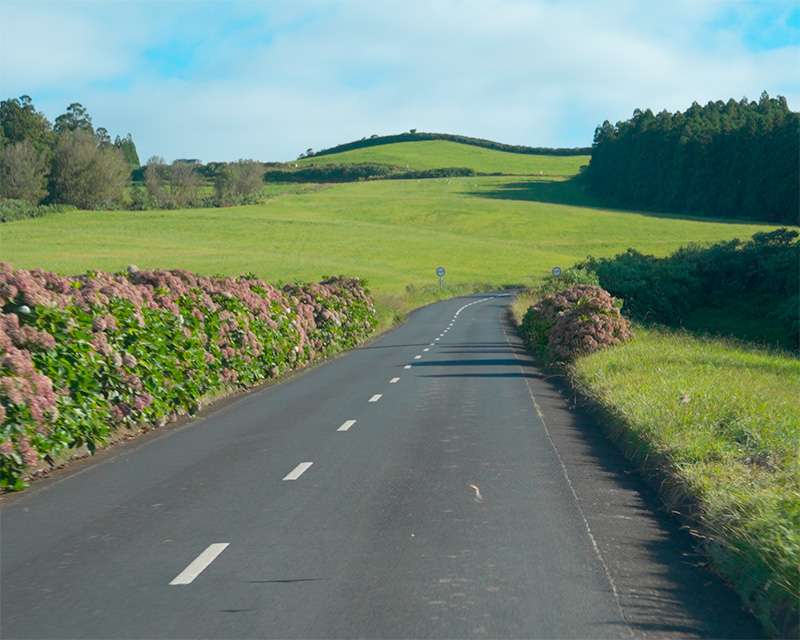
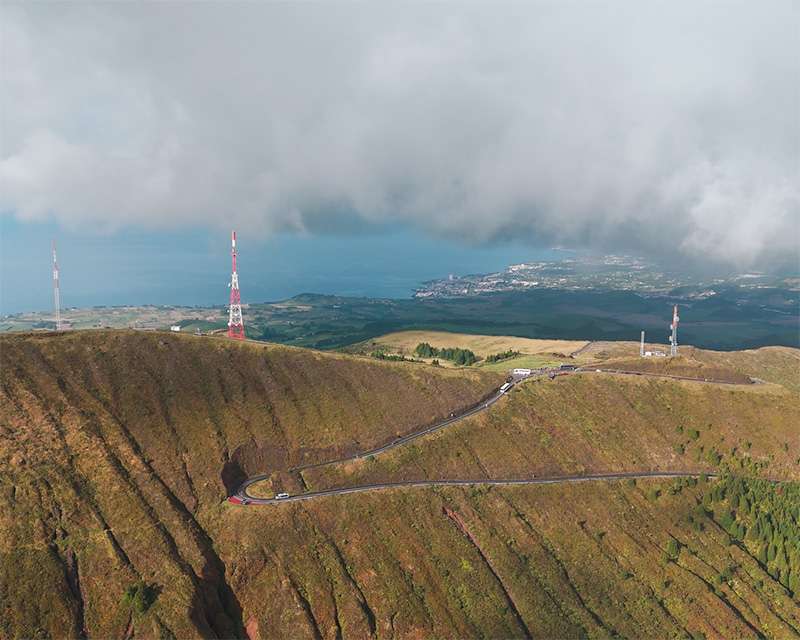
The road leaves Ponta Delgada northwards and climbs at once — pasture, hydrangea hedges, cattle, and then cloud. The viewpoint on the ridge of the Serra de Água de Pau stands at 899 metres; the summit above it, the Pico da Barrosa, reaches 947 and carries the island’s transmitter masts.
On a clear day you can see the north and the south coast of São Miguel at the same time from up here. Clear days are not common. The cloud that hangs on this ridge hangs here most of the time, and it is worth knowing before you plan a morning around the view: the weather at 900 metres has very little to do with the weather at the quay.
Lagoa do Fogo: what fills the caldera
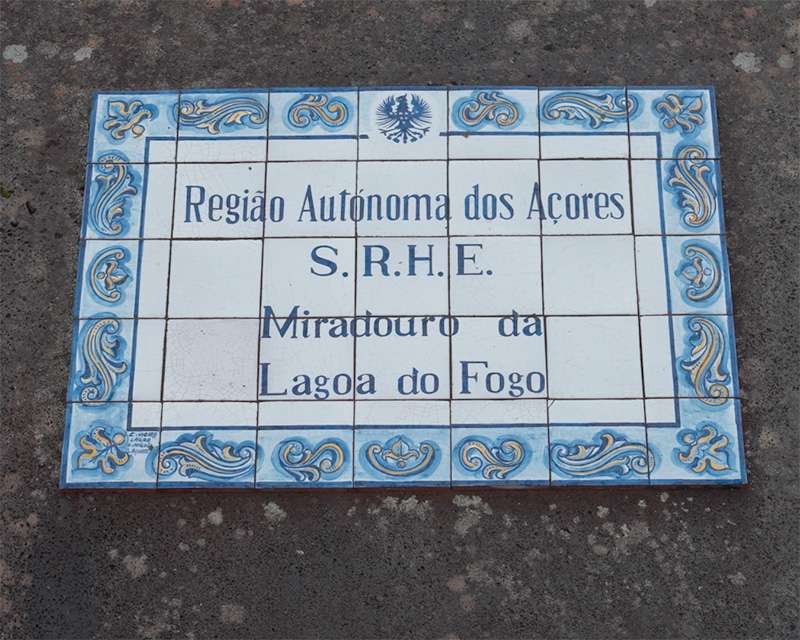
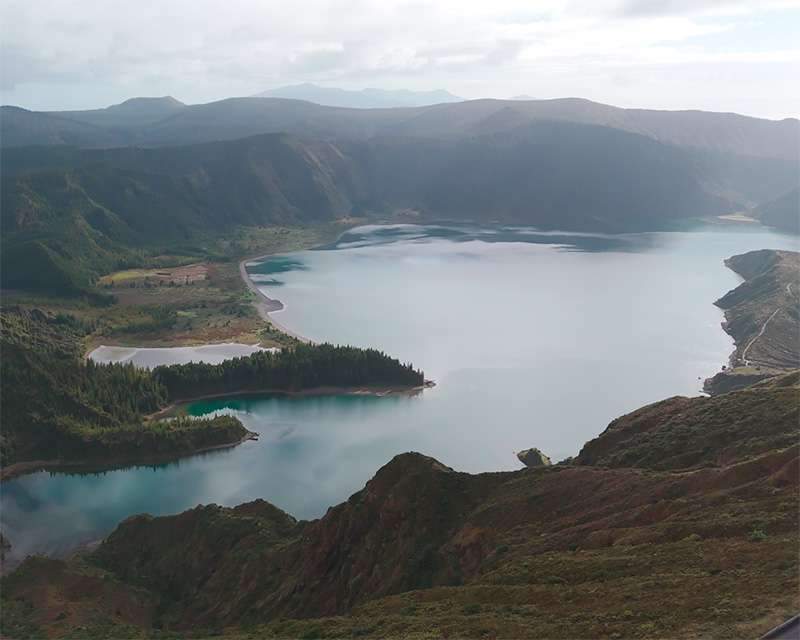
Below the ridge lies the Lagoa do Fogo, the lake of fire. It fills the inner caldera of the Água de Pau volcano and is about thirty metres deep. It has been protected since 1974 and now sits inside the Parque Natural da Ilha de São Miguel as a protected area of some 1,670 hectares, which is also a Natura 2000 site. There is no house on the shore, no road down to the water and no farming in the basin. Anyone who wants to reach the lake walks.
The name comes from the eruption of 1563, which began on 28 June and lasted until 26 July — a plinian eruption from the caldera, preceded and accompanied by earthquakes, with an ash column carried out over the Atlantic. From 2 July a second vent opened on the north-western flank at Cerro Queimado, and its lava reached the coast near Ribeira Grande. A further eruption followed inside this caldera in February 1564.
What the eruption did not do is make the crater. The inner caldera is roughly fifteen thousand years old, the outer one between thirty and forty-five thousand. 1563 filled the basin with ash and pumice; it did not dig it.
Swimming in the lake is not allowed. There is an official waymarked circuit, the PRC02SMI Praia — Lagoa do Fogo, twelve kilometres and about four hours, which is a hiking day rather than a port day. The short scramble down from the viewpoint to the shore takes roughly twenty minutes each way and is steep and loose underfoot.
Caldeira Velha: the same heat, arriving slowly
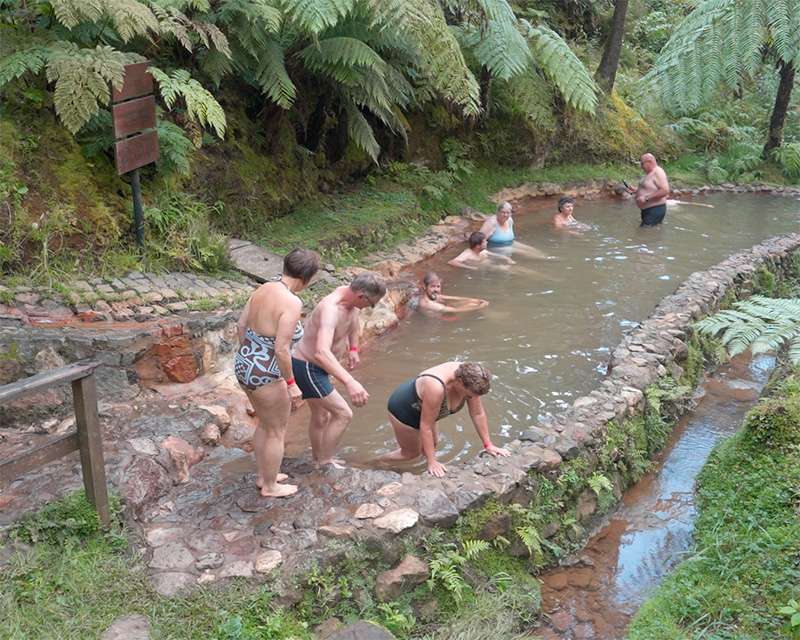
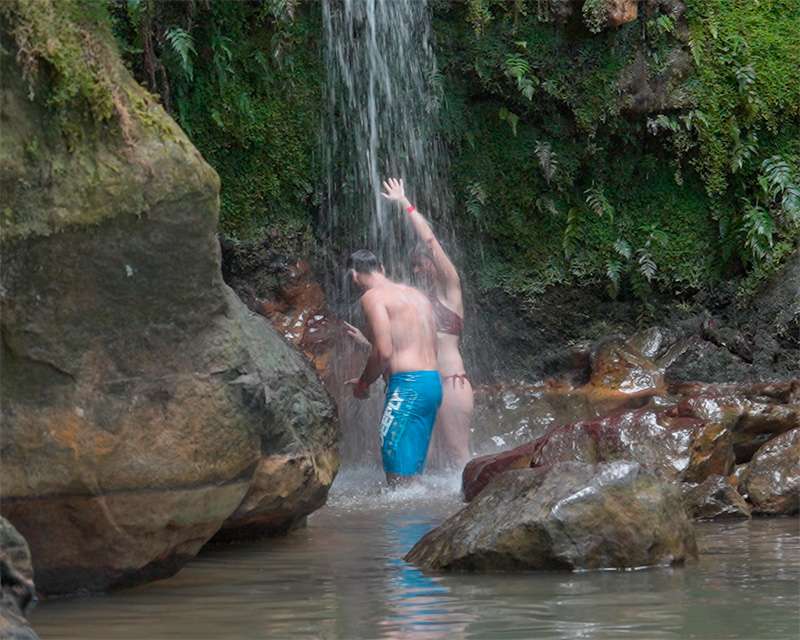
On the northern flank of the same mountain, a few kilometres from the lake, the heat comes to the surface as water instead of lava. Caldeira Velha is a run of pools under tree ferns: the spring itself around 32 °C, the fumarole-heated pool up to about 38, the basin under the waterfall cooler at 25 to 28. The brown colour is iron, and it is said to stain swimwear for good — take something you do not mind losing.
It is a natural monument with a visitor centre, and it is managed accordingly. In October it opens daily from 09:00 to 18:30; in summer until 20:30, in winter to 17:00. The full ticket including the thermal pools is €10 (€5 for ages 7–14 and 65+), a visit without bathing €3, a locker €2, children under six free. Entry runs on timed slots booked online through the natural parks’ ticketing, which is the detail most day visitors miss: on a cruise day you do not simply turn up.
Chá Gorreana: what replaced the oranges
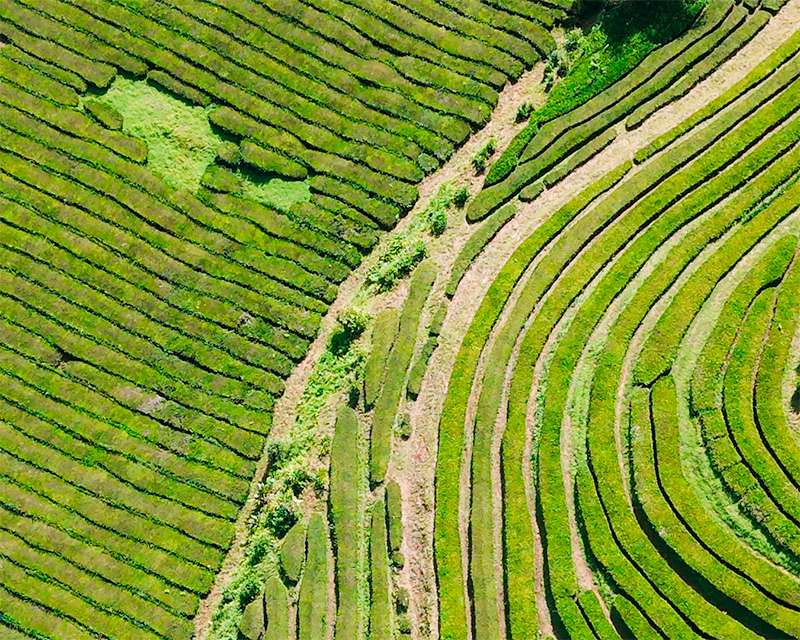
In the middle of the nineteenth century a blight destroyed São Miguel’s orange groves — until then the island’s main export — and by about 1864 the trade was effectively gone. Tea was promoted as the replacement, and in 1878 two specialists were brought from Macau: Lau-a-Pan, a tea master, and Lau-a-Teng, an interpreter. Several factories followed. One of them, founded in 1883 by Ermelinda Pacheco Gago da Câmara, is still working: Gorreana.
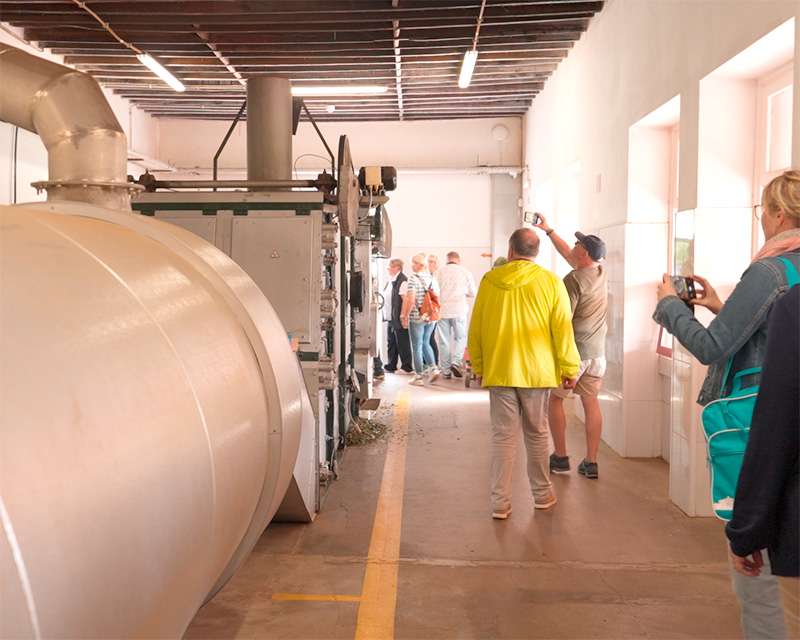
It is the oldest tea plantation still in production in Europe, run by the fifth generation of the same family. Part of the machinery has been turning since the turn of the last century. The output is around forty tonnes a year, grown without pesticides — the island is too isolated for the pests that would make them necessary.
Entry is free, the walk through the factory is free, the tour is free and so is the tea in the café. For a stop on a paid excursion that is an unusual sentence to write.
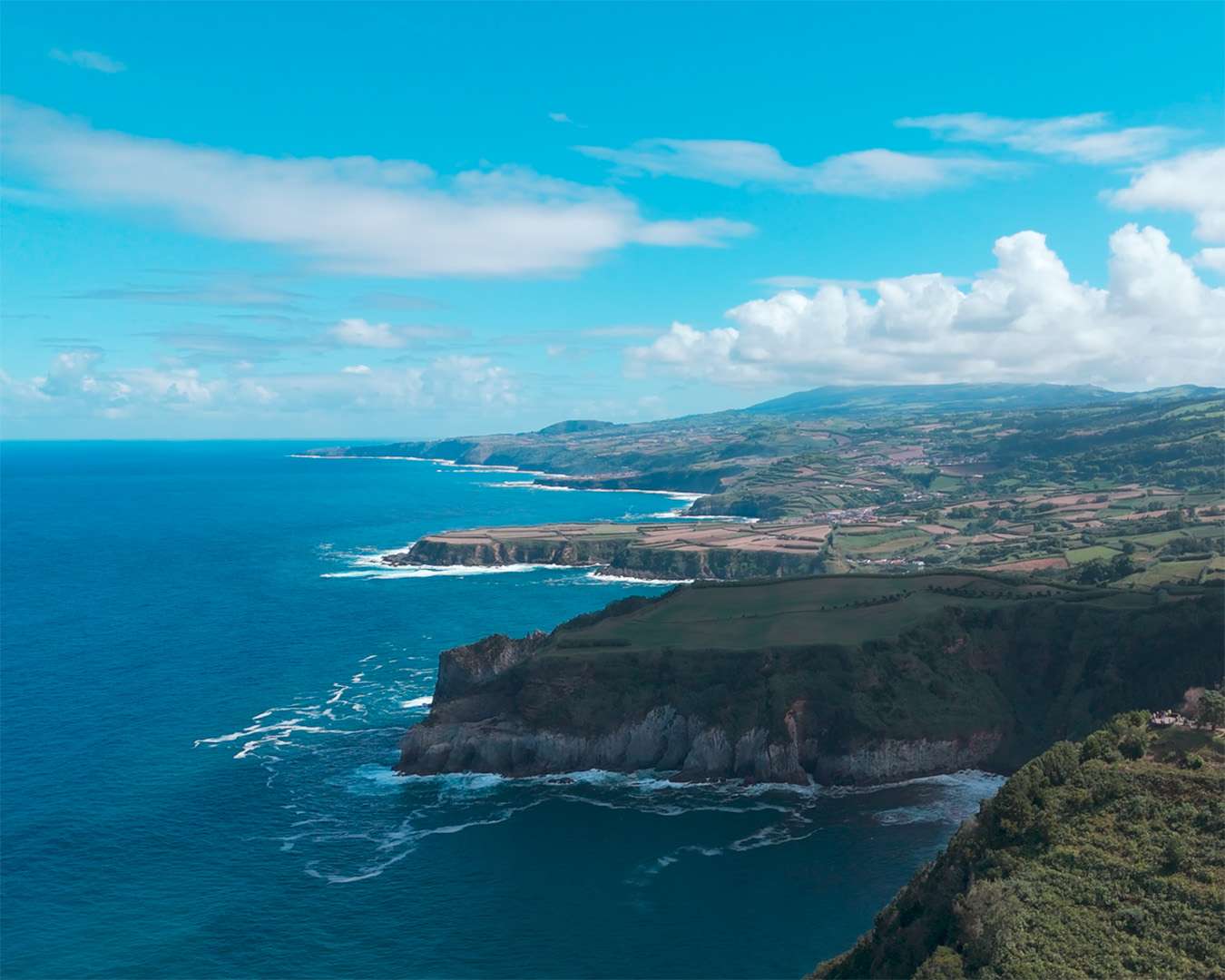
Miradouro de Santa Iria: the slope where it was decided
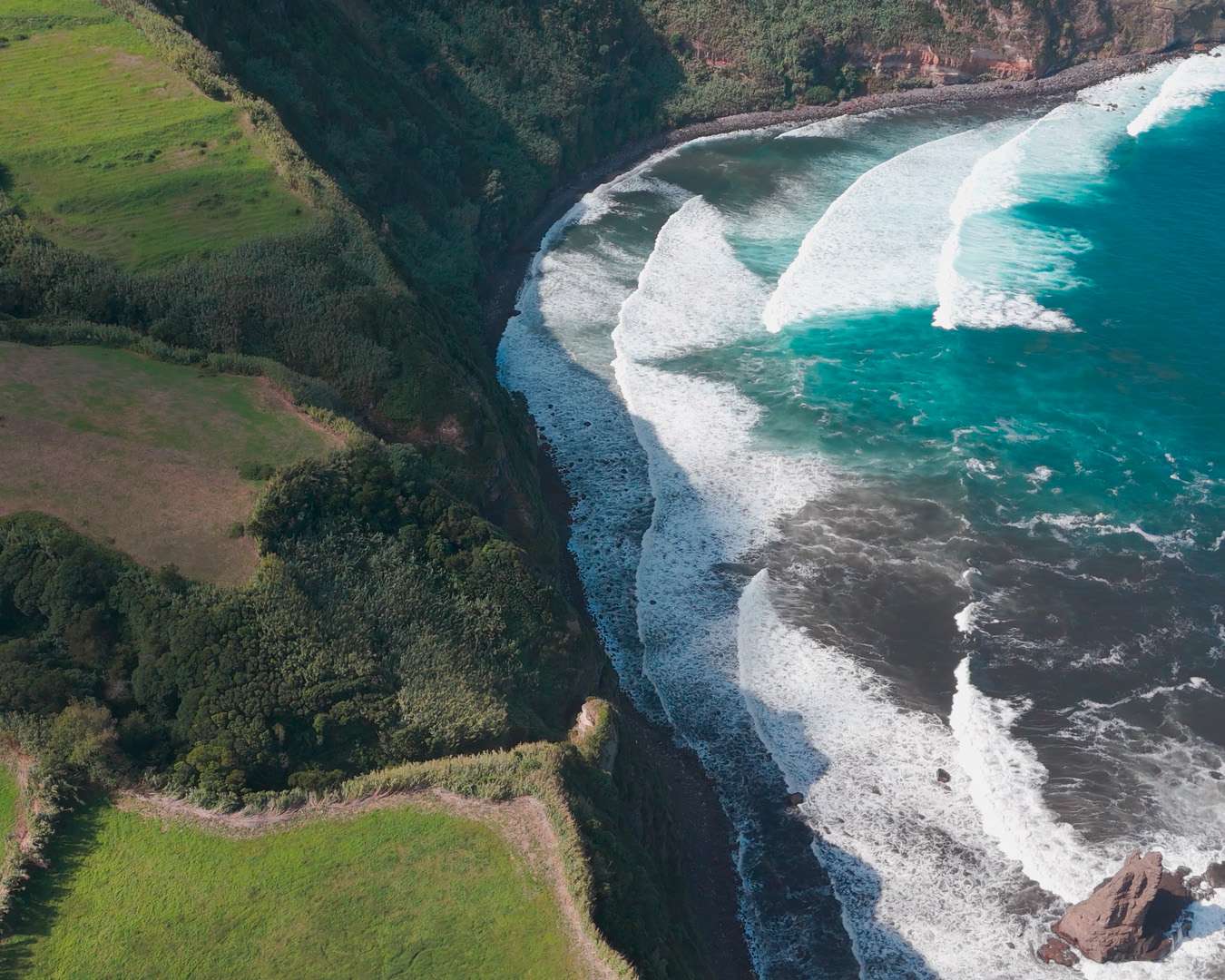
The last stop stands 221 metres above the bay, with the tea fields below and the north coast running away on both sides.
On these slopes, at the start of August 1831, liberal troops shipped over from Terceira under the Conde de Vila Flor defeated the Miguelist garrison of São Miguel — the Batalha da Ladeira da Velha, fought near Porto Formoso. Portuguese sources date it to 3 August, the English-language account to the 2nd. It completed liberal control of the archipelago, which then became the base for the landing on the mainland the following year. Absolutism in Portugal ended three years later, with the Convention of Évora Monte in 1834.
The warm water, the soil under the tea, this view — all of it comes out of the same mountain. An island that lives off what it once buried.
Ship’s excursion or on your own?
This is one of the ports where the honest answer depends on the calendar rather than on your budget.
By hire car or taxi the whole loop is straightforward: Ponta Delgada to the ridge, down the north side to Caldeira Velha, on to Gorreana and Santa Iria, back along the coast. The roads are good, the distances are small, and the hire-car desks are close to the terminal.
The complication is the shuttle. In the high-season months the road between Caldeira Velha and the Casa da Água is closed to general traffic and visitors reach the Lagoa do Fogo viewpoint on a hop-on service instead — in 2025 that ran from 15 June to 30 September, daily, for €5, with free parking at Caldeira Velha and Casa da Água and the viewpoint car park reserved for operators, taxis and residents. For 2026 the contract was only cleared in July and the timetable had not been published when this was written, so treat the arrangement as something to check for your own date rather than as a fixed rule.
The ship’s coach sidesteps all of that, which is its real value here: not the commentary, but the fact that it has the permit and the parking space.
How much return buffer should you plan?
From Santa Iria back to Portas do Mar is a drive of well under an hour, and the terminal is in the town, so the last leg costs you nothing. Be back an hour before all-aboard if you are driving yourself, ninety minutes if any part of the day depends on the shuttle. The one thing that can genuinely delay you is cloud on the ridge — not because it is dangerous, but because it tempts you to wait for it to clear. It usually does not.
Photo notes
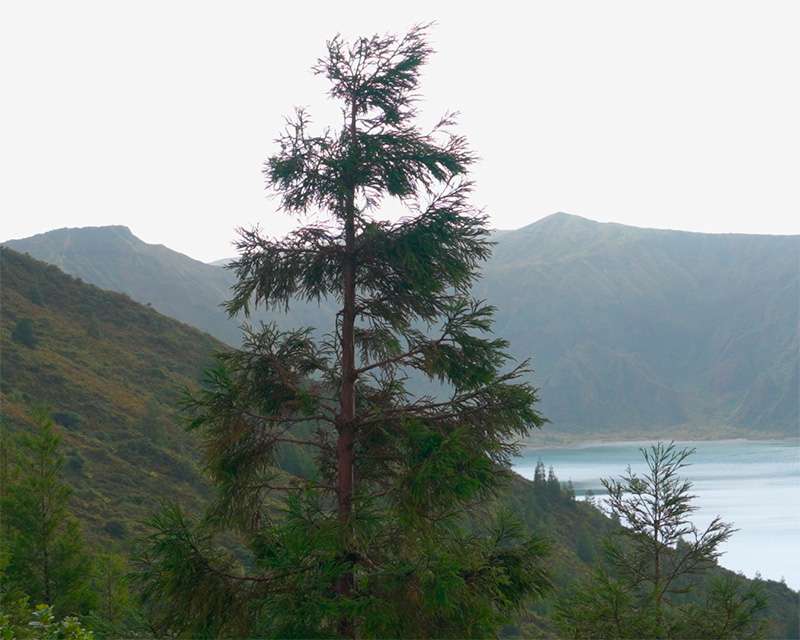
The lake is a light problem, not a composition problem. It sits in a bowl with a rim of nearly a thousand metres, so for most of the day it is either flat grey under cloud or blown out where the sun finds it. The best frame I got was the one with a foreground — a single tree against the pale water — because the lake alone has no scale.
At Caldeira Velha the tree ferns do the work: shoot up into them with the people small underneath, rather than across the pools. And the tea terraces at Gorreana are worth the walk out of the factory — the curved rows read as pattern from above and as nothing at all from the car park.
Sources: Smithsonian Global Volcanism Program — Água de Pau · Parques Naturais dos Açores — Caldeira Velha · Turismo dos Açores — Caldeira Velha · Miradouros dos Açores — Santa Iria · Chá Gorreana — history · Azores Cruise — Ponta Delgada · Visit Azores — Lagoa do Fogo
Related: All cruise ports on your own · São Miguel: Sete Cidades and Furnas · Horta Cruise Port on Your Own · Praia da Vitória Cruise Port on Your Own · All Azores stories
Written by Jan Madeus — ship’s videographer at sea since 2008. I go ashore in the same ports as the passengers, with the same few hours and the same deadline. More about me.