
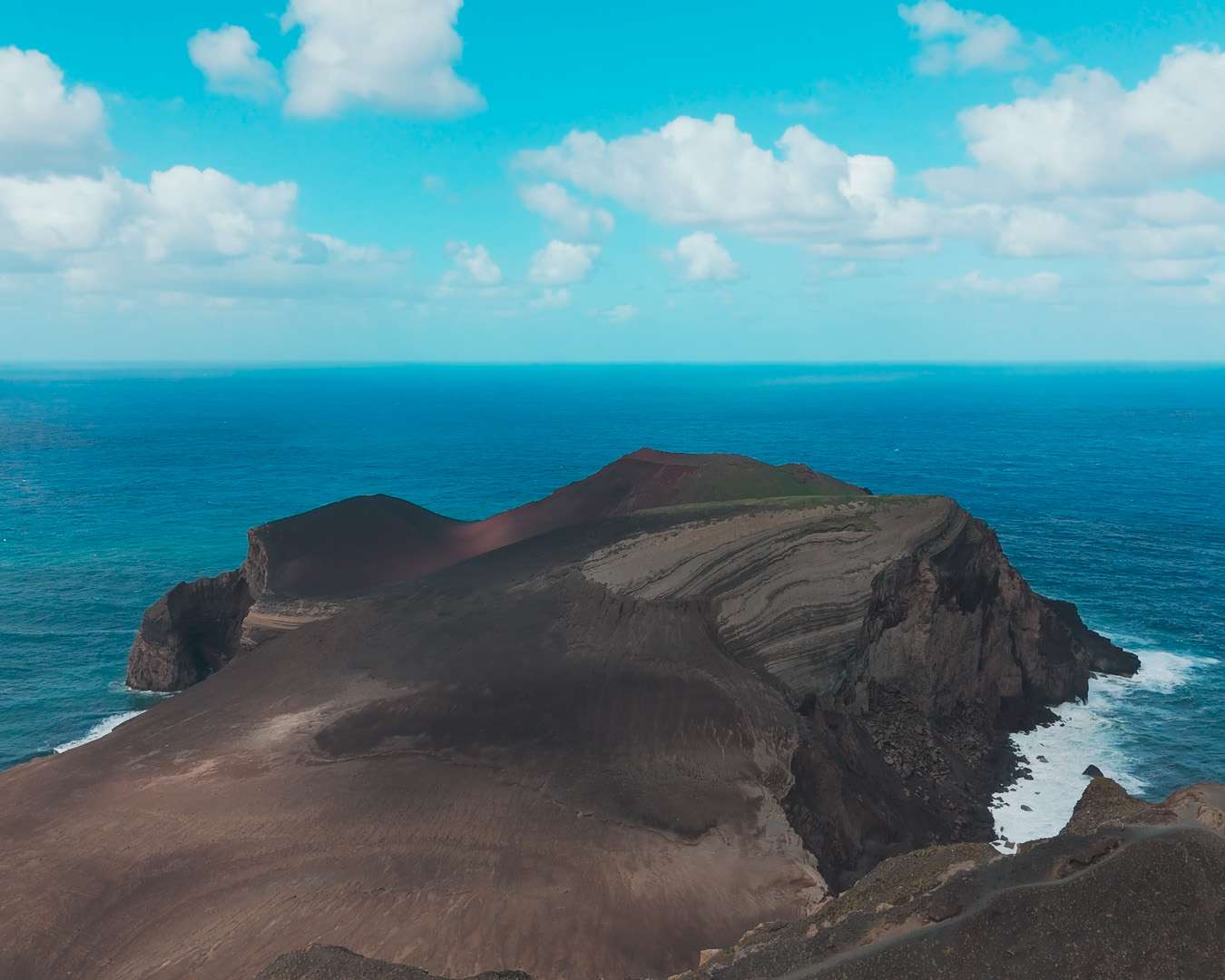
Visited: September 2026, on a call of MS Amadea. The photographs are my own, taken that day.
Ships lie alongside in Horta, about 500 metres from the town centre — you walk off the quay and you are there. The reason most people leave town is Capelinhos, the volcano at the western tip of Faial, roughly 40 minutes away by road. Allow three hours for the drive and the site together. Public transport exists but is thin, so realistically it is a taxi, a hire car or the ship’s coach.
Where does the ship dock in Horta?
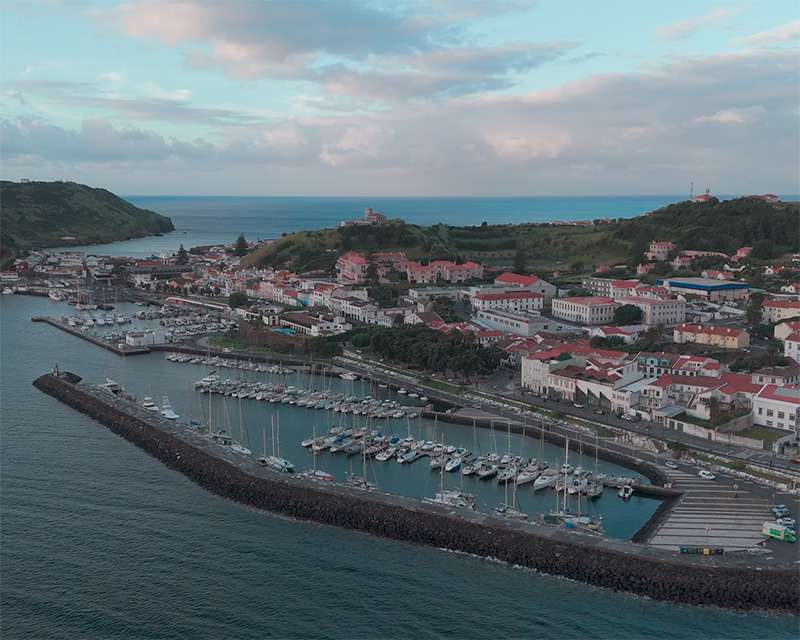
At the cruise quay on the south side of the harbour, behind the long breakwater. The berthing line is about 270 metres and takes ships of up to roughly 230 metres alongside, in a little under nine metres of water. A ship of our size fits comfortably. Larger vessels, or a harbour already occupied, mean anchoring off and tendering in; smaller ships sometimes go to the commercial pier instead, which is about 2 km from the centre.
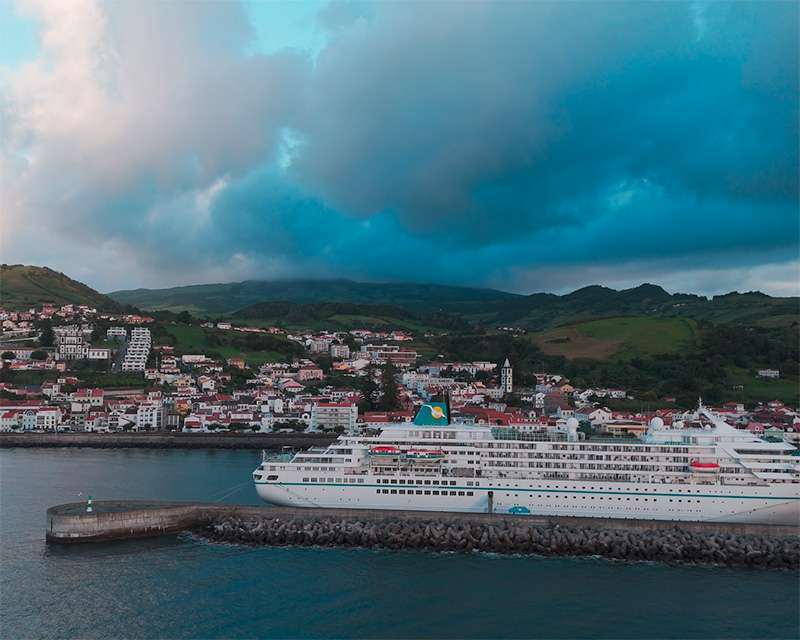
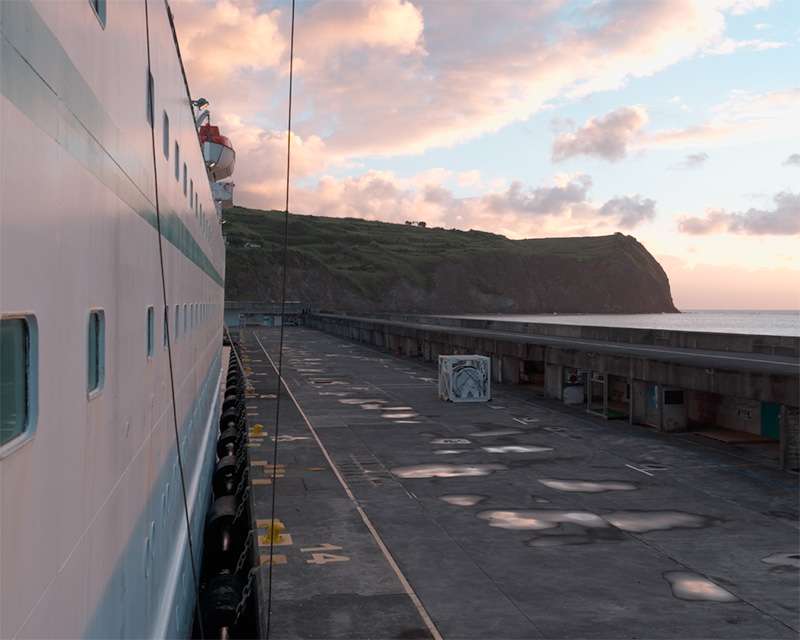
From the quay it is a flat ten-minute walk past the marina into town. No shuttle is needed, and none is usually offered. This is one of the easier ports in the Azores to do on foot.
How do you get from Horta to Capelinhos?
Ship’s coach. What I was on. We left in the morning and were at the site in about 40 minutes, on a road that runs up over the middle of the island and down the other side. Per head it costs more than a shared taxi, and it buys the thing that matters on a road like this: somebody else watching the clock.
Taxi. A car does the run in around half an hour. Drivers quote in the region of €40 to €50 one way. Agree the fare and the collection time before you get in — there is nothing at Capelinhos to wait around with, and no passing trade to flag down.
Hire car. Bookable in Horta and the best value if there are two or more of you, because it lets you add the Caldeira — the island’s 400-metre-deep summit crater — on the way back without adding a fare.
Island bus. A rural service runs from Horta towards Capelo and Capelinhos, but only a few times a day, and the timetable is built around residents and school hours rather than ship calls. Check the current one before you plan a day around it. Miss the return and there is no second chance.
Whatever you take, plan to be back at the pier 45 to 60 minutes before all-aboard.
What you actually walk on at Capelinhos
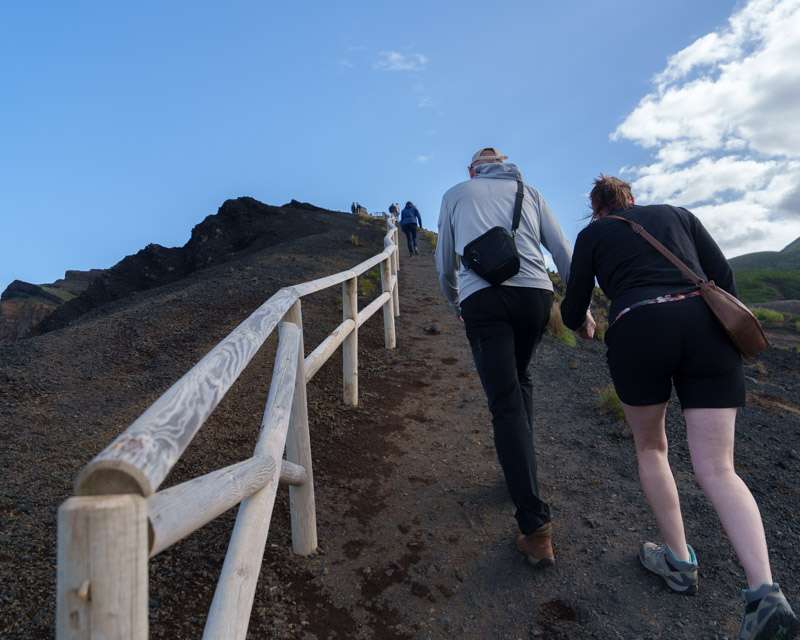
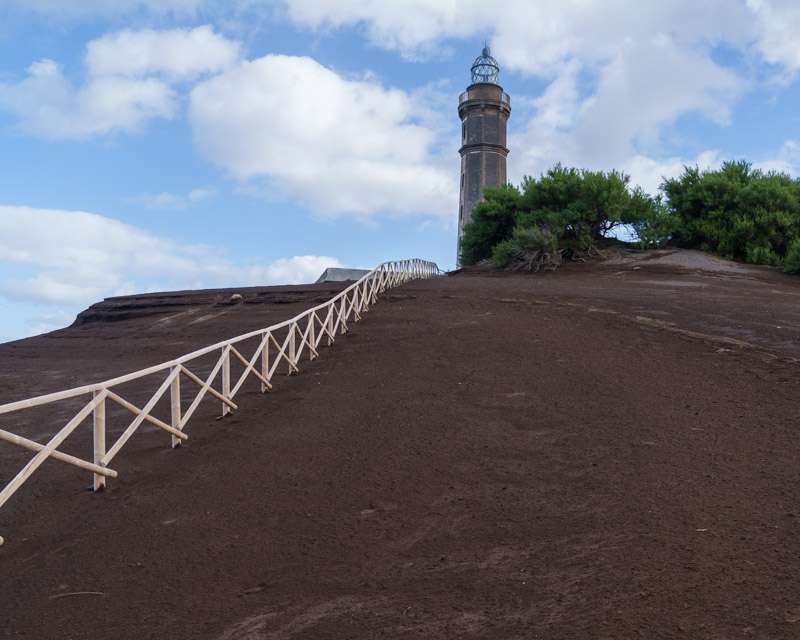
The coach park sits above the site and everything is downhill from there. A fenced path of packed ash leads out along the ridge towards the lighthouse; the surface is loose in places and there is no shade at all. Sturdy shoes, not sandals. On the day we were there the wind came straight off the Atlantic with nothing in front of it for two thousand kilometres.
Left and right of the path are the remains of houses — low walls, a doorway, a corner of a wall standing in the grass. Around three hundred houses were destroyed here and well over a thousand damaged; some two thousand people had to leave.
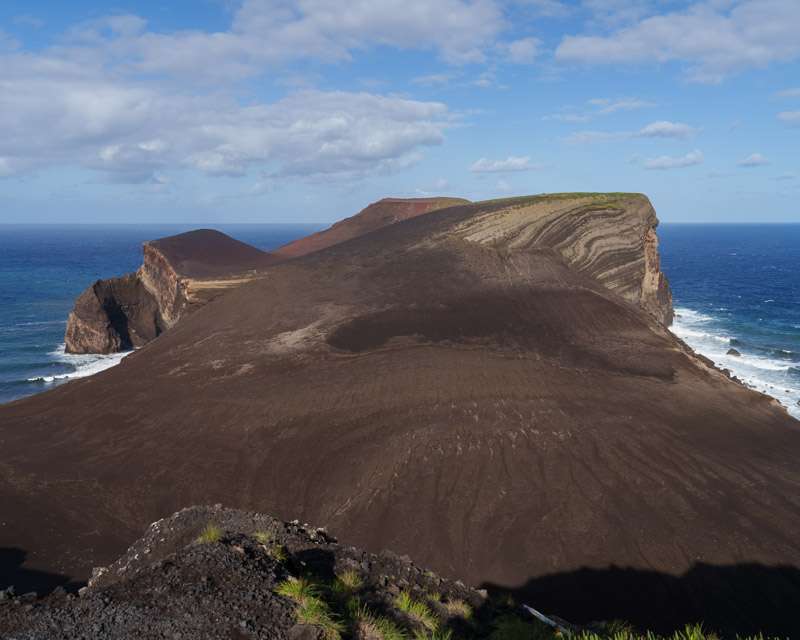
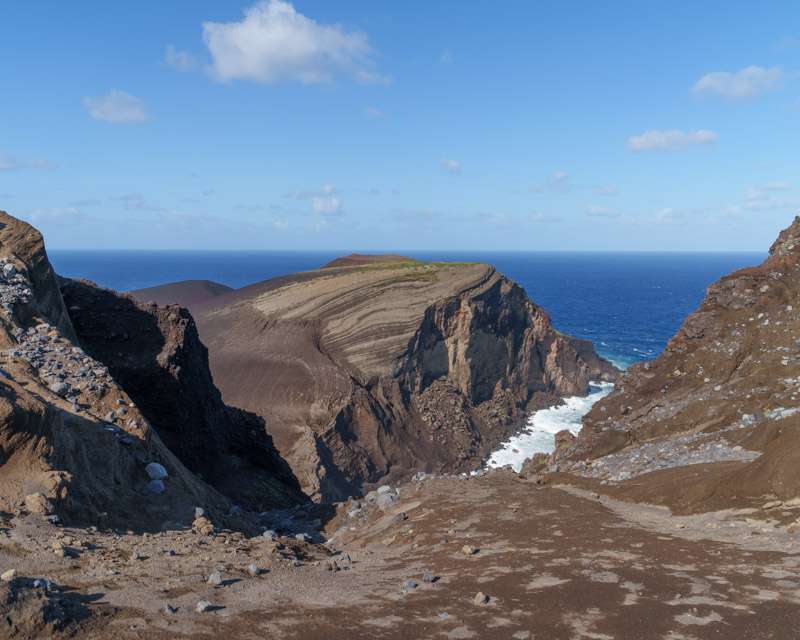
An unhurried round of the site — path, lighthouse, the viewpoints over the cone, and the museum — takes about two hours. An hour is enough if the call is short and you skip the museum, but skipping the museum is the wrong economy here.
Why the ground is younger than the lighthouse standing on it
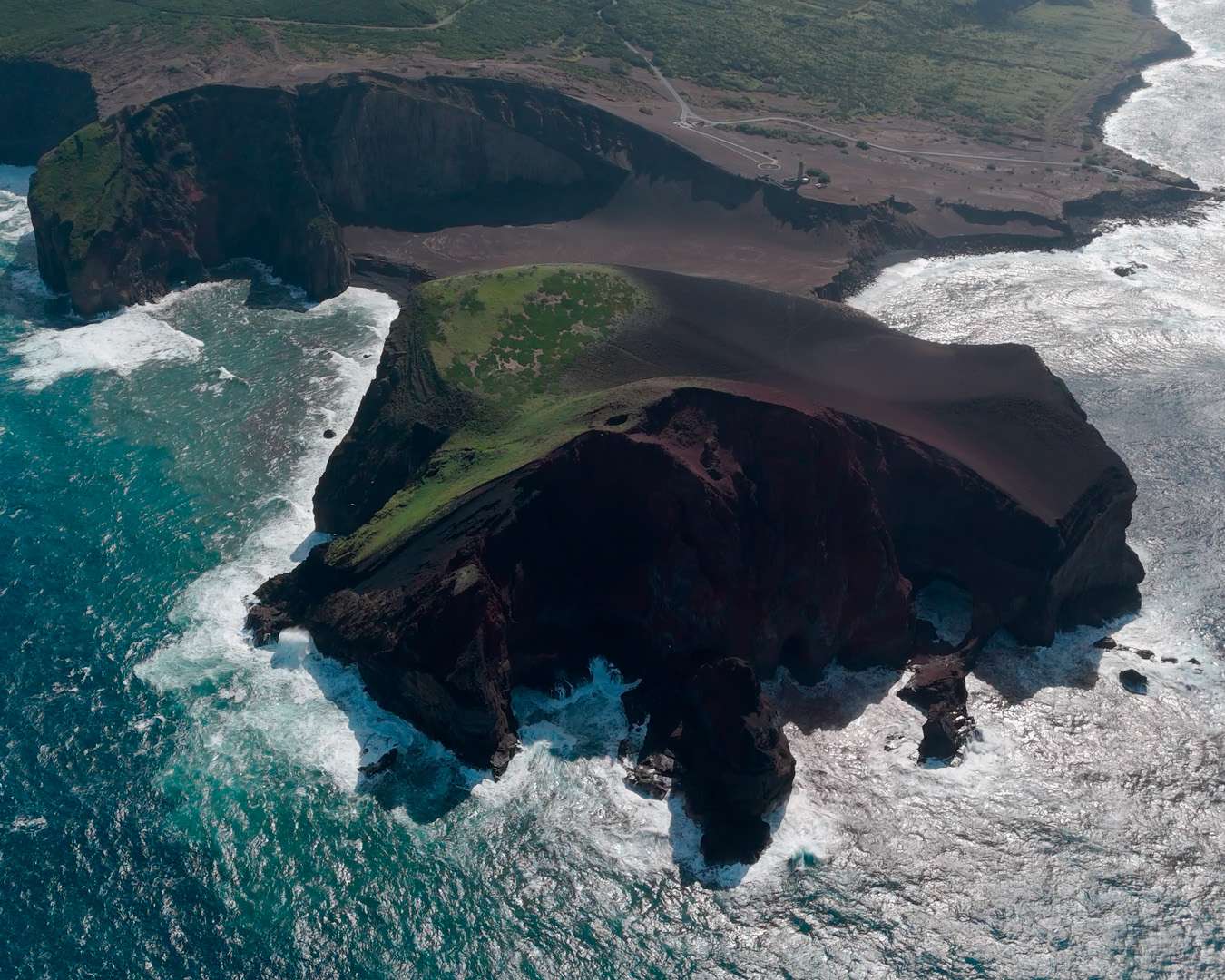
On 27 September 1957, a few hundred metres off this coast, the sea began to boil. The eruption started underwater, and where hot magma meets seawater it does not flow — it explodes. Ash columns rose to around 1,450 metres. The eruption ran for thirteen months, until October 1958, and threw out roughly 174 million cubic metres of material.
First an island grew out of the water. Then the sea washed it away. Then it came back. At the end the new land had welded itself onto the western tip of Faial and the island was 2.4 square kilometres larger than before. Nobody was killed.
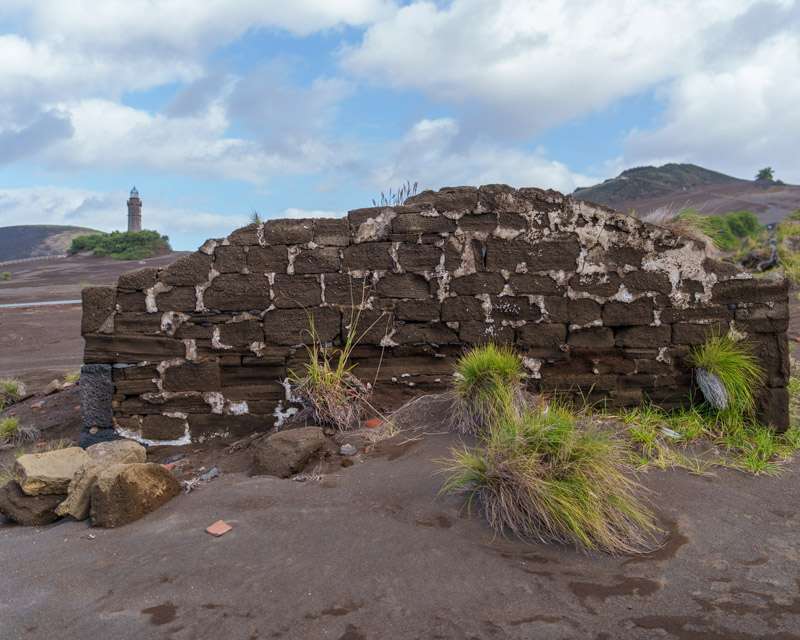
The lighthouse is the measure of it. Work began in 1894 and it was lit in 1903 — a stone tower twenty metres high, standing then on a headland with the sea in front of it. By the spring of 1958 the ash in its courtyard stood seven metres deep. It was switched off in November 1957 and has never been lit again.
Of the 2.4 square kilometres the eruption added, about a quarter is left. The Atlantic is taking the rest back. Seventy years on, almost nothing grows on it.
The eruption that changed an American immigration law
The fields were under ash, the houses were gone and the work had ended. Portugal’s annual quota for immigration to the United States at the time ran to a few hundred visas.
On 2 September 1958 a special act, co-sponsored by Senators John Pastore of Rhode Island and John F. Kennedy of Massachusetts, made 1,500 visas available to Azorean families. It was the first time the United States wrote an immigration law in response to a natural disaster. It was renewed in 1960 for a further 2,000, and family reunification carried the movement on for decades afterwards. The parish of Capelo, directly below the volcano, lost about half its population.
If you have ever wondered why there are Azorean communities in New Bedford and Fall River, part of the answer is the ground you are standing on.
The museum under the ash field
The Capelinhos Volcano Interpretation Centre is built underground, deliberately, so that nothing of it interrupts the landscape from above. You walk down a long ramp into a circular foyer twenty-five metres across, carried on a single flared concrete column with daylight coming down around it. The architect was Nuno Ribeiro Lopes. From outside there is almost nothing to photograph, which is the point: the building stays out of the way of the thing you came to see.
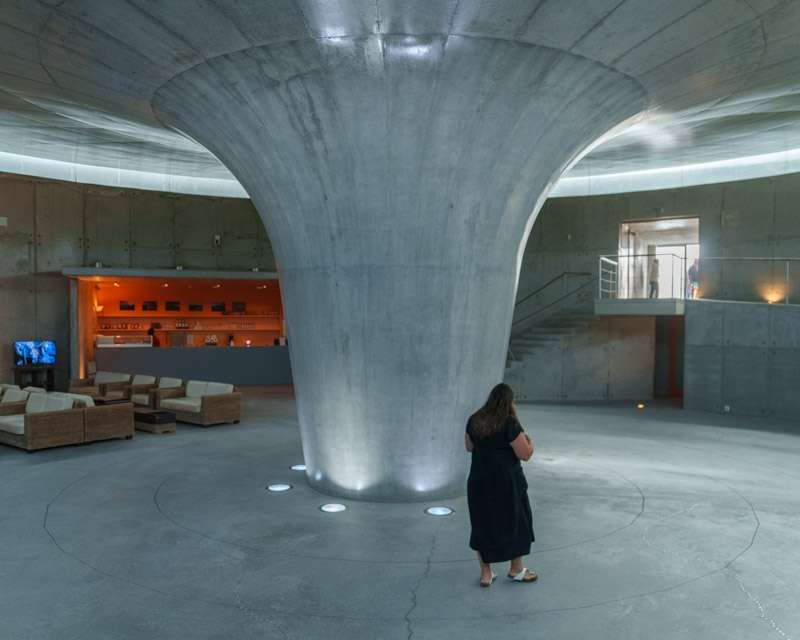
I got as far as the hall and the film about the eruption, and no further — the coach time did not stretch to the exhibition rooms. Beyond them the centre covers the formation of the archipelago, volcanism elsewhere in the world and the lighthouses of the Azores, and the visit ends with the climb up the lighthouse tower, which is included in the ticket.
Opening hours 2026. 1 April to 31 October, daily 10:00–18:00. 1 November to 31 March, Tuesday to Saturday and public holidays 09:00–17:00, closed Sunday and Monday. Last entry one hour before closing. The centre can close at short notice in bad weather.
Porto do Comprido, below the path
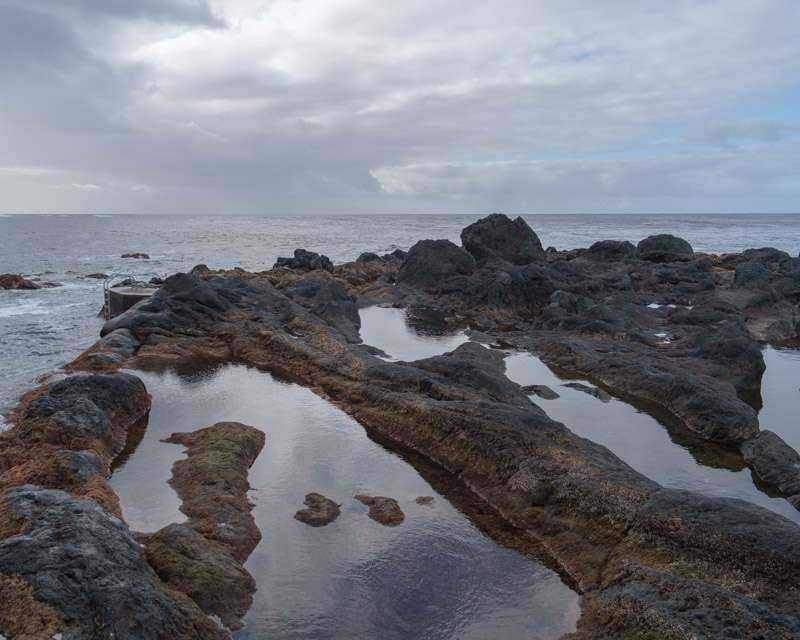
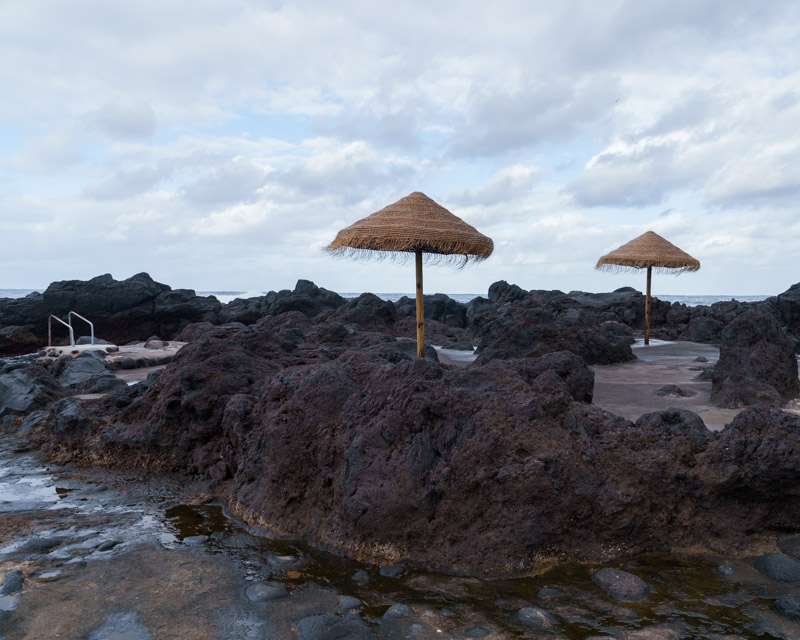
Down at the water lies Porto do Comprido. Until September 1957 this was, by the natural park’s own account of the site, the largest and most productive whaling station in the Azores — the open rowing boats went out from here. The eruption ended that in the same week it began. Whaling continued in the Azores until 1987, when the last whale was taken off Pico, but it never resumed from this coast.
If you stay in Horta instead
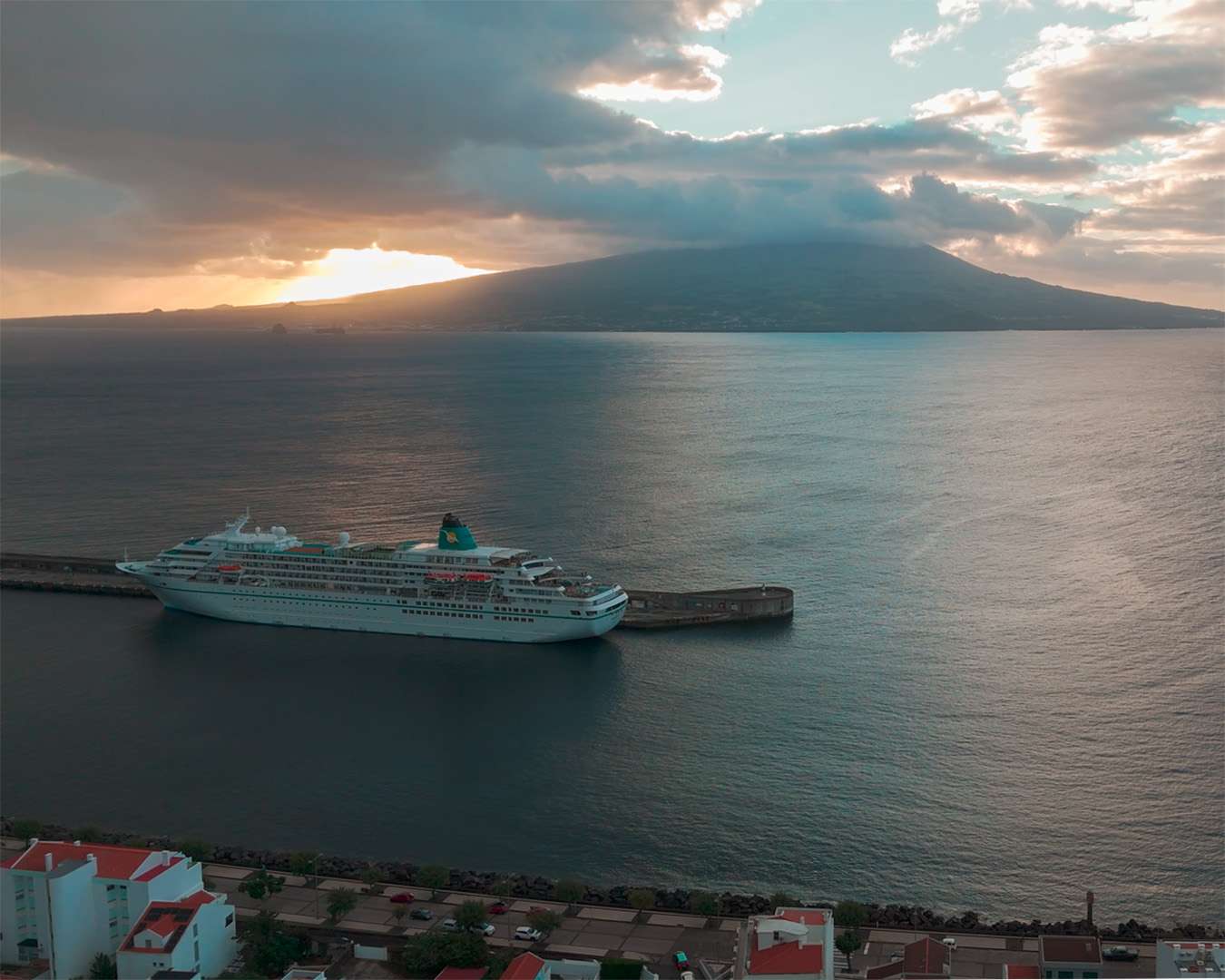
Horta is a sailing town before it is anything else, and it shows on the marina wall: crews crossing the Atlantic paint the name of their boat on the concrete before they leave, and have done for decades, so the whole quay is a layered mural of passages. Opposite it stands Peter Café Sport, the bar every yacht in the North Atlantic has heard of, with a scrimshaw collection upstairs. Both are inside the ten-minute walk from the ship. On a clear day Pico stands across the channel with its cone above the cloud, and that view alone is worth the walk out along the breakwater.
What a day ashore costs
| Item | 2026 | Note |
|---|---|---|
| Quay to Horta town centre | free | about 500 m, flat, 10 minutes on foot |
| Taxi Horta – Capelinhos | around €40–50 one way | about 30 minutes; agree fare and pick-up first |
| Interpretation Centre, adult (15–64) | €10.00 | includes the lighthouse tower |
| Interpretation Centre, 7–14 and 65+ | €5.00 | under 7 free |
| Interpretation Centre, family | €20.00 | two adults and children up to 14 |
| Walking the site itself | free | the paths are open, no ticket needed outside |
Prices I could not confirm from two sources are left out rather than guessed.
Ship’s tour or on your own?
This is one of the ports where the excursion is a reasonable buy. Not because Capelinhos is hard to reach — a taxi does it — but because the return journey is 30 to 40 minutes on a single road across the island, with nothing behind you if it goes wrong. On a call of six hours or more, with three or four of you, a taxi both ways still works out cheaper and gives you the site at your own pace. Alone, or on a short call in poor weather, take the coach.
If you are not going to Capelinhos at all, do not book anything. Horta on foot is a perfectly good half day.
Photographs: where to stand, and what the light does
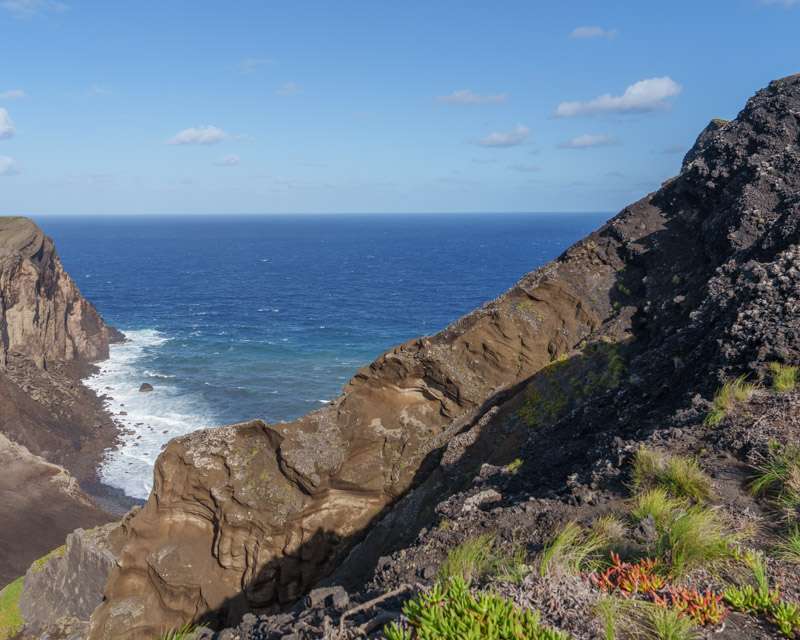
The picture everyone comes for is the cone from the ridge path, with the lighthouse small in front of it and the sea behind. It works, and it is the one I would not skip. But the better frames at Capelinhos are the close ones: the cut edges of the ash layers, the way the wind has combed the slopes, the green water in the coves against black rock. The scale here is hard to convey wide and easy to convey tight.
Light: the site faces west, so the middle of the morning — which is when a ship’s excursion arrives — is the flattest you will get it. The ash goes grey and dead under a high sun. If you have any choice, go late. Since most calls do not allow that, the working answer is to underexpose slightly and use the sky rather than fight it; the cloud over this coast is usually doing something.
Bring something to keep grit out of the camera. Ash gets everywhere, and it is sharp.
What I would do differently
I gave the landscape almost all of my time and the centre almost none — the hall, the film, then back to the coach. Next time I would do it the other way round: go underground first, while the eyes are fresh, and come out to the ash field with the story already in place. It reads differently once you know what happened where.
And I would take the hire car rather than the coach, purely to stop at the Caldeira on the way back. It is on the road anyway, and we drove past it twice.
Related: The Capelinhos walk: Whalers’ Path and Varadouro · Praia da Vitória: Angra do Heroísmo on your own · São Miguel from Ponta Delgada · All cruise ports on your own · All Azores stories