

Visited: 28 October 2026, on a call of MS Amadea.
The excursion sold as “World of Volcanoes” goes to the two ends of the same eruption: the Caldera de los Cuervos, where the ground opened on 1 September 1730, and the foot of Montaña Colorada, the last vent, which stopped in April 1736. Between them lie 2,055 days. The ship charges €49 for about four hours. The walk itself is roughly four kilometres, easy, and free. On a call from 07:00 to 14:00 it is the whole port day.
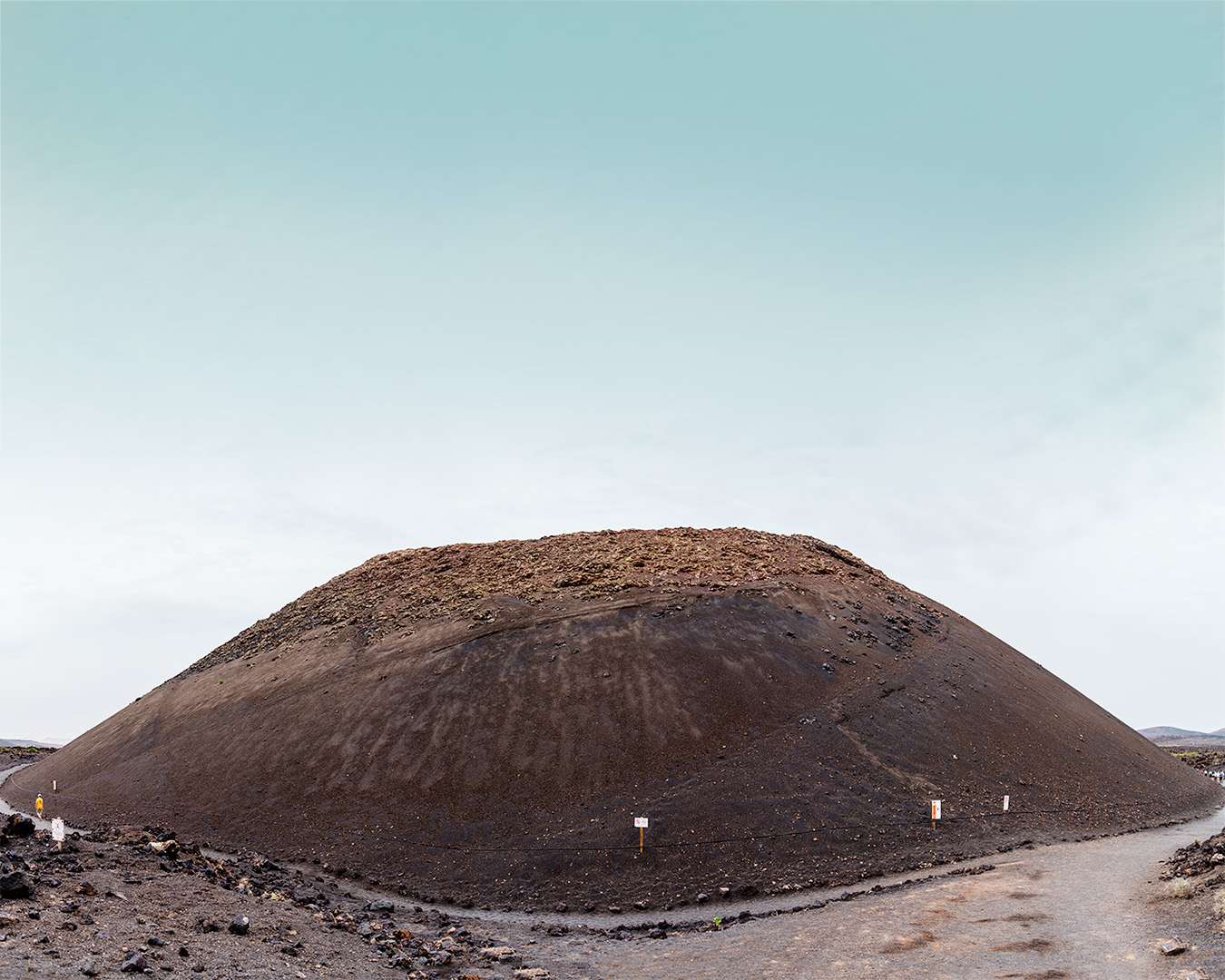
What the excursion actually visits — and what it does not
This is where most expectations go wrong, and it is worth settling before you book: the trip does not go into Timanfaya National Park. The Montañas del Fuego with the Islote de Hilario, the geothermal demonstrations and the coach circuit are not included. The description says so correctly, but in passing: coach “to the edge of the national park”.
The walking is done in the Parque Natural de Los Volcanes, the nature park that borders the national park and carries the same lava. The information centre at the end is the Mancha Blanca visitor centre, which belongs to the national park but sits outside the ticketed zone.
Both are free to enter. Knowing that changes how the €49 reads: you are paying for the coach, the guide and the arrangement, not for access.
Where does the ship dock in Arrecife?
At Puerto de los Mármoles, the commercial harbour north-east of the town. Ships lie alongside; there is no tendering. The centre is about thirty minutes on foot, and a taxi costs around €10 per car. A shuttle is usually offered, but usually not free. The terminal building has a tourist information desk and several car hire counters — which is the single most useful fact about this port, because almost everything worth the day on Lanzarote lies outside Arrecife.
Caldera de los Cuervos: the first vent
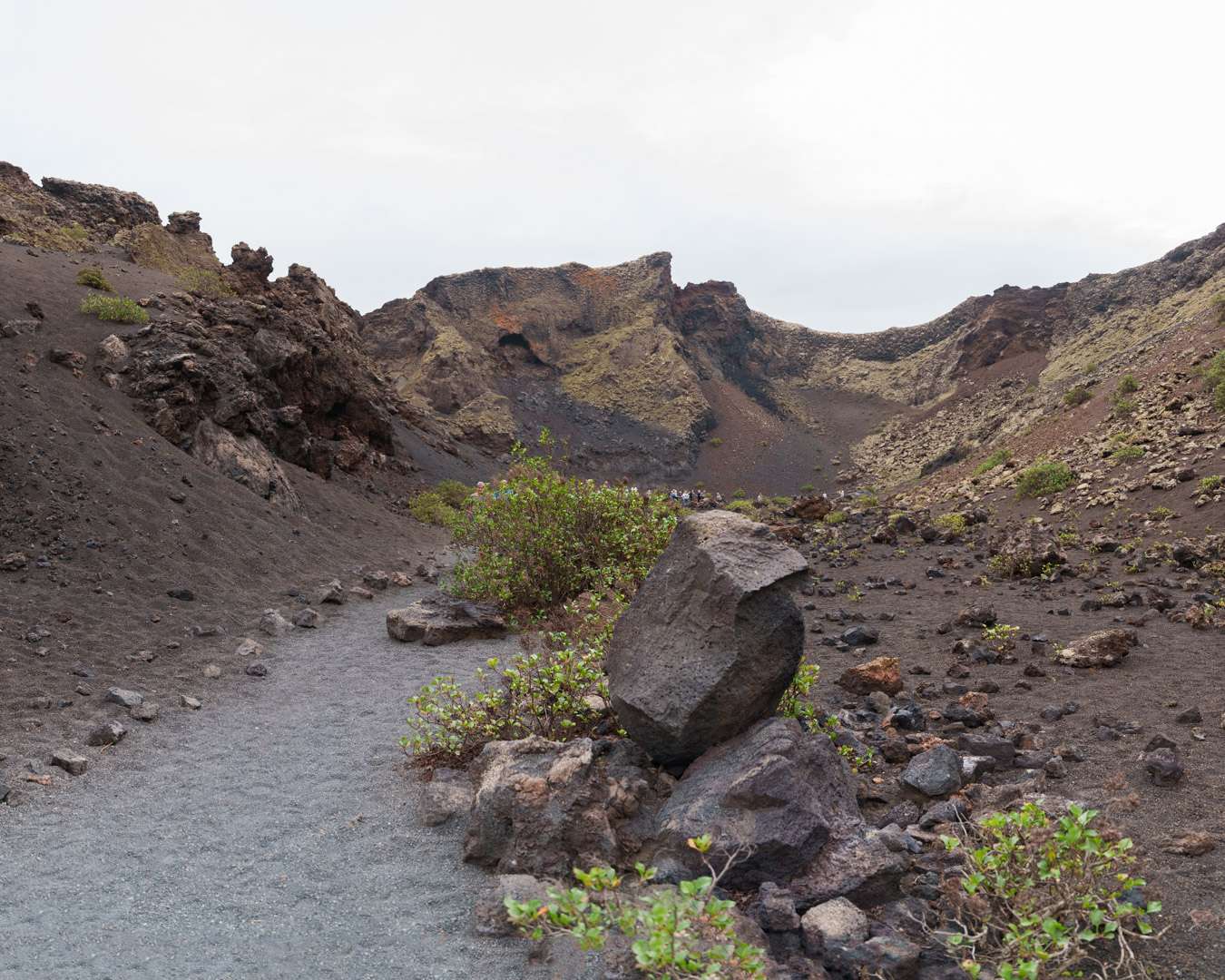
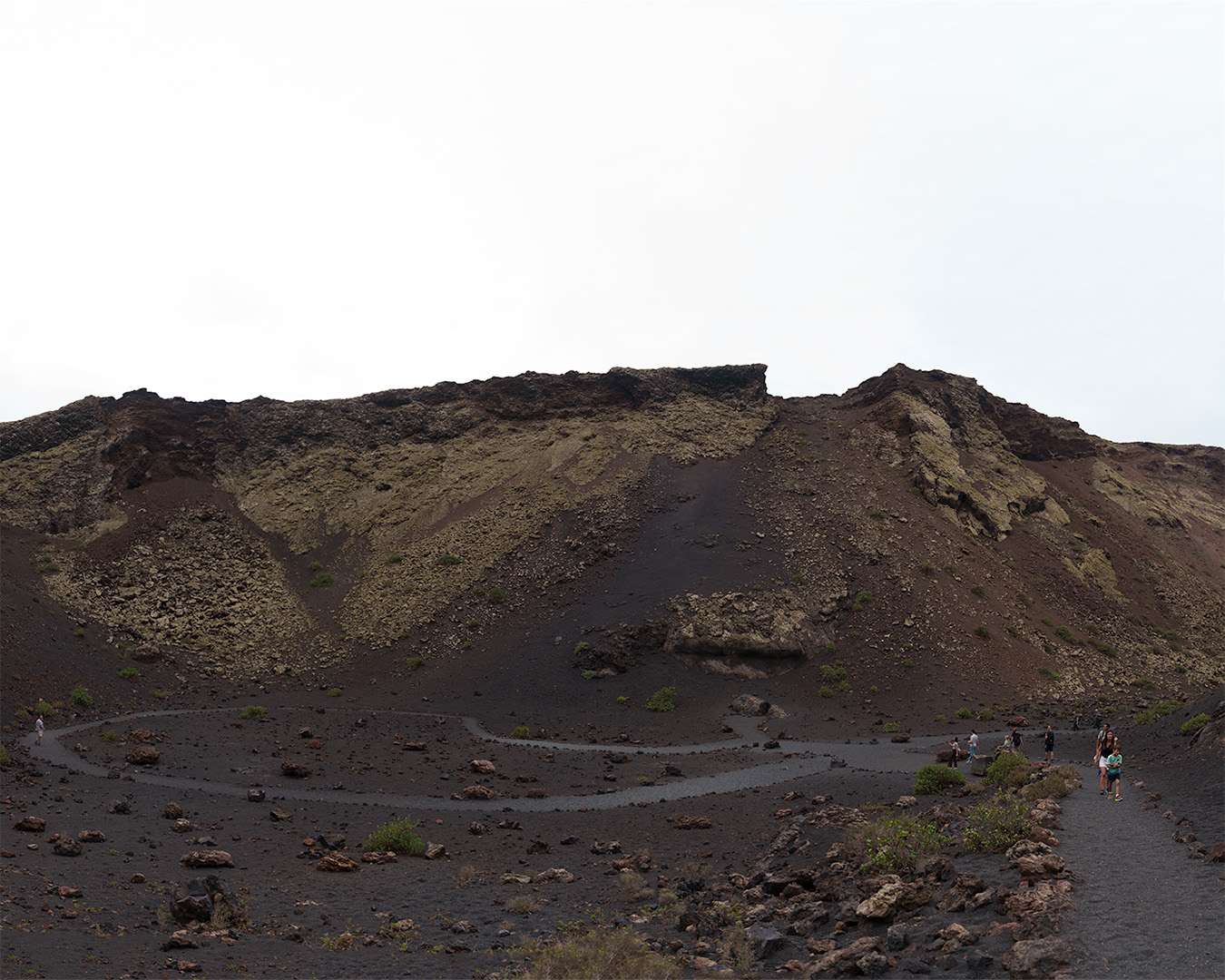
On 1 September 1730 the ground tore open here. Not somewhere on this island — here. This was the first opening. You walk in through a breach, and the floor lies lower than the ground outside. There was once a lake of lava standing in it.
The eruption that began at this spot ran for 2,055 days, until 16 April 1736: five years and seven months. By the end, roughly 23 per cent of the island lay under fresh lava and lapilli, and 26 settlements had disappeared beneath it. One of them was called Timanfaya, and it later gave the national park its name.
It was not only long but large. Recent mapping puts the lava field at 146 square kilometres; older estimates range from 150 to 226, averaging 187. A single flow ran 21.7 kilometres. In the opening phase an eruption column stood at least eight kilometres above the island. After Laki in Iceland, this is reckoned the second-largest basaltic lava flow of the past five hundred years.
We know the start date because somebody wrote it down: Andrés Lorenzo Curbelo, the parish priest of Yaiza. His manuscript has vanished. What is quoted today is a Spanish back-translation from French, which came from German, which came from the lost Spanish original. Three translations. Historians have found wrong dates and swapped place names in it. The start date has held.
And the rock is still working: a satellite study published in 2022 showed that the Timanfaya lava fields are still subsiding, nearly three centuries after the eruption.
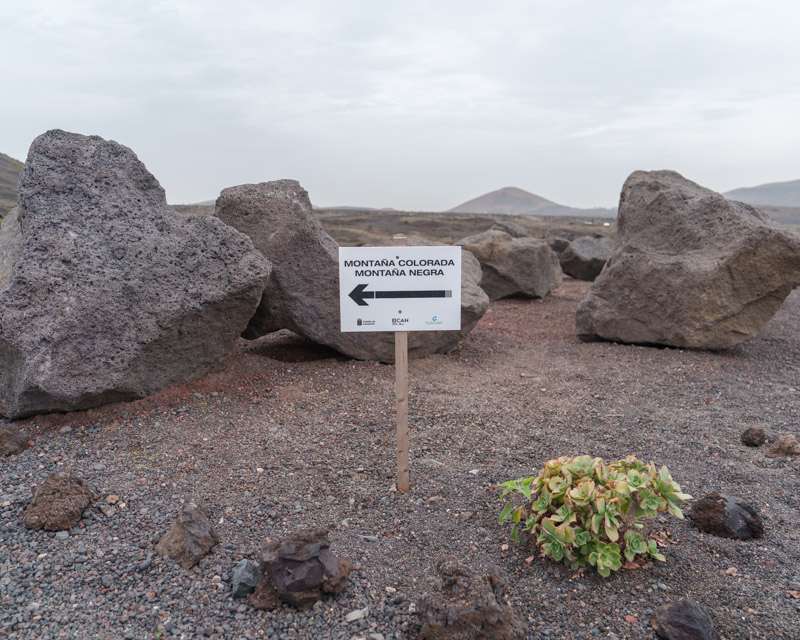
What grows on three-hundred-year-old basalt
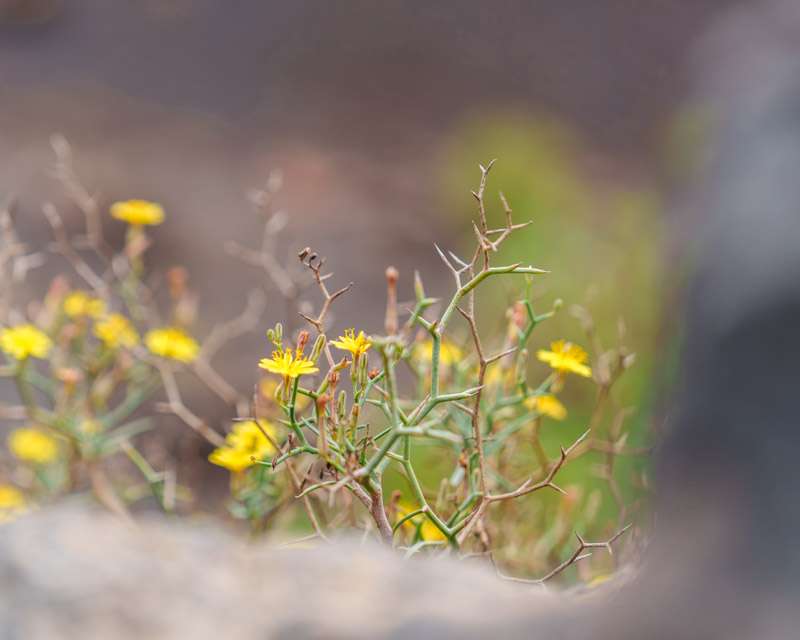
Whatever normally ages a landscape is missing here. The lava looks like last week. And yet something grows on it: white tufts on black rock, a lichen. It does not live on rain but on night dew and on the salt haze the trade wind carries in. How fast it grows has never been measured. The park authority says only: very slowly.
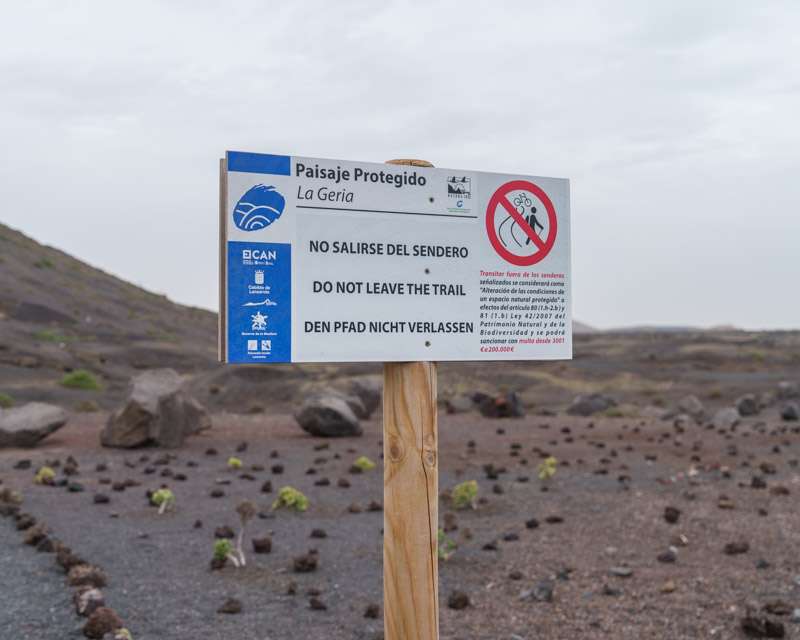
Between them, in the cracks, stand a few yellow flowers. They are the reason for the sign at the edge of the path: do not leave the trail. What gets trodden down here does not come back in a lifetime.
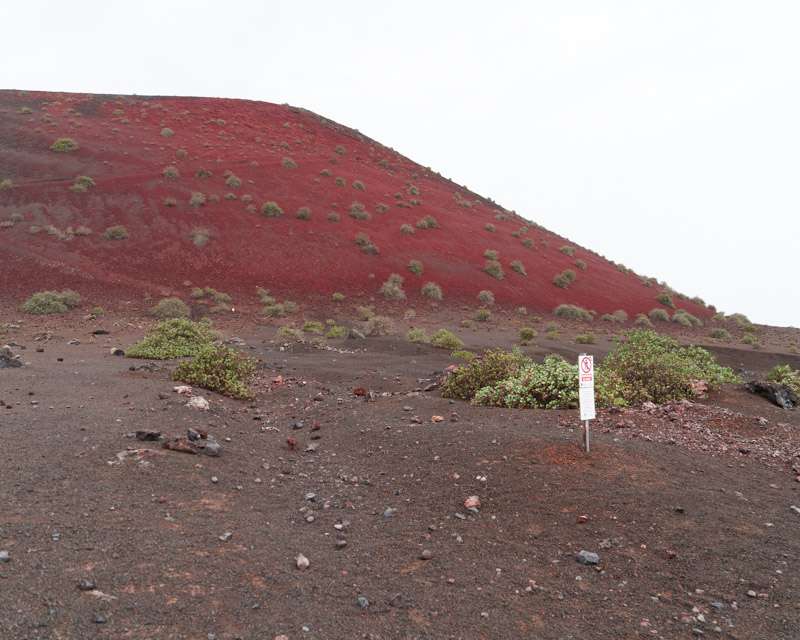
Montaña Colorada: the last vent
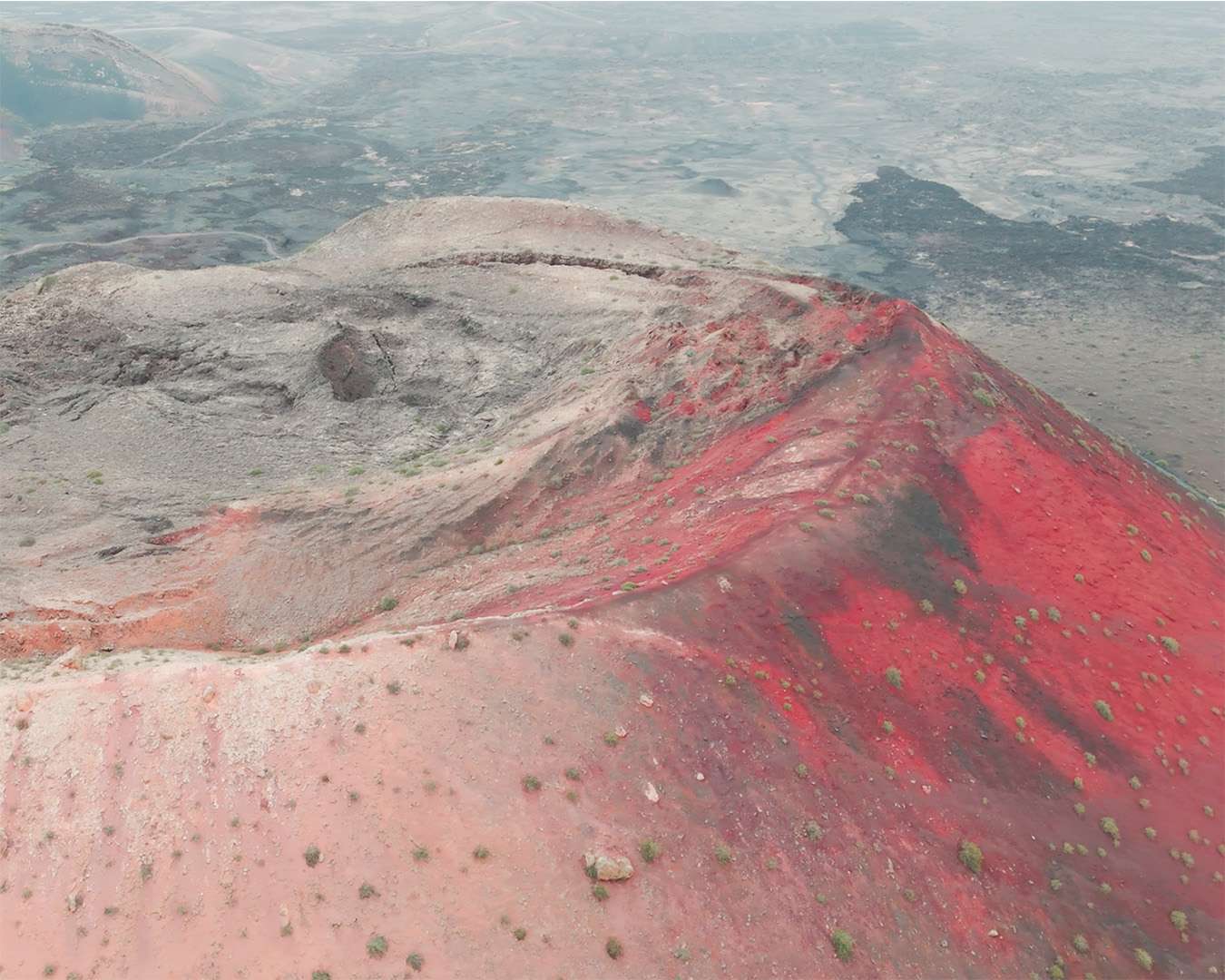
The hill at the end of the walk is the final one. Montaña Colorada, the “coloured mountain”, opened in April 1736, in the closing weeks of the eruption. A solidified lava lake lies in its crater, and a volcanic bomb lies on the flank, thrown there when it blew.
We walked from the first vent to the last in two hours. The eruption has a start date and an end date, and both are in the records. The rock has neither.
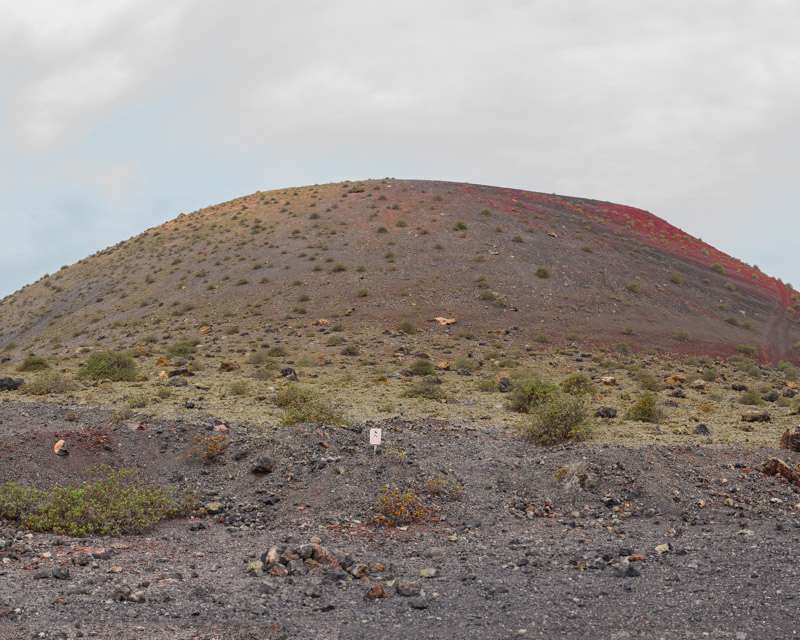
Why Montaña Negra is black
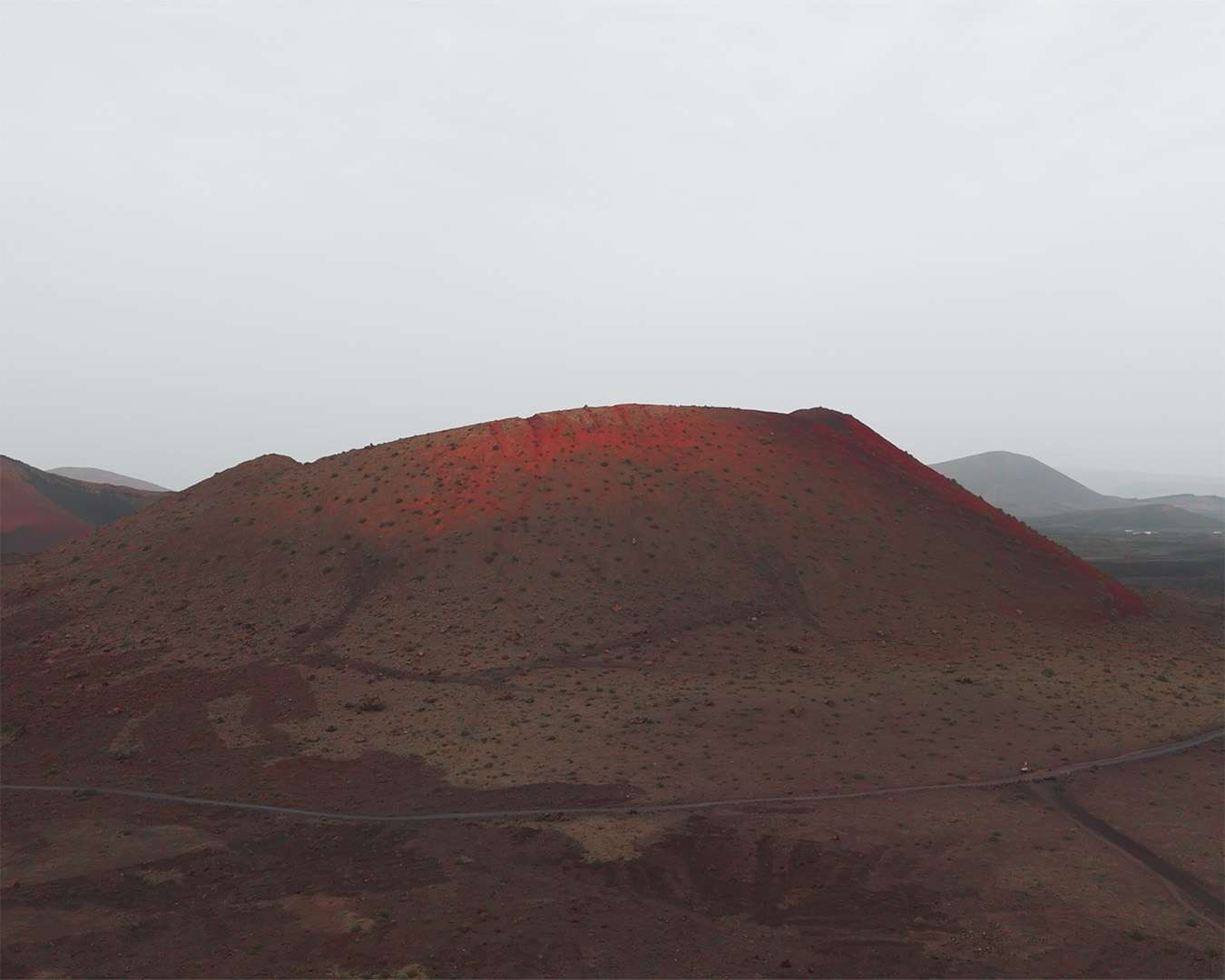
A second hill stands next to it, dark and softer in outline. The panel beside the path explains the difference, and it is the opposite of what you would assume: Montaña Negra is not young but several thousand years old. That is why its shape is rounded — and its colour is not its own.
The 1730 eruption buried the older hills nearby under a layer of lapilli, known on the island as rofe. The fine material smooths the gullies, makes the forms look younger than they are, and covers the ochre and reddish tones with black. Hence the name. After the eruption the islanders gave the old hills new ones.
The rofe on the flanks has a second effect: it holds moisture and makes a little agriculture possible — vines above all, with a few fruit trees. It is the same technique that made La Geria, further south, one of the stranger wine regions in Europe.
What the Mancha Blanca visitor centre is worth
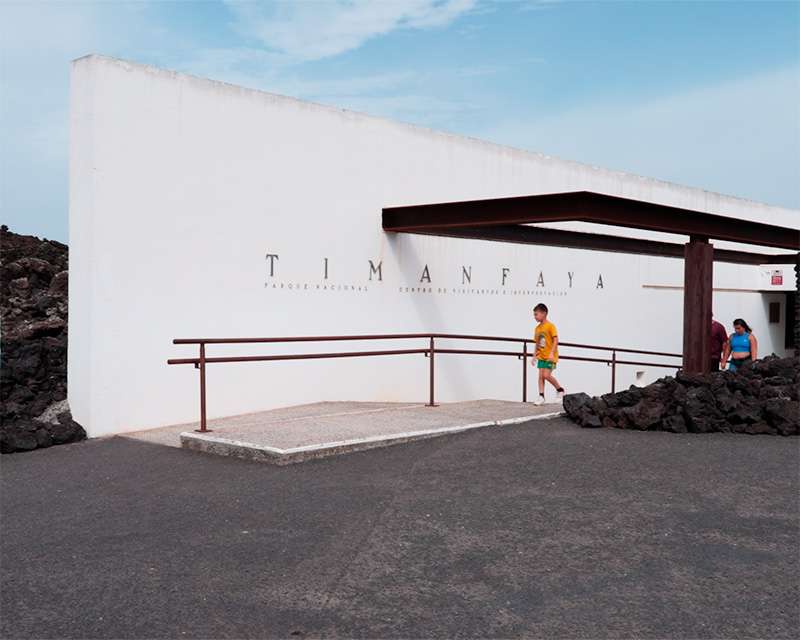
The last stop is the Centro de Visitantes de Mancha Blanca. Admission is free, open daily from 09:00 to 16:00.
It is more than a gift shop with panels. The permanent exhibition covers the origin of the Canaries, recent volcanism, geodynamics, and the flora and fauna of the park, with captions in Spanish, English and German. There is a simulation room that stages an eruption with light, sound and vibration; a projection room with simultaneous translation; a sensory room with Braille panels for visitors with impaired sight; and a raised walkway over the lava flow outside. The building is accessible to wheelchair users.
Anyone who cannot manage the walk gets the larger part of the information here instead — and gets it free.
What does the day cost?
| Item | Price 2026 | Note |
|---|---|---|
| Ship’s excursion “World of Volcanoes”, about 4 hrs | €49 | MS Amadea excursion list, Phoenix Reisen, checked August 2026 |
| Caldera de los Cuervos walk on your own | free | Tinajo trail no. 1, car park on the LZ-56 at km 1.5 |
| Mancha Blanca visitor centre | free | daily 09:00–16:00 |
| Timanfaya National Park, Montañas del Fuego | €30 adult, €15 child 7–12 | Under 7 free; last admission 15:45; coach circuit about 35 min — not part of this excursion |
| Ship’s excursion “Lanzarote panoramic drive”, about 4 hrs | €29 | Los Dolores, drive through Timanfaya, visitor centre, El Golfo, La Geria |
| Ship’s excursion “Highlights of northern Lanzarote”, about 4 hrs | €49 | Teguise, Famara, Jameos del Agua |
| Ship’s transfer “Puerto del Carmen on your own”, about 4 hrs | €19 | 30 min transfer, about 3 hrs free, no guide |
| Taxi, Puerto de los Mármoles to Arrecife centre | about €10 | per car |
| Taxi, Arrecife to Tinajo, one operator’s fixed-price list | €29 | checked 2024; agree price and waiting time in advance |
Excursion prices come from our own list and differ between lines. Admissions and opening hours were checked against two sources for the 2026 season; taxi figures are operator quotes, not a regulated tariff.
Ship’s tour or on your own?
The walk itself argues for doing it yourself. The route is waymarked and easy, a good four kilometres, and the municipality of Tinajo puts it at about an hour; the car park on the LZ-56 is free. The difficulty is not the destination but getting there.
By public bus it does not work. The lines running this way stop at Tegoyo, or at the Palmera Asomada stop, and from there it is about 3.3 kilometres on foot — 40 to 45 minutes each way, with no shade. On a call from 07:00 to 14:00 the arithmetic does not close.
By hire car it works well. The desks are in the terminal, the drive is about half an hour, and you arrive early enough to walk ahead of the coaches. One restriction worth checking first: since April 2025 the car park has been closed to private cars over the Easter peak, with a free shuttle instead from Mancha Blanca in front of the Ermita de Los Dolores, 09:00 to 17:00 every 30 minutes. Whether that becomes permanent was still open.
By taxi it also works, provided you fix the price and the waiting time beforehand. One local operator’s list quotes €29 each way for Arrecife to Tinajo.
For the excursion, the argument is mainly the clock. Seven hours alongside, with half an hour’s drive each way, is a tight window on an island where you get nowhere without a vehicle. Add the conditions printed in the description, which are meant seriously: limited numbers, firm footwear required, not suitable for guests with reduced mobility, and sure footing needed for the descent into the crater.
And one more point that only appears when you do the sums. Anyone who would rather see the national park needs a timed slot for the Montañas del Fuego and has to be inside by 15:45 at the latest. With all-aboard at 14:00 that is out of the question anyway. On a call like this, the excursion that visits the free volcanoes is not the second choice — it is the only one that fits.
Whatever you decide, be back at the quay 45 to 60 minutes before all-aboard. The route runs on country roads, not motorway.
Photo spots and light
The strongest subject on this route is not the crater but the contrast: the red of Montaña Colorada against the black of the lapilli field. On the ground the two colours run into each other, because the slope rises gently and the haze eats the saturation. From above they separate at once. If you carry a drone and are allowed to fly it, this is the picture of the day.
The inside of the Caldera de los Cuervos is harder than it looks. It is wide, flat and evenly lit, and a general view returns a grey bowl. What works is the breach as a frame — the gap you walk in through, with the crater rim above it — or a single figure on the path for scale.
On timing: local advice points to 08:00 to 09:00, with crowds from about 11:00. A morning excursion from Arrecife sits well against that. The trade-wind haze often holds over this stretch until midday; it takes the depth out of distant views but suits the near forms.
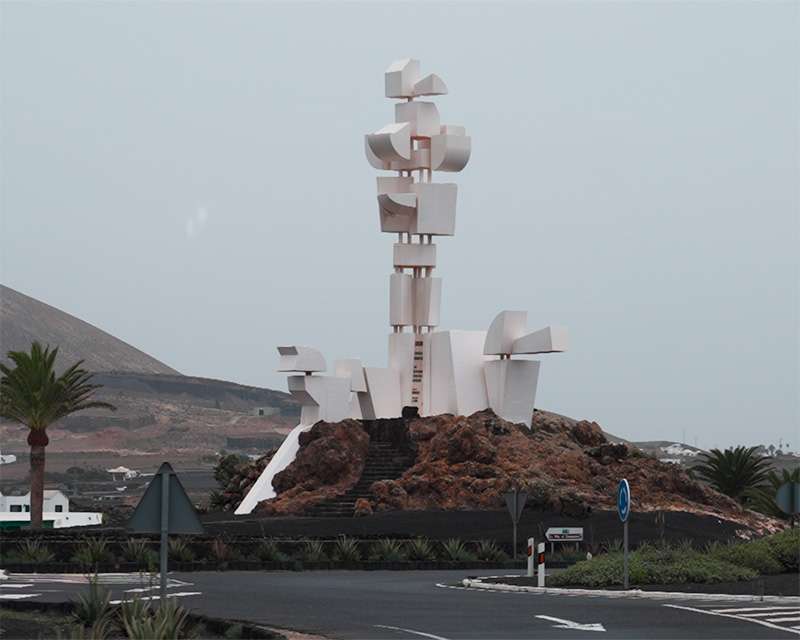
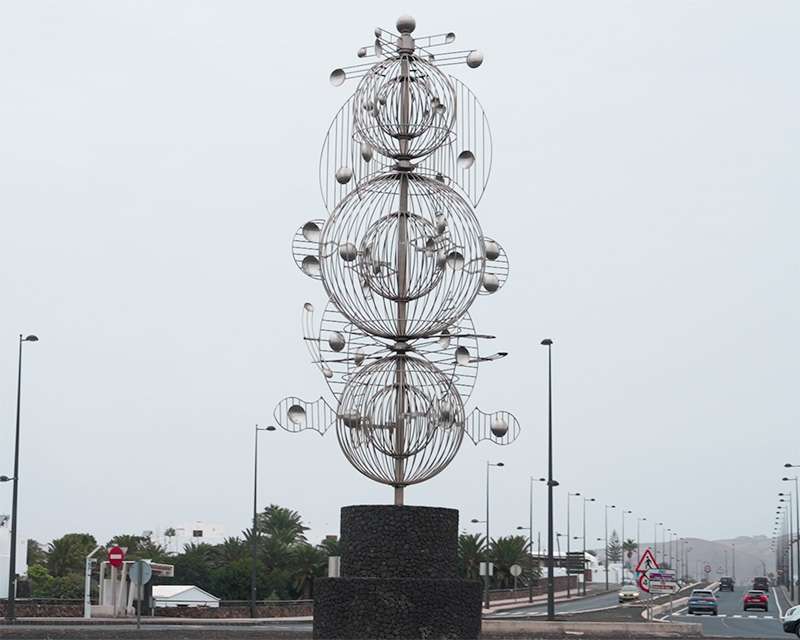
On the drive back, César Manrique’s wind mobiles stand on the roundabouts. They are an ungrateful subject from a moving coach and a good one from a standstill — which is an argument for the hire car.
What I would do differently next time
On a call from 07:00 to 14:00 I would book the same excursion again. The window allows little else, and these two vents are exactly the part of the island that opens up on foot.
With a longer call I would invert it: hire car at the terminal, out early, the walk before nine, and the time saved spent on Montaña Colorada rather than on the return. The excursion passes along the foot of the cone; a full circuit around it would be the better version of the same morning.
And I would put the visitor centre at the start rather than the end. The exhibition explains what you then see outside. Afterwards it is a repetition; beforehand it would be preparation.
Written by Jan Madeus — ship’s videographer at sea since 2008. I go ashore in the same ports as the passengers, with the same few hours and the same deadline. More about me.
Sources: Excursion description and prices: MS Amadea excursion list, Phoenix Reisen, August 2026. Trail data: Ayuntamiento de Tinajo, Red de Senderos no. 1. Admissions and opening hours: Centro de Visitantes de Mancha Blanca and CACT Lanzarote, checked October 2026. Geology: Longpré & Felpeto (2021), Muller & Longpré (2024), Purcell et al. (2022).
Related: Puerto del Rosario: the €109 jeep safari · Santa Cruz de La Palma: is the green north worth the tour? · Cruise Ports on Your Own — every port guide