
Visited: 23 October 2026, on a call of MS Amadea.
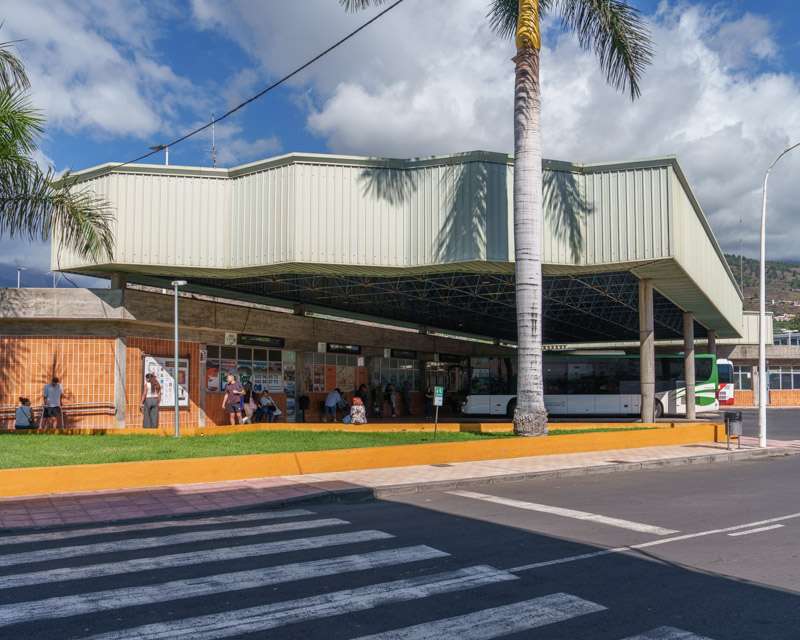
Yes, you can reach the west coast of La Palma from the cruise quay without the ship’s tour. The bus station sits directly opposite the port. Line 300 crosses the island to Los Llanos de Aridane in just under an hour, and line 27 runs on from there down to Puerto de Tazacorte in a few minutes. On 23 October 2026 the whole return journey cost €8.20.
Where the bus station is, and why that decides the day
In most ports an independent trip fails at the first step: getting to the transport. Santa Cruz de La Palma is the exception. The island bus station stands across the road from the cruise terminal — you walk over and you are at the right stand. No shuttle, no taxi negotiation, no trek through town. That single piece of geography is what makes this one of the easiest European ports to do on your own.
The old town of Santa Cruz is within walking distance too, and it is worth an hour. This article is about the other side of the island, the side most passengers only see in the brochure.
Line 300: across the island in under an hour
Line 300 is the fast cross-island link, Santa Cruz to Los Llanos over the Cumbre on the LP-3 road. The island’s own tourist board lists it alongside line 100 (to Tazacorte around the north) and line 200 (south via Fuencaliente). The 300 is the short way.
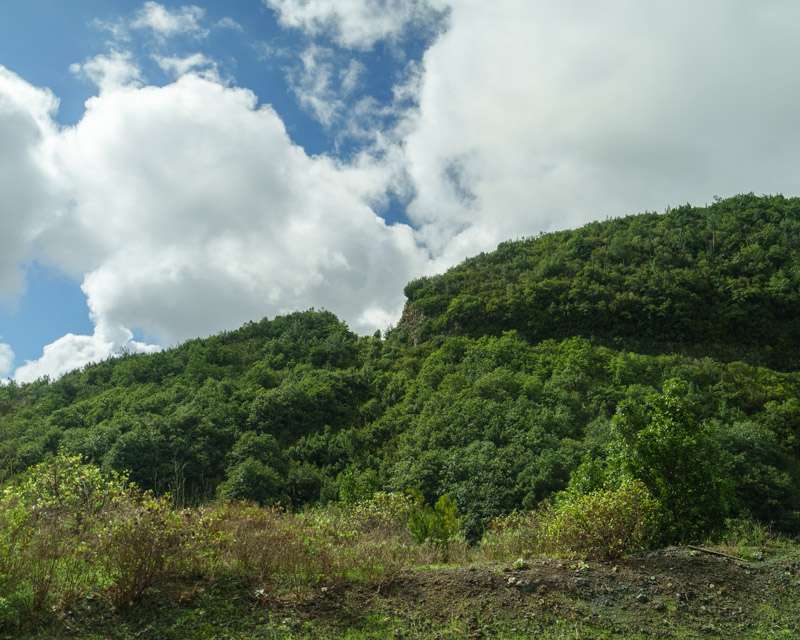
The bus makes several stops in town, passes the hospital and then climbs steadily. The real frontier is the Túnel de la Cumbre, about 2,665 metres long and the second longest tunnel in the Canaries. You go in on the eastern side under low cloud and come out on the western side in full sun. That is the föhn effect across the Cumbre Nueva, and it is the reason a grey morning at the quay says nothing about the weather in Tazacorte. The crossing took a little under an hour.
Changing at Los Llanos for line 27
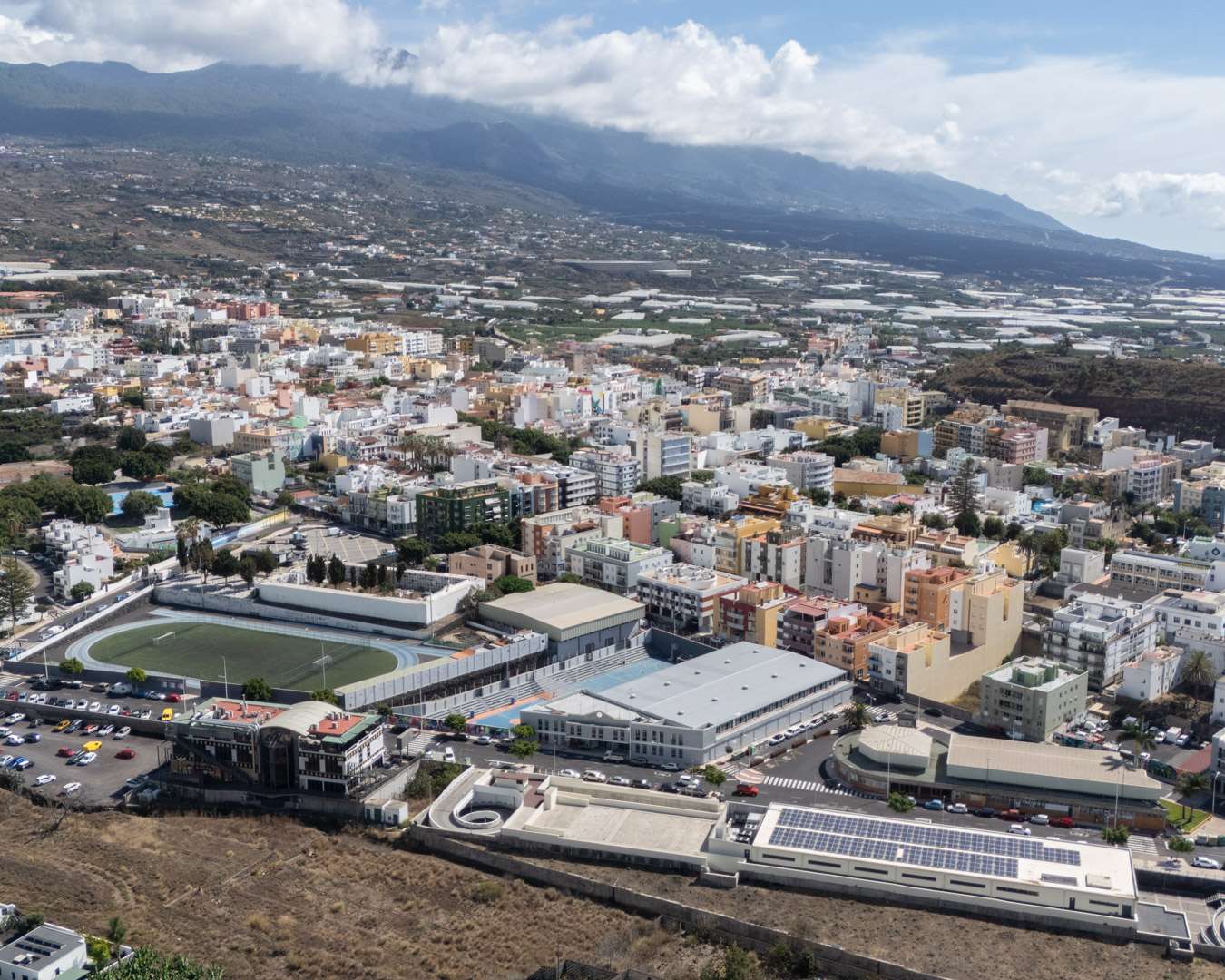
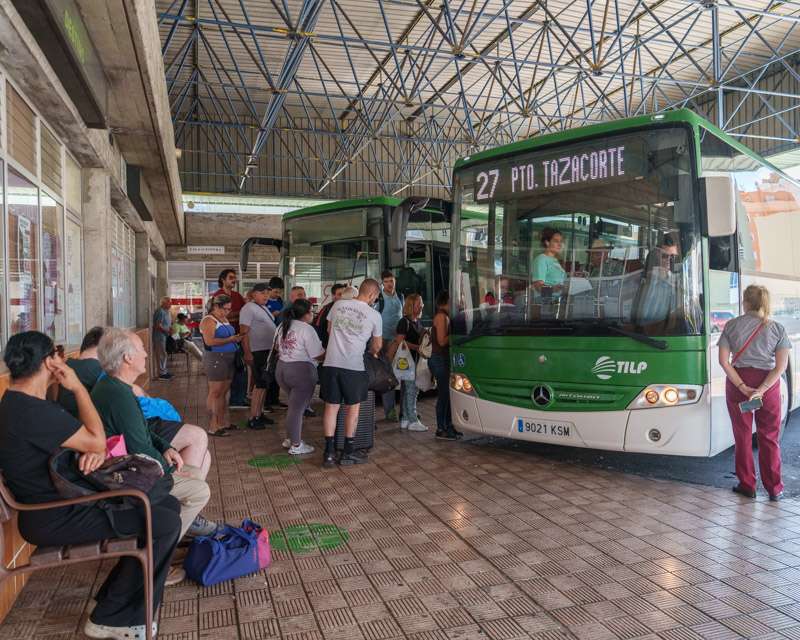
The bus station in Los Llanos is small, covered and signposted, and the connection was already standing there when we arrived — line 27, destination board reading simply “27 PTO. TAZACORTE”. A few minutes between buses.
Do not count on that. Line 27 does not run to a clock-face timetable, and some departures operate on school days only. The practical move is to photograph the return times on the board before you leave the station; that printed sheet is the most reliable information you will have all day.
Tazacorte lies about 2 km south-west of Los Llanos and 17 km west of Santa Cruz. The municipality splits into the upper town and the Puerto down at the water, and the bus runs all the way to the seafront.
What it costs
| Leg | Line | Fare (23 Oct 2026) |
| Santa Cruz de La Palma → Los Llanos | 300 | €2.60 |
| Los Llanos → Puerto de Tazacorte | 27 | €1.50 |
| Puerto de Tazacorte → Los Llanos | 27 | €1.50 |
| Los Llanos → Santa Cruz de La Palma | 300 | €2.60 |
| Total | €8.20 |
You pay the driver, and you pay by card. That is the detail missing from every port guide I have read: a contactless debit card worked on all four legs, and the local passengers were paying the same way — nobody handled cash. Drawing euros before you go ashore is wasted effort here. The driver prints a ticket, which doubles as your record of the fare.

What Puerto de Tazacorte is actually like
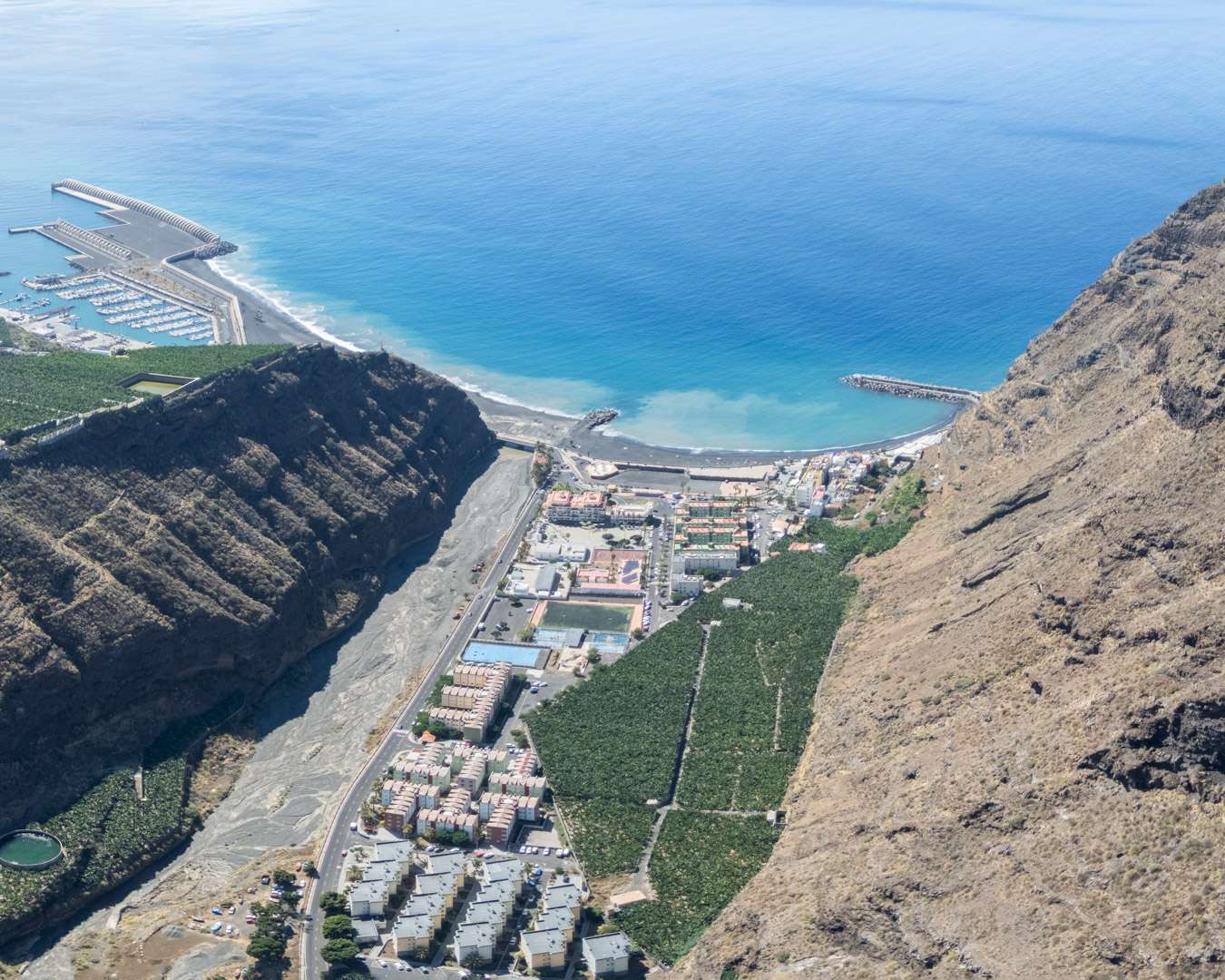
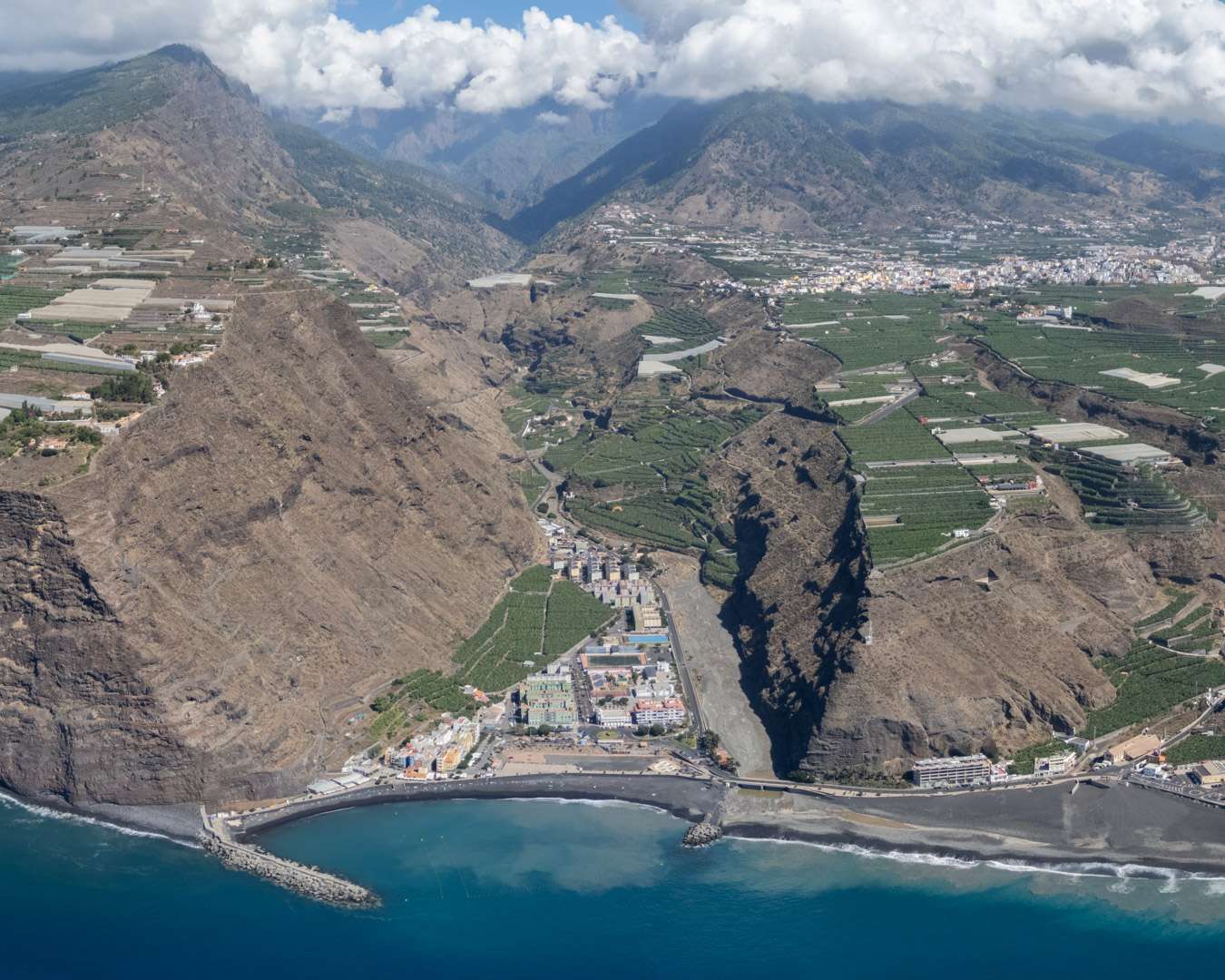
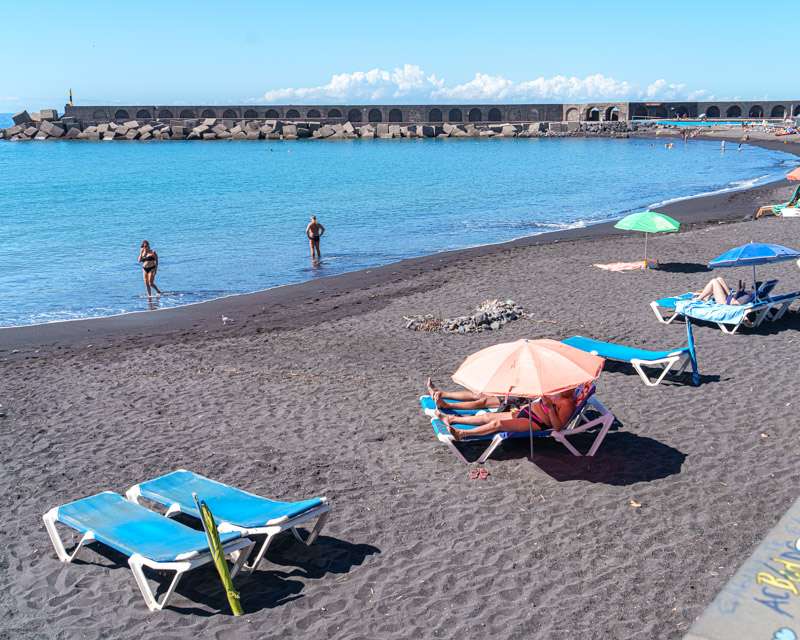
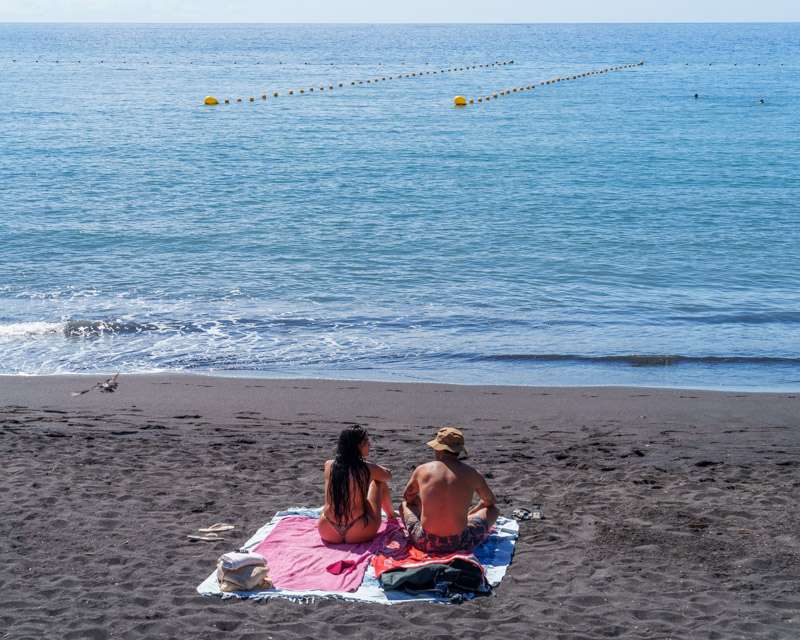
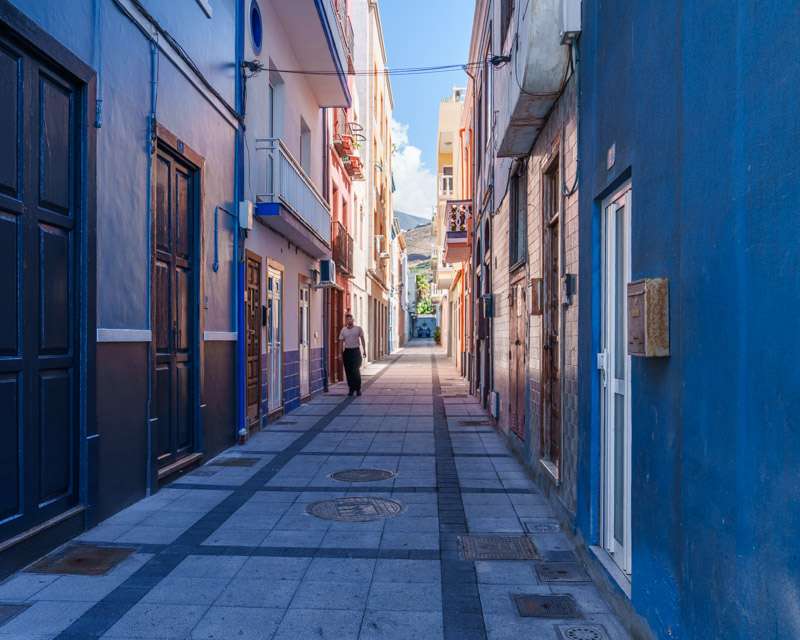
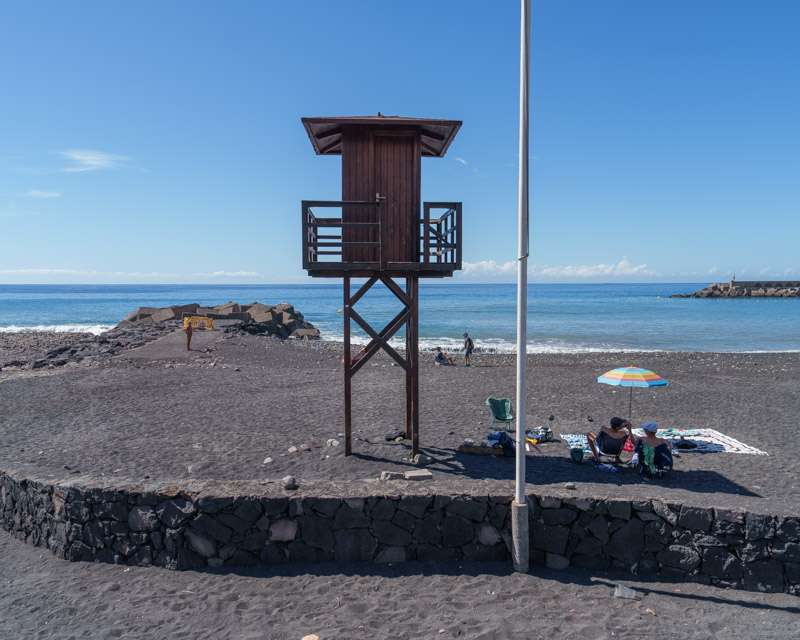
It is quiet to a degree that surprises people who arrive expecting a resort. Few cars, few visitors, no souvenir strip. A promenade, painted houses, a handful of restaurant terraces, and behind them the vertical wall of the Barranco de las Angustias. The beach is dark grey to black volcanic sand, sheltered behind a breakwater, with a buoyed swimming area, showers and loungers.
I spent an hour there and swam. The water was warm, the swell behind the breakwater slight, and visibility underwater a little cloudy — stirred-up dark sand rather than anything unpleasant. If you are hoping for Caribbean clarity, this is the wrong island. If you want a calm place to swim on a volcanic coast, it is the right one. The beach was open on the day; closures after heavy weather have happened here before, so read the signs at the promenade before you go in.
The calm hides a sharp history. At the mouth of the Barranco de las Angustias, where the harbour now stands, Alonso Fernández de Lugo landed on 29 September 1492 and began the conquest of the island. Sugar cane followed, and then bananas: roughly 85 per cent of the municipality’s farmland is under banana plantations today. You see that better from the road coming down than from the sand.
Ship’s excursion or bus?
The same destination is sold as a shore excursion. AIDA runs it as “Tazacorte: Sonnengenuss pur auf La Palma” (LAP26): five hours, roughly an hour of scenic transfer each way and about three hours of free time on the beach. Apart from the coastal road, that is precisely the day you can have for €8.20.
The difference is not the content, it is the risk. The ship’s coach waits if something runs late; the service bus does not. In exchange you get your own schedule — stop in Los Llanos on the way back, walk the old centre, catch a later bus, or come home early. If you are travelling with small children, a short call or limited mobility, book the excursion. Otherwise take the bus; at this price difference it is not a close call.
Timing it against all-aboard
Allow about two and a half hours in total for travelling and waiting: close to an hour each way on the 300, a few minutes on the 27, and the connections in between. On a typical eight- to nine-hour call that leaves a good three hours in Tazacorte — enough for the beach, lunch and a walk, not enough to add Puerto Naos.
The buffer matters more here than in most ports, because the way back depends on a timetable rather than on a taxi. Plan for the second-to-last possible connection, not the last, and be back at the pier 45 to 60 minutes before all-aboard. With the bus station opposite the terminal, that final stretch costs you almost nothing.
The same crossing by bicycle
If you want a sense of how much island lies between the quay and that beach, do it without an engine. I rode the crossing on 4 October 2026: 80.76 kilometres there and back, 2,081 metres of climbing, two hours and 45 minutes of riding. The €2.60 bus ticket buys you all of that.
Photographs and light
The strongest frames of this day are not on the sand. They are on the journey and from above: the switch from the grey eastern slope into western light, the banana terraces stacked over the barranco, the town pressed between two rock walls. Down at sea level, work close — black sand with the surf running out of it, the blue lanes behind the promenade, the terraces in late morning. At midday the light on the beach is hard and flat; the promenade holds shade when the water does not.
Practical notes
Card is enough; you do not need cash. Pack swimming things if the forecast looks bright — there are showers but no changing rooms. A hat is not a luxury on the west side, which is reliably sunnier than the ship. And photograph the timetable board before you set off: it is the best return ticket available.
Related: Santa Cruz de La Palma Cruise Port: Is the Green North Worth the Tour? · Santa Cruz de Tenerife Cruise Port: The Las Raíces Hike · Cruise Ports on Your Own