
Visited: 7 October 2026, on a call of MS Amadea at Leixões. The photographs are my own, taken that day.
The cruise terminal at Leixões is in Matosinhos, 9 to 10 kilometres from Porto’s old town — walking is not an option. The metro takes about 40 minutes from the gangway: roughly 900 metres to Matosinhos Sul, then Line A to Trindade in 25 to 30 minutes, under five euros return. And the number that matters most: Porto needs half a day, better a whole one. An afternoon buys you an impression of the city, not the city.
The Leixões port day at a glance
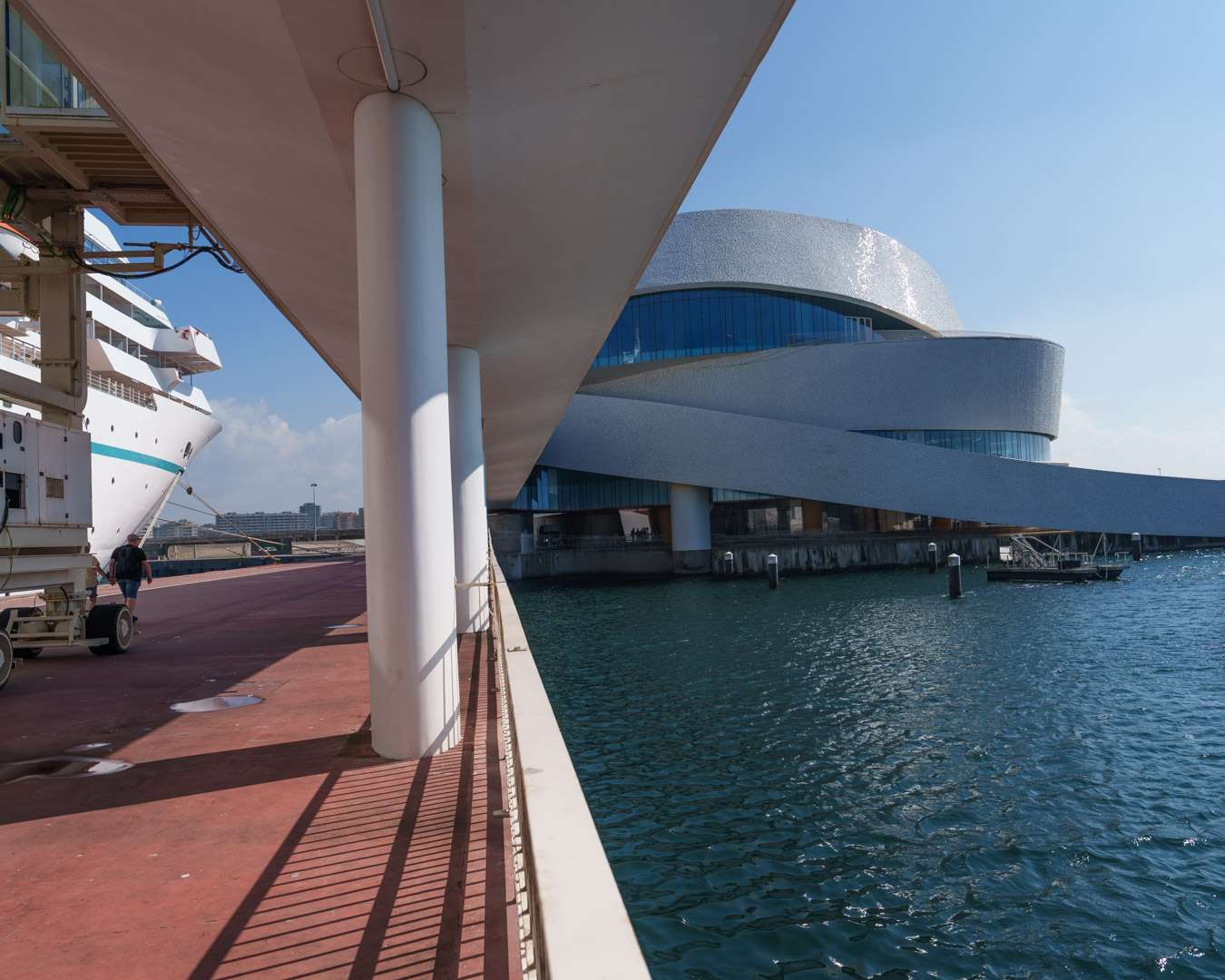
| Berth | South mole of the artificial harbour of Leixões in Matosinhos, at the white spiral terminal by Luís Pedro Silva (2015) |
| Tender | No — ships lie alongside |
| Distance to Porto | 9 to 10 km to the old town, not walkable. A shuttle runs from the terminal to the port gate because the mole is a working area; from the gate you continue on foot |
| Metro | About 900 m (11 min) to Matosinhos Sul, then Line A in 25 to 30 min to Trindade — roughly 40 minutes from the gangway. Andante card €0.60 plus a single fare of €1.40 to €1.85 each way, so €3.40 to €4.30 return |
| Alternatives | Bus 500 along the coast, about €2.50 to €3, roughly 40 min · taxi to the Ribeira €15 to €20 each way · ship’s shuttle usually €15 to €25 return |
| Minimum time ashore | Half a day for the Ribeira, the old town lanes and one viewpoint. A whole day if a port lodge in Gaia or a museum is to come with it |
| Return buffer | Back at the terminal 45 to 60 minutes before all-aboard. The coast road is where a port day runs longer than planned |
| Visited | 7 October 2026, MS Amadea. Prices checked October 2026 |
Where does the ship dock in Leixões?
At the south mole of the artificial harbour of Leixões, at the mouth of the Leça in Matosinhos. The harbour was built from 1884 and opened to steamers in 1886; the present cruise terminal — the white spiral by Luís Pedro Silva — was inaugurated on 23 July 2015. The building also houses a marine research centre of the University of Porto.
There is no tendering. Shuttles run from the terminal to the port gate, because the mole is an operational area; from the gate you walk.
How do you get from Leixões to Porto?
Four ways into the city — and below them, for comparison, the boat trip and the ship’s excursions.
| Way | Price October 2026 | Time and note |
|---|---|---|
| Metro from Matosinhos Sul, Line A | Andante card €0.60, single €1.40–1.85 | about 900 m to the station (11 min), then 25–30 min to Trindade |
| Bus 500 along the coast | about €2.50–3 from the driver | roughly 40 min, runs along the water |
| Taxi, terminal to the Ribeira | about €15–20 each way | 15–20 min without traffic |
| Ship’s shuttle | varies by ship, usually €15–25 return | runs to a fixed point in the centre |
| Six bridges cruise on the Douro | €18–20 | 50 minutes, four operators, the same loop |
| Ship’s excursion “Porto by water and by land” | €55 | about 4 hrs, includes the six bridges cruise. Phoenix Reisen, MS Amadea 2026/27 programme (prices from June 2026) |
| Ship’s excursion “Porto” | €69 | about 4.5 hrs, without the boat |
| Ship’s excursion, Porto panoramic drive | €35 | about 4 hrs, coach with photo stops |
One disclosure, because it bears on the judgement: I travelled that day on a local operator’s coach, not by metro. The fares and journey times are checked against two independent sources rather than ridden by me. The ticket machine shows the zone for the station you select — that is what decides whether you pay €1.40 or €1.85.
How much time does Porto actually need?
More than an afternoon gives you. The old town lies on the slope above the river, and almost all of it is a gradient: from the Ribeira at the water up to the cathedral, on to São Bento station, then across to the upper deck of the Luís I bridge and over to the Gaia side. These are not long distances on foot, but they are vertical metres and cobbles.
Realistically: half a day for the Ribeira, an old-town lane and a viewpoint. A whole day if one of the port lodges in Gaia or a museum is to come with it. We had an afternoon with a panoramic drive and a boat trip, and that is exactly the cut at which you see the city without having been in it.
Is the Porto panoramic drive worth it?
A coach tour first, then the boat at four in the afternoon. The drive crosses the bridges and runs through the centre, and it spends a good deal of that time stationary. Porto has dense traffic in the late afternoon, and a coach gets through it no faster than anyone else.
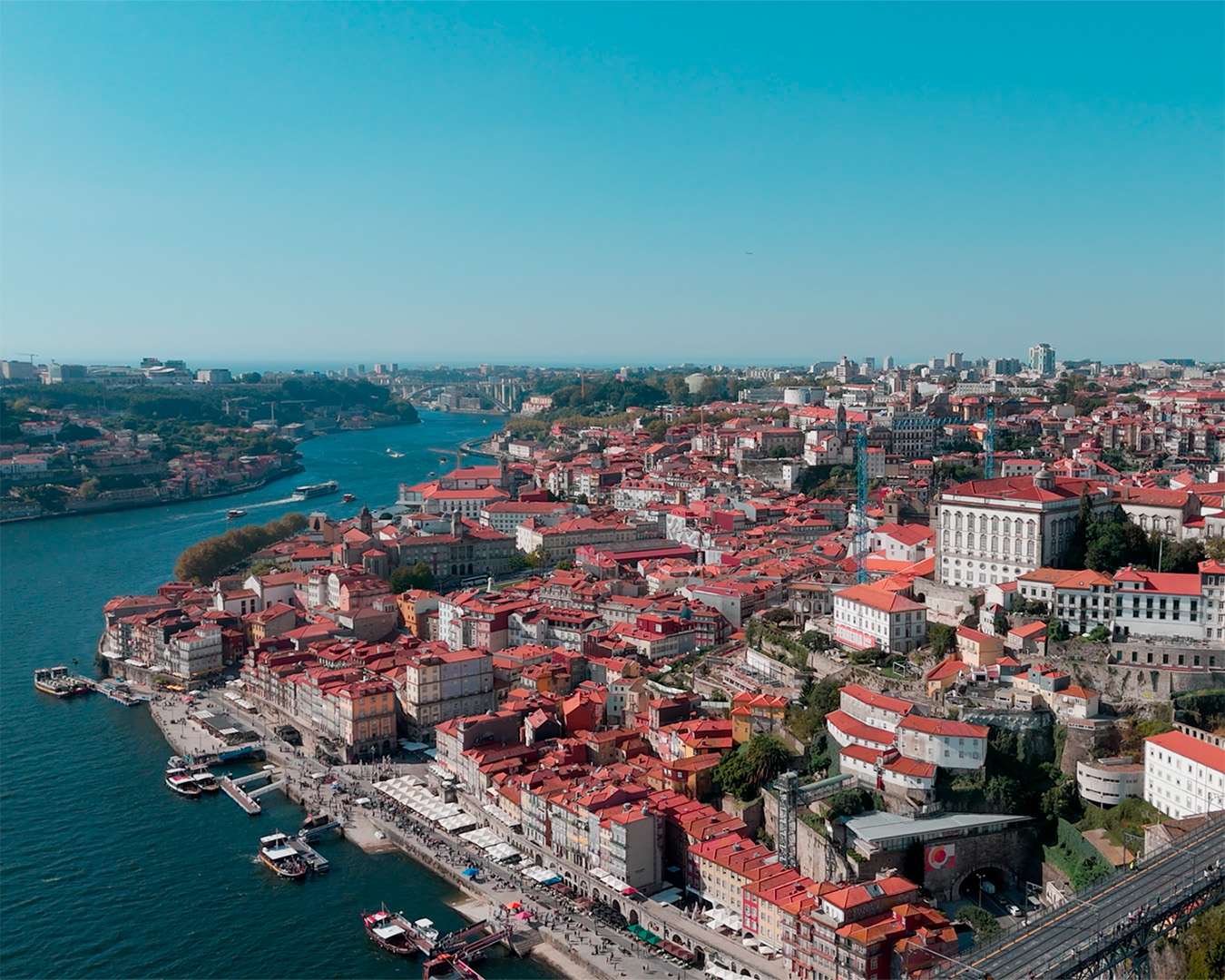
What it does deliver is the view from above. From the bridge deck you look down on the Ribeira and downstream as far as the river mouth — a perspective you get on foot only in a few places and from the boat not at all. Anyone taking the panoramic drive should keep the camera out.
Is the six bridges cruise worth it?
For the bridges yes, as a substitute for time in the city no.
The trip runs just under 50 minutes, upstream to the Freixo bridge and downstream to the Arrábida, and costs €18 to €20. It is the only way to see all six bridges from below, in the order they were built: Maria Pia of 1877 with a 160-metre span, Luís I of 1886 with 172 metres on two decks, Arrábida of 1963 with 270 metres of concrete, São João of 1991 with 250 metres, Freixo of 1995 and Infante of 2003 with 280. Three of them held the world record on completion.
The commentary is recorded, bridge by bridge. The boats take around 60 people and are filled by coach parties. It is a processing operation, not a guided tour — and with that expectation it is a good hour. Counting the walk to the landing stage and the queue, though, it costs closer to an hour and a half of the port day. On a short call those would be better spent in the old town. The full account of the six bridges, the rabelo boats and the wrecked pontoon bridge of 1809 is in the separate piece on that cruise.
What you see at the Ribeira
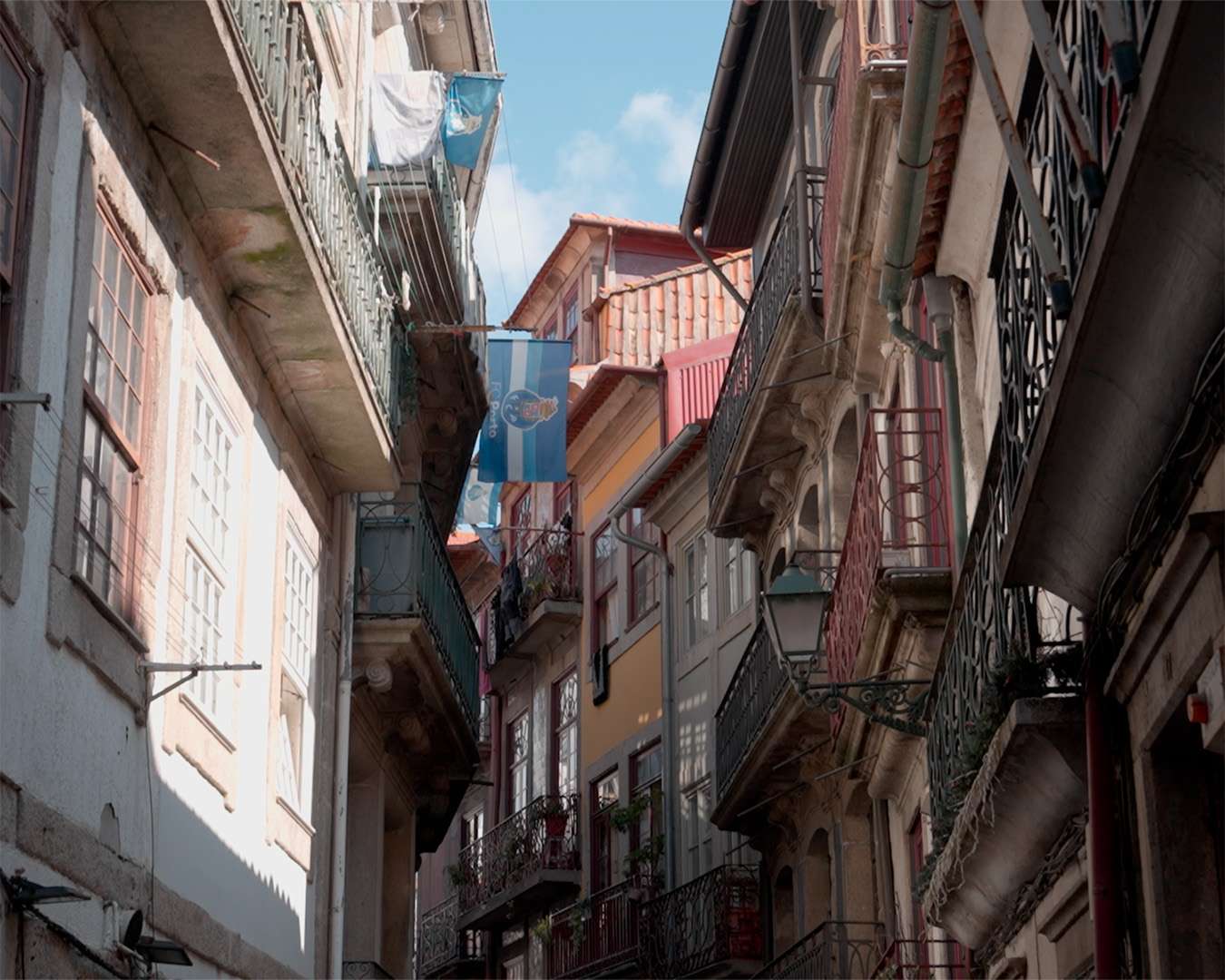
The Ribeira is the waterfront quarter below the Luís I bridge: narrow, tall houses in a row, wine and fish restaurants at street level, the quay and the tour boats in front. On the square stands a bronze cube balanced on its corner in a shallow fountain — a work by the sculptor José Rodrigues, and the agreed meeting point for everyone who has got lost in the lanes.
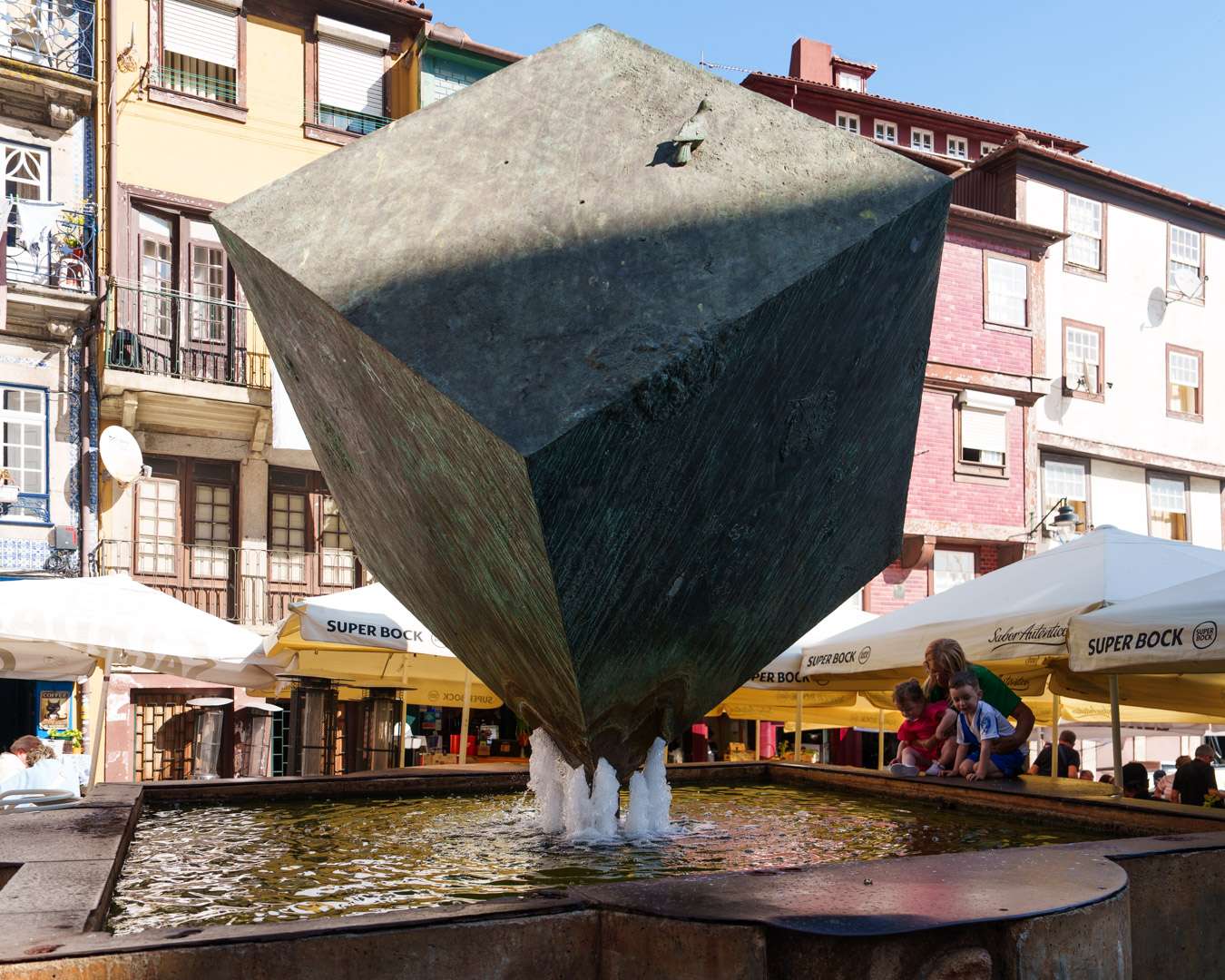
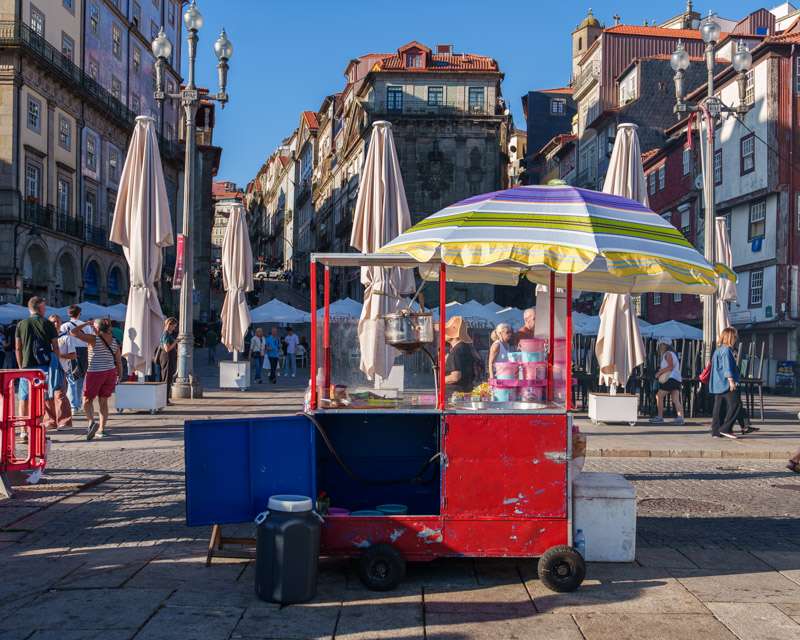
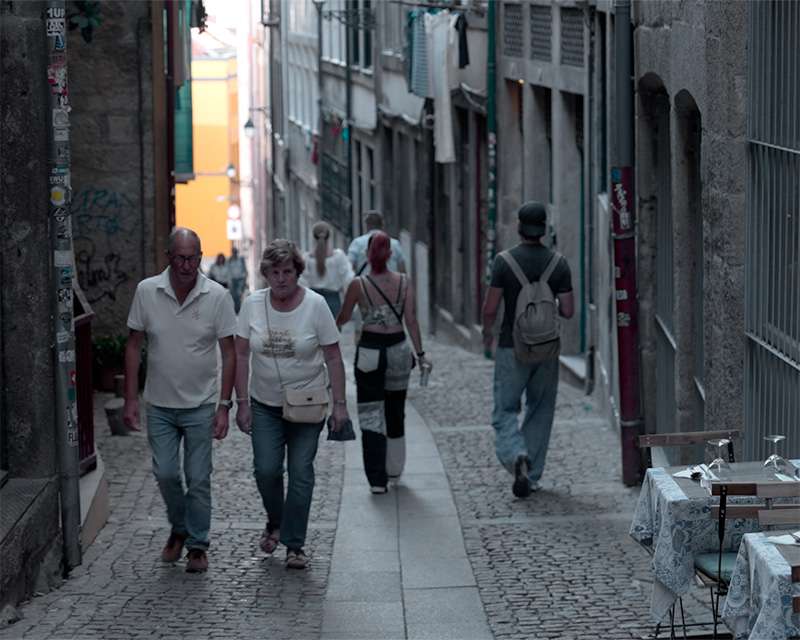
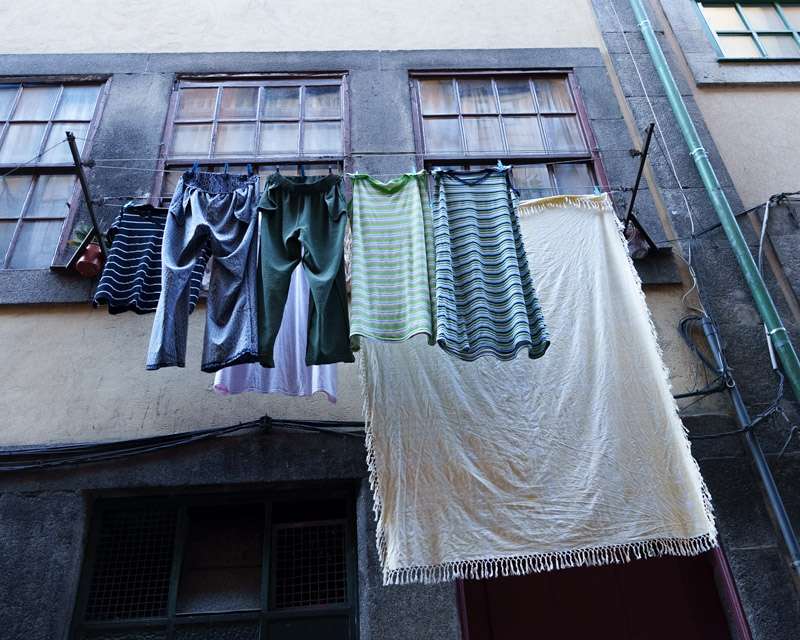
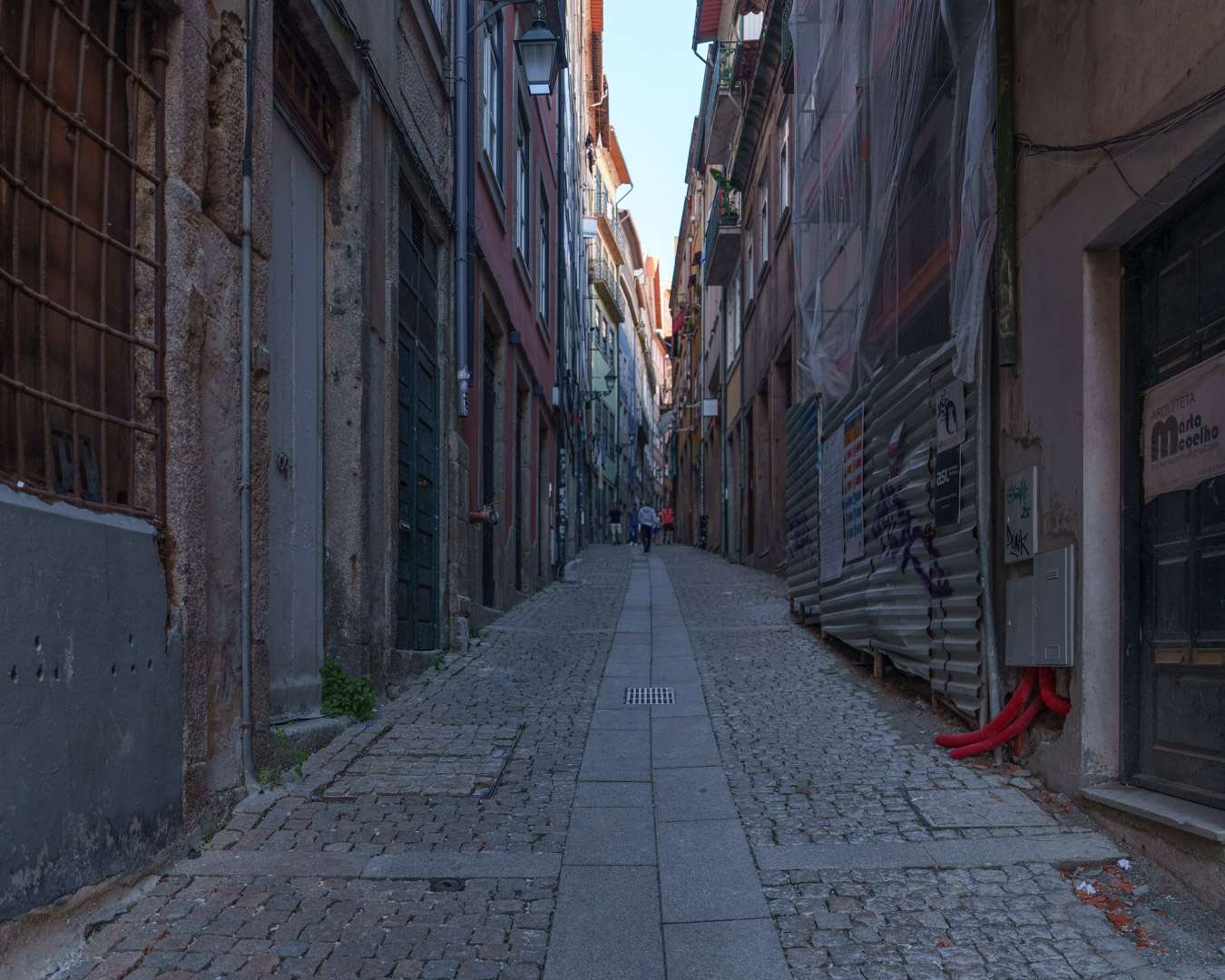
Two lanes further on the postcard stops. Washing hangs from the windows and the render is coming off the walls. Both are the same city, and the distance between them is not a hundred metres.
That has a history. Behind the street frontages, narrow corridors led into the back yards, and rows of one-room houses stood there: the ilhas. Around 1900 roughly a third of the city lived in them, in nine to sixteen square metres, with one privy for five to seven houses. They still exist: over a thousand ilhas with more than 13,000 residents. From the river you see none of it.
Ship’s excursion or on your own?
The honest answer depends on the length of the call.
On a full port day the independent route wins clearly: the metro costs €3.40 to €4.30 return per person with the card, puts you in the city in a little over forty minutes, and lets you decide for yourself how long to stay at the Ribeira. The gap to the excursion price is substantial, and the route is simple — one line, one direction, no changes.
On a short or late call that reverses. Our coach ran in the afternoon, and in heavy traffic the fixed seat is the calmer option — above all for the way back, which the cruise line is answerable for. Anyone travelling independently should be back at the terminal 45 to 60 minutes before all-aboard; the coast road is where a port day can run longer than planned.
Where are the best photo spots in Porto?
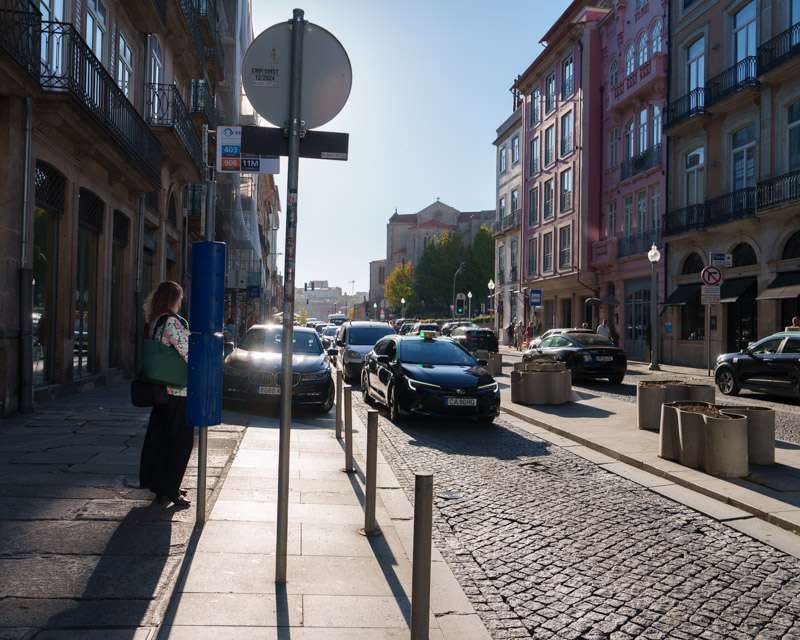
The three worthwhile standpoints are not at the water but above it: the upper deck of the Luís I bridge, the forecourt of the Serra do Pilar monastery on the Gaia side, and any bridge approach where the coach slows down.
In the afternoon the sun stands downstream. That means the old town is backlit from Gaia and side-lit from the bridge — which is exactly when the red roofscape carries. In the lanes it is the other way round: at midday the hard shadow wrecks the composition, in the late afternoon the light goes indirect and the façade colours come up.
On the boat, sit on the left looking upstream. The Porto bank is then on your side and the sun is behind you.
What I would do differently next time
Set off early on my own and give the city the whole day. Metro to Trindade, down to the river on foot, back across the upper deck of the bridge, and the boat trip only if there is time left in the late afternoon. In that order Porto gets the good hours and the river gets the rest — not the other way round.
Common questions about Leixões and Porto on your own
How far is Porto from the Leixões terminal?
The cruise terminal is in Matosinhos, 9 to 10 kilometres from Porto’s old town. Walking is not an option, but there is no tendering either.
How do I get to Porto by metro?
About 900 metres, some 11 minutes, to Matosinhos Sul, then Line A in 25 to 30 minutes to Trindade. Roughly 40 minutes from the gangway.
What does the trip into the city cost?
An Andante card is €0.60 plus a single fare of €1.40 to €1.85, so €3.40 to €4.30 return depending on the zone. A taxi to the Ribeira is €15 to €20 each way, the ship’s shuttle usually €15 to €25 return (October 2026).
Is the six bridges cruise worth it?
It runs just under 50 minutes and costs €18 to €20. With the walk to the landing stage and the queue it costs closer to an hour and a half of the port day — on a short call that time is better spent in the old town.
What does the ship’s excursion cost by comparison?
“Porto by water and by land” is listed at €55, the Porto excursion alone at €69, and the panoramic drive at €35. The same journey by metro is under five euros.
How much buffer before all-aboard?
Travelling independently, be back at the terminal 45 to 60 minutes before all-aboard. The coast road is where a port day runs longer than planned.
Sources for the figures in this article: fares and zones from the Andante fare overview and the Metro do Porto fare table, cross-checked against a second port guide to Leixões; harbour and terminal data from the entry on the port of Leixões; bridge data from Structurae; the ilhas figures from research at Wageningen University. Prices checked in October 2026.
Written by Jan Madeus — ship’s videographer, at sea since 2008. I go ashore in the same ports as the guests, with the same few hours and the same all-aboard time. More about me.
Related: Porto six bridges cruise: what the 50 minutes show · Lisbon Cruise Port on Your Own · Cruise Ports on Your Own — every port guide
Ports on this route — Madeira, the Azores and the Iberian coast: Lisbon Cruise Port on Your Own · Funchal Cruise Port on Your Own · Funchal at night · Praia da Vitória: Angra do Heroísmo on your own · Vilagarcía de Arousa Cruise Port on Your Own · All cruise ports on your own