
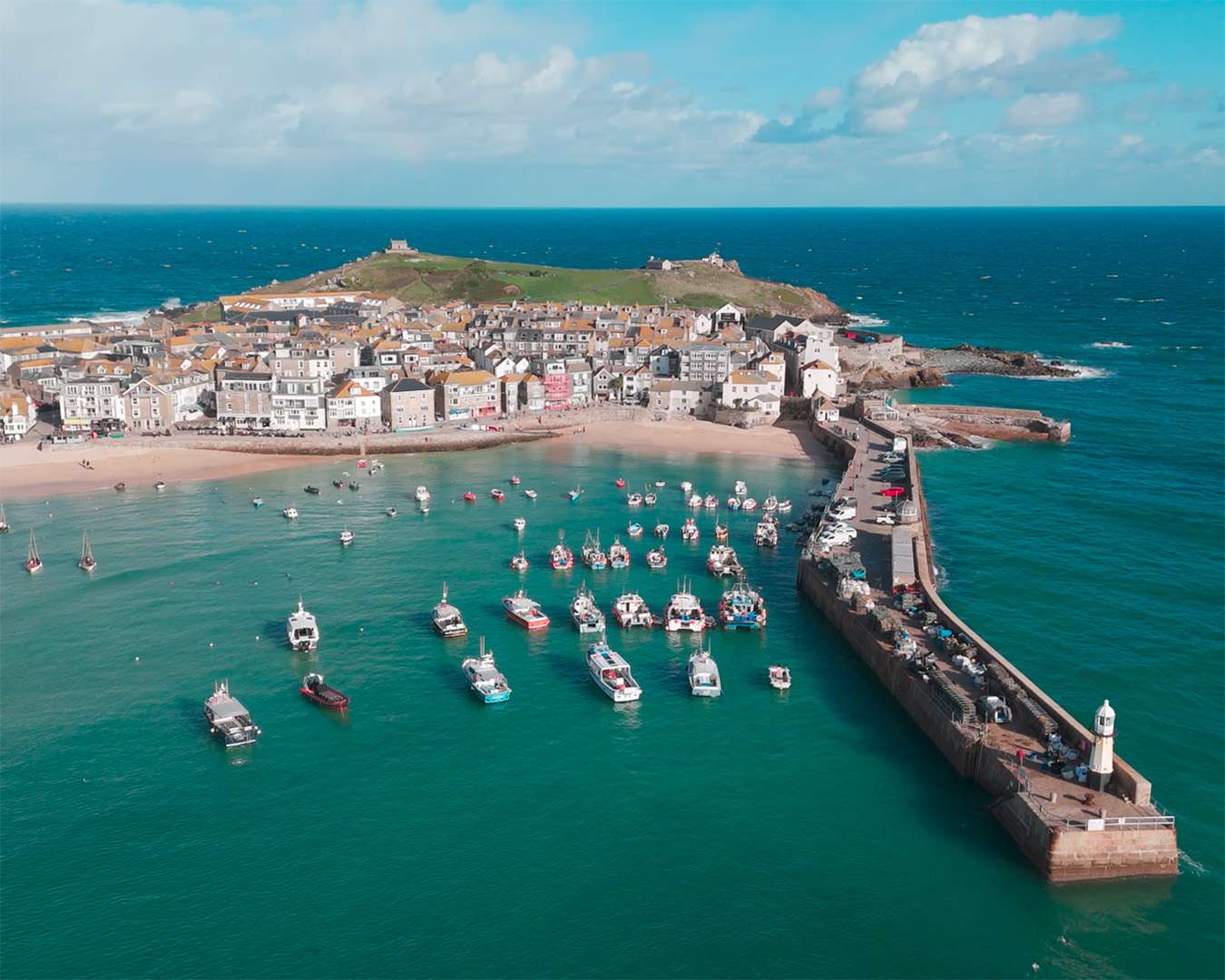
Visited: 16 October 2026, on a call of MS Amadea at Falmouth. The photographs are my own, taken that day.
St Ives lies about an hour west of Falmouth by road, which is why it appears in the ship’s programme rather than on the list of things you can walk to. Our transfer cost €55 and left us roughly two hours in the town, on our own, with no guide. Two hours is enough for Downalong, the harbour and Porthmeor Beach. It is not enough if you also want the Tate.
The St Ives excursion at a glance
| Port of departure | Falmouth Docks, alongside. MS Amadea lay there from 08.00 to 18.00 on 16 October; the coach leaves from the berth itself |
| Journey time | About an hour each way by road, roughly 45 km. The excursion runs about 4.5 hours in total |
| Time in the town | A good two hours of free time, no guided walk. A shuttle bus runs down the steep hill from the coach park above the town into the centre |
| Price | €55 for the transfer alone. On the same port day the programme also offered Land’s End at €63, and Heligan and Prideaux Place at €99 each (Phoenix Reisen, MS Amadea 2026/27, prices from March 2026) |
| On your own? | Possible by train, but two changes (Truro and St Erth) and roughly an hour to an hour and a half each way. On an ordinary port day that leaves too little |
| All on foot | Harbour, Downalong, Tate and Porthmeor lie ten to fifteen minutes apart. Cobbles and gradient throughout |
| Admission | Tate St Ives £15.50 (with donation), Barbara Hepworth Museum £11, both daily 10.00–17.20. No combined ticket. Town, harbour, beach and the chapel on the Island cost nothing |
| Tides | The harbour dries out. Spring range is about 5.8 metres — that, not the weather, decides whether the boats float or sit on the sand |
| Visited | 16 October 2026, MS Amadea. Prices checked October 2026 |
Can you get from Falmouth to St Ives on your own?
In theory yes, in practice barely. The train leaves Falmouth Docks on the Maritime Line for Truro, 25 to 30 minutes, roughly twice an hour, from about £6. At Truro you change towards Penzance, and at St Erth a second time onto the ten-minute branch line into St Ives. Depending on the connection the whole thing takes an hour to an hour and a half — plus two changes with everything that can go wrong at them, on a service far thinner than the Falmouth–Truro leg.
On a ten-hour call that is around three hours of travelling, with the way back hanging on a single connection. This is one of the rare cases where the ship’s coach earns its price: not for the guiding, because there was none, but because somebody else is answerable for getting you back.
If you do go independently, the St Erth branch line runs along the water the whole way and is the better arrival. It is worth it only when the ship stays long enough.
What you can do in St Ives in two hours
Everything that makes St Ives sits on a spit perhaps four hundred metres wide. The coach stops at the car park above the town, and a shuttle bus takes the group down the steep hill into the centre; at the meeting time it goes back up the same way. So the approach costs almost no time. The gradient inside the town does: St Ives is steep cobbled lanes throughout, and the only flat ground is the strip around the harbour.
A round that fits into two hours:
First half-hour: down to the harbour and along Wharf Road to the pier. You stand in front of the postcard and have it behind you.
Second half-hour: into Downalong, the old quarter between harbour and beach. No route needed — the lanes all come out in the same place.
Third half-hour: across to Porthmeor Beach, past the Tate, through Barnoon cemetery with Alfred Wallis’s grave.
Last half-hour: back along the main lanes, a pasty or a cream tea, and back to the shuttle up to the coach park in good time.
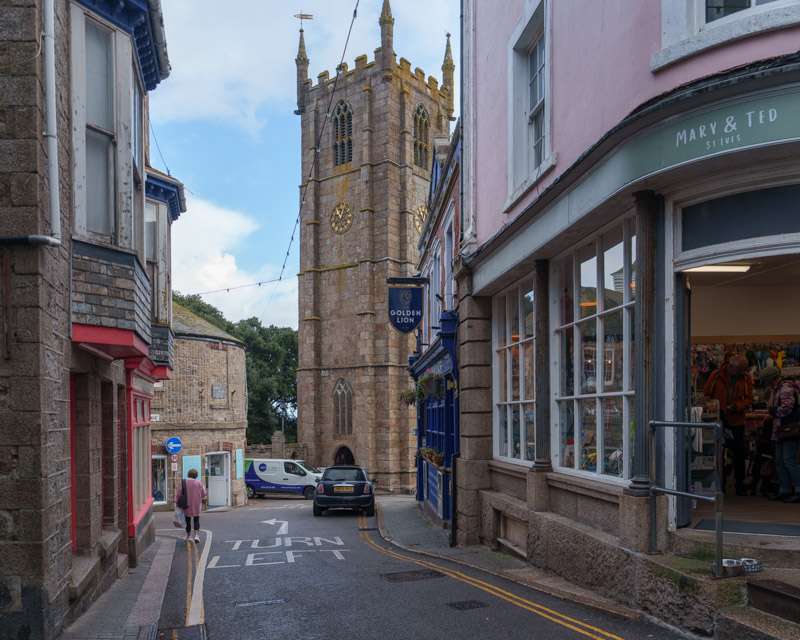
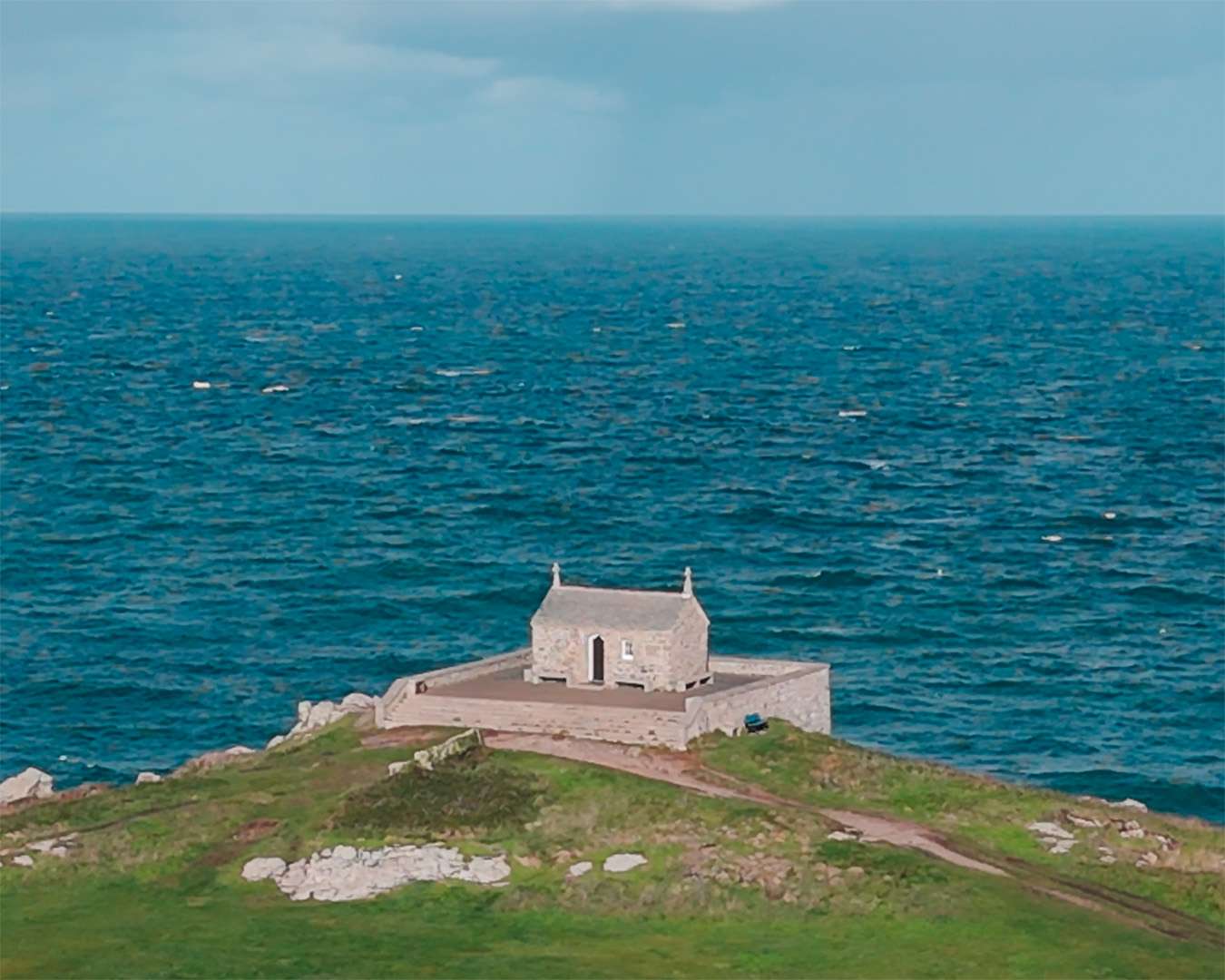
What does not fit into two hours: St Nicholas Chapel on the Island — the headland at the end of the spit is open and free, and costs about twenty minutes there and back that you will miss elsewhere. And the Tate.
Why there are painters’ studios above the fish cellars
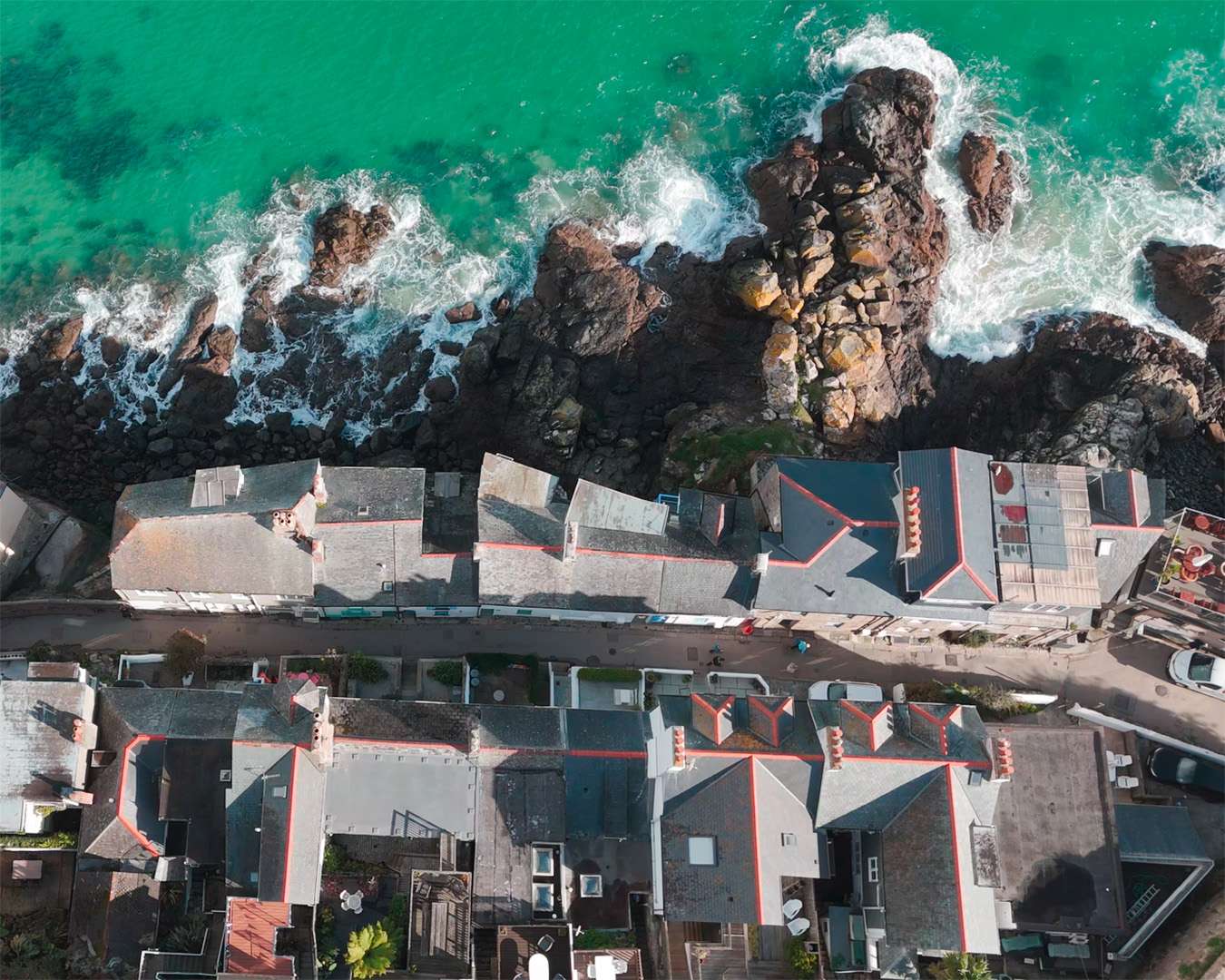
A long white building stands on Porthmeor Beach. Painters work upstairs, fishermen downstairs. That is not staged for visitors; it is simply the order in which it happened.
The Porthmeor Pilchard Cellars have been listed Grade II* since 2004. The oldest parts stood by 1811 and use Smeaton’s sea wall of 1762–82 as their foundation and outer wall. Pilchards were pressed and salted below; the net lofts were above.
When the fishery declined in the later nineteenth century, those lofts stood empty. In 1885/6 the painter Howard Butler converted the first of them into a studio — Studio 8. Three more followed by 1890; by 1898 four studios were let at £10 a year each, and a larger one at £25.
The reason was not the view. The windows face north. North light does not come from the sun but from the sky: the same angle and the same colour all day, and no hard shadows. What the fishermen had left behind as a by-product of their building method was the best working condition a painter can have.
The building has not stopped working since. Borlase Smart and Leonard Fuller founded the St Ives School of Painting there in 1938, and it still teaches on the site; Ben Nicholson and Barbara Hepworth moved to St Ives in 1939, Nicholson into Studio 5. Patrick Heron, Terry Frost and Wilhelmina Barns-Graham worked in the same rooms in the fifties. On the ground floor, fishermen still keep their nets.
What St Ives lived on before the art
Pilchards. A man stood on the hillside above the bay and watched — the huer. When he saw the shoal he called “hevva”, the Cornish word for it, and directed the boats with hand signals. The seine net was a quarter of a mile long, about four hundred metres, shot around the shoal and then hauled towards the shore on a capstan.
The figures from that time are hard to hold. The largest recorded single-day catch came in 1847: over 57 million pilchards. In 1868, 5,600 hogsheads came ashore in one seine. Almost all of it was bought in Italy — 6,400 hogsheads went to Mediterranean ports in 1830, and the yearly average between 1829 and 1838 was 9,000.
From the late 1890s it fell away as the fishermen moved to smaller drift nets. The last seine at St Ives was shot in 1924.
And the fish? It is called the Cornish sardine now and has carried a protected geographical indication since December 2009. The same species as then. Only the market has changed: most of the catch goes to Asia. So the ground floor is still working. It has changed customer.
Who was Alfred Wallis?
In August 1928 two painters from London walked through these lanes, Ben Nicholson and Christopher Wood, in St Ives for a single day. They passed an open door and saw pictures nailed to the wall: ships and houses.
The man inside was Alfred Wallis, born 1855, a marine stores dealer by trade. He had started painting at about seventy, after his wife Susan died in 1922. He painted for company, he later told Nicholson. He worked on cardboard torn from packing cases, with ships’ paint of one particular brand that he would not be talked out of.
Fourteen years later, on 29 August 1942, he died in the workhouse at Madron near Penzance. His grave lies in Barnoon cemetery above the beach. Bernard Leach, the potter, covered it with ceramic tiles; the motif comes from Wallis’s own paintings — an old man at the foot of a lighthouse. From there you look across Porthmeor to the Tate. That is where he hangs today.
Is Tate St Ives worth it if you only have two hours?
No. And that is arithmetic rather than taste.
The Tate stands above Porthmeor Beach, opens daily from 10.00 to 17.20, and costs £15.50 with donation or £14 without; concessions £14.50 or £13, free for under-18s. The Barbara Hepworth Museum and Sculpture Garden is five minutes away down Barnoon Hill, costs £11 or £10, and needs its own ticket — there is no combined one. Both advise booking ahead; only a small number of tickets are sold on the door.
Give one of your two hours to the Tate and you have one hour left for the harbour, Downalong, the beach and the climb back. It does not work. On a long call with your own transport the verdict reverses — then the Tate is the reason to come at all.
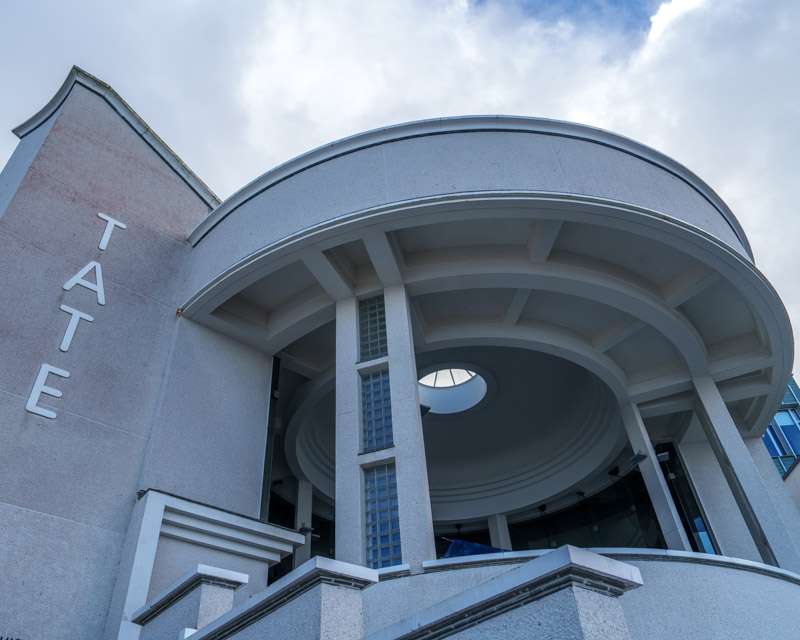
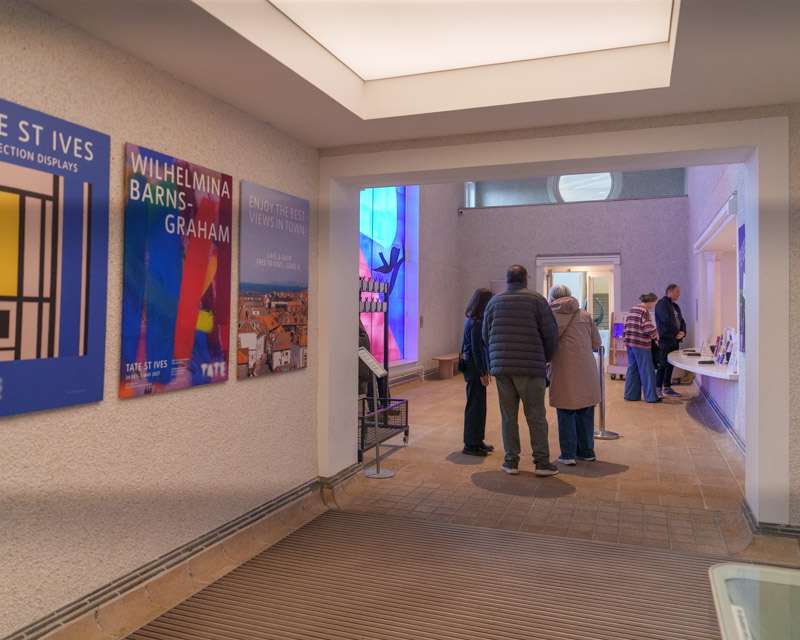
From outside it is still worth the detour: the curved white facade above the beach, built on the site of a gasworks. The entrance hall with the desk and the bookshop can be walked into without a ticket.
Why the lanes in Downalong are so narrow
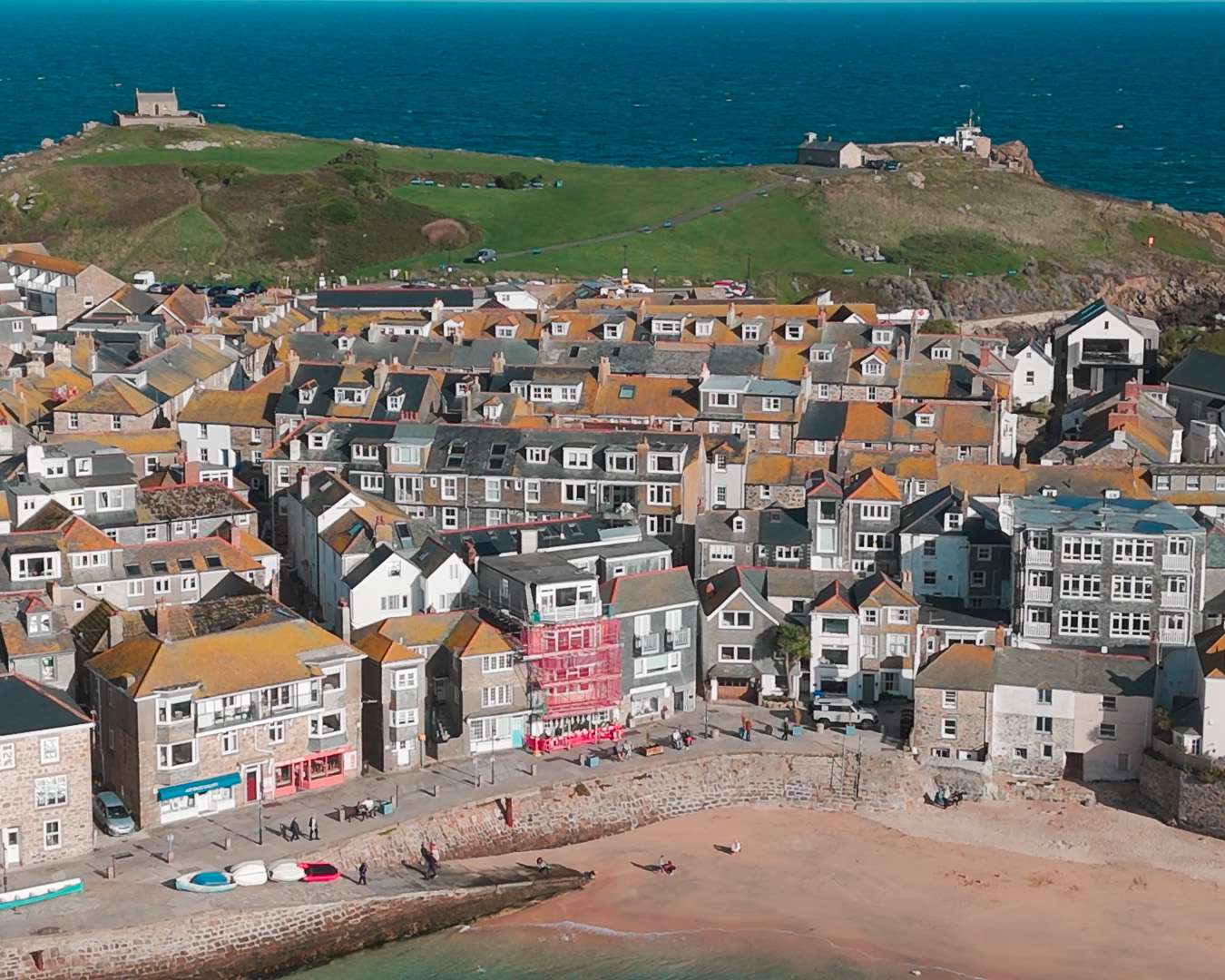
The old part of the town is called Downalong, on a narrow spit between the harbour and the beach. Water on both sides, and a great many fishing families had to live in between. That is why the lanes are so narrow. It is not design, it is arithmetic.
The same arithmetic still occupies the town, the other way round. St Ives has one of the highest proportions of second homes and holiday lets in Cornwall; in 2021 there were over a thousand properties available as short-term holiday lets and exactly one house available to rent long term.
In May 2016 the town voted on it. Policy H2 of the neighbourhood plan allows new open-market housing only where occupancy is restricted to a principal residence. Eighty-three per cent were in favour. An architectural practice from Penzance challenged the plan and lost: the High Court dismissed the case in November 2016.
What a day in St Ives costs
| Item | October 2026 | Note |
|---|---|---|
| Ship’s transfer, Falmouth to St Ives | €55 | about 4.5 hours in all, a good two hours of free time, no guiding |
| Alternative: Cornwall panoramic drive with Land’s End | €63 | about 4 hours, photo stop at St Michael’s Mount, an hour at Land’s End |
| Alternative: the Lost Gardens of Heligan | €99 | about 4.5 hours, of which 2.5 in the gardens |
| Alternative: Prideaux Place | €99 | about 4.5 hours, of which 3 on the coach — the worst ratio of the day |
| Town, harbour, Downalong, Porthmeor | free | all on foot, ten to fifteen minutes between them |
| St Nicholas Chapel on the Island | free | headland open; about twenty minutes there and back |
| Tate St Ives | £15.50 with donation, £14 without; concessions £14.50 / £13 | daily 10.00–17.20, under-18s free, booking advised |
| Barbara Hepworth Museum and Sculpture Garden | £11 with donation, £10 without; concessions £10 / £9 | separate ticket, no combined ticket, five minutes from the Tate |
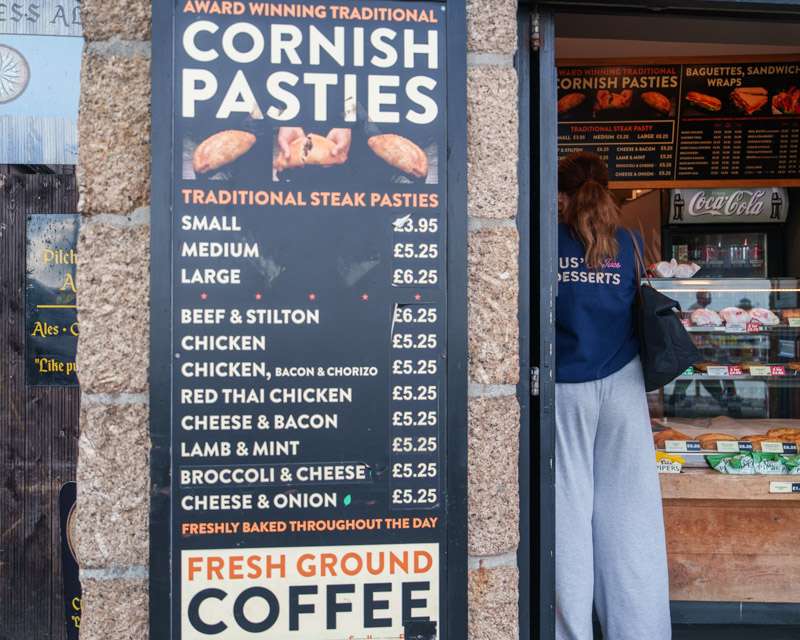
| Cornish pasty | £5.25 medium, £6.25 large | filled varieties also £5.25; price board at the shop, 16 October 2026 |
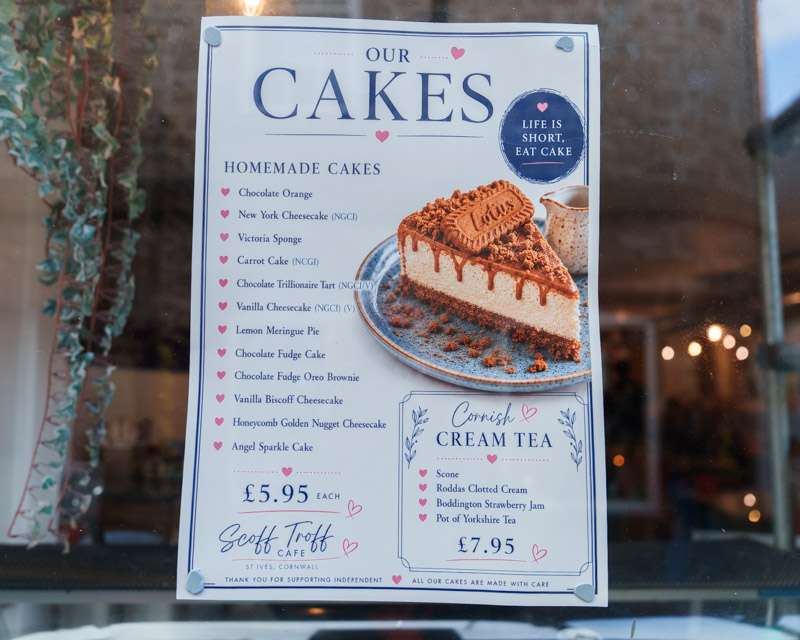
| Slice of cake / Cornish cream tea | £5.95 / £7.95 | cafe window card in the old town, 16 October 2026 |
| Train, Falmouth Docks to Truro | from about £6 single | Maritime Line, 25–30 minutes, roughly two an hour — first leg of the independent route |
Prices I could not confirm are left out. Admissions and opening times checked with Tate in October 2026; the food prices are from the boards on the day.
The harbour dries out — what that means for a short visit
St Ives does not have a harbour with water in it. It has a harbour with tides. The spring range is about 5.8 metres, and at low water the boats sit on the sand. Moorings inside the harbour are explicitly for vessels that can take the ground.
For two hours ashore that means the harbour you have in your head — boats afloat in front of the white houses — is a question of the time slot, not the weather. We were there on a falling tide, and the harbour was a sheet of sand with boats on it. That is not a worse subject, only a different one: the reflections in the standing water and the tracks across the flats make pictures that do not exist at high tide.
If you have the choice — a morning or an afternoon departure of the same excursion, say — look at the St Ives tide table first. It is the one decision of the day you cannot correct later.
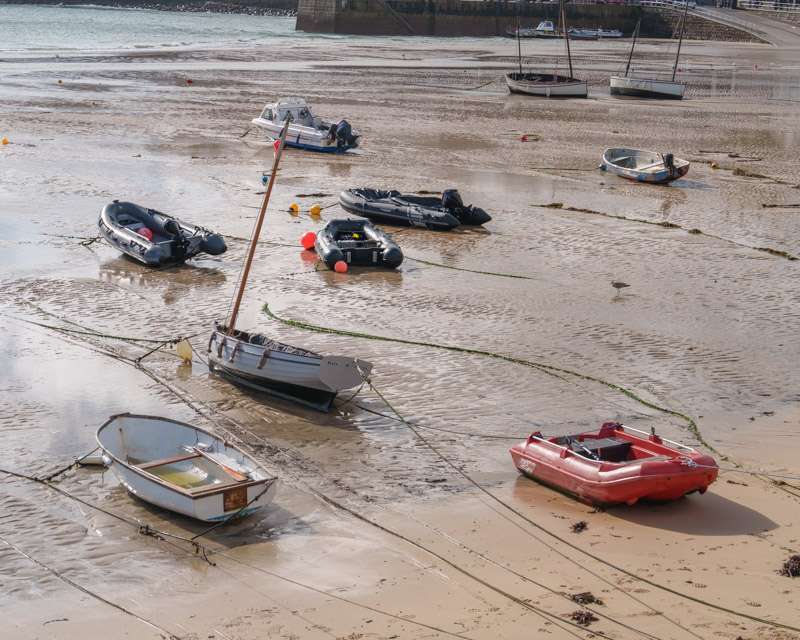
Photo spots and light in St Ives
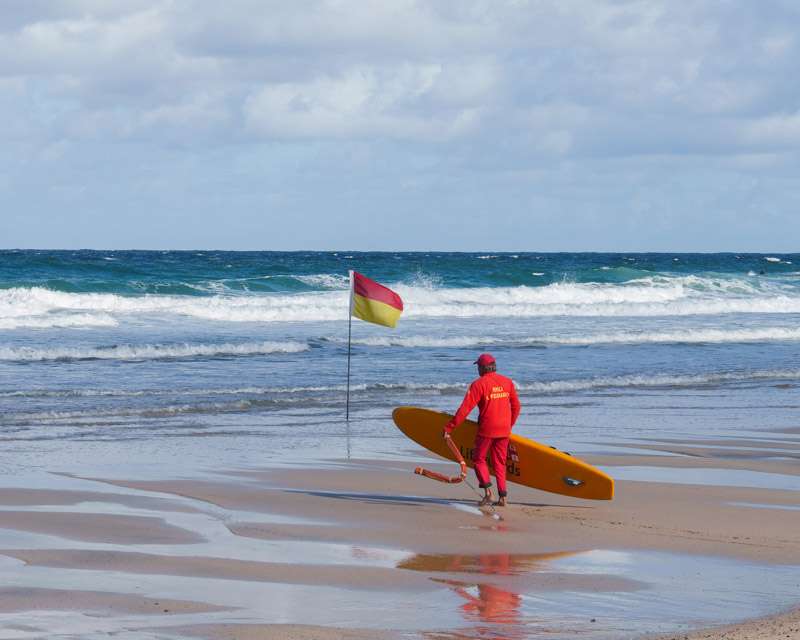
The 16th of October was clear, with cumulus and hard autumn light. For St Ives that cuts both ways. The Downalong lanes run narrow and deep between the houses; at midday the sun sits on the gable and everything below goes into shadow. The lanes that run across the light work, the others do not.
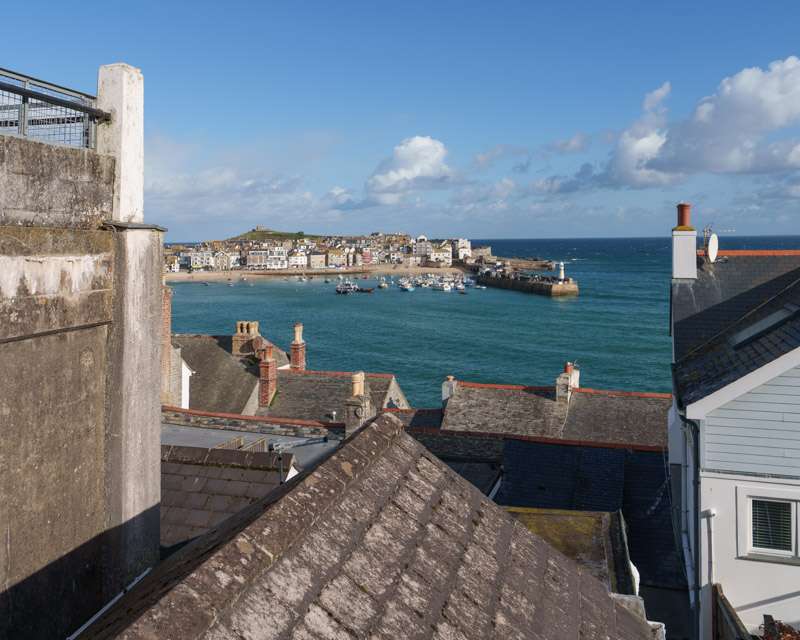
Three standpoints that paid off: the pier looking back at the row of houses — the view the place is known for; the slope above the harbour, where you see over the roofs to the pier and the open sea; and Porthmeor Beach in the afternoon, because it faces north and the light comes from the side rather than behind you.
The north light that brought the painters here applies to photographers too, with the sign reversed: on the Porthmeor side it is soft and even, on the harbour side hard. Two hours are enough to see both. They are three hundred metres apart.
What I would do differently next time
Check the tide before booking and, if there is a choice of slot, pick by that. Everything else about this excursion can be planned. That cannot.
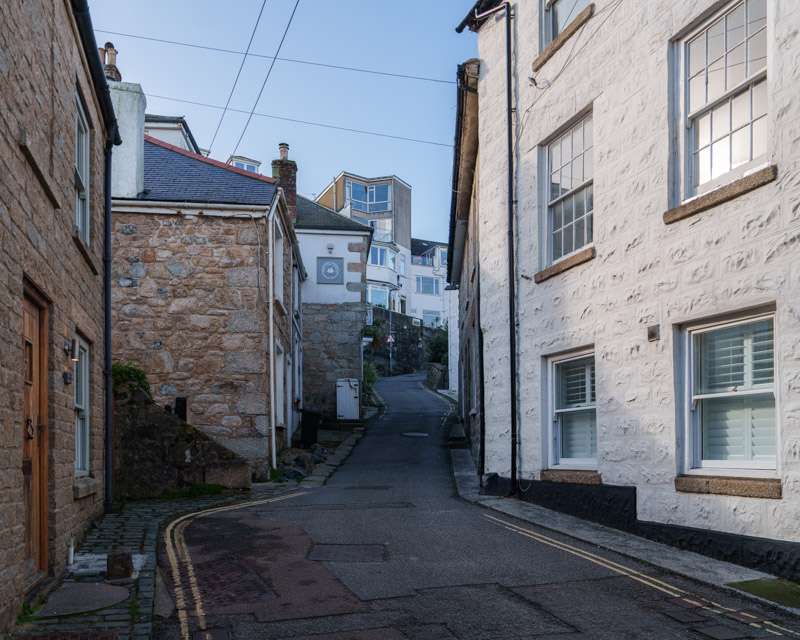
And skip the main lane. It is the busy one, and it is the one that says least about St Ives. Two streets higher the town goes quiet: single-storey houses, blue and red window frames on whitewash, a cobbled lane running uphill to nothing in particular. Most groups do not go there — and it is the town the fishermen built.
Common questions about St Ives from Falmouth
How far is St Ives from Falmouth?
About 45 kilometres by road, roughly an hour each way by coach. It cannot be done on foot or by port shuttle — St Ives belongs to the excursion, not to the port day.
Can you reach St Ives from Falmouth independently?
By train, yes: Falmouth Docks to Truro (25–30 minutes), on towards St Erth, and there onto the branch line into St Ives (10 minutes). An hour to an hour and a half each way with two changes. On a short call that leaves too little time in the town.
What did the ship’s excursion cost?
€55 for the transfer alone, both ways, about 4.5 hours in all, with a good two hours of free time and no guiding. On the same port day the Land’s End panoramic drive cost €63, and Heligan and Prideaux Place €99 each (Phoenix Reisen, MS Amadea 2026/27, prices from March 2026).
Are two hours enough for St Ives?
For the harbour, Downalong and Porthmeor Beach, yes — everything is ten to fifteen minutes apart on foot. For Tate St Ives, no; an hour in the museum costs half the time you have.
What does Tate St Ives cost?
£15.50 with donation, £14 without, concessions £14.50 or £13, free for under-18s. Daily 10.00 to 17.20. The Barbara Hepworth Museum costs £11 and needs a separate ticket (October 2026).
Why are the boats in the harbour sitting on sand?
Because St Ives harbour dries out. The spring range is about 5.8 metres. Whether the boats float is decided by the tide table, not the weather.
Sources for the figures in this article: admissions and opening times from Tate St Ives and the Barbara Hepworth Museum; the building history of the Porthmeor Studios from the Historic England list entry; Alfred Wallis from the St Ives School of Painting; the pilchard fishery from the St Ives Museum; tidal levels from visitmyharbour; the protected status of Cornish sardines from GOV.UK. Food prices from the boards on 16 October 2026.
Written by Jan Madeus — ship’s videographer, at sea since 2008. I go ashore in the same ports as the guests, with the same few hours and the same all-aboard time. More about me.
Related: Falmouth Cruise Port on Your Own — the day ashore on foot · St Mary’s Cruise Port on Your Own · Cruise Ports on Your Own — every port guide
Ports on this route — British Isles: Falmouth Cruise Port on Your Own · Portsmouth Cruise Port on Your Own · St Mary’s Cruise Port on Your Own · Saint Peter Port Cruise Port on Your Own · Kirkwall Cruise Port on Your Own · All cruise ports on your own