
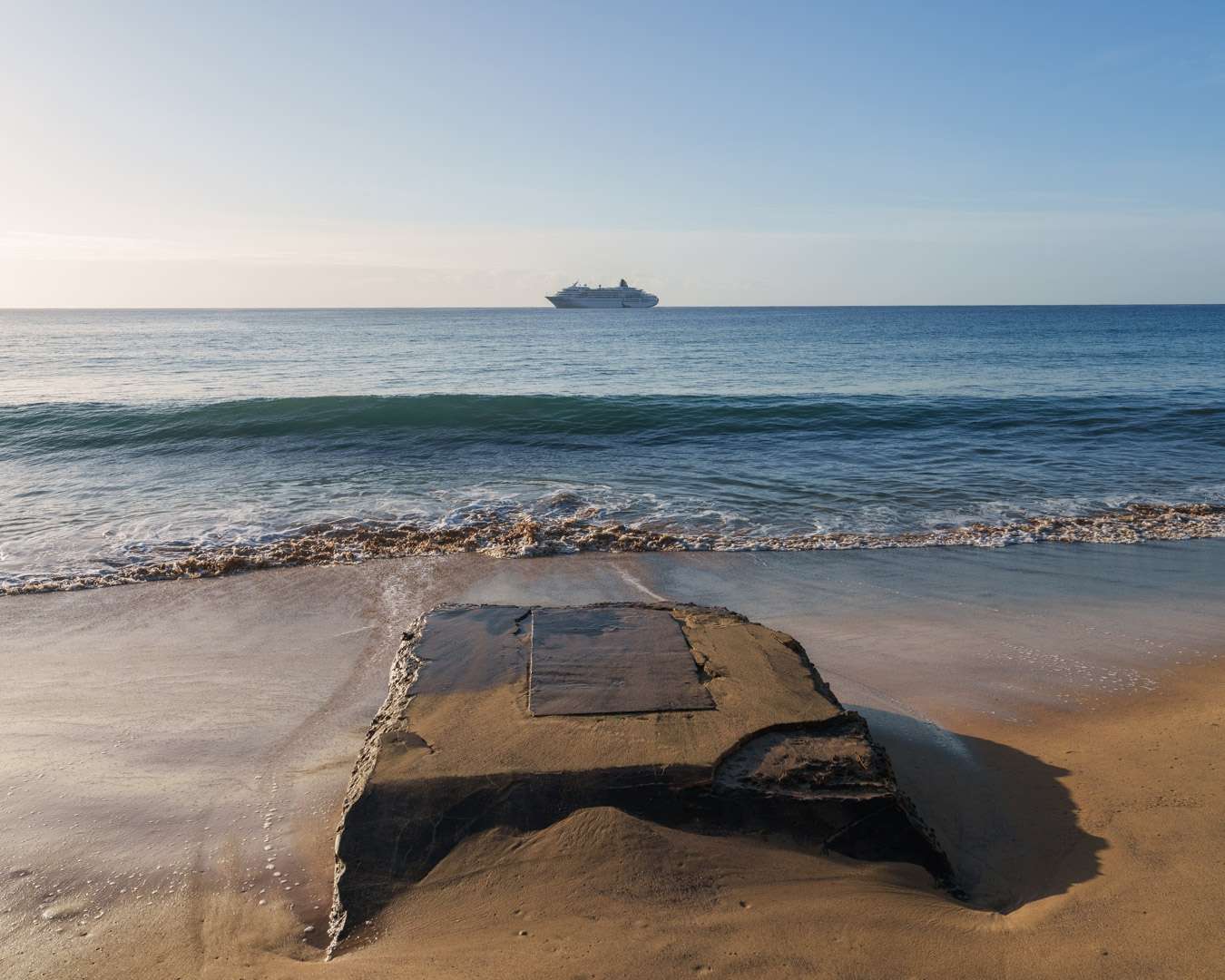
Visited: 20 October 2026, on a call of MS Amadea. The photographs are my own, taken that day.
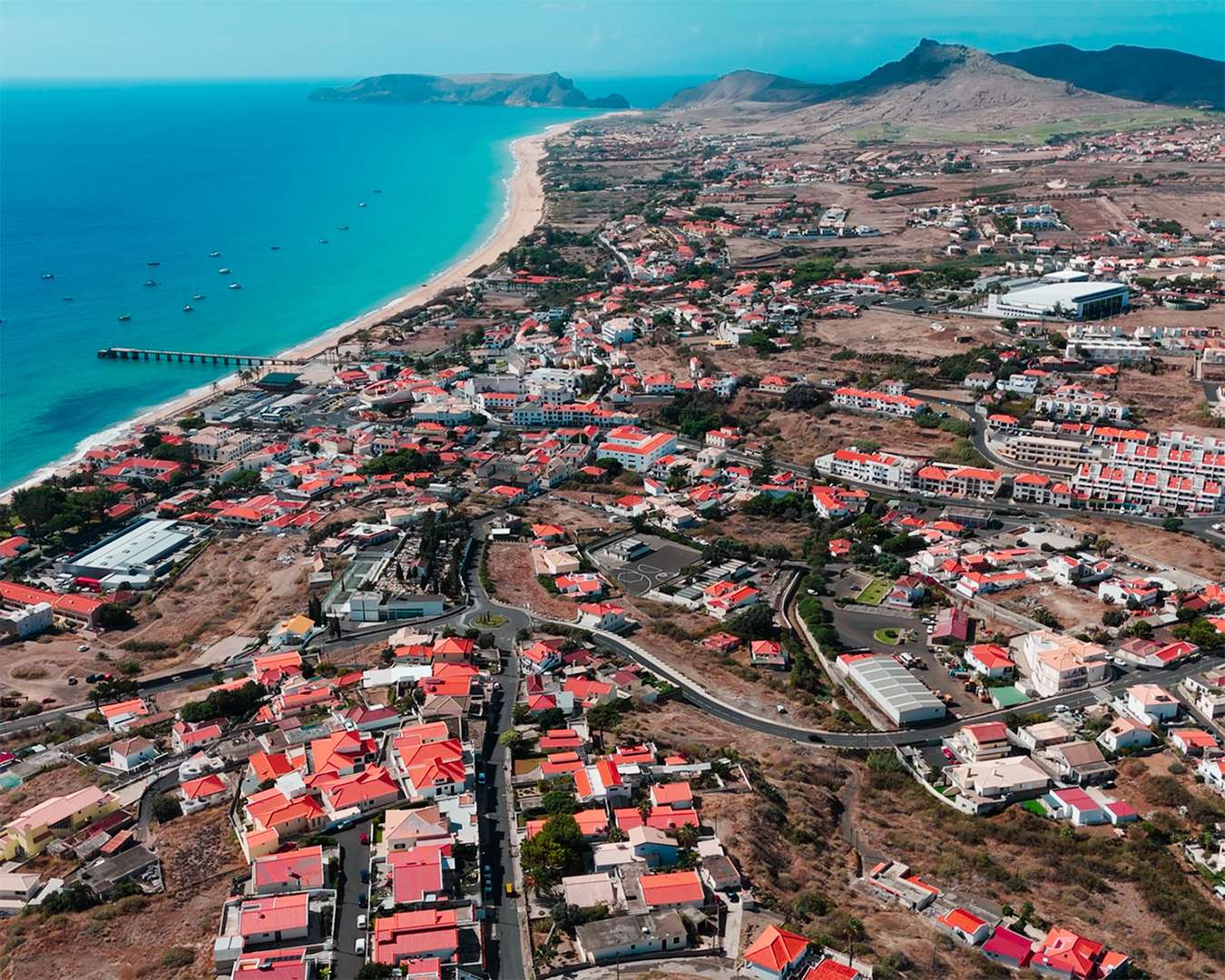
Porto Santo is a tender port. The ship lies off the island and runs boats into the marina — about fifteen minutes on the water. From the marina it is roughly a kilometre into Vila Baleira, flat, twelve to fifteen minutes on foot. Two hours covers the town. Five hours covers the town, the high ground behind it and a stretch of the nine-kilometre beach, which is what I walked.
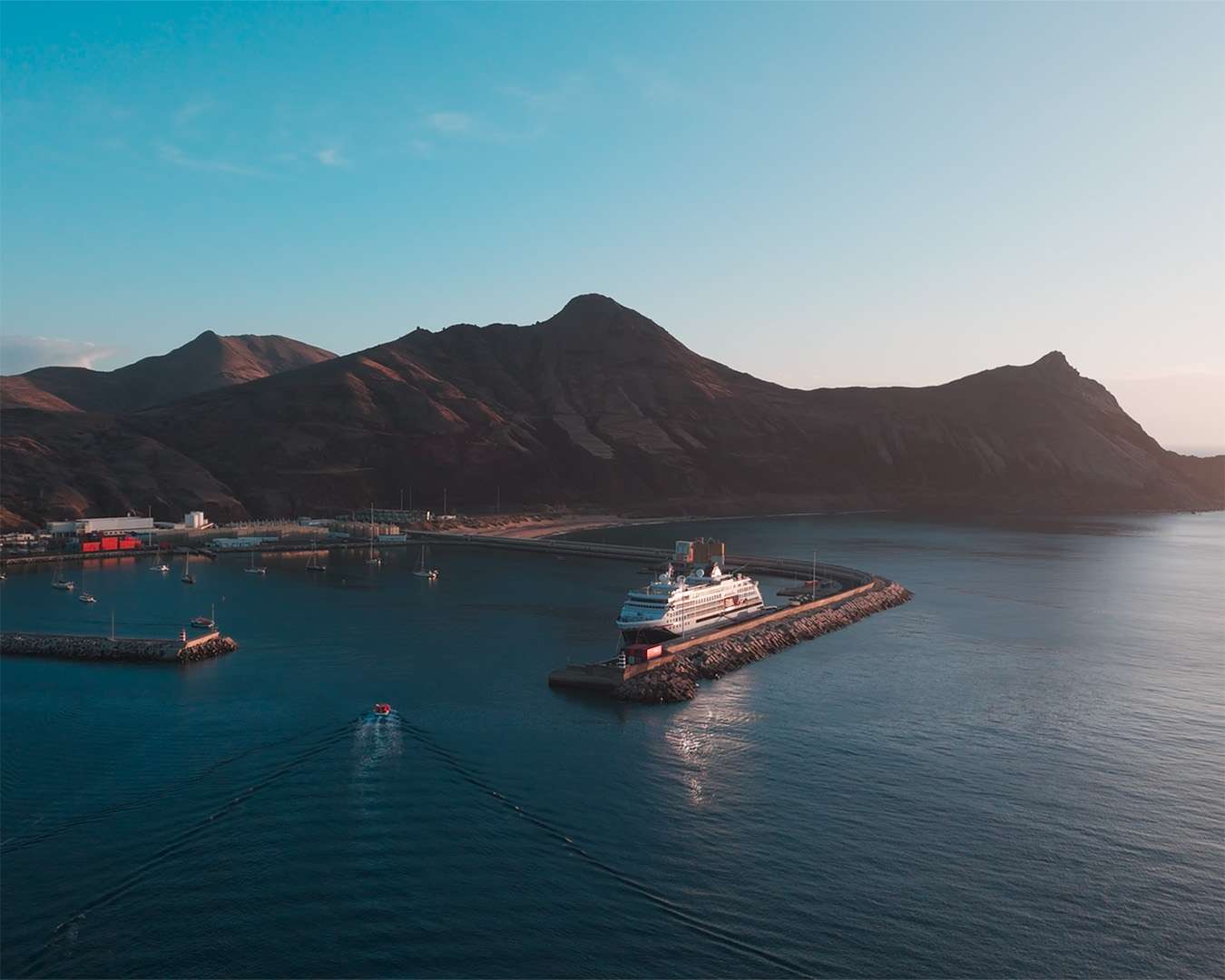
Porto Santo cruise call at a glance
| Berth | None for cruise ships — this is a tender port. The quay inside the breakwater takes the Funchal ferry and small craft |
| Tender | Yes — about 15 minutes from the anchorage to the marina |
| Distance to Vila Baleira | About 1 km from the marina to the town centre · 12–15 min on foot · flat, paved |
| The beach | 9 km of pale carbonate sand, beginning at the marina and running south-west |
| Minimum time ashore | 2 hours for the town. 5 hours if you want the high ground as well |
| Terrain | Low. Over 85% of the island lies below 200 m; the highest point, Pico do Facho, is 517 m |
| Return buffer | 45–60 minutes before all-aboard, plus the tender queue — which is the part people underestimate |
| Visited | 20 October 2026, MS Amadea. Prices checked October 2026 |
Where does the ship dock in Porto Santo?
It does not. Porto Santo has one harbour, east of the town behind a long breakwater, and it is built for the Funchal ferry, the supply ships and the fishing boats. Cruise ships lie at anchor off the south coast and run their own tenders.
Ours landed inside the marina. The crossing took about fifteen minutes in calm water, and the tender is the one part of this port that can go wrong: a swell from the south makes the boat work harder, and the queue at the gangway at the end of the day is longer than the walk you have just done. Build the buffer around the boat, not around the town.
How far is Vila Baleira from the marina?
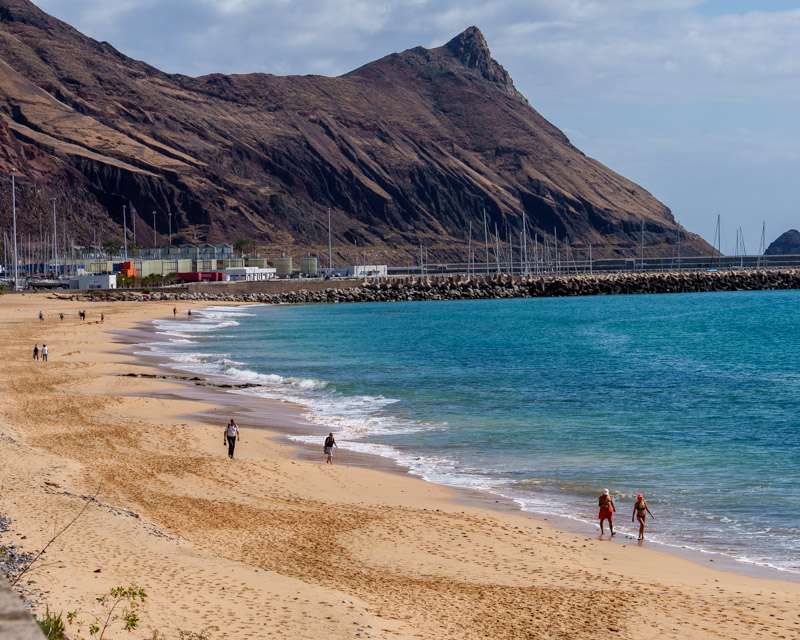
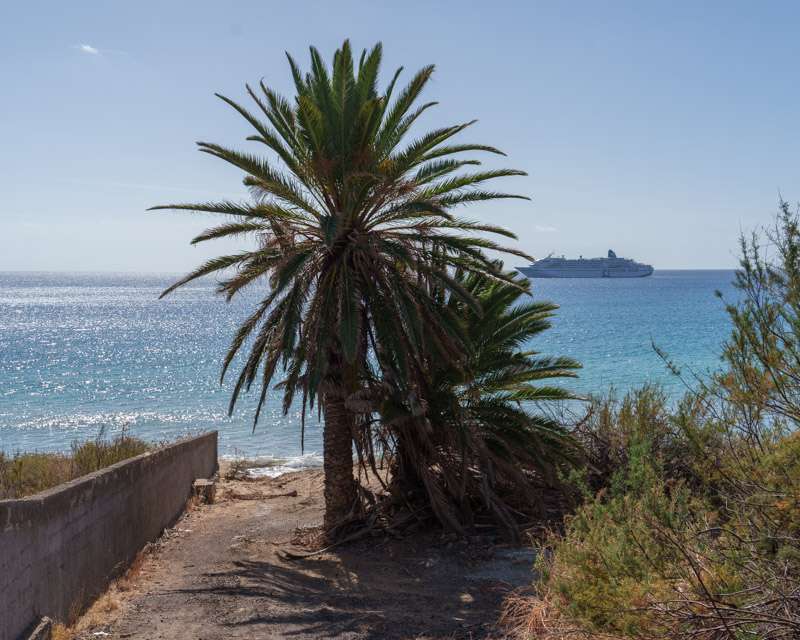
About a kilometre. The road runs behind the beach, level the whole way, and it takes twelve to fifteen minutes at an ordinary pace. There is nothing to get wrong: keep the water on your left and the town arrives.
- Distance — roughly 1 km from the marina to the main square
- Walking time — 12–15 minutes, flat, on pavement
- Shade — patchy. Palms along part of it, open ground for the rest
- Taxis — wait at the marina on call days. Fares are not posted; agree the price before you get in
- Shuttle — not needed for the town. If walking is a problem, the taxi is the better answer
Is Porto Santo worth doing on your own?
Yes, and here the question is almost beside the point. The town is twenty minutes from the boat on foot and the beach begins where the tender lands. There is very little an excursion can give you that walking does not, unless the excursion goes up.
That is the honest division of this island. Vila Baleira and the sand are free and immediate. The viewpoints — Pico do Castelo at 437 m, the ridge roads, Fonte da Areia on the north coast — are a drive, or a long walk in open sun with no shade worth the name. If the call is short, stay low. If you have five hours and legs, go up: the island is small enough that from the high ground you see the whole of it at once, which is not true of Madeira at all.
What to see in Vila Baleira
The centre is small and the three things worth stopping for stand within three hundred metres of one another.
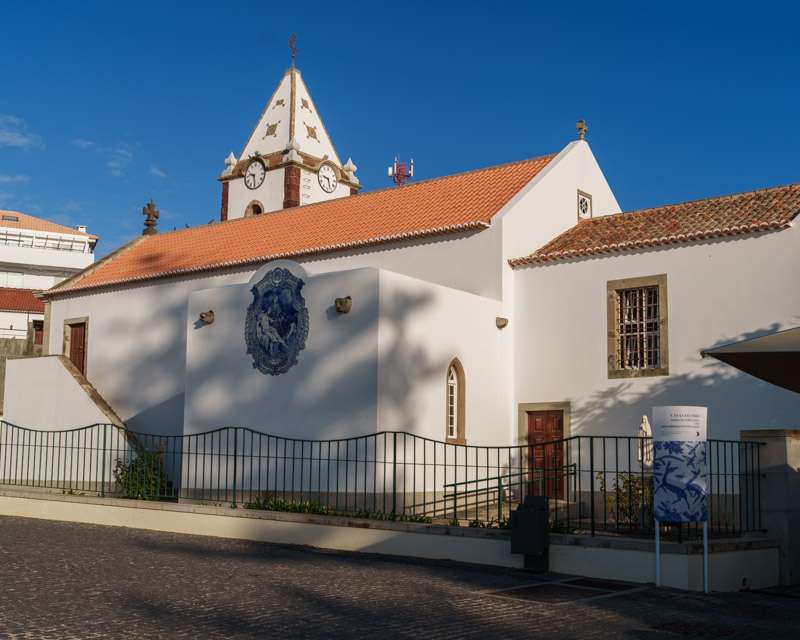
The parish church (15 minutes). Nossa Senhora da Piedade, white, with a tile panel on the flank and a bell tower carrying two clock faces. It is the oldest building line in the town and the one that photographs well from the street rather than from the square.
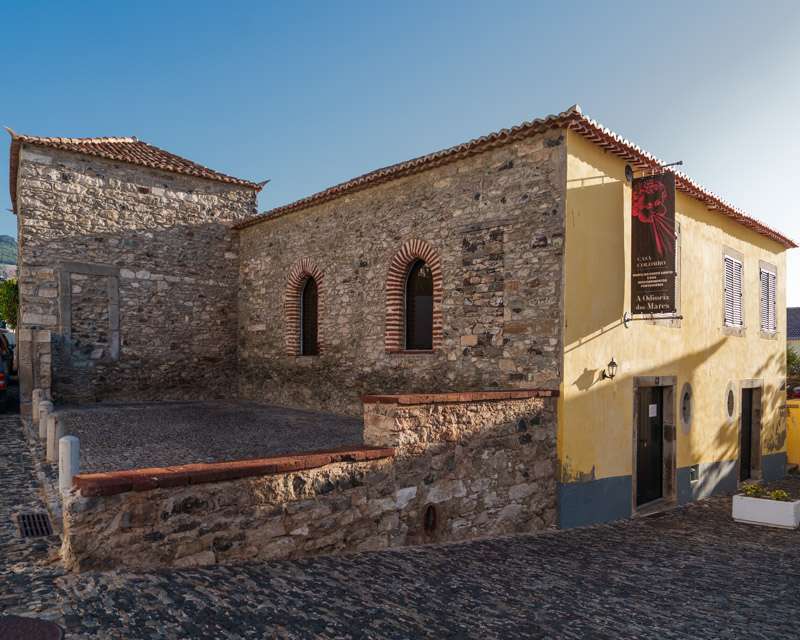
Casa Colombo (30–45 minutes). The Columbus House, in dark stone behind the church. Christopher Columbus married Filipa Moniz, daughter of Bartolomeu Perestrelo, the first captain of the island — that is documented. That he lived in this particular house is not; the attribution rests on local tradition, and the museum is better for the Porto Santo material and the charts than for the Columbus story itself.
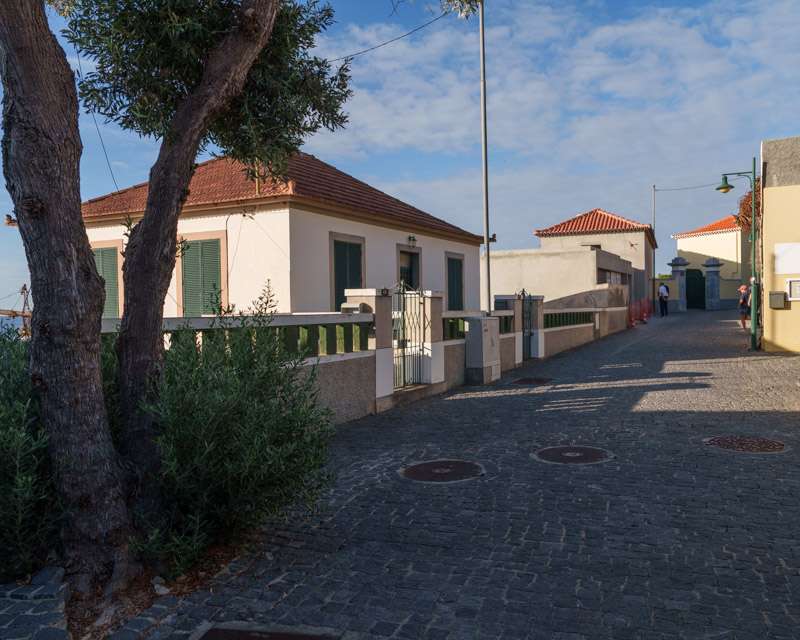
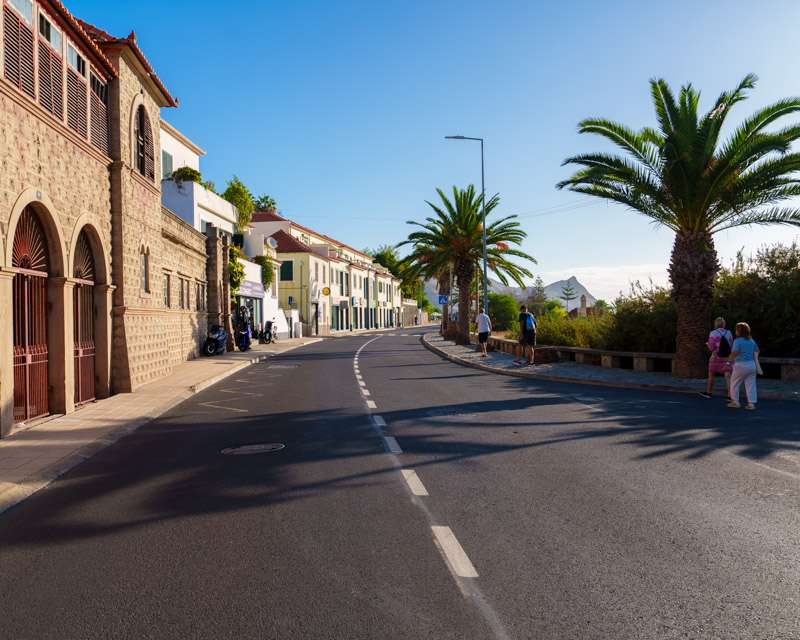
The streets between them (20 minutes). Cobbles, low white houses with green shutters, bougainvillea over the walls. It is a working town of a few thousand people, not a set, and in October it is almost empty by four.
Casa Colombo opening hours and admission, October 2026
The regional culture directorate gives 10:00–12:30 and 14:00–17:30 Monday to Friday, 10:00–13:00 at weekends, and lists the museum as closed on Tuesdays from October to June. The tourist board’s page for the same museum says Mondays. They do not agree, and on a one-day call that matters: check on the morning you arrive before you walk up for it. Admission is €6 for adults, €3 for ages 13–25 and over-65s, €4 per head for groups of more than six, and €10 for a family ticket.
Why is the beach pale on a volcanic island?
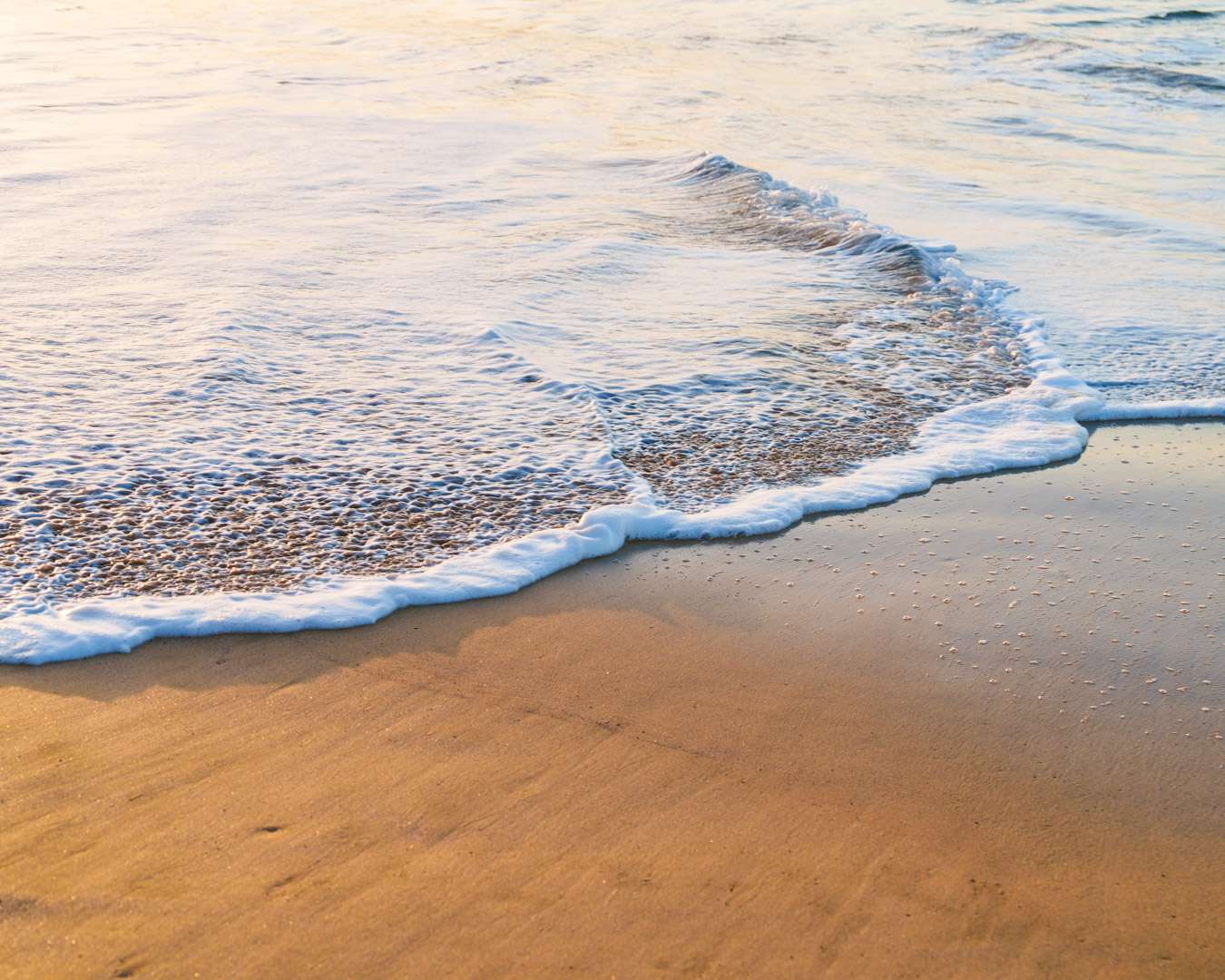
This is the thing worth knowing before you walk on it. The sand of Porto Santo is not ground-up lava. It is lime — broken shells, coral, calcareous algae, the plates of sea urchins, the cases of single-celled organisms. All of it lived. The regional government’s own geosite description puts it plainly: a carbonate beach, yellow because of what it is made of, with only a small fraction of dark volcanic grains mixed in.
It is also not freshly made. The sand came out of the sea, the wind piled it into dunes inland, those dunes hardened into rock, and the rock has been eroding back down to the beach ever since. What you walk on has already been somewhere else twice.
The same properties are why people come here to be buried in it. Sand baths — psammotherapy — are a documented local use of this beach for bone and muscular complaints, and in summer you will see it happening. Nine kilometres is enough room for everybody.
Five hours on foot: what the walk actually covers
Porto Santo is twelve kilometres long and nowhere more than six wide, and over eighty-five per cent of it lies below two hundred metres. That is the whole difference from Madeira, forty kilometres away: Madeira rises past eighteen hundred metres and takes the water out of the clouds. Porto Santo is too low to do that, which is why it is the colour it is.
Five hours, starting at the marina, gets you the town, the road inland past the golf course, and enough height behind it to see from the harbour to the far end of the island in one view. Nothing on that route is difficult. All of it is exposed: there is no shade between the last houses and the ridge, and you should be carrying water before you leave the town, not looking for it afterwards.
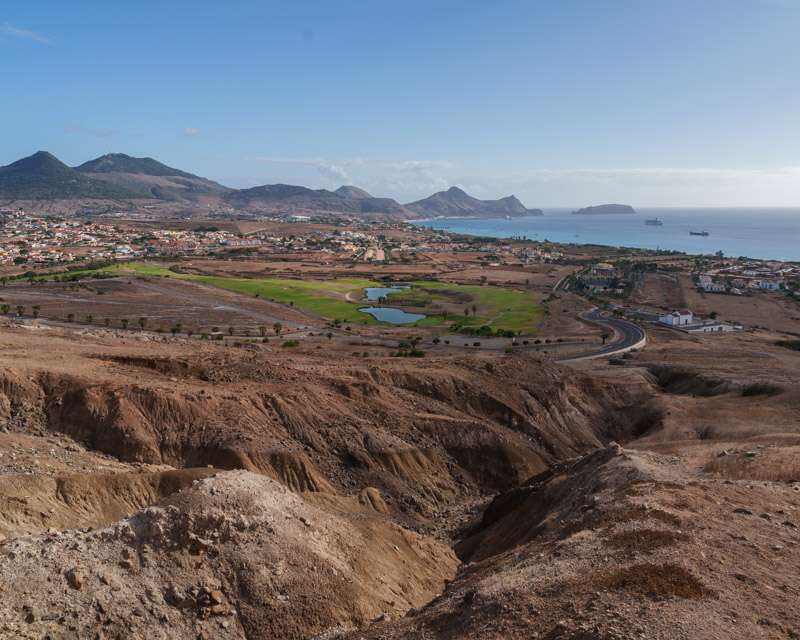
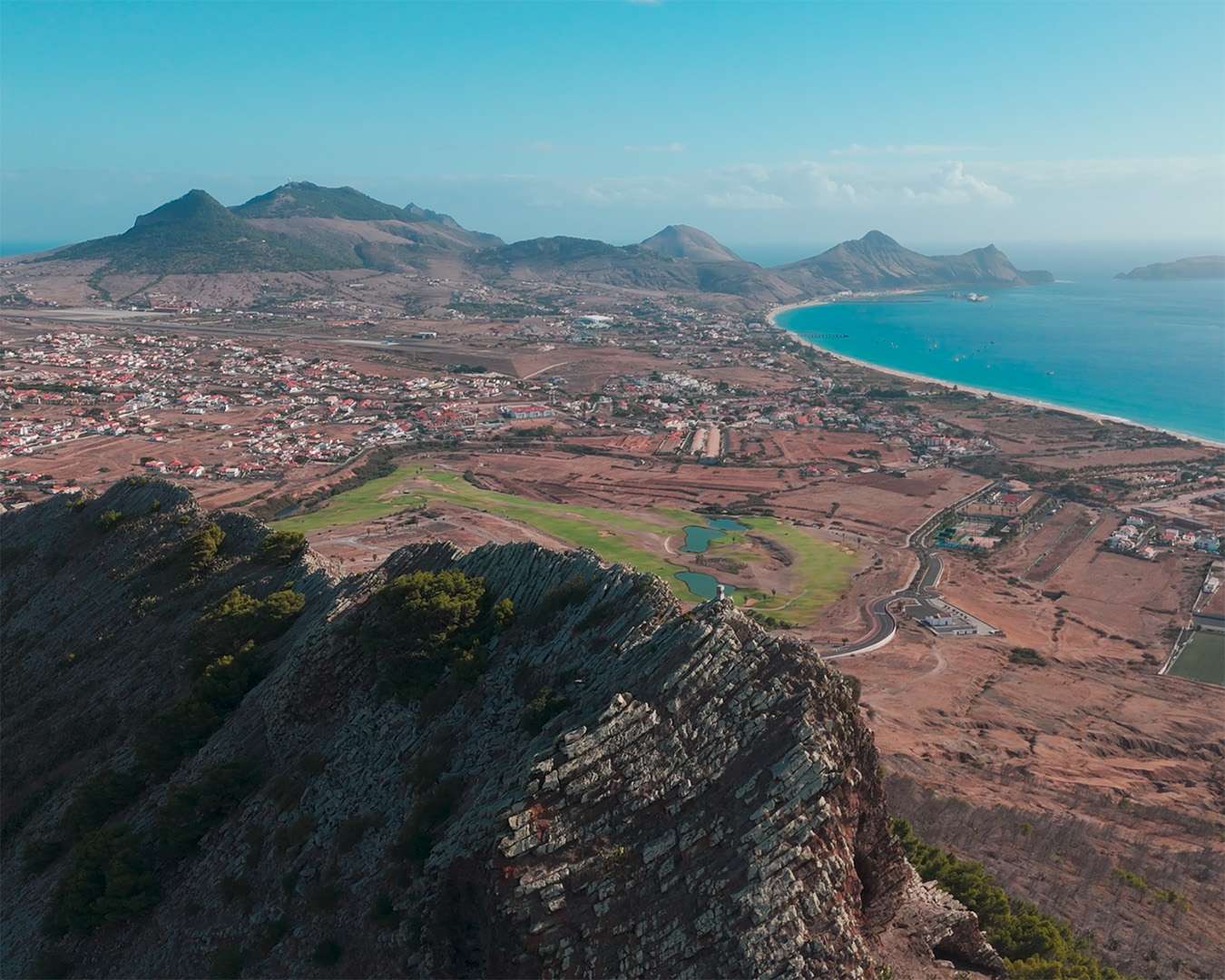
The golf course below you is a Seve Ballesteros design, opened in 2004, twenty-seven holes on ground that had nothing on it. The green on this island is almost all like that — placed rather than found.
Everything green here was planted
Porto Santo was wooded when the Portuguese arrived: dragon trees, juniper, wild olive. The first captain is said to have put rabbits ashore, and they bred. What the rabbits left, the settlers cut for timber and firewood. In 1717 a chronicler recorded that there was scarcely a dragon tree to be seen on the island. In 1825, after a visit two years earlier, T. E. Bowdich wrote that there were not twenty trees of any kind left standing on it, and that people burned cow dung because they could not afford wood.
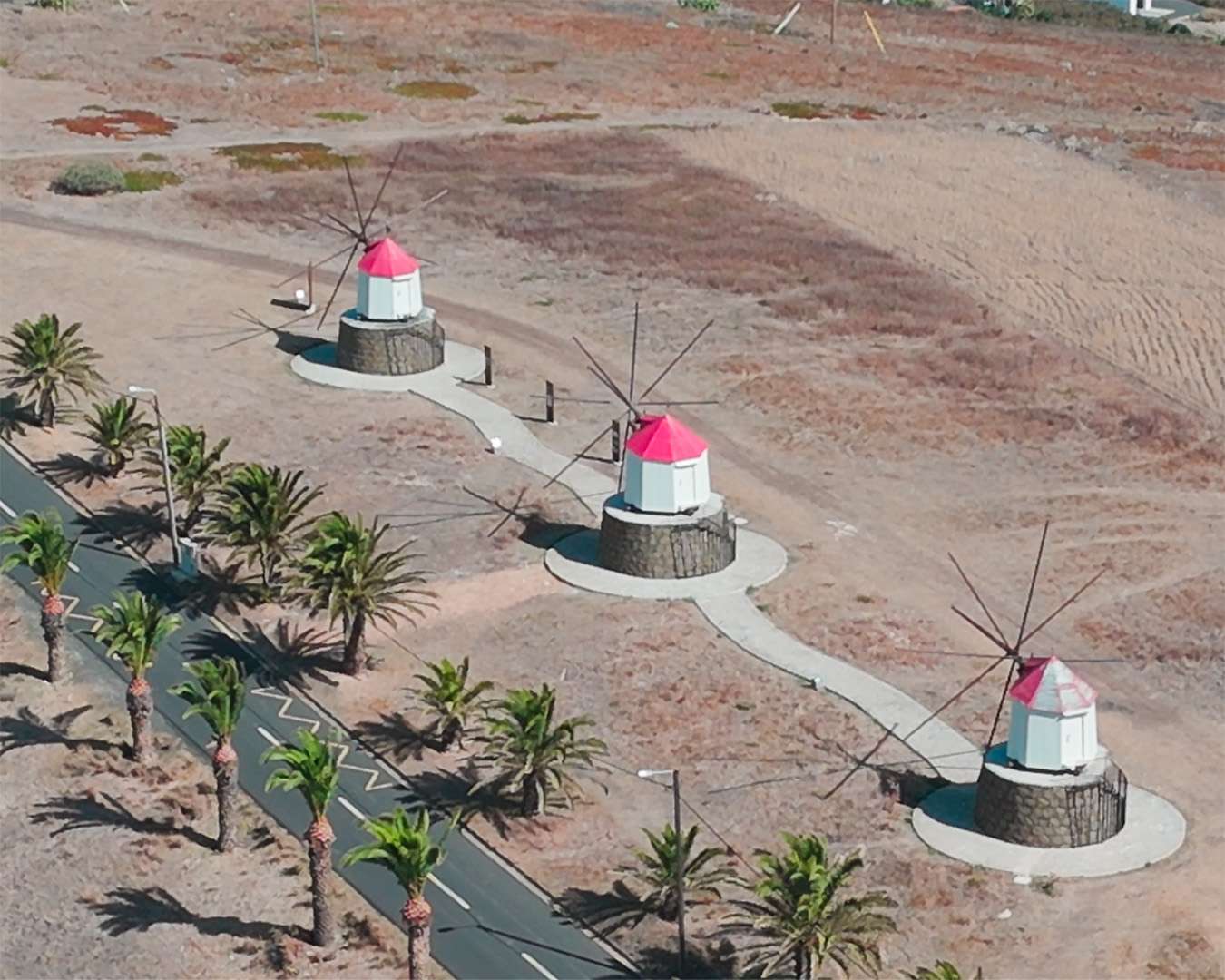
The trees you see now were put there. From about 1905 a forester, Schiappa de Azevedo, began planting on Pico do Castelo — fourteen hectares to begin with, extended to roughly fifty by the 1950s and to a few hundred by 1990, on an island of four thousand two hundred hectares. His bust stands on the hill he planted. It is the most unusual thing about the landscape here and almost nobody is told it: every tree on Porto Santo is there because somebody carried it up.
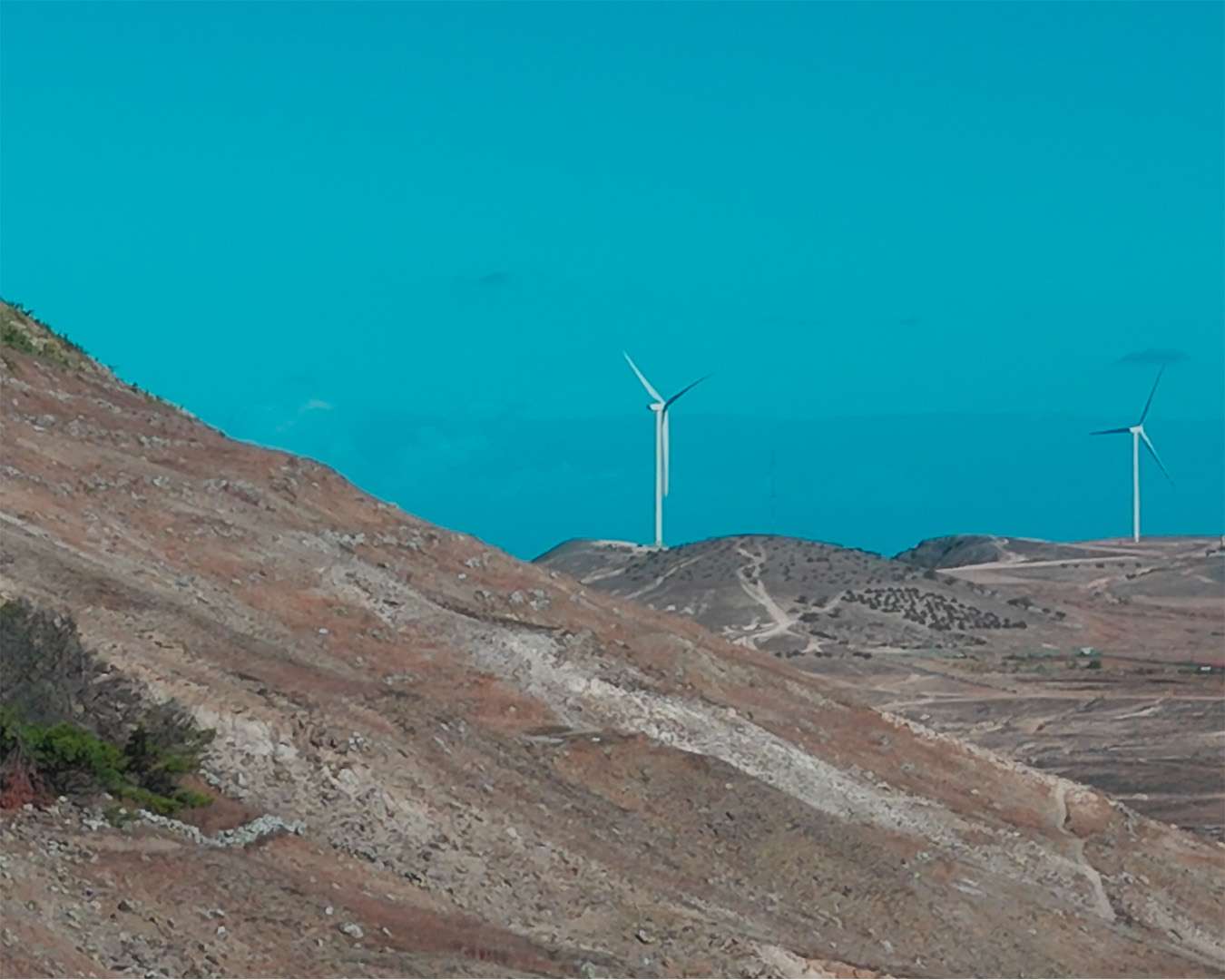
The same applies to the water. The island’s drinking water is made from the sea, by a reverse-osmosis plant that has supplied Porto Santo for decades. Without it the place would not work in its present form.
What does a day on Porto Santo cost?
| Item | October 2026 | Note |
|---|---|---|
| Tender ashore | included | run by the ship; about 15 minutes each way |
| Walk, marina to Vila Baleira | free | about 1 km, 12–15 min, flat |
| The beach | free | 9 km, starting at the marina |
| Casa Colombo — Porto Santo Museum | €6 adult · €3 ages 13–25 and 65+ · €10 family | €4 per head for groups over six. Closing day disputed — see above |
| Taxi from the marina | not posted | agree the fare before you get in |
| Ship’s excursion | price in the on-board programme | worth it only if the target is the viewpoints or the north coast |
Prices I could not confirm from two sources are left out rather than guessed. The museum figures come from the regional culture directorate’s own page, checked in October 2026.
Ship’s tour or on your own?
On your own, unless you want the high ground and do not want to walk to it. The town, the museum and the beach are all inside half an hour of the tender landing, and an excursion that covers them is paying for a coach you do not need.
The case for the coach is the rest of the island: Pico do Castelo, the ridge road, Fonte da Areia and the north coast. It is a small island, so these are short drives — but in the open sun they are long walks, and a tender port takes a bite out of both ends of your day. Whichever you choose, be back at the marina 45 to 60 minutes before all-aboard, and count the boat queue as part of the journey.
Where are the best photo spots on Porto Santo?
The first one is from the ship, before anyone goes ashore. Lying off, you get the island as a long low ridge with the harbour at one end, and in the hour after sunrise the whole north side of it goes red-brown while the water is still flat.
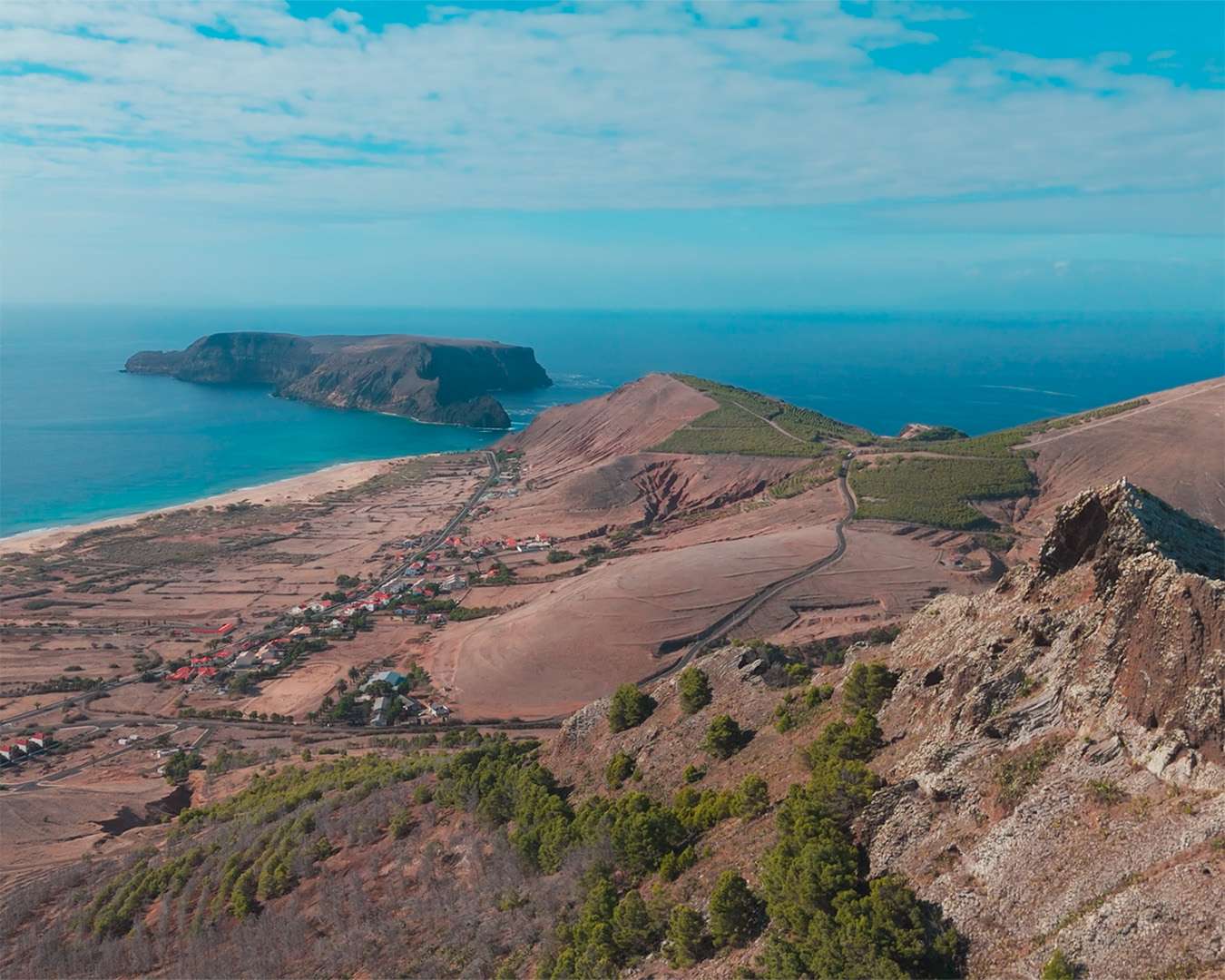
The second is the high ground behind the town. Because the island is low and narrow, one frame from the ridge holds the harbour, the town, the golf course, the full length of the beach and the islets at the far end — a view you can only get on a small island, and the single best reason to spend the extra hours walking up.
The third is the sand itself, close up and in low sun, where you can see that it is made of fragments rather than grains.
What did not work was the town in the middle of the day. White render and dark basalt under a vertical sun give you two tones and no drawing in between, and the lanes are narrow enough that there is no way to work around it. Early or late, or not at all.
What I would do differently next time
Check the museum’s closing day before leaving the ship rather than on the door. Two official sources name two different days, and on a one-day call that is the difference between seeing the Columbus house and photographing its outside wall.
And I would go up earlier. The five hours were enough, but the best light on the ridge is at the start of the day, when most people are still deciding whether to take the first tender.
Written by Jan Madeus — ship’s videographer at sea since 2008. I go ashore in the same ports as the passengers, with the same few hours and the same deadline. More about me.
Ports on this route — Madeira, the Azores and the Iberian coast: Funchal on your own · Funchal at night · Porto from Leixões: the six bridges · Lisbon on your own · Horta: Capelinhos on your own · Praia da Vitória on Terceira · All cruise ports on your own