
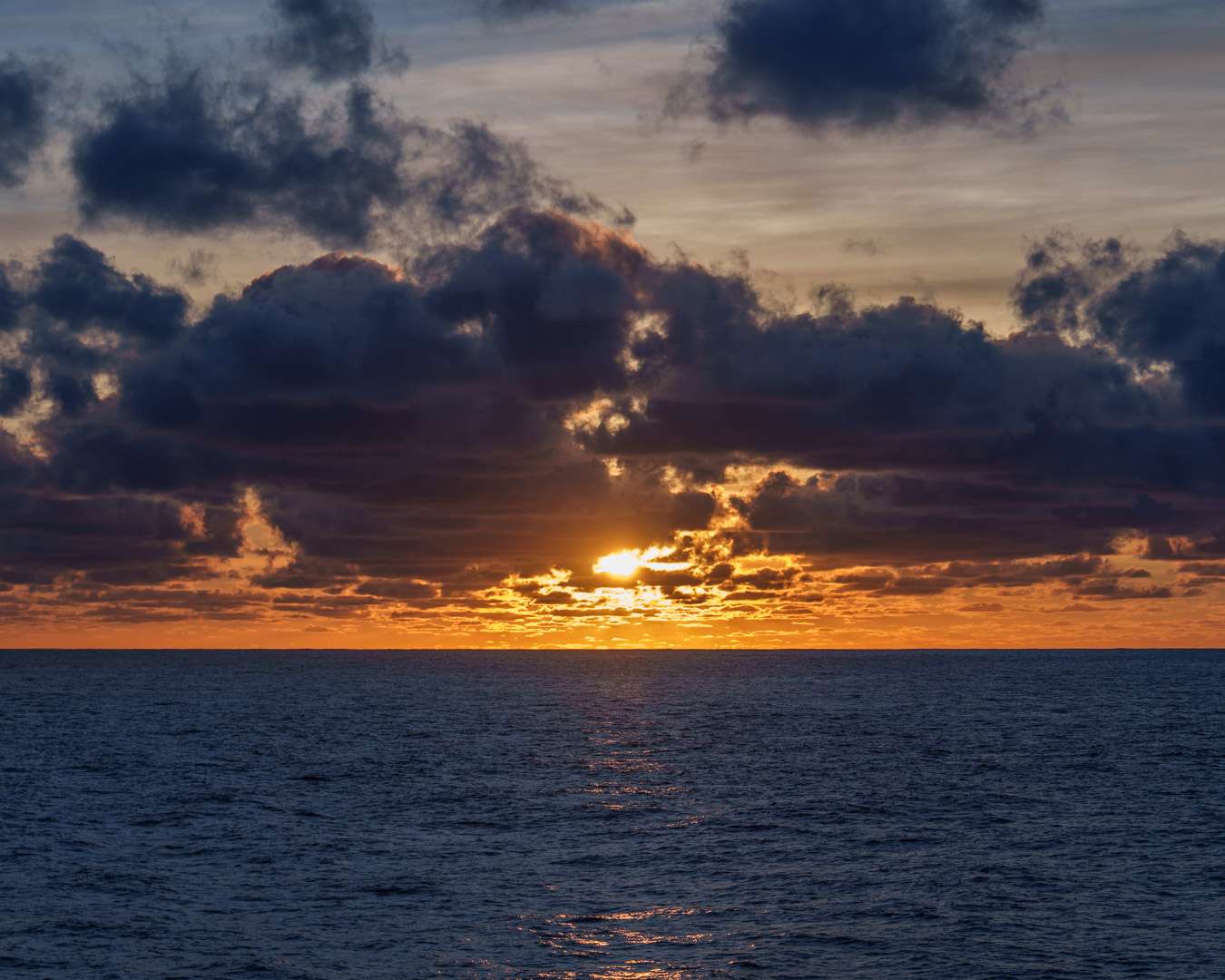
Observed on an Atlantic crossing in September 2026, bound for the Azores
A sea day is a day without a port. The ship sails, nobody goes ashore, and the onboard programme fills the hours a shore day would have filled. On long legs they come several in a row — four or five across the Atlantic is normal. What is on offer is printed and in your cabin the evening before, and it is fuller than most people expect.
This piece walks through one sea day, from the first exercise class at eight to the late-night sausages at half past ten. It also says what costs money and what does not. The second half is missing from almost every description, although it explains half the day.
What is a sea day?
Sea days come out of distance. Between two ports a thousand nautical miles apart there is nothing to call at, so the ship keeps going. For the line it is the day the ship itself is the destination. For the passengers it is the day they find out whether they like the ship.
In practice that means no alarm for an excursion, no walk back, no all-aboard time. Instead there is a programme with twenty to thirty items on it, of which you will attend three or four. Try for more and the evening feels like the end of a working day.
Morning: movement, a lecture, a service
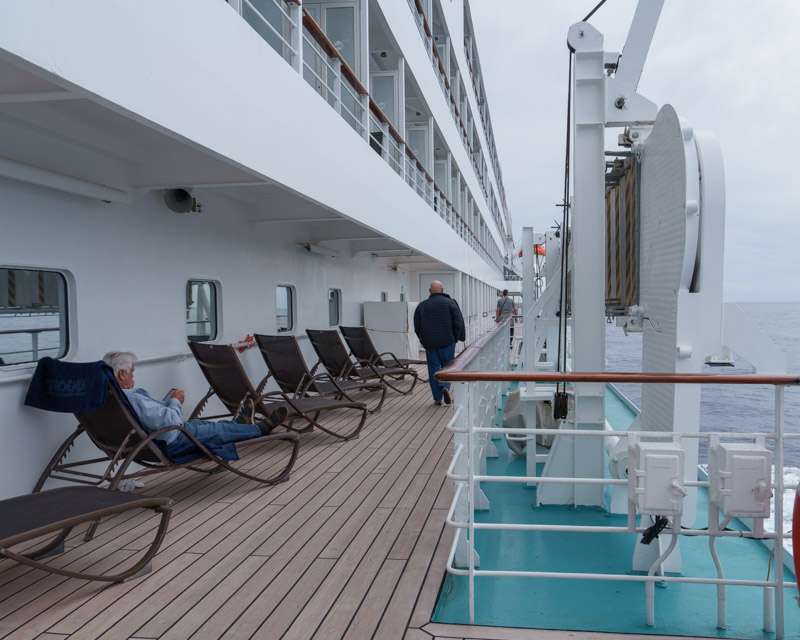
The day starts early and athletically. Back exercises in the show lounge at eight — bring the large towel and proper shoes, which at sea is not a detail but a safety matter. At nine, a session for core and pelvic floor. Around quarter past eleven, resistance-band work by the shuffleboard court, outdoors, on the sheltered side.
On a Sunday the ship’s service runs alongside it, ecumenical, with the ship’s pianist and a guitarist. Ships with a German-speaking clientele usually carry a chaplain. The service is one of the few items people dress for in clothes they would otherwise keep for the evening.
The most important item of the morning comes just after ten: the lecturer’s talk on the next destination. Regional background, three quarters of an hour, delivered without notes — and the only item on the whole programme that has anything to do with the voyage. If you attend one thing, attend this. It is usually broadcast on a cabin TV channel as well, which is convenient and also the reason the room is rarely full.
In between sits what you might call the occupation programme: a Dutch board game in one bar, mandala painting in the lounge above, darts in the other bar. On this day all four of those sessions were run by one person from the entertainment department, alone.
Lunch: the point where the day tips over
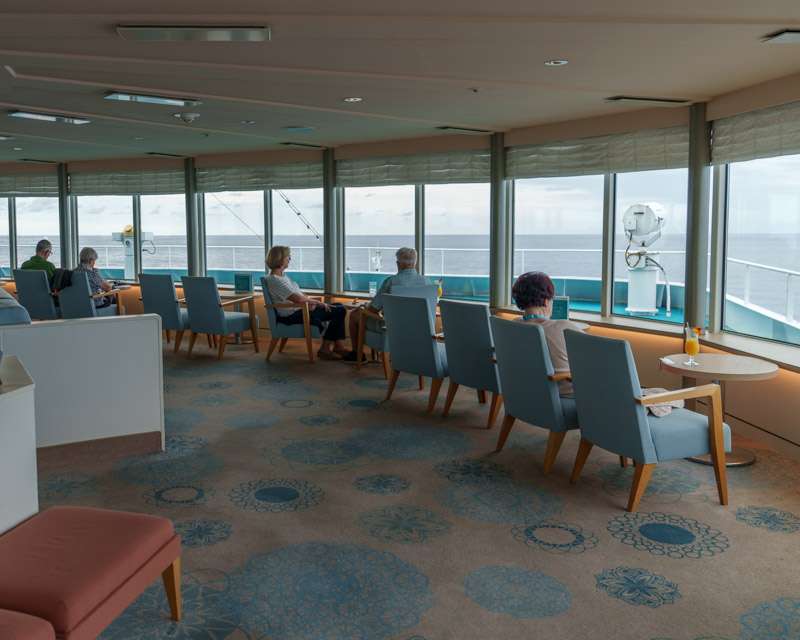
Lunch runs from half past twelve to two, and on a sea day it is not a pit stop. It is not only a buffet: that day a card lay alongside it with two starters, a salad, two soups, three main courses and four desserts — plus a full vegetarian menu in a column of its own. Weather permitting, the pool had a dish to itself as well. Work through the card and you sit for an hour and a half, and the afternoon starts accordingly later.
More interesting than the length is the choice. The ship was mid-Atlantic, bound for the Azores, and the chef’s recommendation was an “Oktoberfest Sunday roast”: leg of suckling pig with dark beer sauce, sauerkraut and potato dumplings. Beside it, baked cod with rocket pesto, and Swabian dumplings from the wok with hoisin and sesame.
That is not a mistake, it is the principle. The galley of a ship with German-speaking passengers follows the calendar at home, not the geography outside. At the end of September there is Oktoberfest, whatever the latitude. If you expect the menu to follow the route you will be disappointed — in exchange, on any day of the voyage you know roughly what season it is at home.
And here too the price line sits alongside: two wines are recommended with lunch, a Pinot Gris from Baden and a Bordeaux, both €6.50 for 0.25 litres. The food is in the fare. The wine is not.
Afternoon: tournaments, a catwalk, waffles
After that the afternoon breaks into smaller pieces.
At two, the third and final round of the card tournament. Tournaments like that run across several sea days; they are the reason some passengers suddenly have acquaintances by the second one. At half past two, two things at once: shuffleboard with nobody supervising, equipment left out for whoever wants it — and the fashion show, which needs a section of its own.
Then railing gymnastics at three, a throwing game by the shuffleboard court at half past, and from half past three the tea and coffee hour, which has a different theme every day. On this one, waffles with ice cream and two tropical compotes. Bingo at half past four.
The layer nobody writes about
A daily programme is not only a timetable. It is also a sales brochure, and if you read it twice you can see it.
The afternoon fashion show is an event of the onboard boutique. The ship’s officers walk as models, which is charming and works well — and the programme carries the line that today only, everything shown is ten per cent off. Bingo costs five euros a card, exact change appreciated. The tea and coffee hour is free; the smoothie recommended alongside it is €4.40, or €4.80 with a shot. Lunch comes with two wines recommended by the bar team, vintage and price included. The cocktail of the day is printed with its ingredients and its price, the alcohol-free one a euro cheaper. After dinner a particular whisky is suggested, €6.20 for four centilitres.
The largest item sits as running text between the appointments: an offer from the cruise sales desk for an entirely different voyage. Sixteen days in India with a river cruise, from €4,599 per person, early-booking discount “only 4 days left”. That is no accident. Sea days are the best selling days of a voyage, because the guests are on board, have time, and are in the best mood they will be in all trip.
None of it is underhand. It is the business model, the tone stays friendly, and nobody approaches you if you buy nothing. But it is worth seeing the difference between what the programme offers and what it sells. A sea day without a single euro of extra spending is entirely possible — you just have to plan it that way on purpose.
Evening: show, music, cinema
The evening carries a dress code, reprinted every day; on this sea day “light elegance”, one step up for the extra-charge restaurant. From half past six one of the bars serves an evening snack for small appetites — currywurst, which on a ship with German passengers is not a joke but a fixture.
The speciality restaurant is the other half of the evening, and it runs by its own rules. You book neither online nor on the spot, but in person: that day the programme gave a half-hour window in the morning, outside the restaurant, with the head waiter. Miss it and you eat in the main dining room. What is served is a set menu in six courses — bread with herb butter and two dips, a ceviche, a wild mushroom cream soup, a gin sorbet as the intermediate course, a slow-cooked main, a dessert. The vegetarian menu is not a substitute dish but the same sequence, rethought course by course.
One detail in the margin shows the logic of a long voyage: the card changed that evening, and guests who had already eaten there were invited to book again. On a crossing with many sea days that is planning, not chance — it lets the supplement be sold a second time to the same passengers.
At eight the ship’s pianist plays, while a solo entertainer works the bar on deck six before and after the show. At half past eight the ship’s cinema runs a surprise film — every evening, announced only on a TV channel and a board by reception.
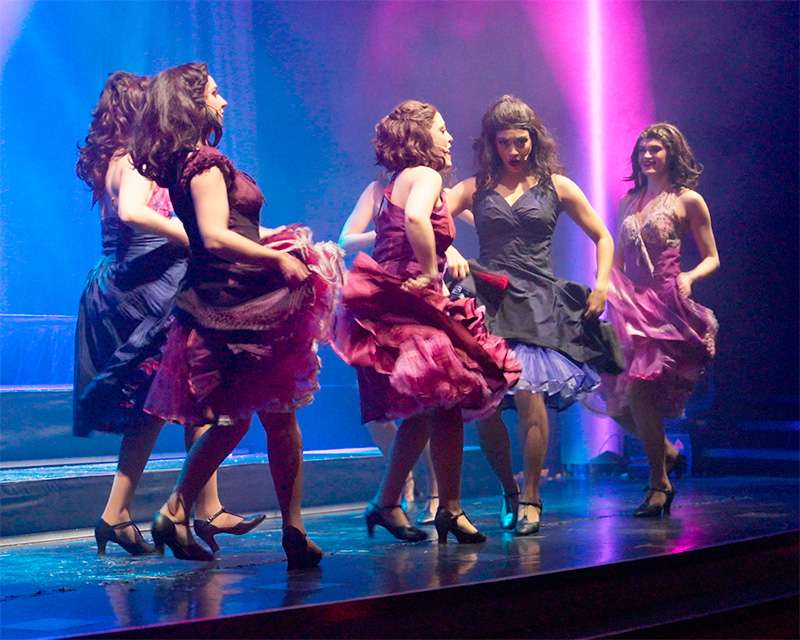
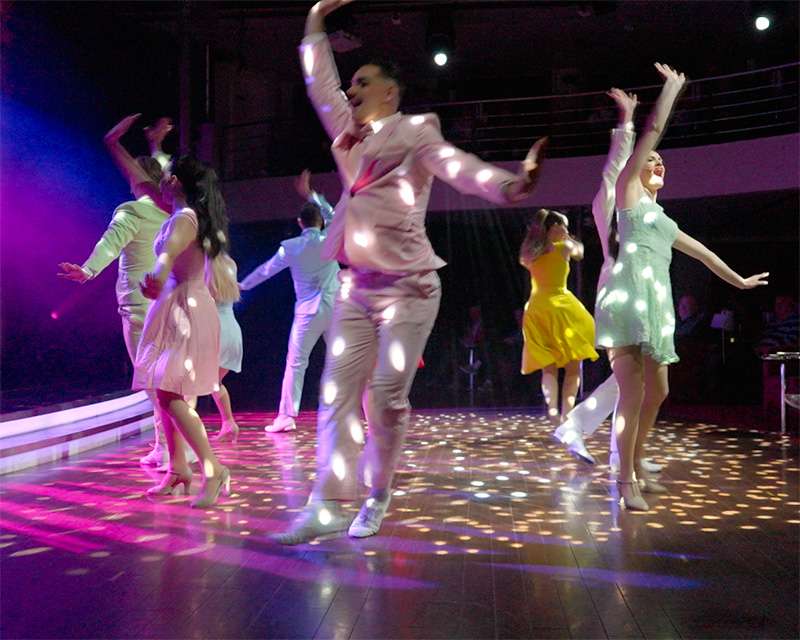
At nine comes the main show. That night a guest artist: a quick-change performer combining juggling, mime, puppetry and comedy in one person. Guests like that come aboard for a handful of performances and leave again at the next port. At quarter past nine a band upstairs plays pop standards, and between half past ten and one in the morning the bar on deck nine serves sausages to whoever is still awake.
What costs nothing, and what costs
| Free on a sea day | Costs extra |
|---|---|
| The lecturer’s talk | Bingo card (€5) |
| The ship’s service | A wash in the launderette (€3) |
| All gymnastics and sport sessions | Bar and cocktails of the day (about €3.70–5.90) |
| Board games, darts, shuffleboard, throwing games | After-dinner digestif (€6.20) |
| The card tournament | Supplement in the speciality restaurant |
| The fashion show (watching it) | Spa treatments (from €25) |
| Evening show, live music, ship’s cinema | Boutique and photo shop |
| Tea and coffee hour | Recommended wines at lunch (€6.50 / 0.25 l) |
| Meals in the main restaurants | |
| Library, pool, sauna, gym | |
| Dryers and irons in the launderette |
Prices from one sea day in September 2026, on a ship with German-speaking passengers. The order of magnitude carries over; the individual figures do not.
When the satellite drops out
A side note in that day’s programme explains the rest better than any description of the activities: on the crossing the ship leaves the satellite reception area, and most TV channels will be gone for six days. Onboard internet in that zone is weak and expensive anyway.
That is exactly what the programme is for. It does not replace the port. It replaces the phone. Once you see that, the mandala hour and the card tournament read differently: they are not filler, they are the reason a day without a signal does not feel long at sea.
Tips for a sea day
Read the programme the night before and mark two things. Not ten. The rest takes care of itself, and the day should not feel like a diary.
Take the lecture. It is the one item connected to the voyage, and it makes the next port better.
Use the launderette early or late. On sea days everyone has the same idea. The dryers and irons are usually free; the machines are not.
Check the dress code in advance. It is printed daily and it changes. Leave it until you are back in the cabin and you will change twice.
Book the speciality restaurant first thing. The window is a note in the margin of the programme, often only half an hour long, and it runs in person outside the restaurant. Read past it and your evening is already decided.
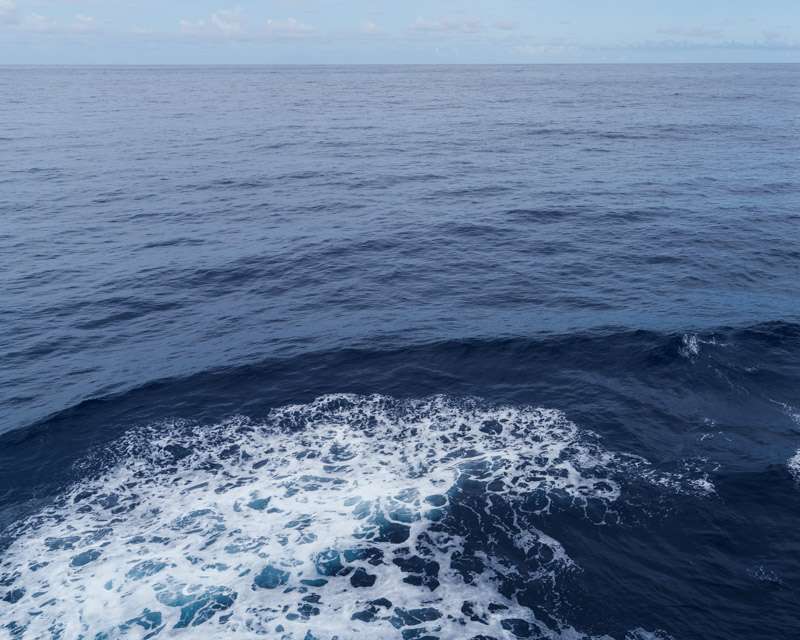
For photographs: early morning. A sea day is the best photographic day of a voyage — no harbour backdrop, nobody on deck before eight, and a horizon that changes all day. After breakfast the bow belongs to everyone again.
Related: Cruise Ports on Your Own · Copenhagen Cruise Port on Your Own · More travel tips