
Africa enters this blog from the sea, on the Atlantic run between Europe and the Canaries. The ports here are working commercial harbours rather than cruise terminals, which changes the day: you rarely walk out of the gate, the interesting place is usually inland, and the decision is less about what to see than about how to get there and back inside the call. Morocco opens the section — Agadir, rebuilt after the earthquake of 1960, and the walled Souss town of Taroudant an hour and a half east of it. As everywhere on this site, the articles are written from days ashore: where the ship ties up, what the ship’s excursion costs against doing the same route independently, how much of the place ninety minutes actually buys, and how much buffer to keep before all-aboard. Prices carry the season in which they were checked, and the photographs were taken on the day described.
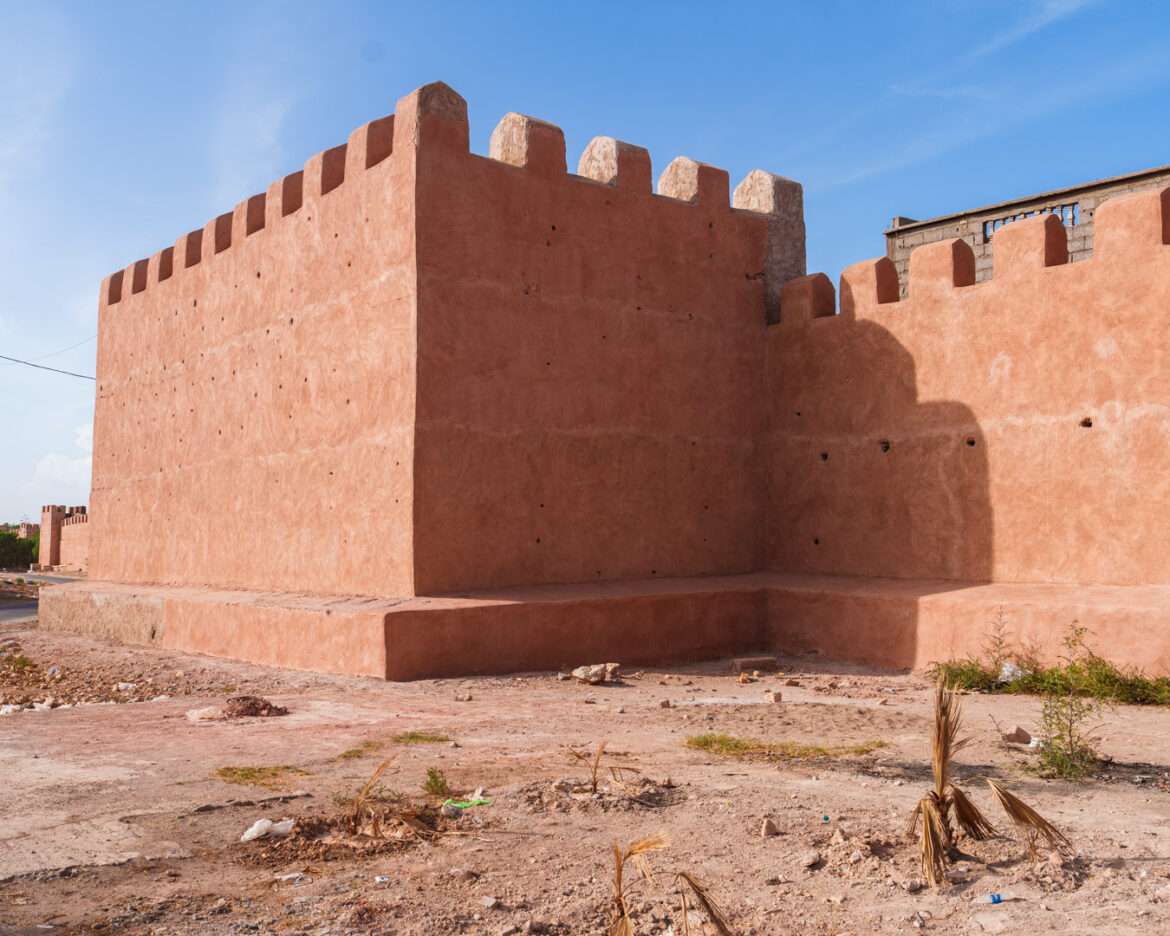
Visited: 29 October 2026, on a call of MS Amadea at Agadir.
Yes, on balance — but know what you are buying. The ship charges €49 for about five hours, of which roughly three are spent in the coach. You get around ninety minutes in Taroudant, an hour of it guided. For a call from 08:00 to 21:00 the independent route by bus is genuinely possible; for everyone else, €49 buys the transport, the guide and the certainty of being back.
Where does the ship dock in Agadir?
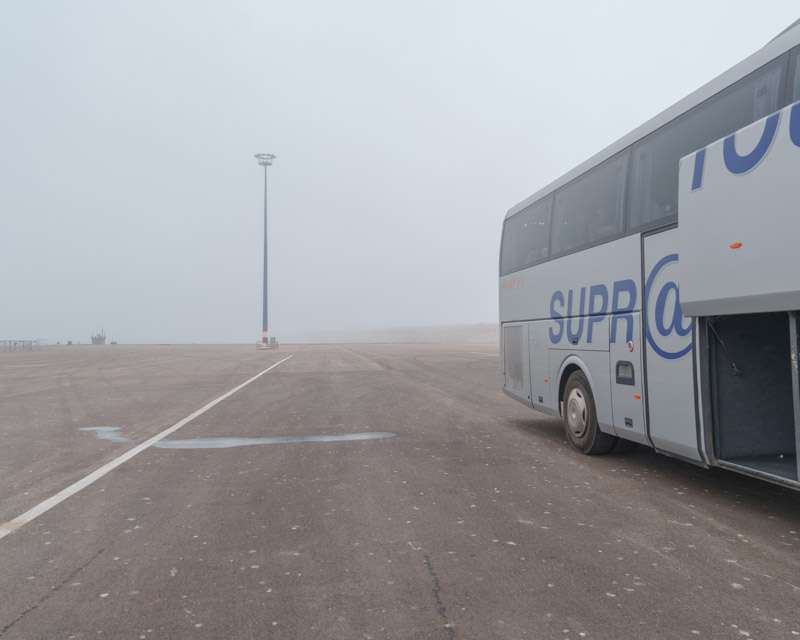
In the commercial port at the northern end of Agadir’s eight-kilometre beach — a working harbour with fishing boats and containers, not a cruise terminal. There are no facilities on the quay. The central beach is a ten-minute taxi ride or a walk of thirty to forty-five minutes along the coast road; most lines run a shuttle into town for about €6–8, and on a hot afternoon it is worth it.
This matters for the independent plan below. You do not simply stroll out of the gate and find a bus station. Whatever you do in Morocco on your own starts with a taxi.
How far is Taroudant, and how long is the drive?
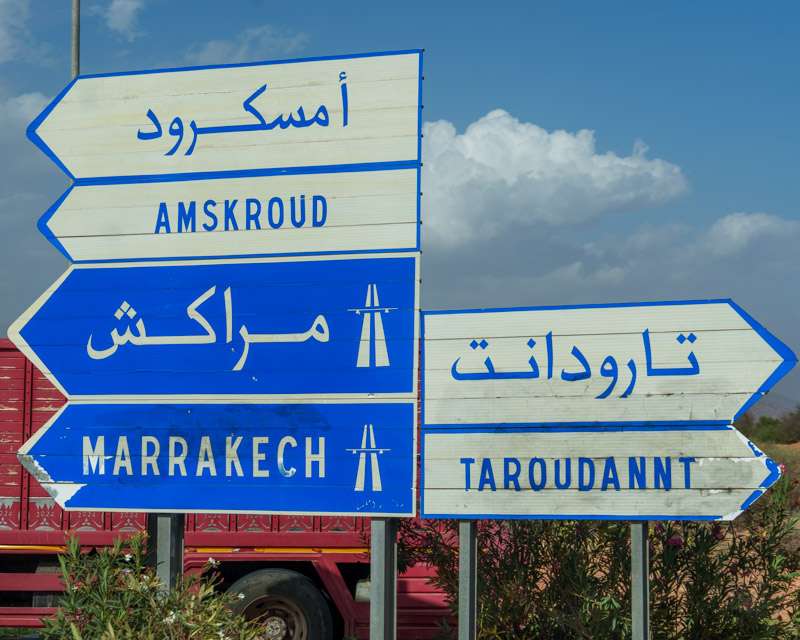
About eighty kilometres east by road, inland up the Souss valley. The brochure says “just under 1.5 hours” and that is accurate — ours took about that each way. The road climbs gently away from the coast through Amskroud, where the signs fork for Marrakech to the north and Taroudant to the east.
One correction to the printed description, which calls Taroudant a town “in the Anti-Atlas region”. It is not in the Anti-Atlas. It stands on the floor of the Souss plain, between the High Atlas to the north and the Anti-Atlas to the south — which is the whole point of the place. That plain is some of the most fertile ground in Morocco, and it is the reason there is a wall here at all.
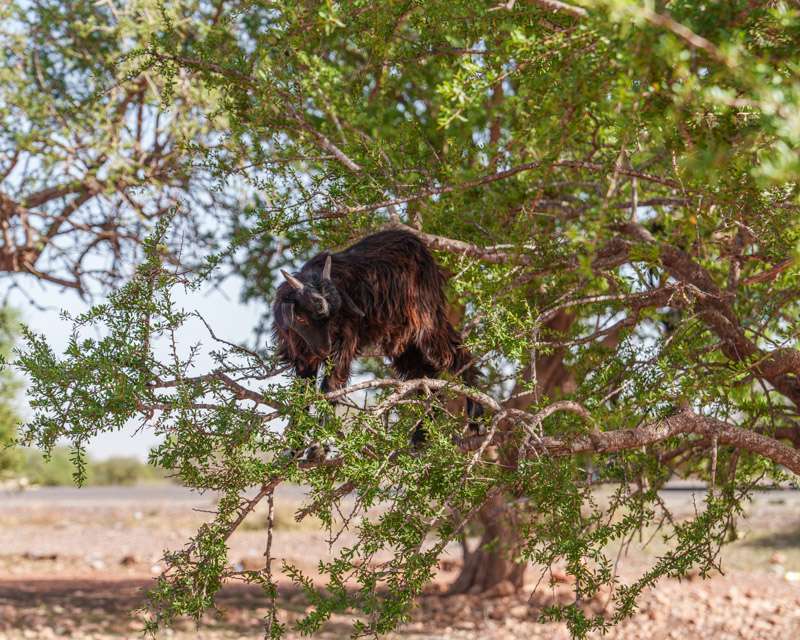
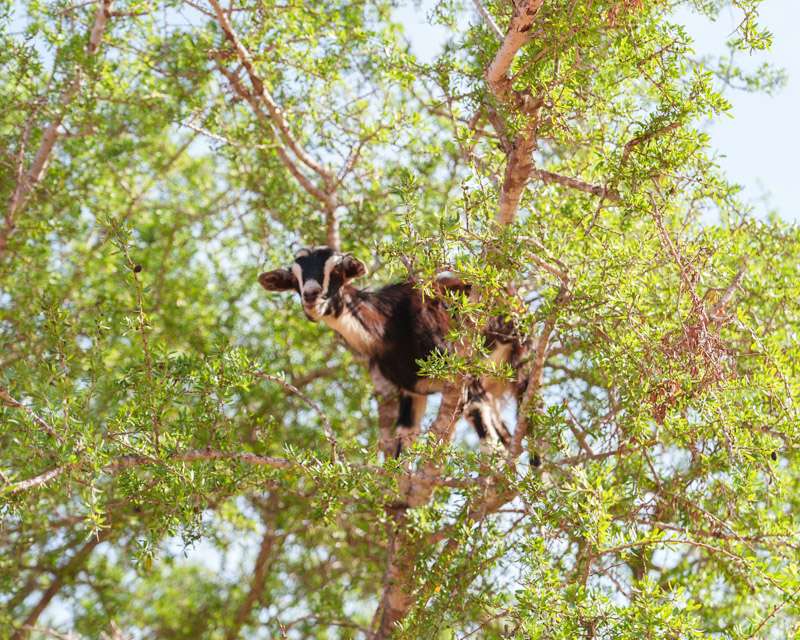
The goats in the argan trees
They are on the road, and they are the picture everyone wants. The behaviour is real: argan fruit is food, the trees are low and thorny, and goats climb them to reach it. The argan forest of the Souss is a UNESCO biosphere reserve and the tree grows in commercial quantity almost nowhere else on earth. The goats appear to have worked this out some centuries before the cosmetics industry did.
The honest caveat is equally well documented: along the main tourist roads, some roadside operations place goats in trees and charge visitors to stop and photograph them. If a man is collecting coins, you are looking at a staged tableau rather than a feeding goat. There is no fee if nobody asks for one — but it is worth knowing which of the two you have in front of the camera before you tell the story at home.
What the excursion includes — and what it does not
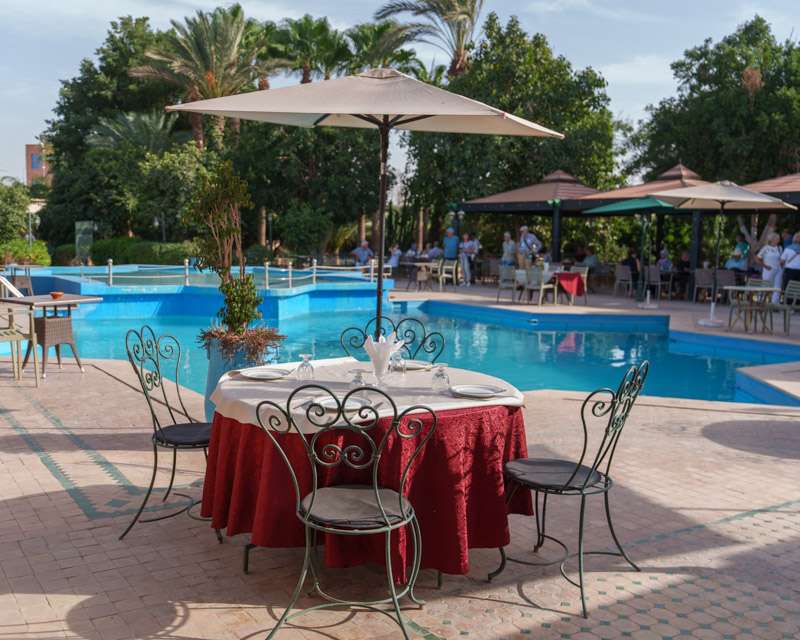
Ours ran from 13:30 to 19:00: five and a half hours door to door, against the five hours advertised. The sequence was drive, refreshment stop, walk, free time, drive. The refreshment stop comes first, at a hotel with a pool and a tented dining room, and it costs you perhaps half an hour of daylight before you have seen anything of the town.
Then a guided circuit of about an hour through the medina and the souks, followed by free time in the same area. Total on the ground: roughly ninety minutes to two hours.
What is not included: the Great Mosque interior (as a non-Muslim you will not go in anywhere in Morocco apart from the Hassan II in Casablanca), the ramparts by horse-drawn carriage, and the tanneries. Nor is Tiout, the oasis that many non-cruise day tours from Agadir pair with Taroudant. If you want Taroudant and an oasis, this is not that trip.
What ninety minutes in the medina actually shows
Enough, as it turns out, because Taroudant is small and the two things worth seeing are next to each other. There are two main squares, Assarag and Talmoklate, and a souk beside each. A third market, the weekly one, sits outside the walls.
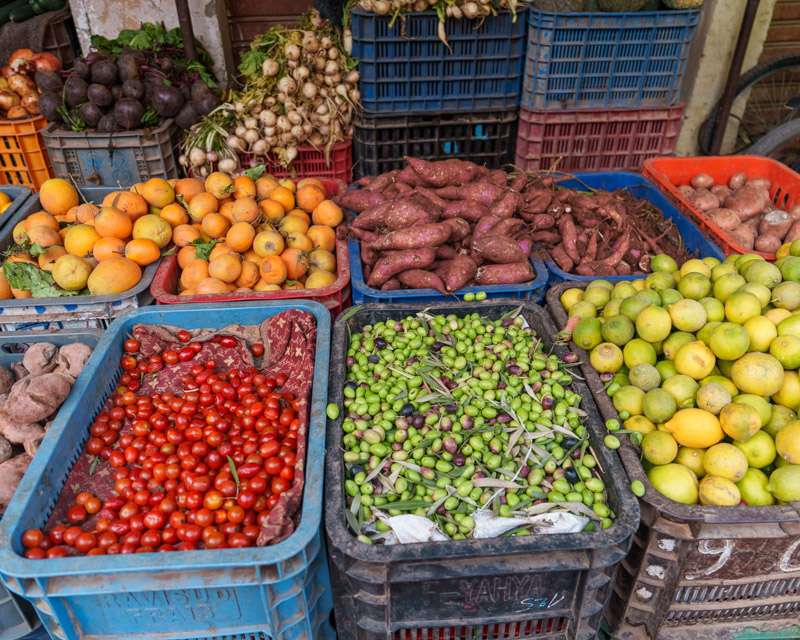
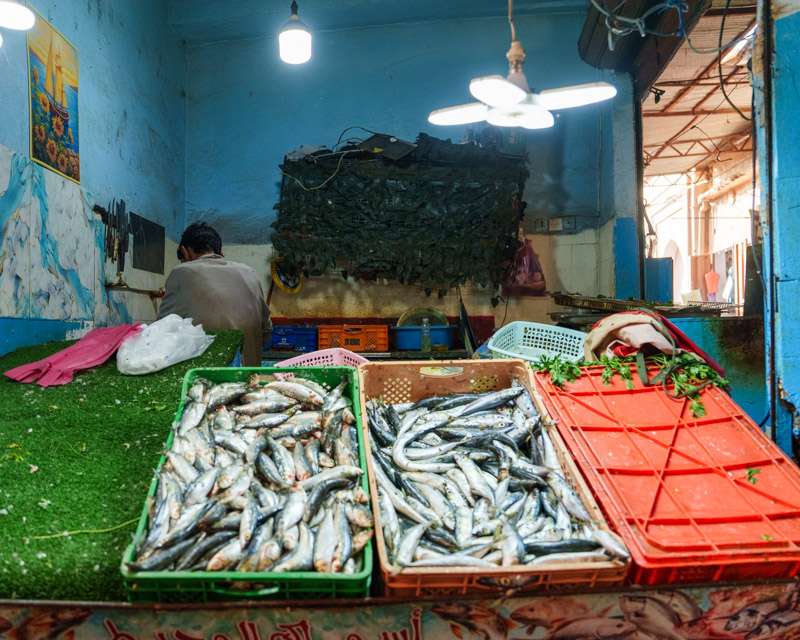
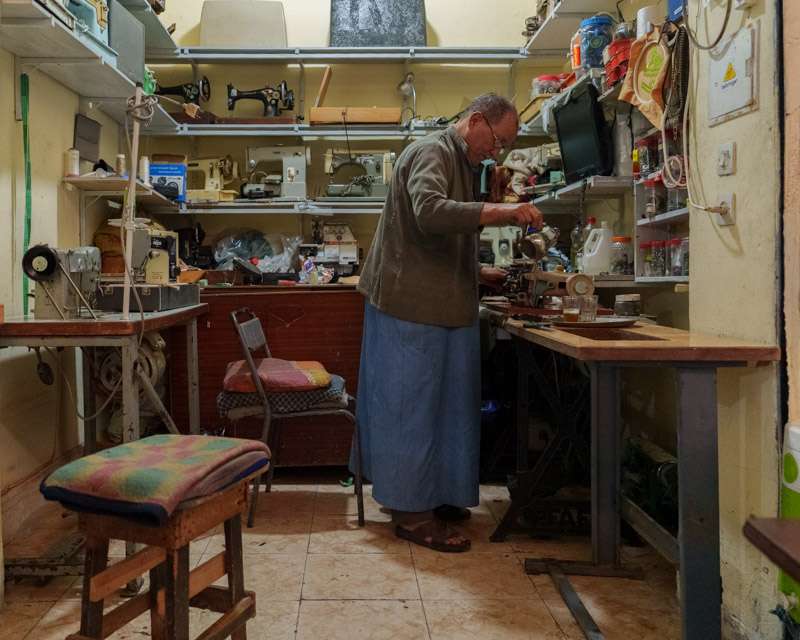
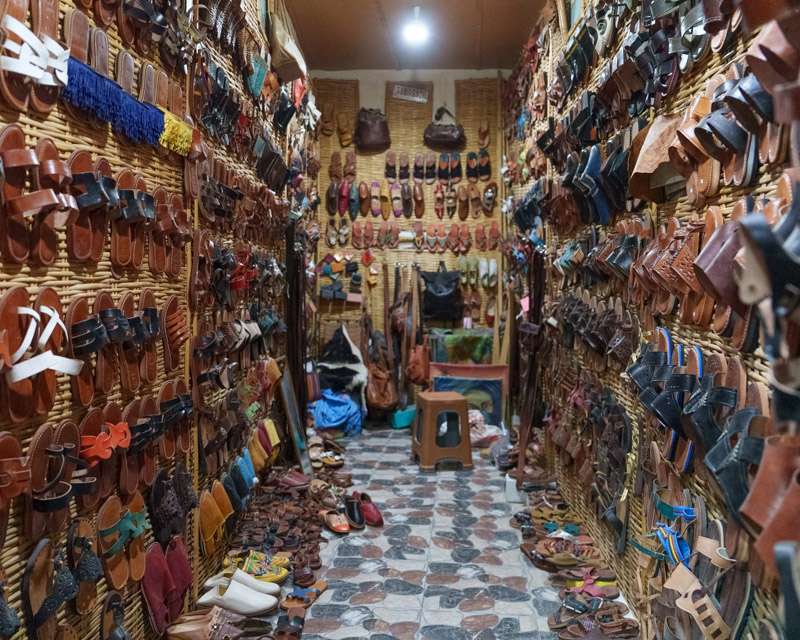
What is sold in them is not sold for visitors. Sardines in crates on a wet green counter. Tomatoes, olives, lemons, sweet potatoes. Boxes of dates. A cobbler at his bench in a space the width of his shoulders. A shoe shop with both walls papered floor to ceiling in sandals. Stacked chairs and terracotta tagine dishes on the pavement outside a pottery. Taroudant was a caravan station — gold and salt out of the Sahara, cloth, spices — and the markets are still doing the job they were built for, which is supplying the Souss.
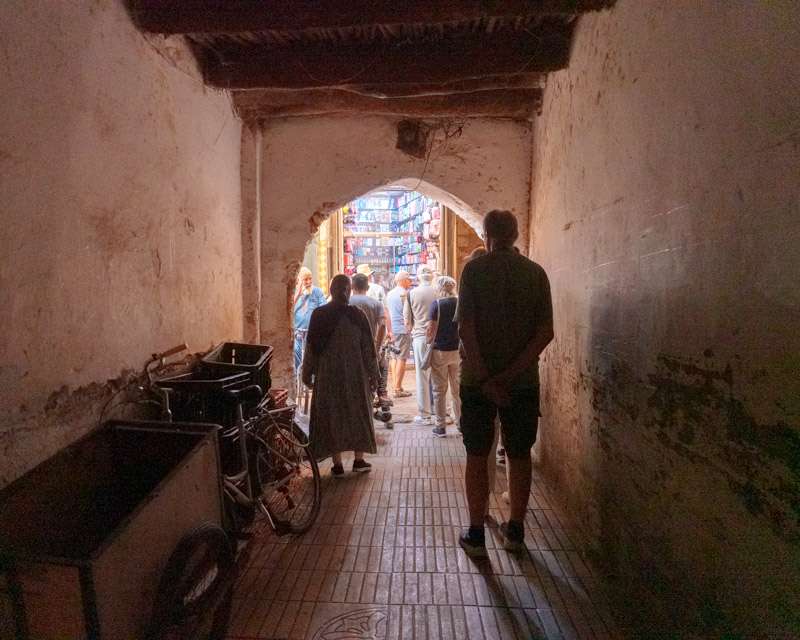
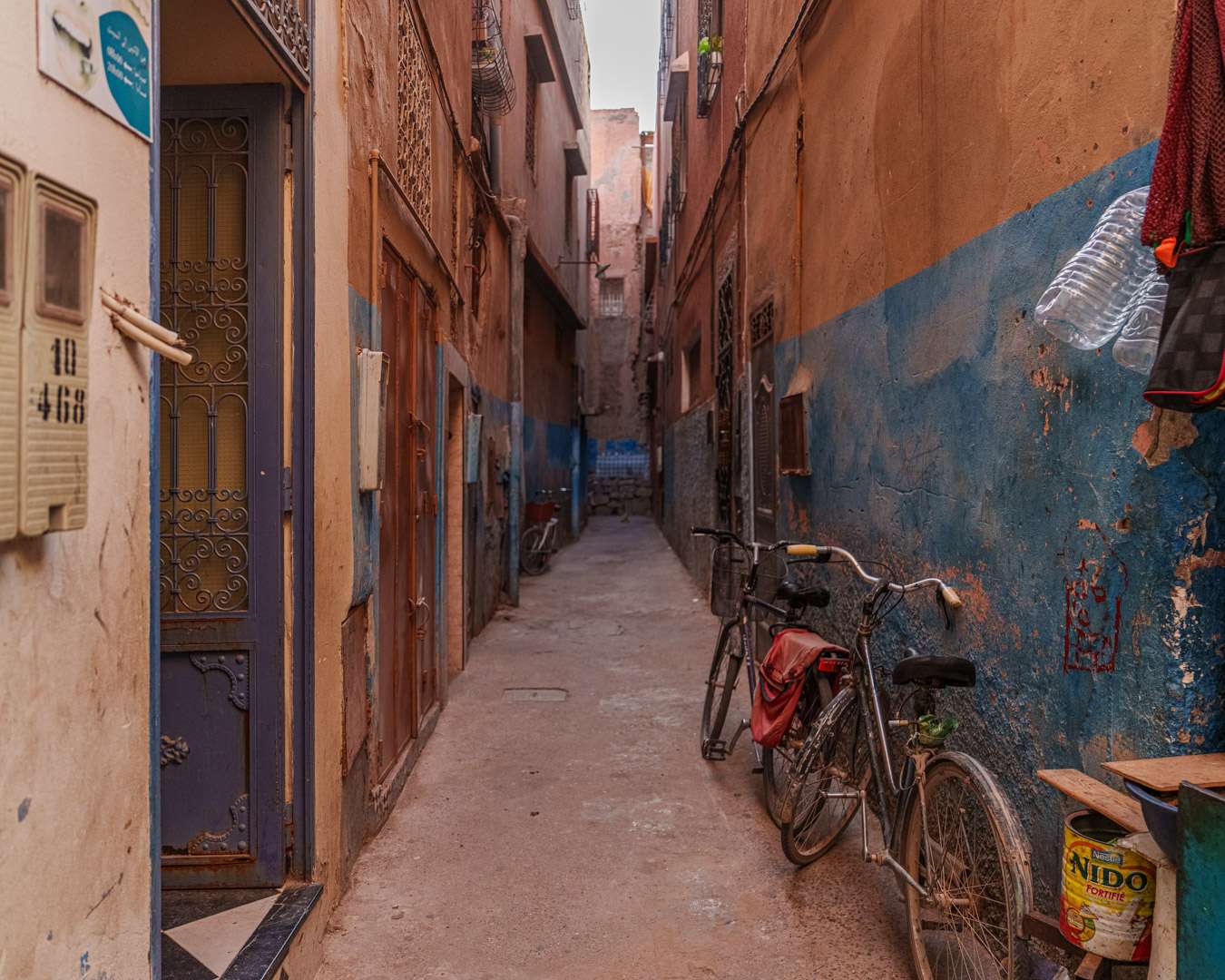
Between the squares the lanes run narrow and mostly empty at midday: ochre plaster, a blue-painted wall, bicycles leaning where their owners left them, a dog asleep in the shade. Walk two minutes off the guided line and the volume drops to nothing.
Why there is six kilometres of wall and a market town behind it
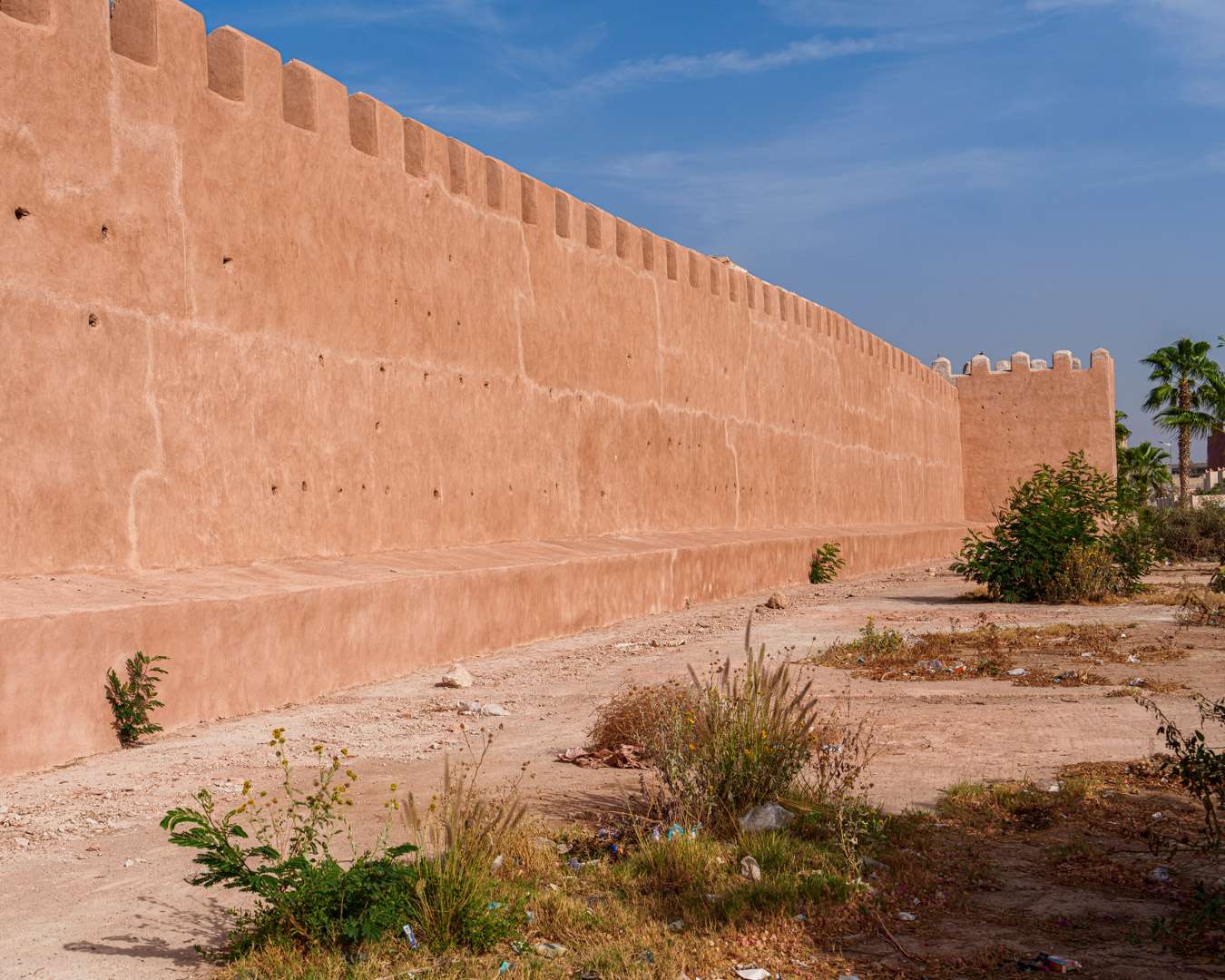
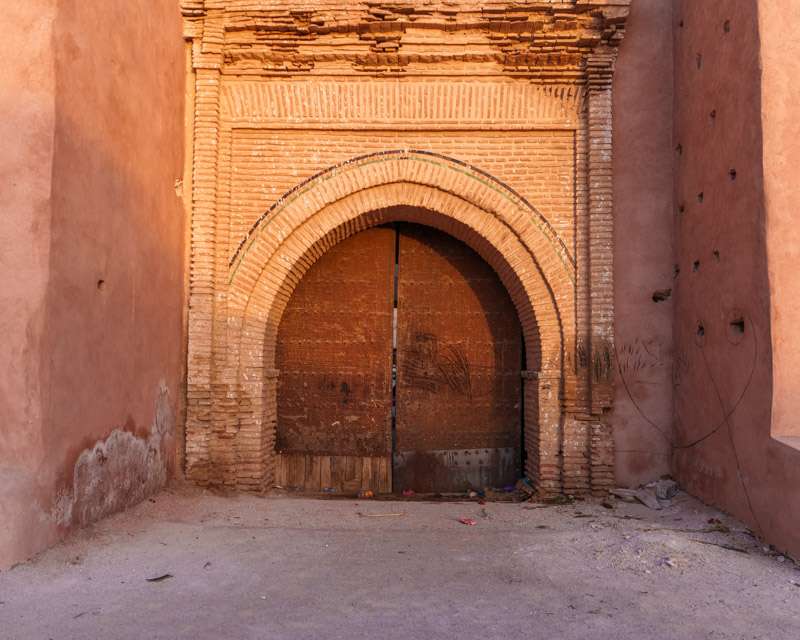
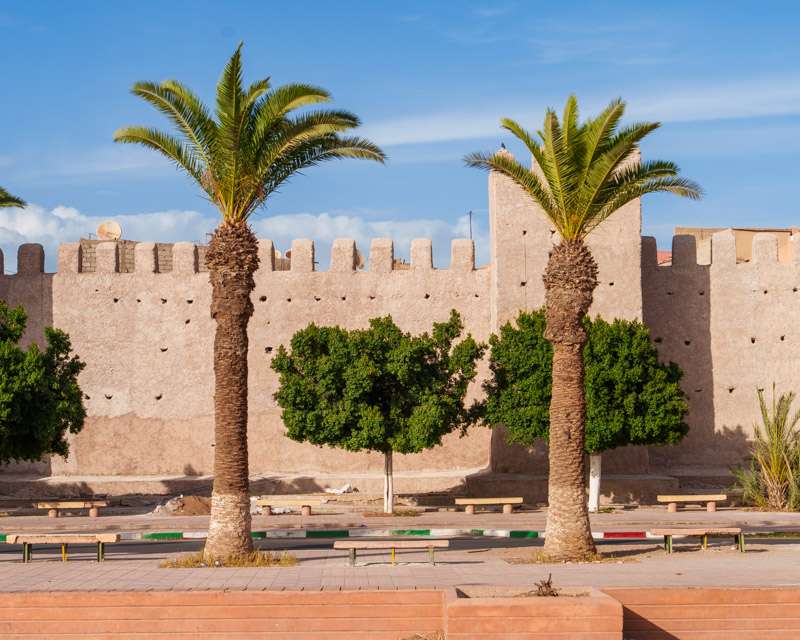
The scale of the wall does not match the size of the place, and that is the interesting part. Sources differ on the length — about six kilometres is the usual figure, Moroccan reporting goes as high as eight — but the layout you see is Saadian work of the sixteenth century, rammed earth, with the whole town still inside it. Taroudant never grew past its own defences.
It was built when this was the centre of things. The Saadians rose in the south, and Taroudant was their early seat. From here Mohammed ash-Sheikh besieged the Portuguese fortress at Agadir — Santa Cruz do Cabo de Gué — for roughly six months in 1541 and took it. Safi and Azemmour were evacuated by the Portuguese that October; Fez fell in 1549.
The money came out of the plain outside the wall. Today it grows oranges, olives and argan; in the sixteenth century it grew sugar cane, and sugar was the export that paid for everything. When Ahmad al-Mansur built the El Badi palace in Marrakech — begun in December 1578, finished in 1593 — the Italian marble for its colonnades was paid for by weight, sugar against stone. The sugar came from down here. The marble went up there. Taroudant has been called the grandmother of Marrakech ever since, and the walls went up while the court was already looking north.
Roughly a tenth of the population was Jewish, by tradition from the eleventh century onwards, and those families helped run the caravan trade for centuries.
The decline has a date. The town backed the wrong side in a succession war, siding with Ahmad ibn Mahrez, the nephew of Sultan Moulay Ismail. Ahmad was killed near here in October 1685; the resistance held on under Moulay Harran until April 1687, when he fled into the Sahara. The population of Taroudant was then massacred and the town resettled with families brought from the north. It never recovered its position. It stayed what it had become: a market town behind a wall built for a capital.
That failure is probably why it is worth the drive. No growth outwards, no rebuilding for guests. If you know Marrakech, you are looking at what Marrakech was before it became Marrakech.
What does the day cost?
| Item | Price 2026 | Note |
|---|---|---|
| Ship’s excursion “Taroudant”, about 5 hrs | €49 | Ours ran 13:30–19:00; not suitable for guests with reduced mobility |
| Ship’s excursion “Agadir panoramic drive”, about 3 hrs | €37 | Kasbah, post office, courthouse, corniche |
| Ship’s excursion “Agadir”, about 4 hrs | €39 | Kasbah, Talborjt district, new town, some free time |
| Ship’s excursion “Massa valley by four-wheel drive”, about 8 hrs with lunch | €75 | 4–5 guests per vehicle, sand tracks, limited numbers |
| Ship’s excursion “Tafraout”, about 11 hrs with lunch | €79 | Pass road to 1,700 m; about 6 hrs of it in the coach |
| Ship’s excursion “Marrakech”, about 11 hrs with lunch | €89 | About 3.5 hrs each way; roughly 7 hrs in the coach |
| CTM bus, Agadir–Taroudant, one way | about €8–13 | Roughly 2 hrs; departures concentrated between 08:00 and 10:00 |
| Private transfer, Agadir–Taroudant | from about €50 | Per car, one way; agree the price before setting off |
| Ship’s shuttle, port to Agadir town | €6–8 | Rarely free in this port |
| Petit taxi within Agadir | 10–20 Dh | Meters exist; ask for the meter or fix the fare first |
Excursion prices and durations come from the MS Amadea excursion list (Phoenix Reisen, priced August 2026) and differ between lines. Bus and transfer figures are operator quotes checked in October 2026, not a regulated tariff. Taxi figures are what drivers quote, not a published rate.
Ship’s tour or on your own?
This is one of the few ports where the arithmetic genuinely closes for the independent traveller — on paper.
By bus it works, just. CTM runs Agadir–Taroudant in about two hours for roughly €8–13 each way. With a call from 08:00 to 21:00 that leaves a usable afternoon in the town. The catch is at both ends: departures cluster in the morning, the return timetable is thin, and you first need a taxi from the commercial port to the bus station. Miss one connection and you are negotiating with a grand taxi driver at dusk, eighty kilometres from a ship that will not wait.
By grand taxi it works better — shared Mercedes run this route all day and leave when full — but you need some Arabic or French, a tolerance for six people in a saloon car, and the confidence to agree a return.
By private car and driver it works best of all, from roughly €50 each way, and buys you Tiout as well. For two or three couples sharing, that undercuts the ship’s €49 a head and doubles the time on the ground.
The case for the excursion is the port itself. Agadir is a commercial harbour with a gate, not a quay you wander off. Add an eighty-kilometre drive on country roads, and the cost of getting it wrong is a flight to the next port at your own expense. €49 buys the coach, a guide who gets you into the souk and out again, and someone else watching the clock.
Whichever you choose, be back at the quay 45 to 60 minutes before all-aboard. The N10 is not a motorway.
Photographing people in Taroudant
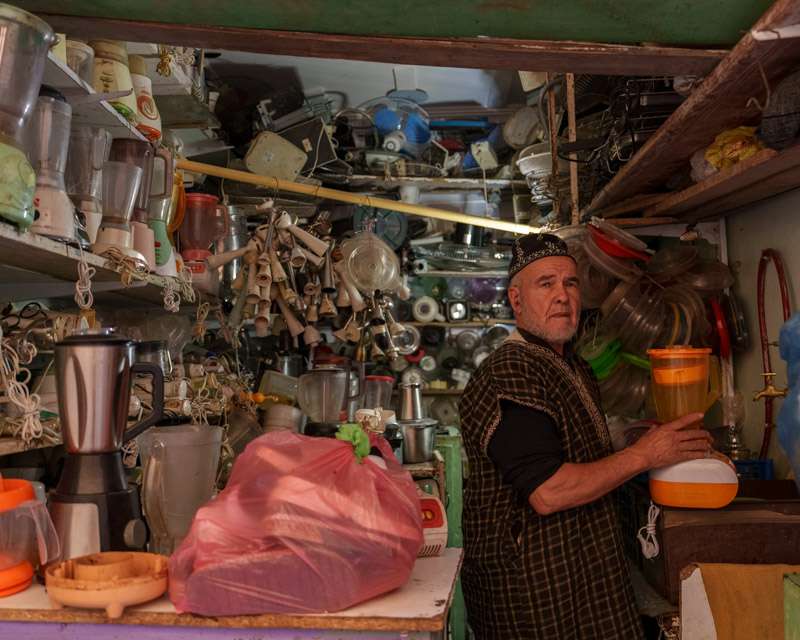
This was the surprise of the day, and it is the part I would tell a photographer first. People were friendly and let themselves be photographed without fuss. That is not the general rule in Moroccan markets, where a lifted camera often buys an argument or a demand for money, and it is not what I had been led to expect.
The likely reason is the one that makes the town worth visiting at all: Taroudant is not a tourist economy. Nobody is working the crowd, because there is no crowd. The man in the hardware stall, the cobbler, the fruit seller — they are selling to their neighbours, and a visitor is a curiosity rather than a revenue stream. Ask anyway, with a gesture if nothing else. The answer being yes is not a licence to skip the question.
On light: an afternoon call is the harder half of the day. The lanes are narrow and run deep in shadow while the roofline burns out, so expose for the shaded side and let the sky go. The one reliable subject in that contrast is the gate passage — people walking out of the dark arch into the light beyond it. The wall itself does the opposite: it wants late sun, when the rammed earth turns from flat ochre to something with texture in it.
What I would do differently next time
I would take the same trip again, and I would change the proportions. Three hours in a coach for ninety minutes in the town is the wrong ratio, and the half hour of refreshment stop at the start comes out of the only part that cannot be replaced.
With a call as long as this one — 08:00 to 21:00 — the better version is a private car for the day, shared. Leave early, be in the souks before the coaches, take Tiout on the way back, and treat the argan trees as a stop rather than a blur through a window.
And on the morning of a Moroccan port day, check the haze before deciding anything. Ours sat thick over the coastal plain and lifted inland; the long views did not come back until well past Amskroud.
Written by Jan Madeus — ship’s videographer at sea since 2008. I go ashore in the same ports as the passengers, with the same few hours and the same deadline. More about me.
Sources: Excursion descriptions, durations and prices: MS Amadea excursion list, Phoenix Reisen, priced August 2026. Port and transfer detail: Whatsinport Agadir and bus-operator timetables, checked October 2026. History: Wikipedia entries on Taroudant, the Fall of Agadir (1541), the El Badi Palace and Ismail Ibn Sharif; population figure from the 2014 Moroccan census. Argan: UNESCO Arganeraie Biosphere Reserve.
Related: Caldera de los Cuervos: is the €49 volcano walk worth it? · Puerto del Rosario: the €109 jeep safari · Cruise Ports on Your Own — every port guide