
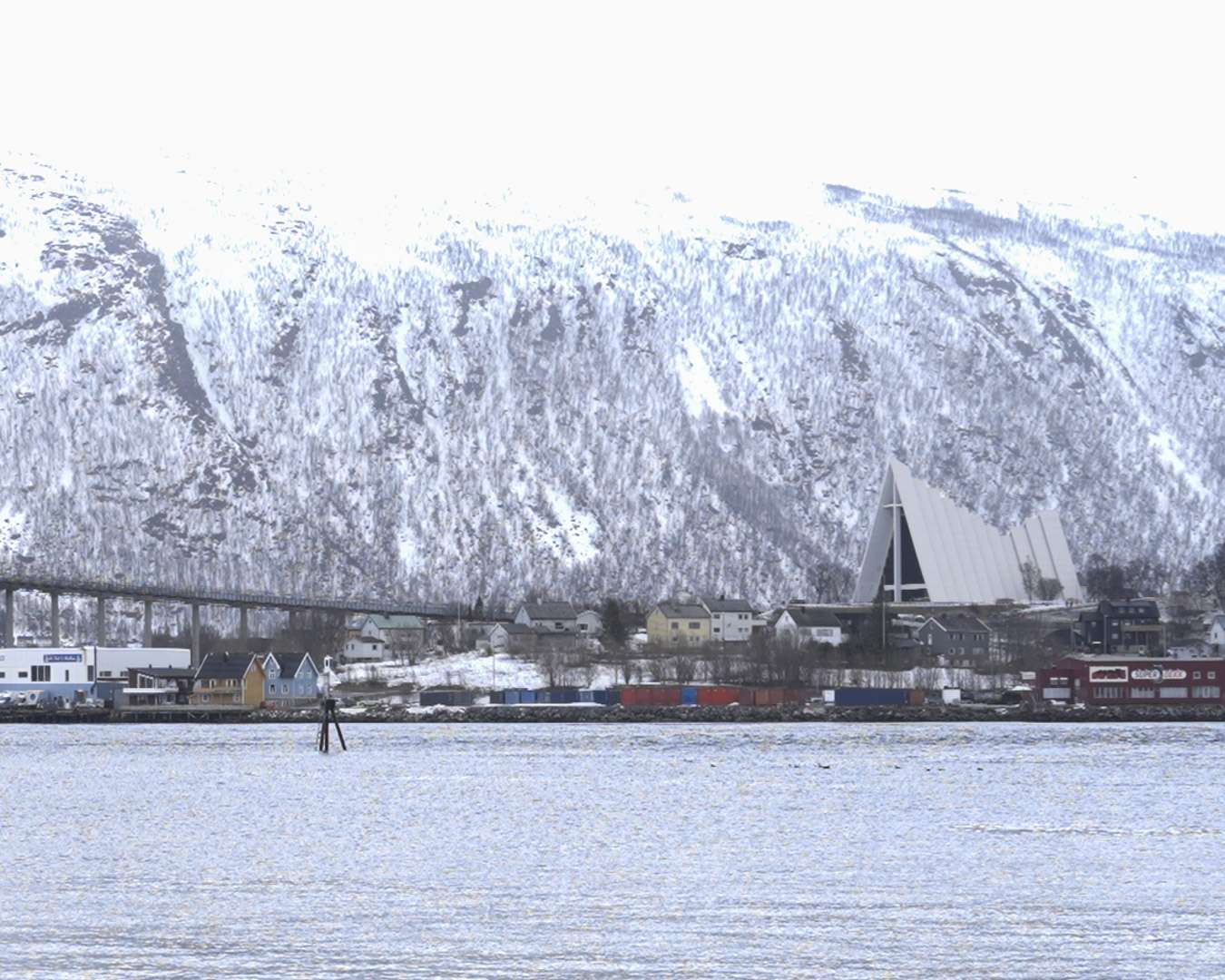
Visited: 8 March 2024, on a call of HANSEATIC nature at Tromsø. The photographs are from that day. Prices and times checked November 2026 — verify before you sail.
Most port guides to Tromsø open with the line that the ship lies in the middle of town. In winter that is often wrong. We lay at Breivika, the cargo port about four kilometres north of the centre, among industrial sheds — and from there Tromsø is not a port you stroll into but a distance. I walked it. That works, but it costs the best part of an hour each way, and it is the first decision of the day.
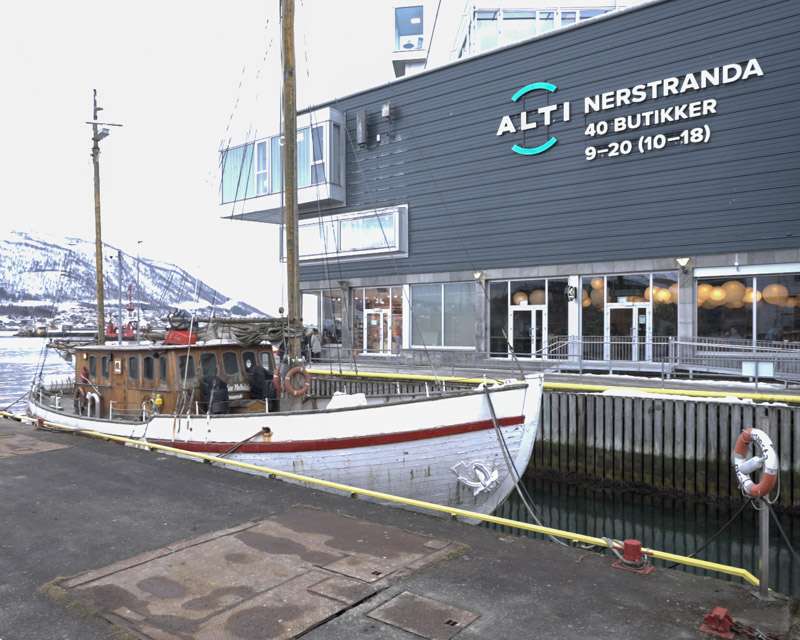
Tromsø winter call at a glance
| Berth | Breivika, about 4 km north of the centre, a working cargo port on an industrial estate. In summer many ships lie at Prostneset in the middle of town — the difference decides the whole day |
| Tender | No — alongside at the quay |
| Distance to the centre | About 4 km. Just under an hour on foot through an underpass, along pavements and over a bridge; otherwise bus line 42 |
| Bus | Line 42. From the port take it towards Eidkjosen from the stop on the far side of Stakkevollan, reached through the underpass; coming back, towards Stakkevollan to the stop named Breivika. Single NOK 50 on the Svipper app, valid 60 minutes, no cash on board |
| Daylight on 8 March | About ten and a half hours. On 1 March the sun rises at 07:10 and sets at 16:44; through March Tromsø gains an average of 8 minutes 35 seconds a day |
| Minimum time ashore | Six hours if you walk — two of them are the walk. Four is enough with the bus |
| Return buffer | On foot, set off 90 minutes before all-aboard. The route crosses industrial ground, not a pedestrian street |
| Visited | 8 March 2024, HANSEATIC nature, berthed at Breivika. Prices checked 2026 |
Breivika instead of Prostneset: why the berth matters in winter
Tromsø has two addresses for cruise ships. Prostneset sits on the western side of the island, five minutes from the pedestrian street — that is the berth almost every port guide assumes. Breivika lies about four kilometres further north and is a working harbour: cargo quay, sheds, lorry traffic, no terminal architecture and no café at the gangway.
On our day it was also a turnaround, with passengers joining and leaving. A changeover day looks different at the quay from a transit call: coaches, baggage chains, people with suitcases going both ways. For your own day ashore that mainly means leaving early, before the crush starts.
So check the berth in the daily programme before you plan anything. Between “five minutes on foot” and “four kilometres across an industrial estate” lie two hours of an eight-hour call.
How do you get from Breivika into town?
On foot or by bus. The port authority lists no shuttle for Breivika.
| Option | Price 2026 | Time and note |
|---|---|---|
| On foot | free | About 4 km, just under an hour. Underpass beneath the main road, then pavements and a bridge. Cleared in winter, but not a scenic walk |
| Bus line 42 | NOK 50 single | Through the Svipper app, valid 60 minutes. Outbound towards Eidkjosen, back towards Stakkevollan to the stop named Breivika |
| Taxi | not checked | Does not simply wait at the quay — order one if you need it |
The walk is unremarkable and entirely straightforward: through the underpass to the other side, along the pavement heading south, and after a good half hour you are where the city starts to look like a city. In winter the route is cleared. What it is not is pretty. The first two kilometres are warehouses, parking and traffic.
Anyone short of time, or walking back in the dark, should take the bus. Cash is not accepted — the app or a card is required.


Why the pavements are clear and the road is not
This is the observation that told me most about the place, and it appears in no brochure. In my photographs the pavements in the centre are bare while snowbanks lie beside them. That is not luck and not unusually diligent clearing.
When Tromsø rebuilt its main shopping street in the 1980s and 1990s it had underfloor heating laid in — along the entire length of the shop facades. The roadway was deliberately left unheated, as a reminder of the snow-covered street it had been. So in the centre you walk on ice-free paving while half a metre away you can see what winter here actually looks like.
In practice: you need no spikes in the core of the city. The moment you leave the shopping street — walking out to Breivika, in the old town lanes, on the steps up the hillside — you are on packed snow and occasionally ice. Good soles are enough; trainers are not.


How much daylight is there in March?
More than most people expect, and far more than in January. The polar night in Tromsø runs from 28 November to 14 January, so by early March the sun has been back for nearly two months and is catching up fast. On 1 March it rises at 07:10 and sets at 16:44 — 9 hours 34 minutes. Every further day adds an average of 8 minutes 35 seconds.
For 8 March that means about ten and a half hours of daylight, enough for a full day ashore even on foot. Walk back towards Breivika at around five in the afternoon, though, and the last half hour is in dusk. On an industrial estate that is an argument for the bus.
The light itself is the real gain. This far north the sun stays low even at midday, and what counts as twenty minutes of golden hour further south stretches over hours here. Our day was overcast from end to end — and even then the light stayed soft and directional rather than flat.
What you can do in Tromsø in winter on foot
Everything in the centre, and that is more than the size of the town suggests. I had no organised excursion and simply walked.
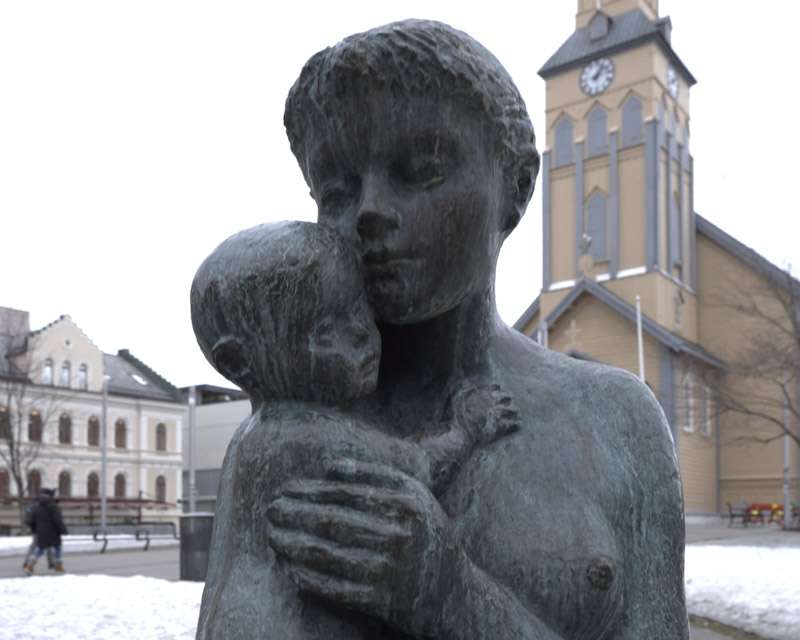
The Cathedral on the main square is one of Norway’s largest wooden churches and in winter stands clear among bare birches — a subject that half disappears in summer foliage. A bronze group of a mother and child stands in front of it. Two streets on, the old town begins with its red and ochre wooden houses.

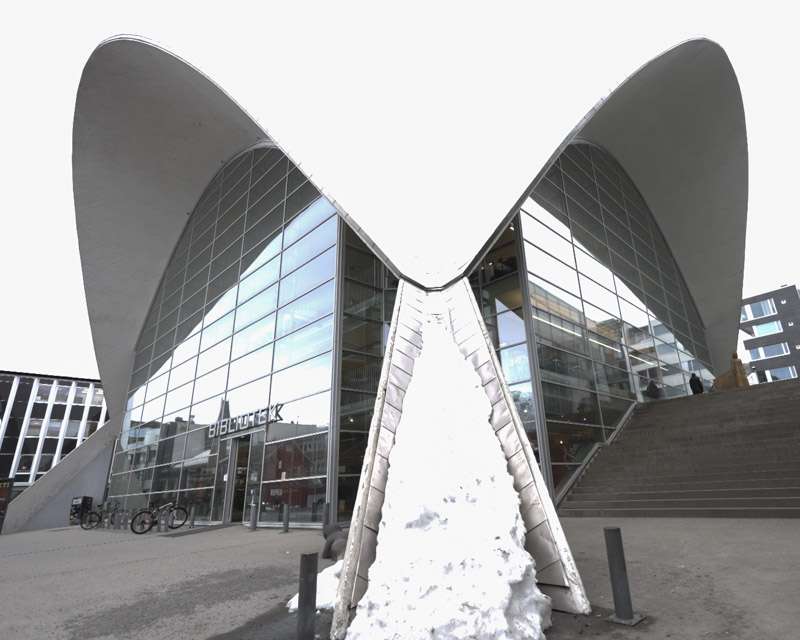
The public library is the architectural surprise: a curved glass roof lifting in two sweeps above the entrance. It is open to anyone, warm, and on a winter day the best place to spend twenty minutes without gloves. The city hall stands next to it behind glass and steel.

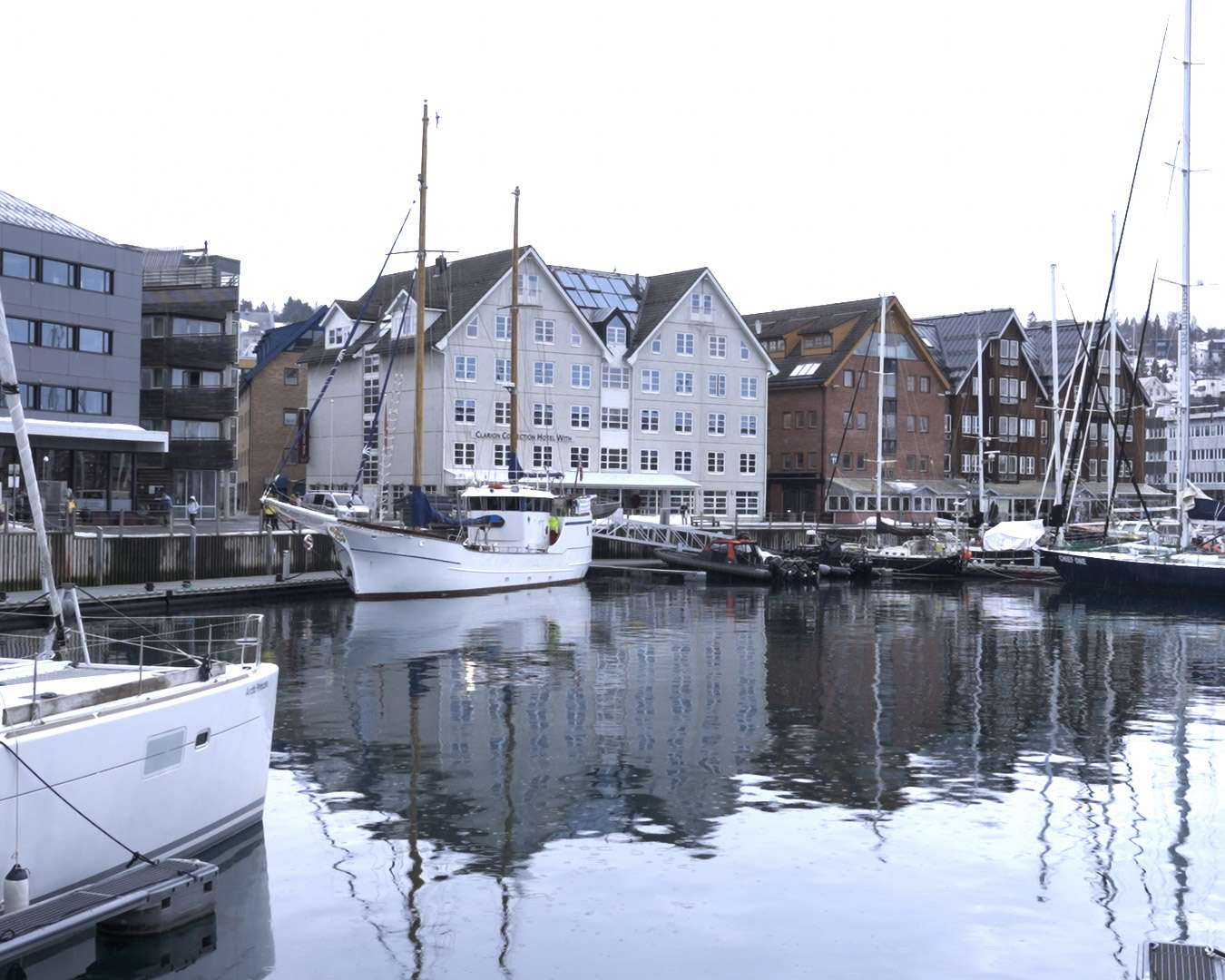
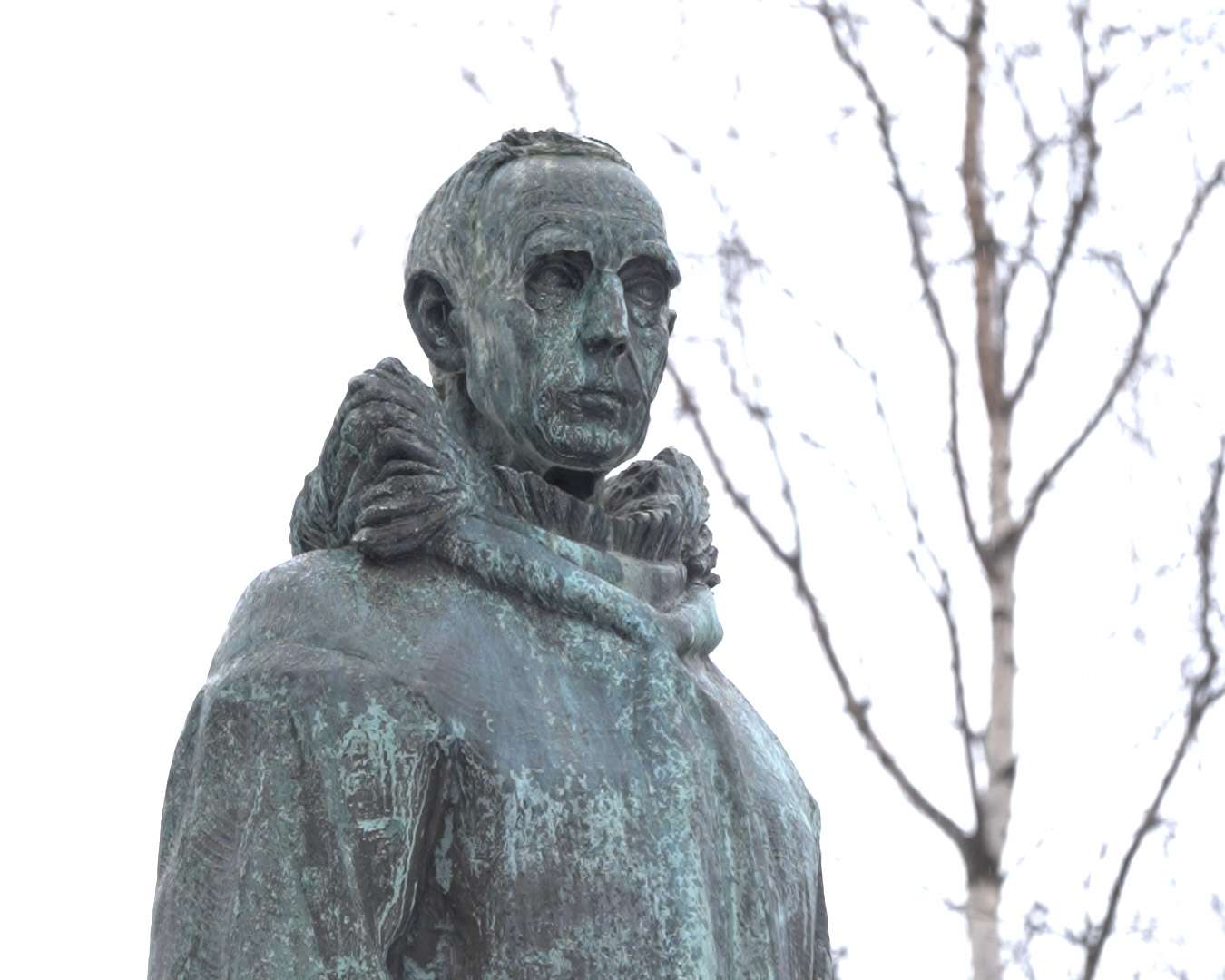
Around the harbour basin stand the old wooden warehouses, in March with still water in front of them and reflections that the summer traffic never allows. The monument to Roald Amundsen stands there too — Tromsø was the departure point of his last flight, and the town does not let you forget it.
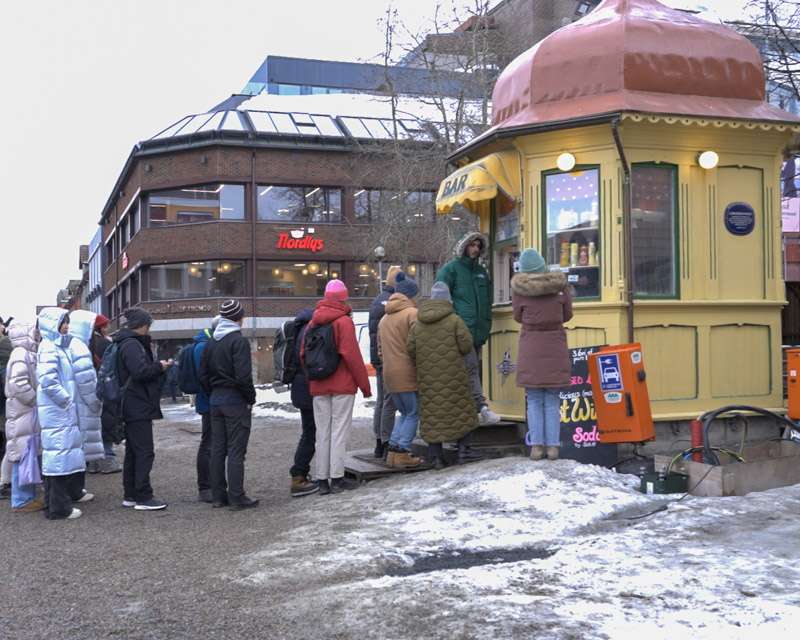
And then the thing that actually makes a winter day: a small yellow kiosk with a rounded roof, a queue standing in front of it at minus something, and a street stand where waffles come off the griddle with sliced banana on top. Not a sight. But the reason you end the day feeling you were in a town rather than in an itinerary.

Northern lights on a port day: the honest answer
8 March falls in the middle of the aurora season, which runs from September to April. We saw nothing. The sky was overcast all day and all evening.
That is not bad luck but the normal case, and it belongs in any honest port guide. The aurora needs three things at once: darkness, solar activity and a clear sky. On the Norwegian coast the third is the problem. Operators in Tromsø therefore drive minibuses an hour or more inland, or towards the Finnish border, to get out from under the cloud — and that almost never fits inside a ship’s call.
If the northern lights are why you want Tromsø, stay three or four nights. A port day is a lottery ticket, not a plan.
What I did not do that day
Two things that appear in every Tromsø guide are missing from this report, and I am not going to write them up second-hand.
I was not on Storsteinen. The Fjellheisen cable car runs daily from 09:00 to midnight, every half hour, to 421 metres; about NOK 645 return, four minutes each way. It stops in strong wind, and the Sherpa Stairs beside it are explicitly not advisable in winter, because the steps ice over and parts of them lie under snow. From Breivika the lower station is a project of its own: into town first, then across the bridge to the mainland side.
And I was not inside the Arctic Cathedral. It appears in my photographs only from the island side across the water. Entry is NOK 90, and in March it opens 10:00 to 17:00, Sundays from 13:00. So I cannot describe the stained-glass mosaic on the east wall, which is the reason to go in.
Both are covered in the general Tromsø port guide, which assumes a berth at Prostneset.
Photo notes: March light in Tromsø
Overcast is not a lost day here but a different problem. The sky goes white and becomes an empty surface — anything you set against it loses. The answer is to take it out of the frame: crop tighter, shoot down into the lanes, or use the snow-covered slope as a background instead of the cloud.
What does carry on a day like that is colour. The wooden houses in red, ochre and yellow stand against snow and white sky as if cut out, and the saturation that would look garish in sunlight is exactly right under flat light.
The harbour basin is still in winter. Reflections that summer boat traffic breaks up hold for minutes at a time. And the third thing, which I only noticed when editing: people in winter clothing are patches of colour in an otherwise grey-white scene. The queue at the yellow kiosk is the better picture of the town than any building.


What I would do differently next time
Walk out and take the bus back. On the way in the light is rising, you get moving, and you see the industrial estate for what it is. On the way back in the afternoon dusk, along the same road, those are fifty minutes better spent in town. NOK 50 is a fair price for them.
And I would treat the library as a planned break rather than a curiosity. On a winter day with six hours outdoors, a warm public room where nothing has to be bought is worth more than one more monument.
Sources for the figures in this article: distance, bus line 42 and the walking route from the Port of Tromsø; bus fare from Tromsø Trip; sunrise, sunset and the daily gain from Weather Spark and Nordic Sunsets; heated pavements along the shop facades from OCULS; cable car from Tromsø Winter and the Arctic Cathedral from the church itself. Checked November 2026.
Related: Tromsø Cruise Port on Your Own — the general port guide · Honningsvåg and the North Cape · Cruise Ports on Your Own — all port guides · Auf Deutsch lesen: Tromsø im Winter auf eigene Faust
Ports on this route — the Norwegian coast: Stavanger and the Lysefjord · Flåm and the Stegastein viewpoint · Tromsø on your own · Honningsvåg and the North Cape · Longyearbyen on your own · All cruise ports on your own
Written by Jan Madeus — ship’s videographer at sea since 2008. I go ashore in the same ports as the passengers, with the same few hours and the same deadline. More about me.