
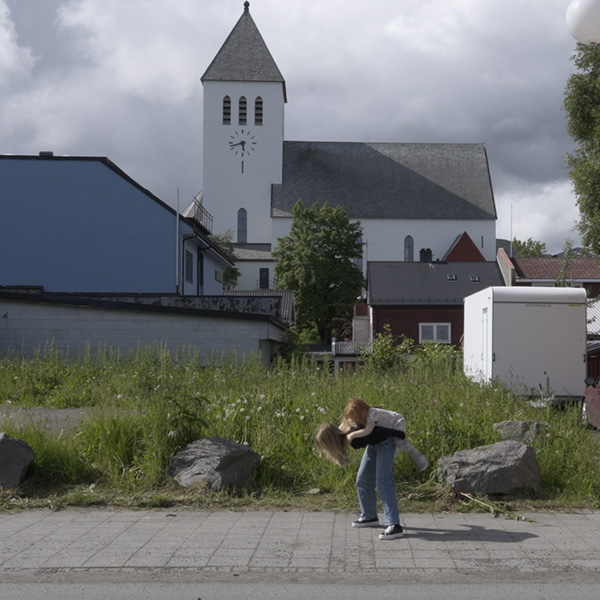
Eleven photographers, roughly a century of work: Ansel Adams, Michael Kenna, Galen Rowell, Sebastião Salgado, Edward Burtynsky, Hans Strand, David Noton, Charlie Waite, Daniel Kordan, Max Rive and Art Wolfe. Between them they carry landscape photography from large-format black and white in Yosemite to drone work and saturated digital colour. Each one changed something — a technique, a subject, or the reason for photographing land at all.
How this list was made
Any ranking of photographers is an argument, not a measurement. Five things were weighed:
- Vision. Whether the pictures interpret a place rather than record it.
- Influence. Whether other photographers’ work looked different afterwards.
- Craft. Control of light, timing and the whole technical chain, analogue or digital.
- Consequence beyond the picture. Conservation, documentation, public argument.
- Reach. Exhibitions, books and awards — a weak signal, not a verdict.
The numbering is for reference, not a ranking. The order runs roughly from the oldest work to the newest.
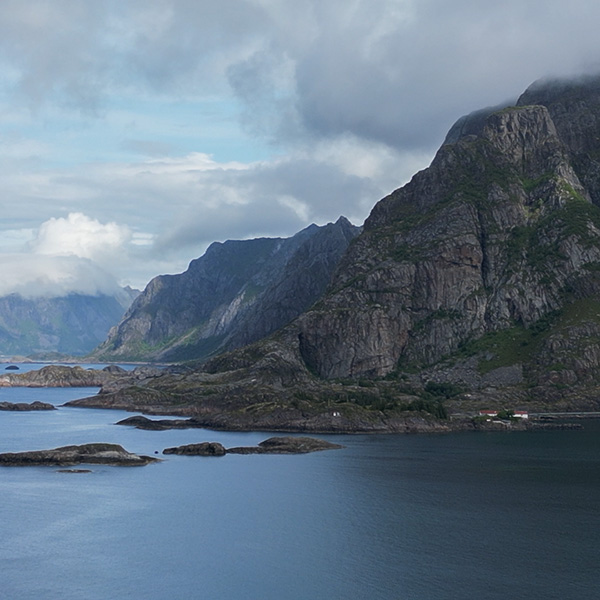
1. Ansel Adams (United States, 1902–1984)
Black-and-white large format in the American West, above all Yosemite. Adams co-developed the Zone System, a method for deciding at the moment of exposure how every tone in the finished print would sit. It turned darkroom work from a craft of repair into part of the composition.
He was also a campaigner. His pictures were used as arguments for protecting the land they showed, which set a pattern the genre has followed ever since: the landscape photograph as evidence, not only as decoration.
2. Michael Kenna (United Kingdom)
Long exposures, small prints, almost empty frames. Kenna works in black and white and often at night or at dawn, letting exposures of many minutes smooth water and cloud into a single grey field. What remains is usually one object — a tree, a jetty, a fence line.
His Japanese work, particularly in Hokkaido, made that reduction into a recognisable language. He is the reason a whole generation of minimalist landscape photography exists, and the reason much of it looks derivative.
3. Galen Rowell (United States, 1940–2002)
A climber first, a photographer second, and the combination is the point. Rowell carried a small camera into places large-format photographers could not reach, and shot colour film in the few minutes when mountain light is worth having.
He argued for going to the light rather than waiting for it — running to a ridge for an alignment that would last two minutes. He died in a plane crash in 2002, together with his wife Barbara.
4. Sebastião Salgado (Brazil, 1944–2025)
Known primarily for photographing people and labour, Salgado spent eight years on Genesis, a project on the parts of the planet that still look untouched. The landscapes in it are lit and printed like portraits: heavy blacks, sculpted light, no prettiness.
With Lélia Wanick Salgado he also replanted the deforested family land in Minas Gerais, which became the Instituto Terra. It is the clearest case in this list of a photographer’s work and a photographer’s actions pointing the same way. He died in May 2025.
5. Edward Burtynsky (Canada)
Mines, quarries, oil fields, tailing ponds, shipbreaking yards — photographed from above, at a scale that makes industry look geological. The pictures are beautiful, which is the uncomfortable part and clearly deliberate.
Burtynsky moved the genre away from wilderness and towards the landscape people have actually made. The film Manufactured Landscapes and the later Anthropocene project carried that argument well beyond photography audiences.
6. Hans Strand (Sweden)
Aerial and large-format work in Iceland, the Arctic and the Nordic wilderness. Strand photographs river deltas, glacial silt and volcanic ground from the air until they stop reading as places and start reading as pattern.
It is abstraction drawn from real terrain rather than imposed on it. Anyone who has flown over southern Iceland has seen the raw material; the difference is in knowing which altitude and which light turn it into a picture.
7. David Noton (United Kingdom)
A travel and landscape photographer whose real subject is planning. Noton writes and talks openly about the research behind each frame: the season, the hour, the tide, the weather window, the second and third visit.
His influence is didactic rather than stylistic. A great many amateurs learned from him that a landscape photograph is a scheduled appointment, not a lucky encounter.
8. Charlie Waite (United Kingdom)
Formal, quiet, almost painterly compositions — often a single field, a row of trees, a wall running across the frame. Waite came to photography from the theatre, and it shows in how deliberately he stages depth and light.
He founded the Landscape Photographer of the Year award in Britain, which has done more than any single body of work to define what British landscape photography currently looks like.
9. Daniel Kordan (Russia)
The most online photographer on this list, and included for that reason. Kordan works in strong colour and heavy post-processing, and distributes through Instagram, workshops and tours rather than galleries.
Whether the pictures survive as work is an open question. That the model works — audience first, prints second — is not, and it has reshaped what a career in landscape photography looks like.
10. Max Rive (Netherlands)
Mountains in bad weather, usually with a small human figure on a ridge for scale. Rive climbs to positions most photographers do not attempt and shoots in conditions most would wait out.
The results are cinematic and unapologetically dramatic. He is the clearest example of a younger, adventure-driven strand that grew up on the internet rather than in galleries.
11. Art Wolfe (United States)
Landscape, wildlife and people, photographed across more than a hundred countries over five decades. Wolfe composes like a designer — his frames are built on repetition, colour blocks and pattern rather than on a single subject.
Through books and the television series Travels to the Edge he reached an audience that would never have walked into a photography gallery, and taught a good deal of composition while doing it.
What the eleven have in common
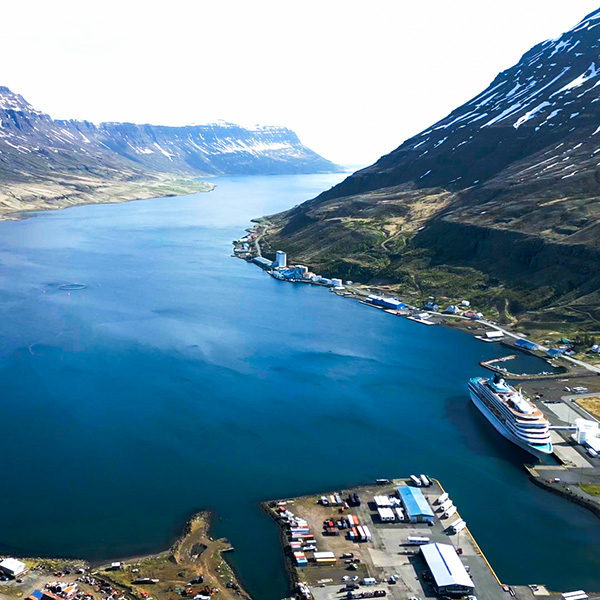
Not style — the range here runs from an empty grey frame to a saturated alpine sunrise. What they share is a decision made before the camera comes out. Adams decided what the print would look like while standing in the valley. Kenna decided to remove almost everything. Burtynsky decided that the interesting landscape is the damaged one.
The ones whose work ages badly are the ones who decided nothing and photographed what was in front of them at the hour they happened to arrive.
What I take from them
I am not a landscape photographer. Most of my own work is architectural, and the rest of this site is travel: ports, towns, coastlines, usually with a few hours ashore and no second chance. But three of these photographers changed how I work.
From Kenna, subtraction — the willingness to leave a place with one frame instead of forty. From Strand, the idea that a landscape can be read as surface and pattern, which is close to what I do with façades. From Rowell, going to the light rather than waiting for it, which on a ship in Norway means knowing before you dock which side of the town will be lit at four in the afternoon.
The practical half of that — how to work out in advance where the picture is — is a separate subject, and I have written it up in how to find the best travel spots for landscape photography.
Who is missing from this list?
A great deal. The eleven names above are all men, and nine of the eleven are European or North American. That is a fair description of who has been collected, exhibited and written about in this genre; it is not a fair description of who has done the work.
It is a working list rather than a finished one, and it will change.
Related: How to Find the Best Travel Spots for Landscape Photography · Narsaq, Greenland: Fjords, Drifting Ice and a Town of 1,400