
Europe is where almost every article on this site begins, because it is where the ships go: the Norwegian fjords and the North Cape, Iceland’s Westfjords, Orkney and the Scottish Highlands, the Baltic as far as Stockholm and Copenhagen, the Channel ports of England and France, the Dutch North Sea canal, and the Atlantic islands of the Azores and Madeira. Each piece is written from a day ashore rather than from a holiday — where the ship ties up or tenders, what is reachable on foot or by public transport, what the same route costs against the ship’s excursion, and how much buffer to keep before all-aboard. Prices and timetables carry the season in which they were checked, and the photographs were taken on the day described. The port guides are collected on one page: Cruise Ports on Your Own.
A Journey Through Iceland’s Geologic Heart
| Ship’s excursion from Akureyri | Duration | Price |
|---|---|---|
| Mývatn and Goðafoss with a coffee stop | most of a day | €159 |
| Bathing in the Mývatn Nature Baths | most of a day | €189 |
| Whale watching from Akureyri | about 3 hrs | €119 |
Phoenix Reisen, MS Amadea 2027 programme, prices checked March 2026. Goðafoss is 50 km from the quay and Mývatn another 50 beyond it, on a road with no bus service worth planning around — which is what the €159 is really buying.
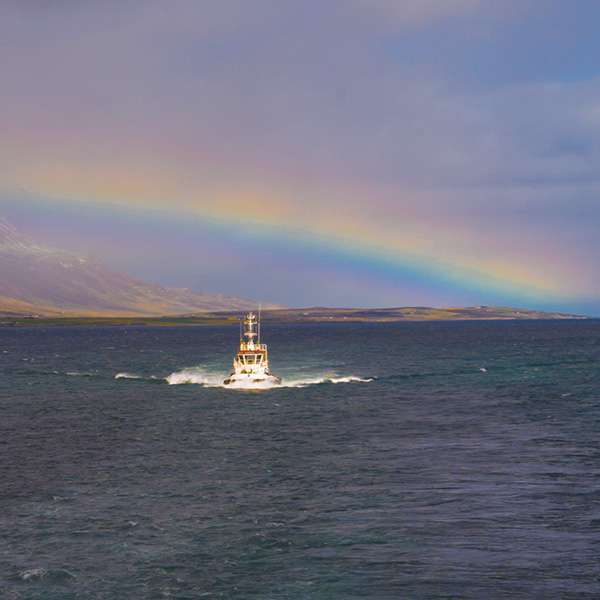
Our journey begins in Akureyri, the vibrant heart of North Iceland. Often called the “Capital of the North,” Akureyri is nestled at the end of the Eyjafjörður fjord, surrounded by snow-capped peaks and a laid-back charm that makes it a perfect base for exploring the region’s volcanic wonders.
Goðafoss – The Waterfall of the Gods
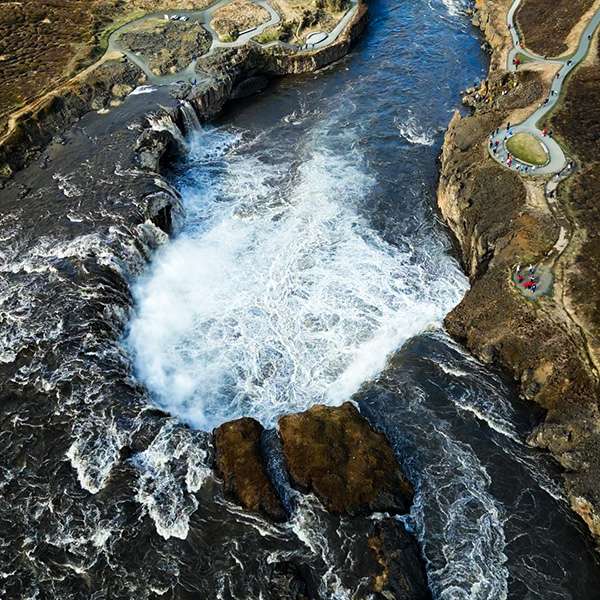
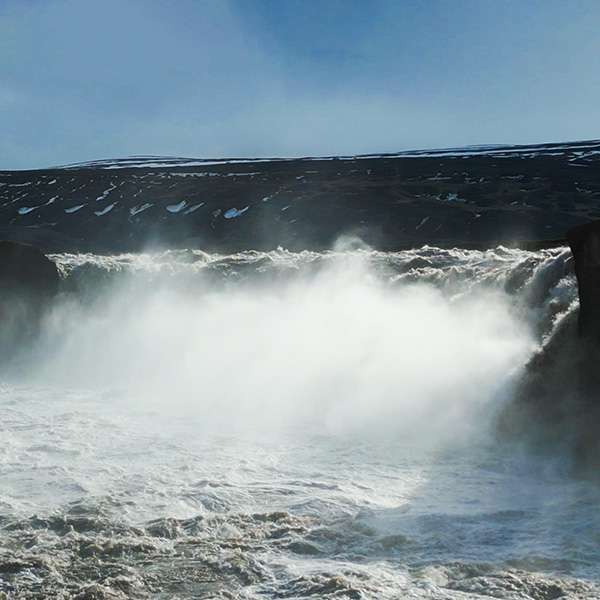
Our first stop is the majestic Goðafoss, one of Iceland’s most beautiful and historically significant waterfalls. Its name—“Waterfall of the Gods”—stems from a pivotal moment in Icelandic history: around the year 1000, the law speaker Þorgeir Ljósvetningagoði converted to Christianity and cast his pagan idols into the waterfall as a symbolic act of the nation’s religious shift. Today, the semicircular cascade, with water thundering over a 12-meter drop, draws visitors not only for its beauty but also its role in Iceland’s spiritual story.
Lake Mývatn – A Volcanic Oasis of Life
We continue east toward Lake Mývatn, a shallow body of water formed by a volcanic eruption over 2,000 years ago. The area is a paradise for birdwatchers, especially in spring and summer, when rare duck species gather to breed—more than any other place in Europe. The lake is surrounded by a surreal landscape of lava fields, wetlands, and steaming geothermal vents.
Skútustaðir – The Pseudocraters
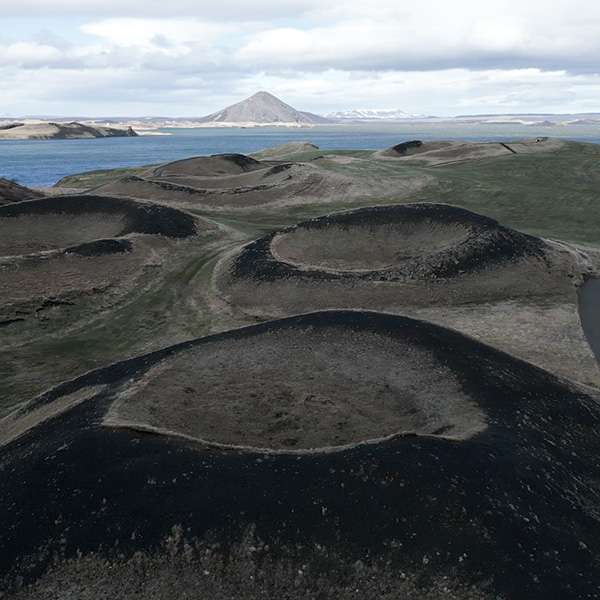
Just south of the lake lie the pseudocraters of Skútustaðir, strange landforms created when hot lava flowed over wetlands, causing steam explosions that shaped craters without magma chambers. Walking among these grass-covered mounds, you’d be forgiven for thinking you were on the Moon.
Dimmuborgir – The Dark Castles
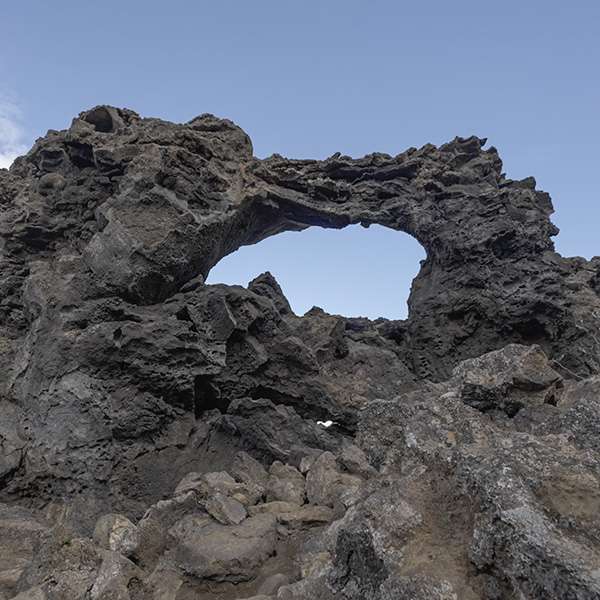
Next, we explore Dimmuborgir, meaning “Dark Castles”. This dramatic lava field is filled with twisted, towering formations—lava pillars, caves, and arches—created by collapsing lava tubes. Icelandic folklore says that this eerie place is home to trolls and the infamous Yule Lads, mischievous characters from local Christmas legends. Some formations even resemble haunted ruins, lending an otherworldly atmosphere.
Námaskarð – Boiling Earth
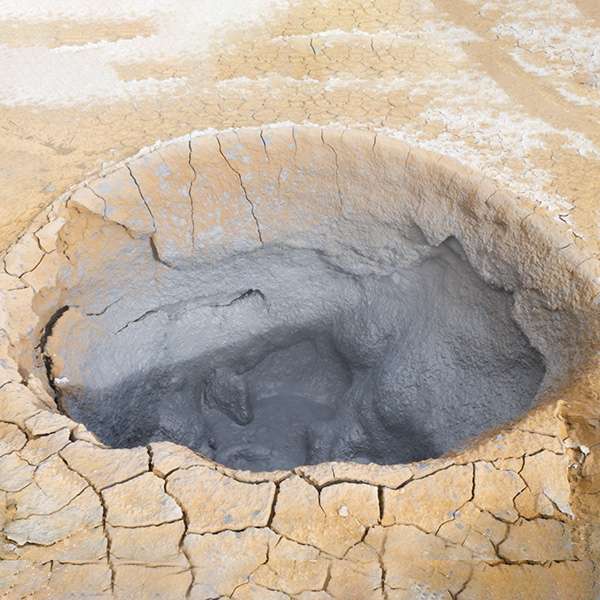
Our final stop before returning to Akureyri is Námaskarð, a geothermal area at the base of the Námafjall mountain. Here, the earth seems alive: mud pots bubble, fumaroles hiss, and sulfur stains the ground in vivid yellows and oranges. The smell of sulfur is strong, but so is the fascination—this is raw Earth on display, reminding us of Iceland’s volatile inner workings.
Practical Tips for Visiting Akureyri and the Mývatn Area
- Best Time to Visit: Summer (June to August) offers long days, ideal for sightseeing. In winter, the region is magical under snow, with chances to see the northern lights.
- Getting There: Akureyri is accessible by domestic flights from Reykjavík (approx. 45 minutes), or by road via Route 1 (approx. 5-6 hours).
- Tours: Guided day trips to Goðafoss and Mývatn are available from Akureyri. Renting a car offers more flexibility, especially if you enjoy photography or hiking.
- What to Bring: Waterproof outerwear, sturdy walking shoes, and layered clothing—even in summer. A camera is essential for capturing the unique geology and light.
- Where to Stay: Akureyri offers charming guesthouses, boutique hotels, and budget hostels. Staying overnight at Lake Mývatn is also an option if you plan to explore more.
- Dining: Try local specialties in Akureyri such as Arctic char, lamb, or skyr-based desserts. There are also good cafés and bakeries for lighter meals.
Whether you’re drawn by geology, wildlife, or Icelandic folklore, the journey from Akureyri to Lake Mývatn offers an unforgettable glimpse into the island’s fiery soul.
Ports on this route — Iceland and Greenland: Narsaq: two hours ashore · Hesteyri in the Westfjords · Iceland’s Golden Circle · The Golden Circle on a budget · Inside the Langjökull ice tunnel · Hiking to Hengifoss · All cruise ports on your own