
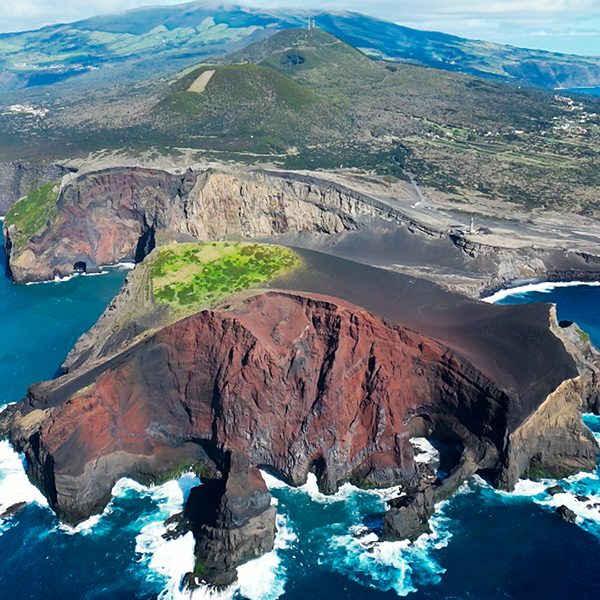
Visited: May 2023, on Faial in the Azores. The photographs are my own.
Capelinhos sits at the western tip of Faial, about 40 minutes by road from Horta. The marked circuit from the Interpretation Centre car park — the park authority calls it the Whalers’ Path — is 3.8 km, takes around 90 minutes and is rated easy. Our walk went beyond it and ended at the coast village of Varadouro, roughly two and a half hours in all. There is no shade anywhere on the route and nowhere to buy water.
What the Whalers’ Path covers
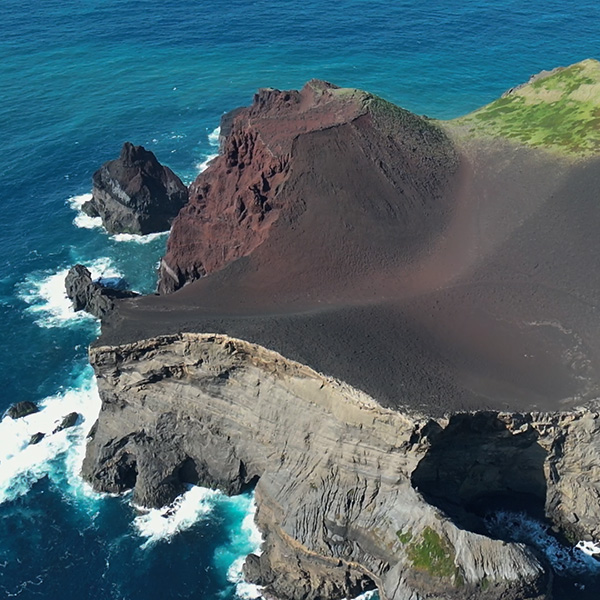
The circuit begins and ends at the car park of the Capelinhos Volcano Interpretation Centre, so you do not need a lift at the far end. It runs out across the ash field towards the lighthouse, drops to the old whaling harbour at Porto do Comprido and comes back along the slope. The natural park gives it 3.8 km, about an hour and a half, and grades it easy.
Easy is right as far as gradient goes. It is less right about the surface and the exposure. The path is packed ash and loose grit, it sits on an open headland, and the wind here comes off two thousand kilometres of Atlantic with nothing to slow it down. Walking shoes rather than trainers, and something over your arms even in summer.
What the ground is like underfoot
You are walking on material that did not exist before the autumn of 1957. The eruption began underwater a few hundred metres offshore on 27 September that year, ran for thirteen months and added 2.4 square kilometres to the island. About a quarter of that is still here; the sea has taken the rest, and it is still taking it.
The surface reads like a building site that nobody cleared. Grey and brown grit, cut edges where water has worked through the ash layers, and almost nothing growing. Seventy years is not long enough. Along the path there are low walls and the corners of houses in the grass — around three hundred were destroyed and some two thousand people had to leave the parish.
Porto do Comprido, the harbour the eruption closed
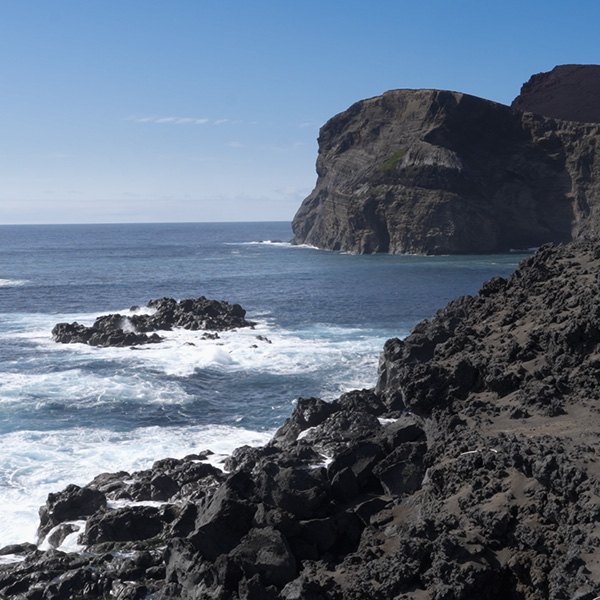
Halfway round, the path drops towards the water at Porto do Comprido. The natural park’s own description of the site calls it the largest and most productive whaling station in the Azores until September 1957 — the open rowing boats put out from here. The eruption ended that in the week it began, and the boats never came back to this stretch of coast. Whaling continued elsewhere in the archipelago until 1987, when the last whale was taken off Pico.
There is not much to see: a slipway, some walls, the shape of a harbour. It is worth the descent anyway, because it is the one place on the walk where the scale of what was lost is a human scale rather than a geological one.
The lighthouse
The tower on the ridge went into service in 1903 after nine years of building. It is twenty metres high and stood on a headland with the open sea in front of it. By the spring of 1958 the ash in its courtyard was seven metres deep. It was switched off in November 1957 and has never been relit.
It is now part of the Interpretation Centre, which is built underground beneath the ash field so that nothing of it shows from the path. If you have the time, go in — the ticket includes the climb up the tower, and the view from the top is the one the walk is really about.
Ending at Varadouro
Our route carried on south to Varadouro, a small place on the west coast with bathing pools set into the lava. The contrast is the point of walking it in this direction: you come off an ash field where nothing grows and arrive somewhere green, sheltered and in use.
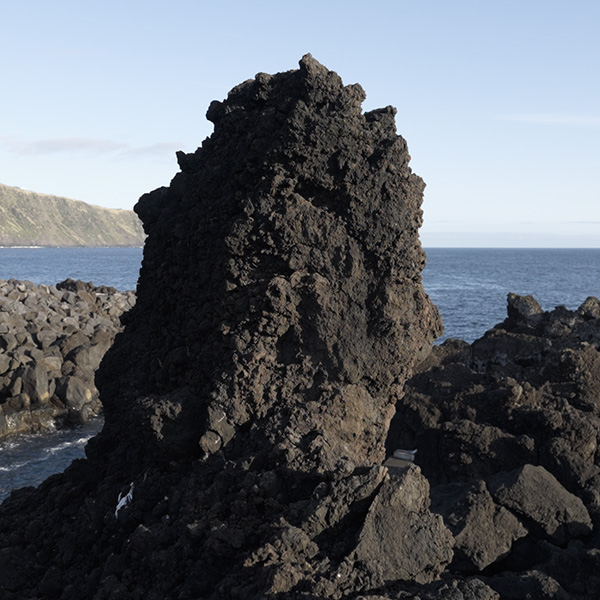
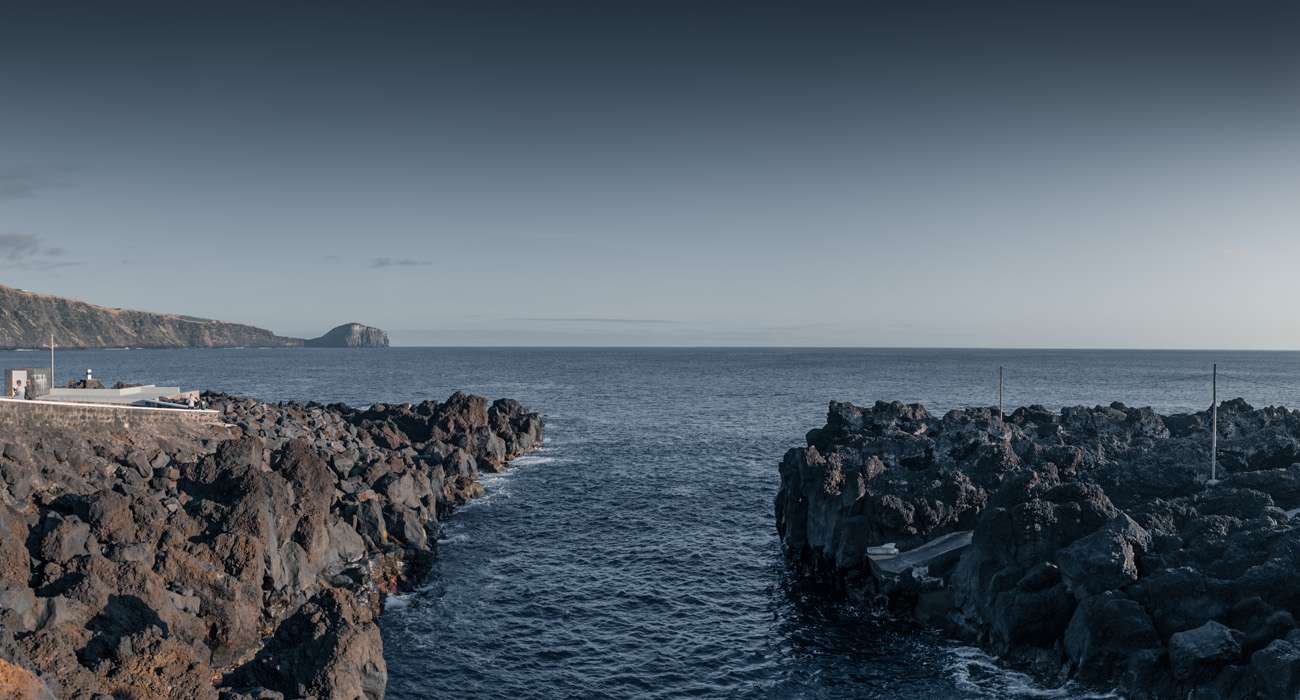
If you are walking rather than driving, note that Varadouro is not the car park you started from. We went back to Horta by bus. Check how you are getting off this coast before you commit to the longer version.
When to go, and what to take
Late spring to early autumn gives the mildest weather and the clearest air. Water, because there is none on the route. Sun cover, because there is no shade. And something to keep grit out of a camera — the ash gets everywhere and it is sharp-edged.
Check the Interpretation Centre’s hours before you set out: from 1 April to 31 October it opens daily 10:00–18:00, and from 1 November to 31 March Tuesday to Saturday 09:00–17:00, closed Sunday and Monday. Last entry is an hour before closing, and it can shut at short notice in bad weather.
Photographs: what works on this coast
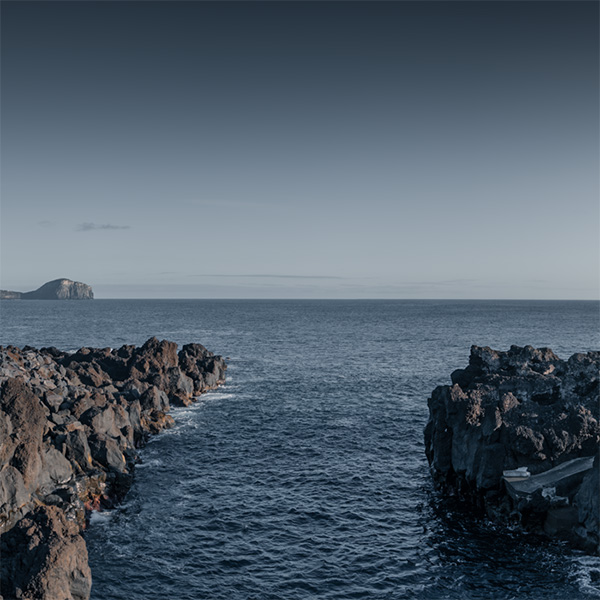
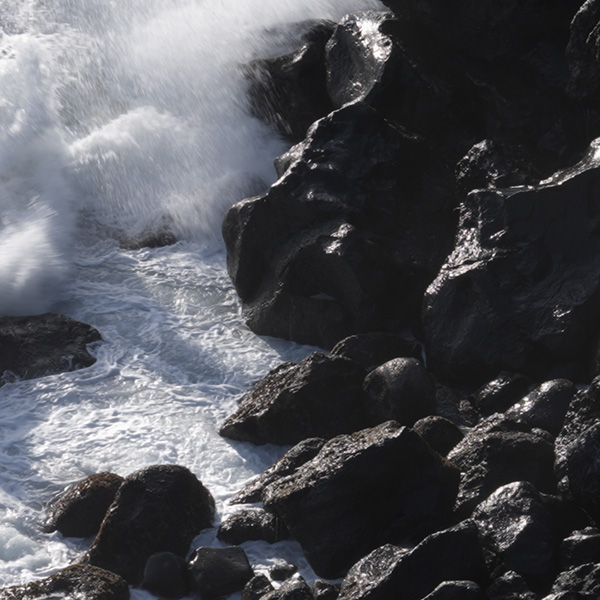
Wide shots of the cone are the obvious picture and the hardest one to make work — the ground is one colour and the light here is usually flat. What holds up better is the edge: surf against black rock, the cut layers in the ash, the line where the new land stops and the old island starts.
Black and white is worth trying on this coast. The colour information is thin to begin with, and taking it out leaves the texture, which is the actual subject.
If you only have a few hours
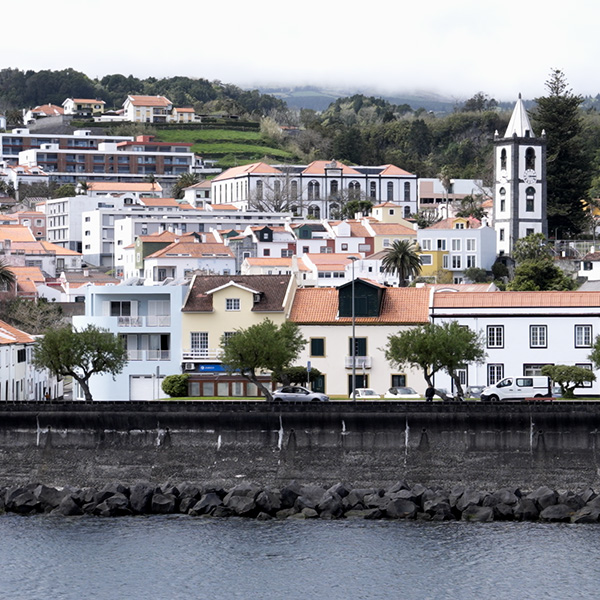
Most people arriving here are on a day out from Horta, often from a ship. In that case the long version to Varadouro is not the walk to plan — the circuit from the car park plus the centre fills two hours comfortably and gets you back to where the transport is. I have written the logistics of that day up separately.
Related: Horta cruise port: Capelinhos on your own · Praia da Vitória: Angra do Heroísmo on your own · São Miguel from Ponta Delgada · All Azores stories