
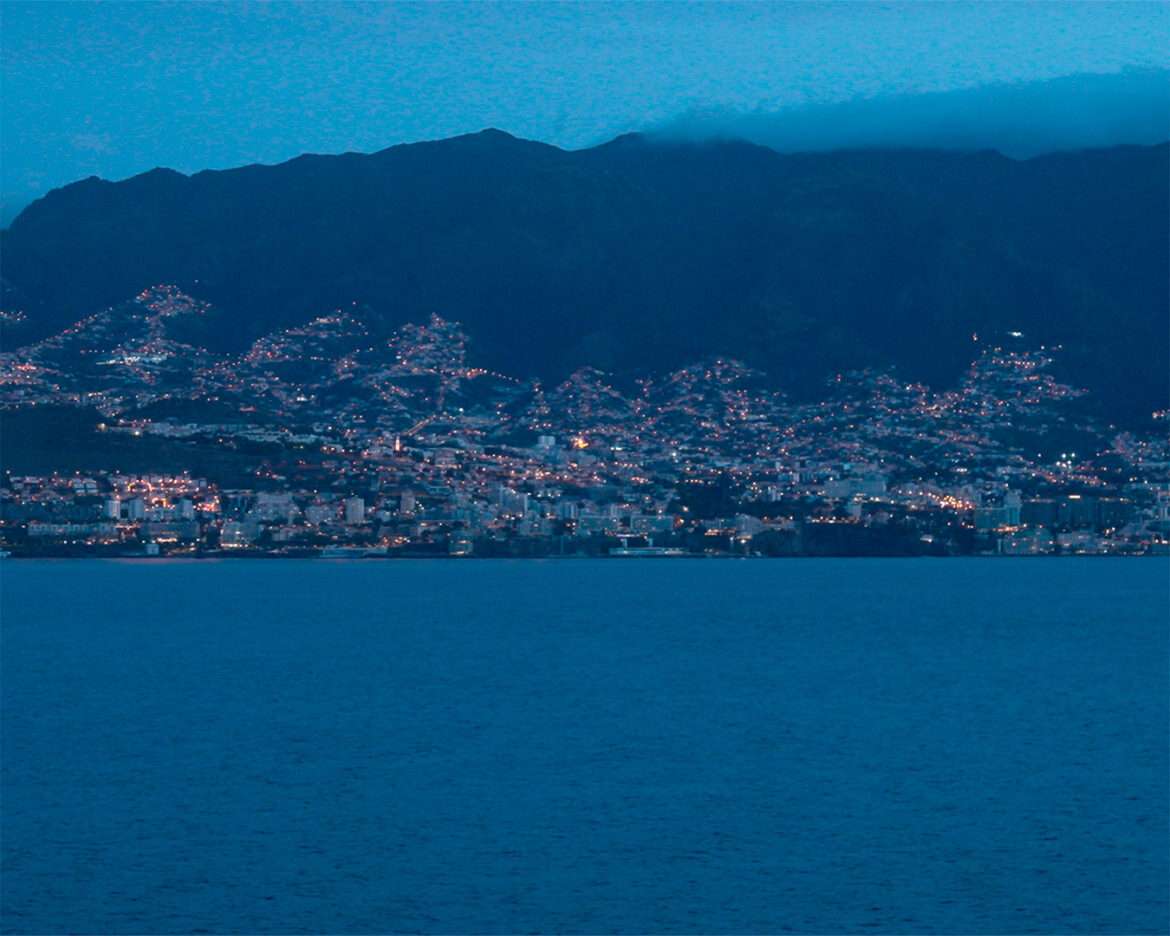
Visited: October 2026, on a call of MS Amadea. The photographs are my own, taken that morning.
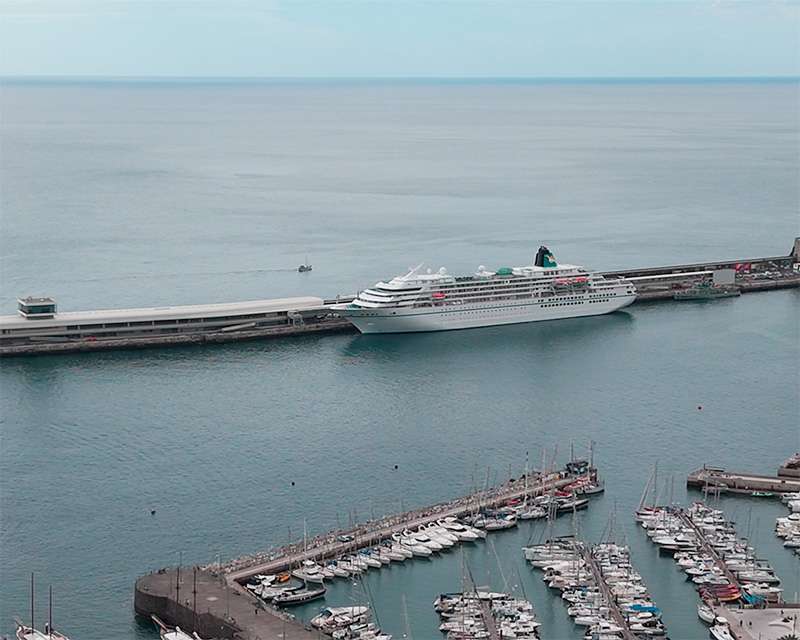
Funchal is one of the easier European ports to do without a tour. Ships berth on the breakwater about 1.6 km west of the old town — 20 to 30 minutes on foot along the water, or a fixed €7.50 by taxi. The market hall, the painted doors of Rua de Santa Maria and the seafront fort all stand within two kilometres of one another. Half a day covers the centre.
Where does the ship dock in Funchal?
On the breakwater west of the marina — a mole running parallel to the coast with room for about three large ships alongside. A fourth berths on a shorter pier closer to the CR7 museum. There is no tendering here.
From the gate it is roughly 1.6 km to the Avenida do Mar and the edge of the old town: 20 to 30 minutes depending on where you are tied up, flat the whole way, past the marina and the yacht moorings. Taxis wait outside the terminal at a fixed €7.50 into the centre for up to four people — official cabs are yellow with a blue stripe. Most lines run a shuttle, with the fare announced on board. The hop-on-hop-off buses cannot come onto the pier; their representatives meet passengers at the gate instead.
Is Funchal worth doing on your own?
For the town, yes, and without much hesitation. Everything that makes the centre worth a morning sits inside a square roughly two kilometres on a side, and the route is level until you choose to go uphill.
The honest caveat is the rest of the island. Monte, Cabo Girão, Pico do Areeiro, a levada walk — those are an hour of driving each way and a tight clock against all-aboard. If you came to Madeira for the mountains, this is one of the ports where the ship’s coach earns its price. If you came for the town, walk.
What to see in Funchal in half a day
Mine ran from the gangway to about two o’clock. In that order it works:
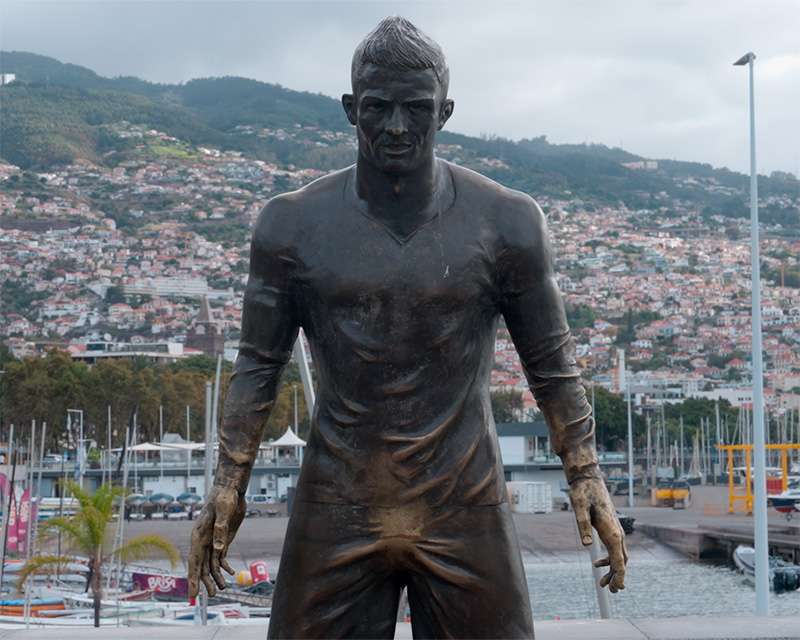
The waterfront (20 minutes). The walk in along the Avenida do Mar, with the marina on one side and the city climbing away on the other. The bronze Cristiano Ronaldo stands above the harbour at Praça do Mar, next to the museum named after him. Most people stop here whether they meant to or not.
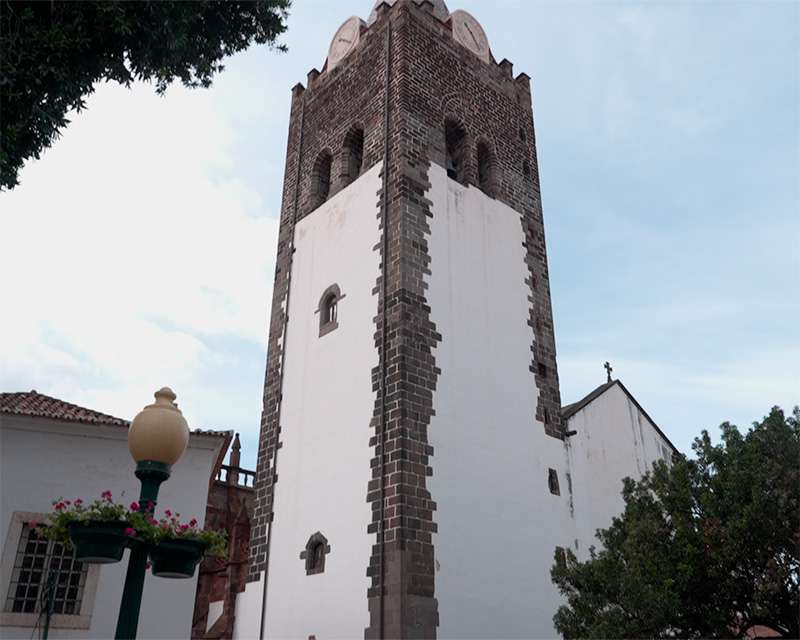
The cathedral (20 minutes). The Sé was begun in 1486 and structurally finished in 1514, the main altar consecrated in 1517, under the patronage of the man who became Manuel I. The stone came from Cabo Girão. The walls are plastered white with the volcanic rock left bare at the corners and openings, which is why the tower reads as a striped object from the street. Inside, a cedar ceiling in the Mudéjar manner.
Mercado dos Lavradores (45 minutes). See below. Go first if you can.
Rua de Santa Maria (45 minutes). The old town’s long lane, and the painted doors.
Forte de São Tiago and the Barreirinha (30 minutes). The seaward end of the old town, and the natural place to turn round.
Why the pavements in Funchal are black
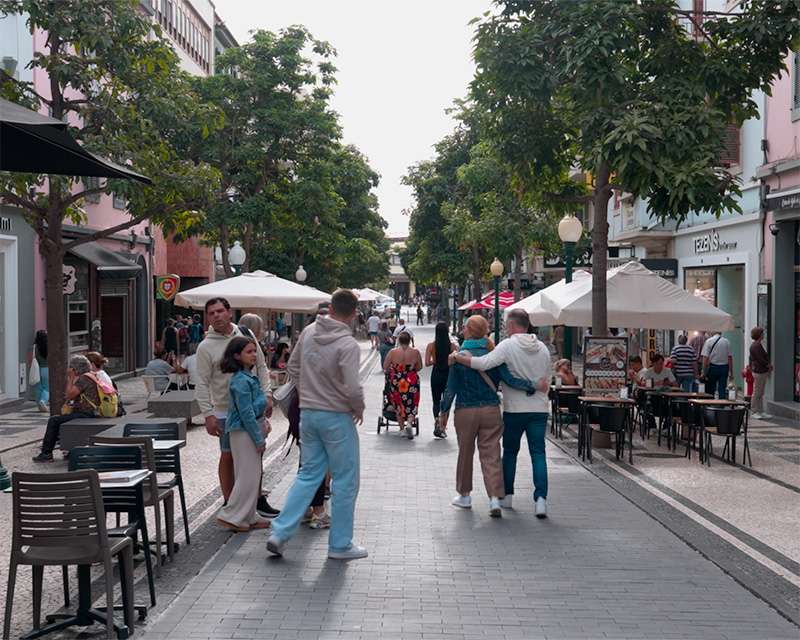
Madeira is a volcano. Pale stone does not come out of this ground. Where Lisbon draws its pavements with white limestone, Funchal works almost entirely in the dark material — grey, red, black — and the patterns are made by changing the shade rather than the contrast. The city keeps its own pavers, and the stones are still set by hand, one at a time, the way they were in the nineteenth century.
It is worth looking down for a minute. It explains the colour of the whole town.
The three rivers that are usually not there
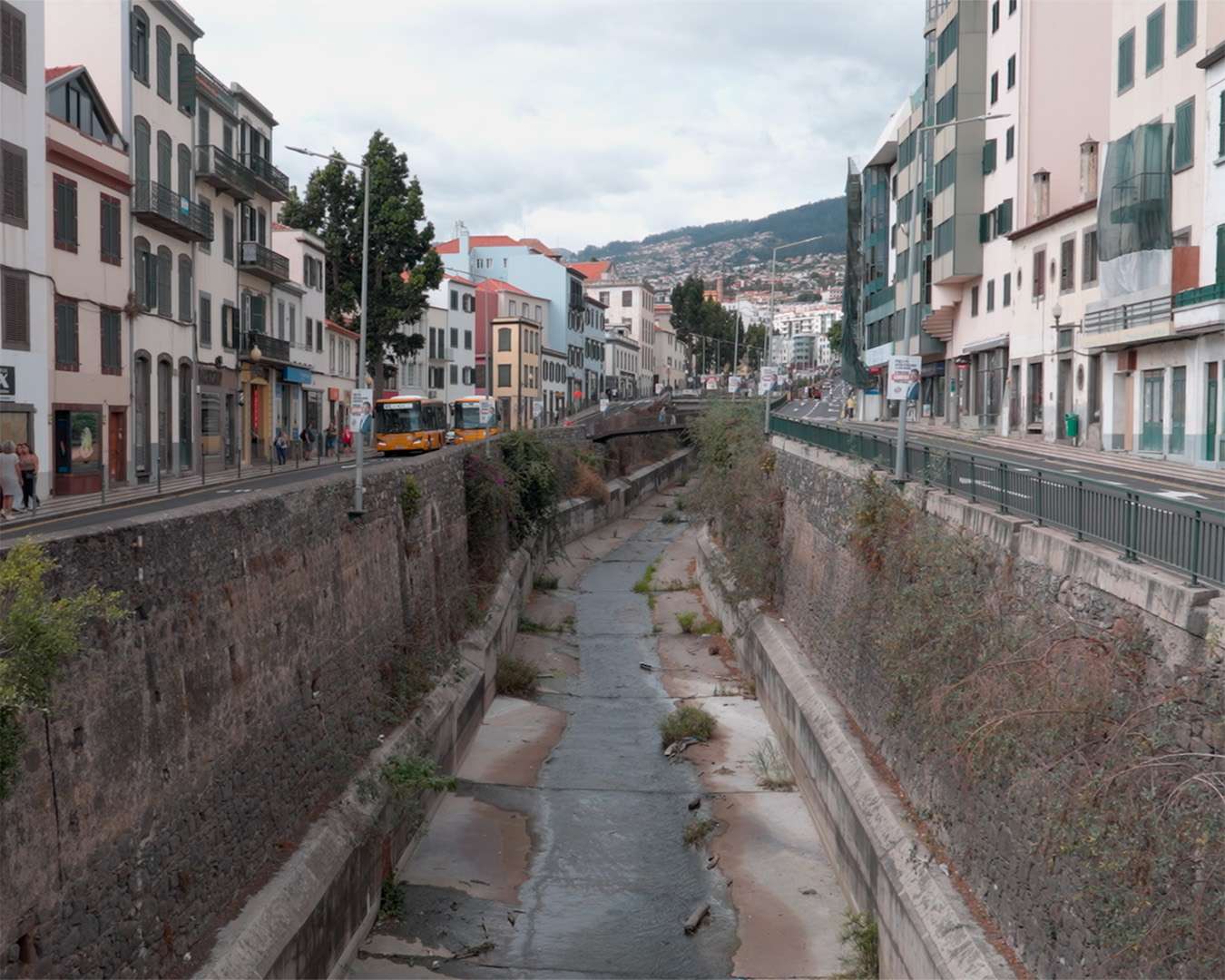
Three watercourses run through Funchal: the Ribeira de São João, the Ribeira de Santa Luzia and the Ribeira de João Gomes. For most of the year they carry no water. What you look down into is a staircase of black stone leading to the sea, built not for the river but for the one day the river comes.
It came on the morning of 20 February 2010. The mountain station at Areeiro, 1,590 m up, recorded 333.8 mm of rain in twenty-four hours — an event of roughly ninety-year return period. The three channels filled with rock, tree trunks and cars. Forty-five people died, around half of them in Funchal.
The walls you stand on were built afterwards. The European Investment Bank lent €62.2 million towards the post-disaster programme, and the three streams were given slit dams — concrete walls ten metres high with teeth in them, designed to hold back the solid material rather than the water. The work ran from early 2011 to April 2016. All of it for rivers that are almost never there.
Mercado dos Lavradores: be there before nine
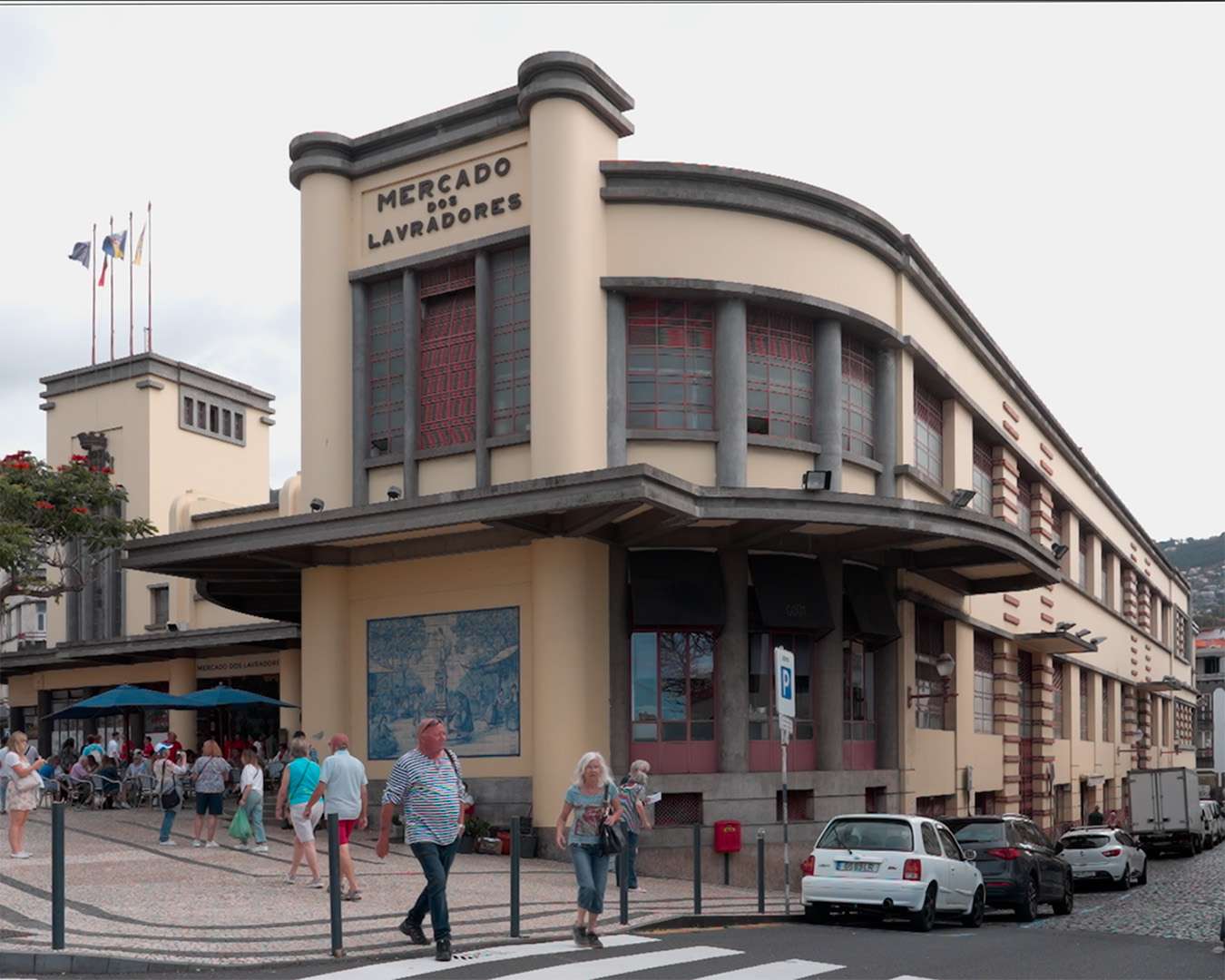
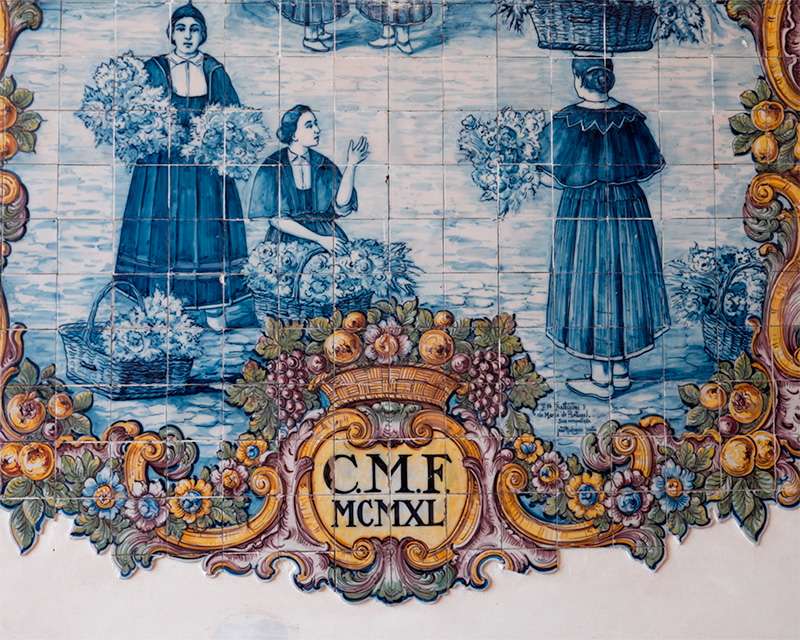
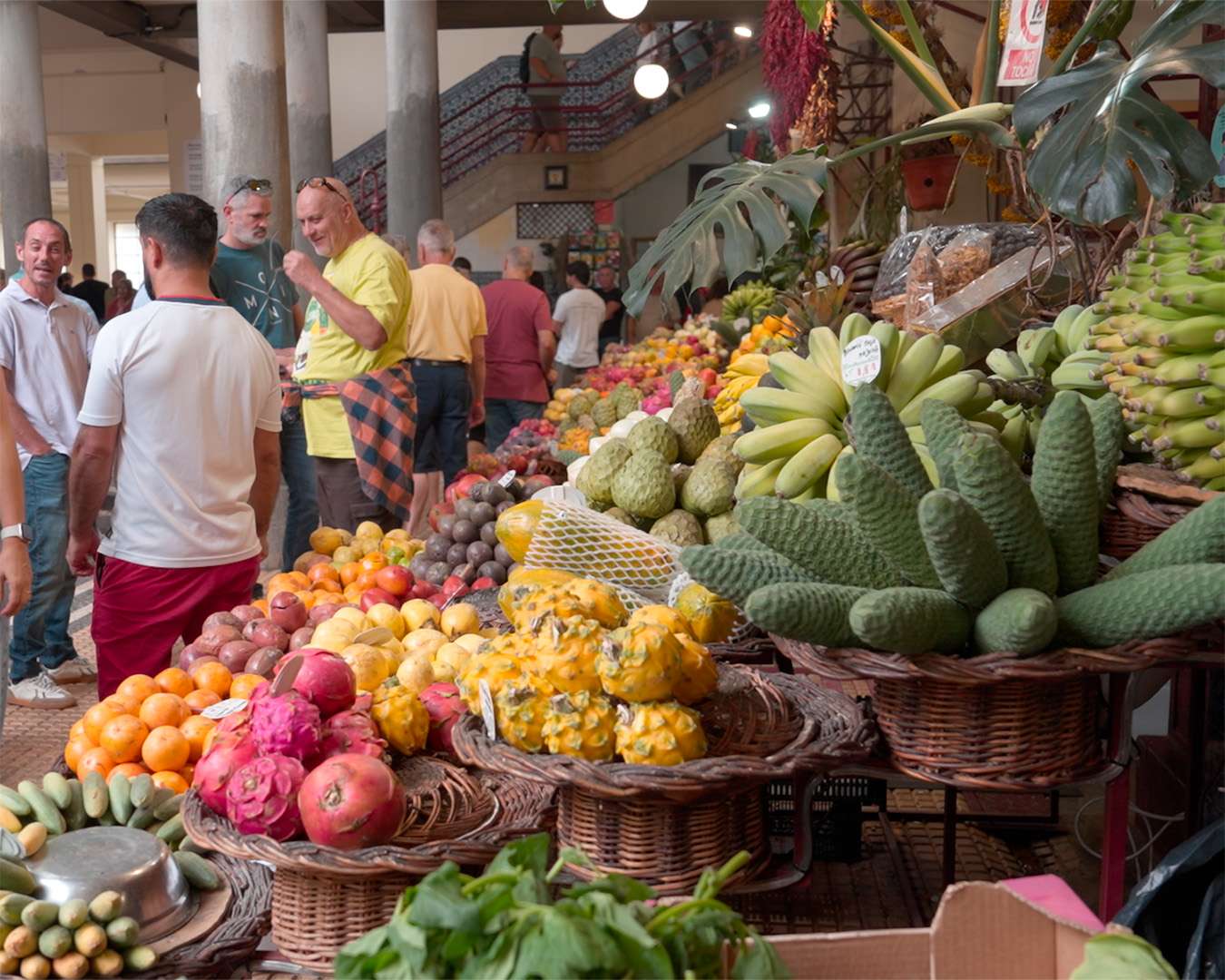
The market opened on 24 November 1940. Edmundo Tavares designed it — art deco in the service of the Estado Novo, built as the supply apparatus of an entire city rather than as an attraction. The tile panels on the facade, the main gate and the fish hall date from the same year and were painted by João Rodrigues. One of them carries the municipal arms with the date in Roman numerals: C.M.F. MCMXL.
Entry is free. The market opens early and closes on Sundays, and on Saturdays it shuts at two. That matters more than it sounds: by mid-morning the ground floor belongs to the ships. If you want the trade rather than the backdrop, be inside before nine.
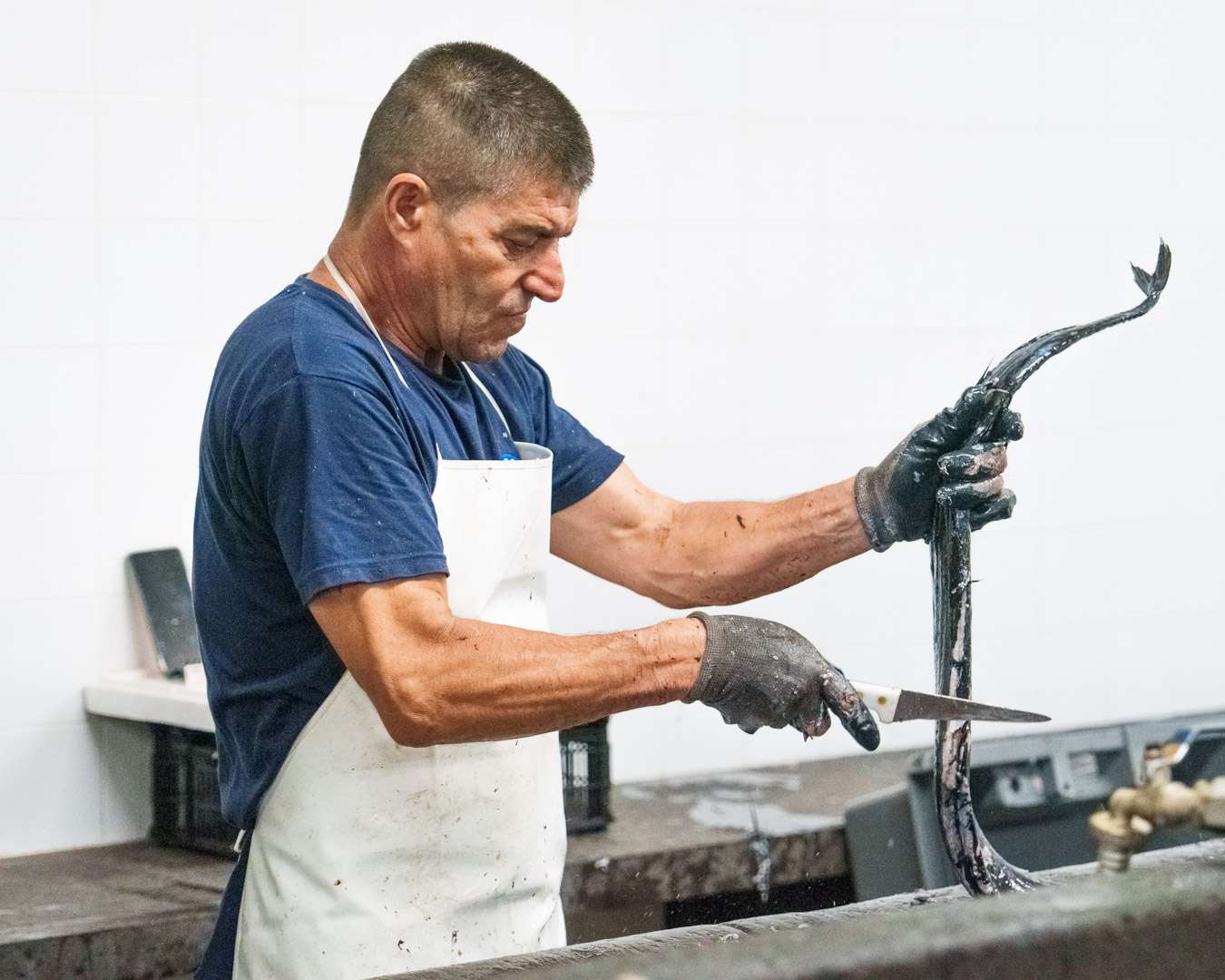
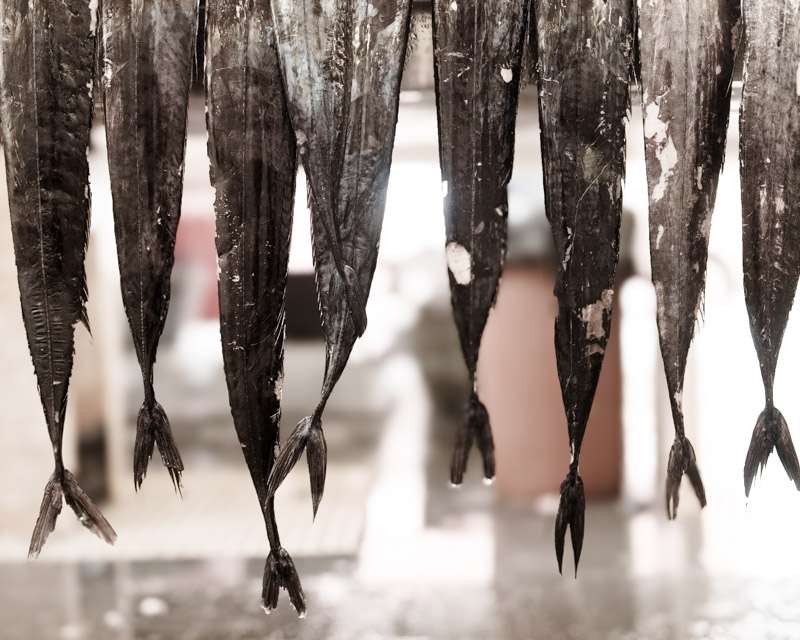
The fish hall at the back is the part worth the walk. Black scabbard fish — espada — lie in rows on the stone counters, and the men behind them fillet without looking down. The light comes from above onto white tile. It is the best room in the building and the hardest to photograph.
The painted doors of Rua de Santa Maria
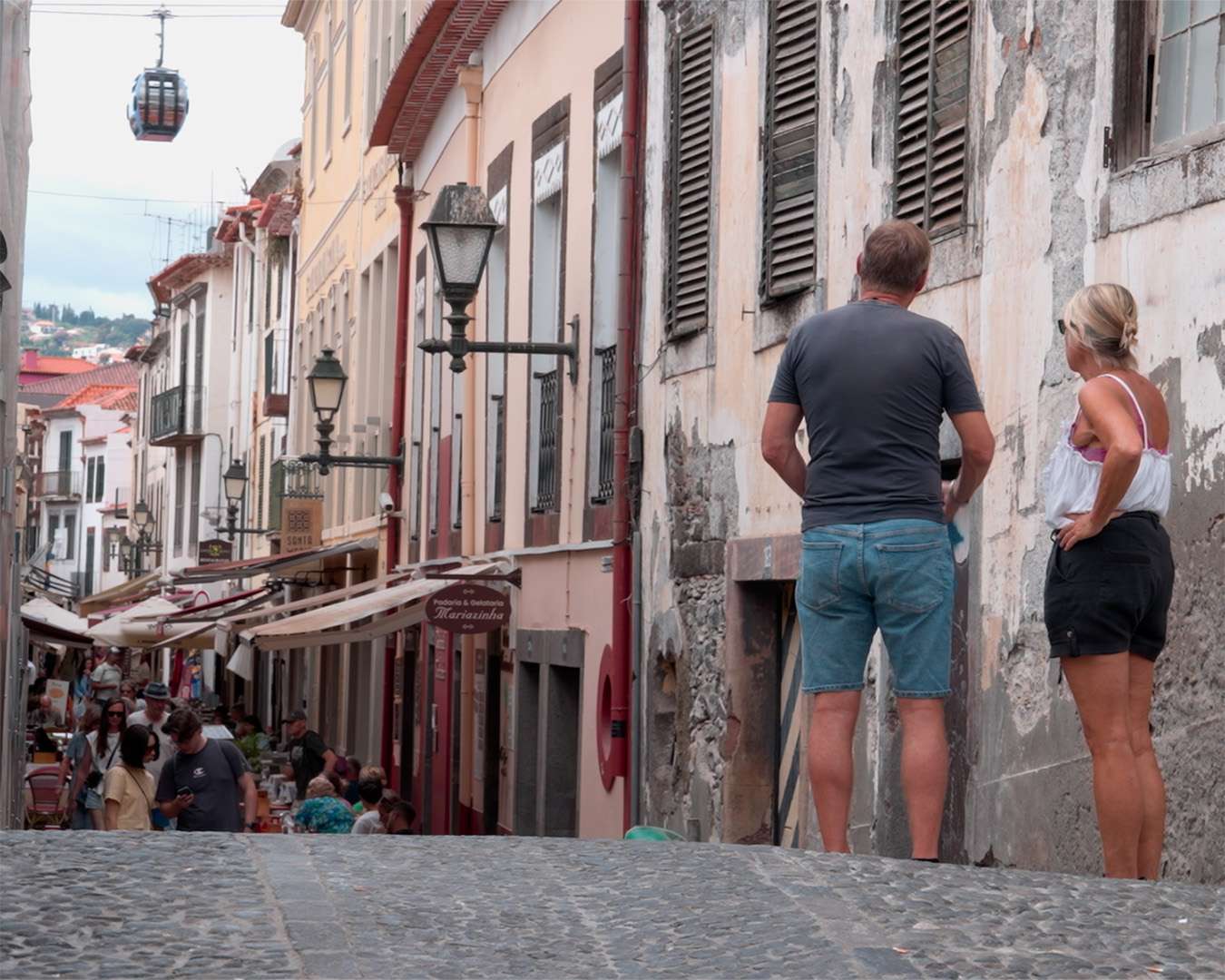
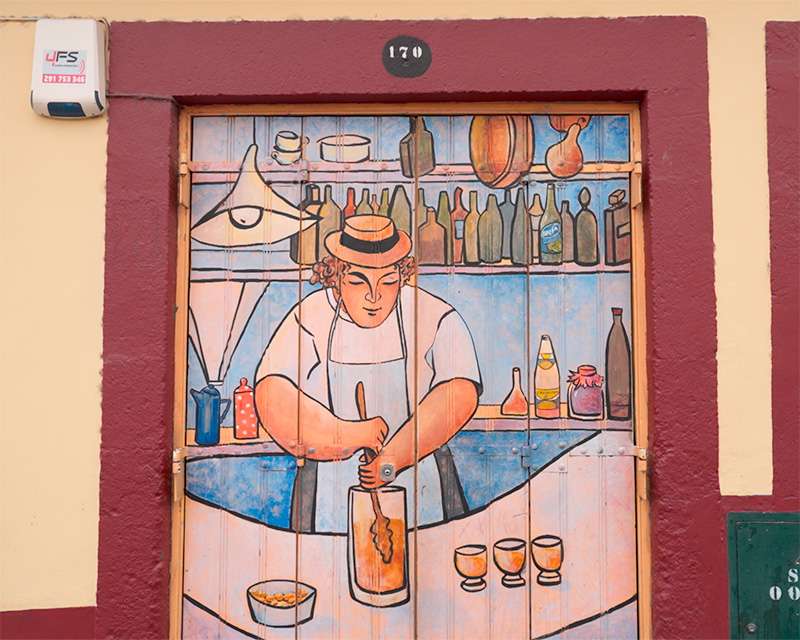
For a long time this was the address people avoided. In February 2010 the storm tore parts of the quarter open, and a year later an artist painted one of the doors. More than two hundred followed, by around a hundred hands — architects, neighbours, people passing through. There was no jury and there is no common line, which is the point: a street that was not restored but painted.
It is now the busiest lane in the old town, lined with restaurants whose staff work the pavement. The doors are still worth the walk, and the ones at the far end are the better ones.
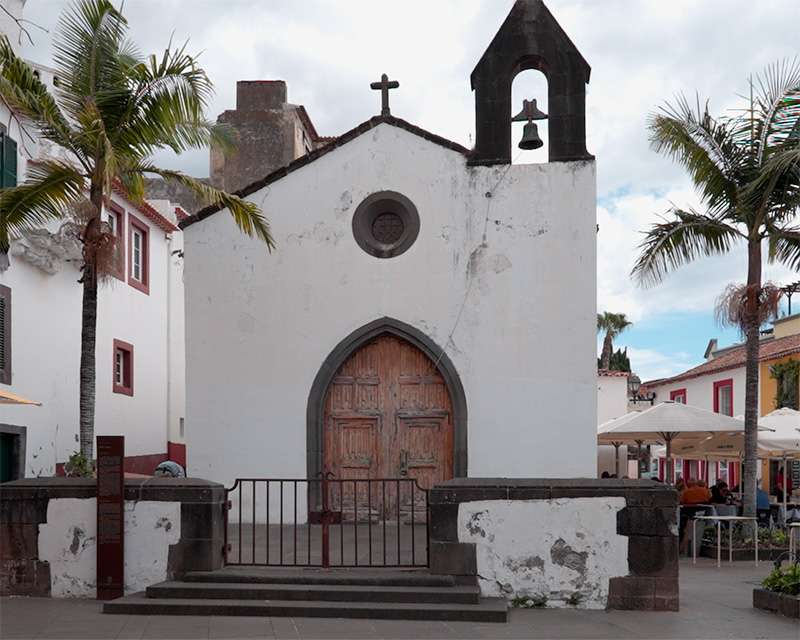
Halfway along, the lane opens onto a small square with the Capela do Corpo Santo on it — a plain whitewashed chapel with a single bell, fifteenth-century in origin and much altered in the sixteenth. It belonged to a confraternity that ran an infirmary for fishermen and their families, and it is the quietest corner of the quarter: two minutes from the busiest terrace in Funchal, and almost nobody crosses the square to look at it.
Forte de São Tiago, and the fortress I did not climb
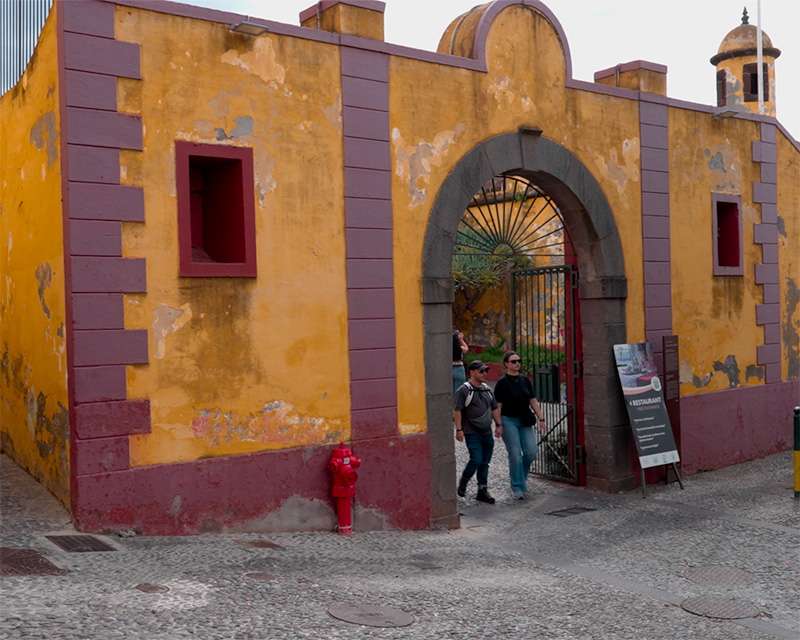
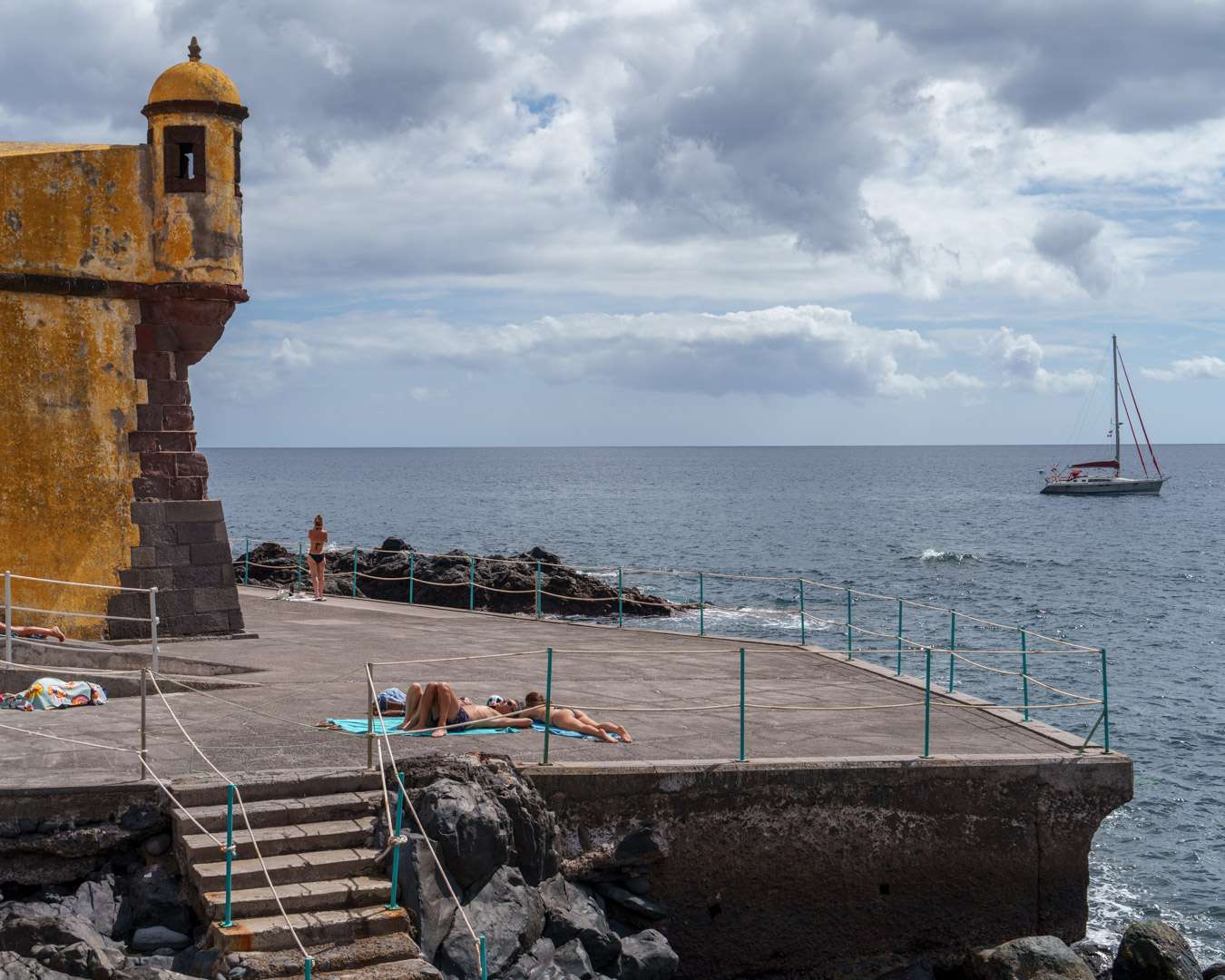
Rua de Santa Maria ends at the fort. Building began in 1614, against pirates; the ochre yellow is not original but dates from the restoration work of the 1990s. The Museum of Contemporary Art moved out in 2015. The grounds are free to walk, and there is a restaurant inside the walls.
Below it, on the rocks, a concrete bathing platform with straw parasols and a few people lying out — the Barreirinha. Not a beach in any conventional sense. It is where Funchal swims.
The other fortress, the one with the view, is the Fortaleza de São João Baptista do Pico, 111 metres above the water on the hill behind the town. I did not get up there. Worth knowing before you plan it: the tourist board listed the fort as closed in September 2026, so check its status before you spend the climb on it.
What does half a day in Funchal cost?
| Item | October 2026 | Note |
|---|---|---|
| Walk, pier to the old town | free | about 1.6 km, 20–30 min, flat along the water |
| Taxi, pier to the centre | €7.50 fixed, up to 4 people | official cabs are yellow with a blue stripe |
| Ship’s shuttle | chargeable, price given on board | only worth it if walking is a problem |
| Mercado dos Lavradores | no admission charge | closed Sundays; Saturday closes at 14:00 |
| Forte de São Tiago, grounds | free | hours vary — check the board at the gate |
| Cable car, Funchal to Monte | €22 return, €16 one way | operator’s own price, October 2026; 08:45–17:45 |
| City bus | day ticket just under €6 | single fares €1.35–1.95 |
Prices I could not confirm from two sources are left out rather than guessed. The cable car is the one to check yourself before you go: the operator quotes €22 return, while several guidebook sites still carry older and lower figures.
Ship’s tour or on your own?
For the centre, on your own, every time. Nothing in the table above comes close to an excursion price, the walk is flat, and the whole route can be shortened at any point by turning back along the Avenida do Mar.
The excursion earns its money the moment the target moves inland or uphill. And whichever you choose, plan to be back at the pier 45 to 60 minutes before all-aboard — the walk from the old town is longer coming back than it felt going out.
Photographs: where to stand, and what the light does
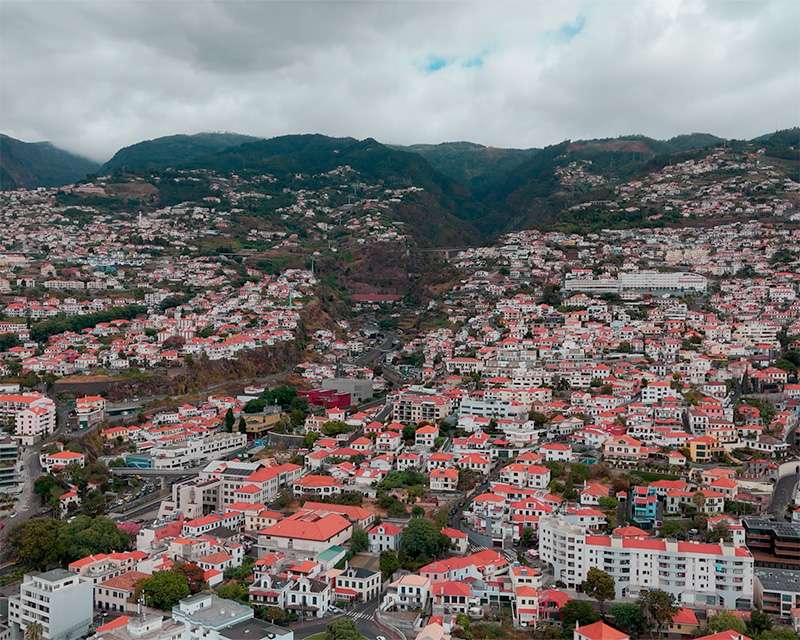
The first picture of this port is made before anyone goes ashore. Funchal lies on a slope and lights itself from top to bottom, so the approach in the dark gives you a hillside of lights above black water, with the mountains closing over the top. Be on deck for it.
The second is the fish hall: overhead light, white tile, black fish, and hands that do not stop. Work close and do not use flash.
The third is the river beds. Straight concrete lines running down to the sea, with the city on both sides — a stronger subject than the pretty lane, and nobody else is photographing it.
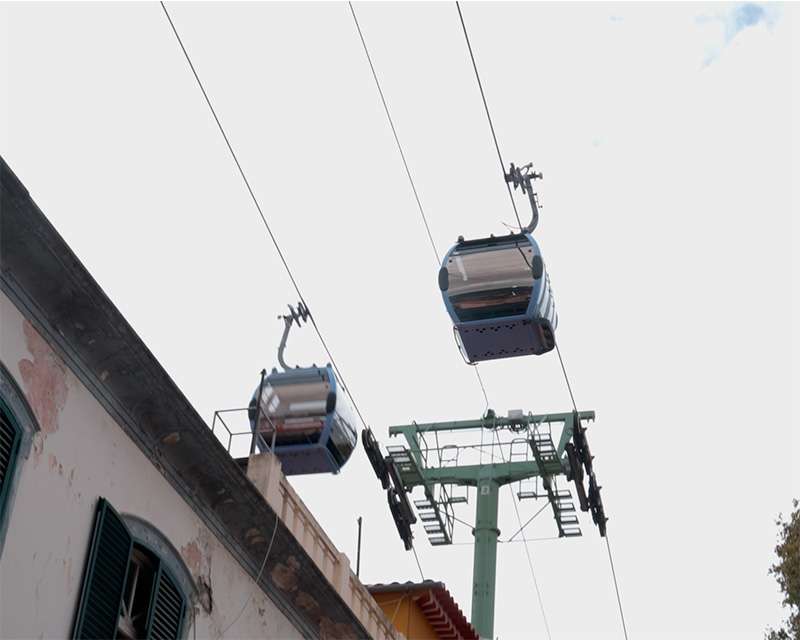
What did not work was the cable car from underneath. Cabins and wires against a white sky read as a tangle, and no exposure saves a frame with no sky tone in it. The pavements had the same problem at midday: black and white stone under a vertical sun loses every bit of the drawing. Early is better for both.
What I would do differently next time
Be in the Mercado dos Lavradores before nine. Everything else in this walk keeps; the market does not. By ten it has turned into a set, and the morning I had was already half an hour too late.
Related: Praia da Vitória: Angra do Heroísmo on your own · Saint Peter Port: a half-day on Guernsey without a tour · All cruise ports on your own · All Madeira stories · Diesen Artikel auf Deutsch lesen