
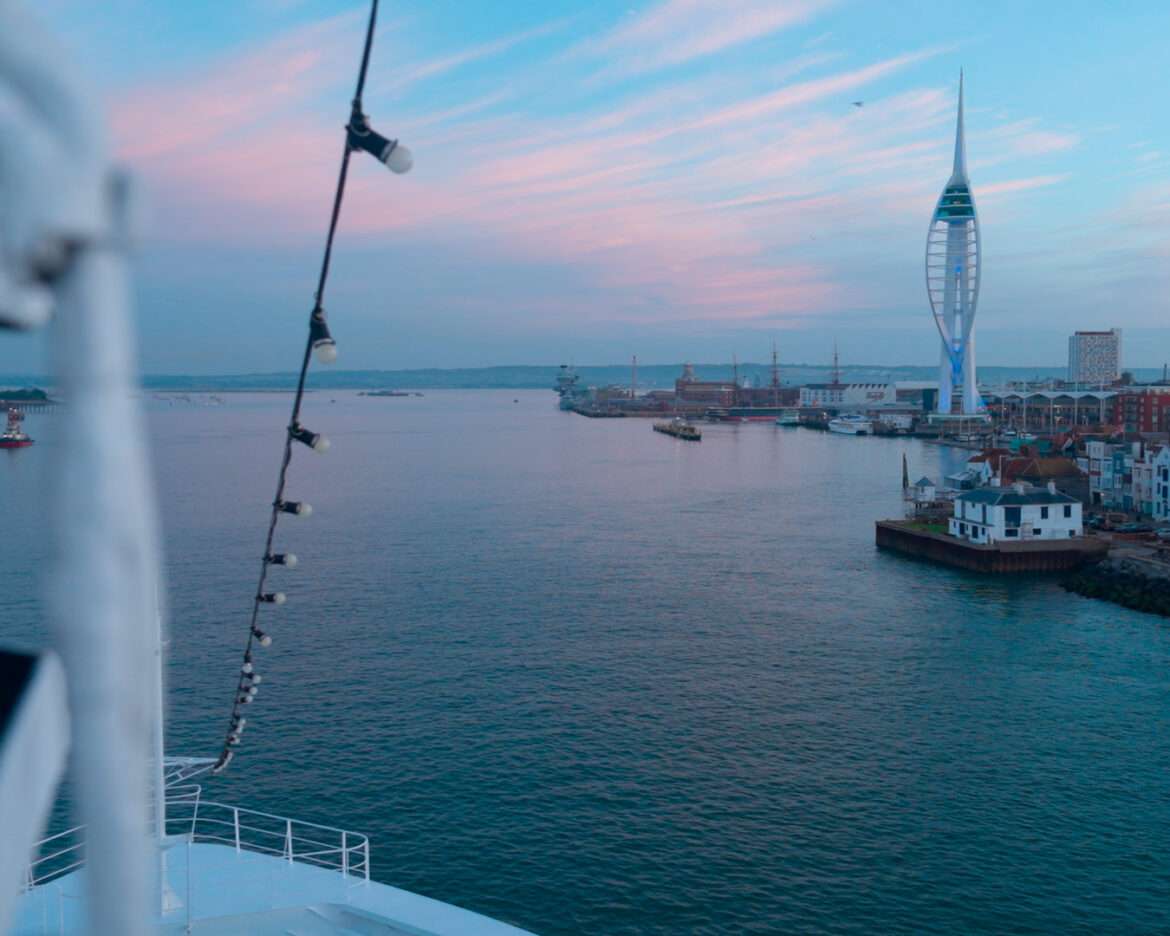
Visited: the morning of 23 September 2026, on a shore excursion from MS Amadea in Portsmouth.
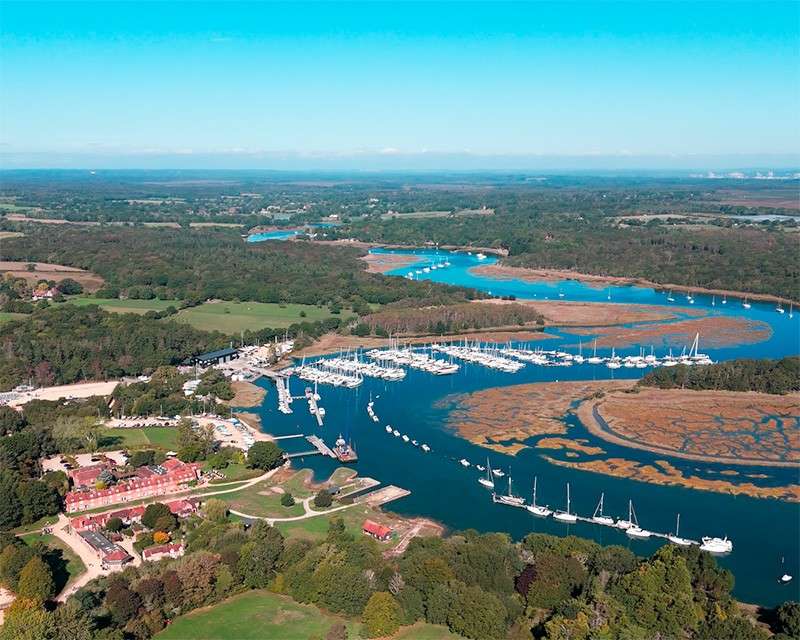
Buckler’s Hard is an 18th-century shipbuilding village on the Beaulieu River in the New Forest, a little over an hour by coach from the cruise terminal in Portsmouth. Entry to the village is free; the museum costs £6.25. Ninety minutes is enough for the street, the chapel, the museum and the old slipways; to study it properly, allow three hours. More than fifty warships were built here for the Royal Navy, among them Nelson’s Agamemnon.
Buckler’s Hard at a glance
- Where: on the Beaulieu River in the New Forest National Park, Hampshire, about 2.5 miles south of Beaulieu
- From Portsmouth: a little over an hour by coach; independently around two hours by train and taxi
- Time needed: 90 minutes for the village and museum at a brisk pace, three hours to take it in properly
- Highlights: the wide Georgian street, the Buckler’s Hard Museum, St Mary’s Chapel, the Master Builder’s House, the old slipways
- Good to know: the river cruise ran until 20 September in 2026; the village is open daily, 10:00–17:00 until 4 October, then 10:00–16:30 (official opening times)
How to get from Portsmouth to Buckler’s Hard
Cruise ships in Portsmouth use the single cruise terminal at Portsmouth International Port, on Whale Island Way at the northern end of the city, about 1.5 miles from the Historic Dockyard. We went from there on the ship’s excursion: a little over an hour by coach, west along the motorway and then, after the M27, into the New Forest. The last stretch runs through Beaulieu and down to the river.
On your own it is possible, but it takes time. Trains from Portsmouth to Brockenhurst need one change, usually at Southampton Central, and take between one hour and an hour and a half. From Brockenhurst there is no convenient bus to the village; Buckler’s Hard itself quotes around £20 for a taxi from the station rank. Allow about two hours each way. If you arrive by train or bus, show your ticket at the museum: Buckler’s Hard gives 20 per cent off standard admission to visitors who came by public transport that day.
For most port calls that is too tight to be relaxing. The ship’s excursion or a pre-booked driver is the realistic choice. Whichever way you go, plan to be back at the ship 45 to 60 minutes before all-aboard.
Are the New Forest ponies wild?
No. Every pony you see at the roadside belongs to someone: a commoner, whose right to graze animals on the open forest is attached to their land and has survived for centuries. Without that grazing the heath would long since have turned to scrub. Ponies, cattle and donkeys roam across the unfenced forest roads, so drivers are asked to slow down.
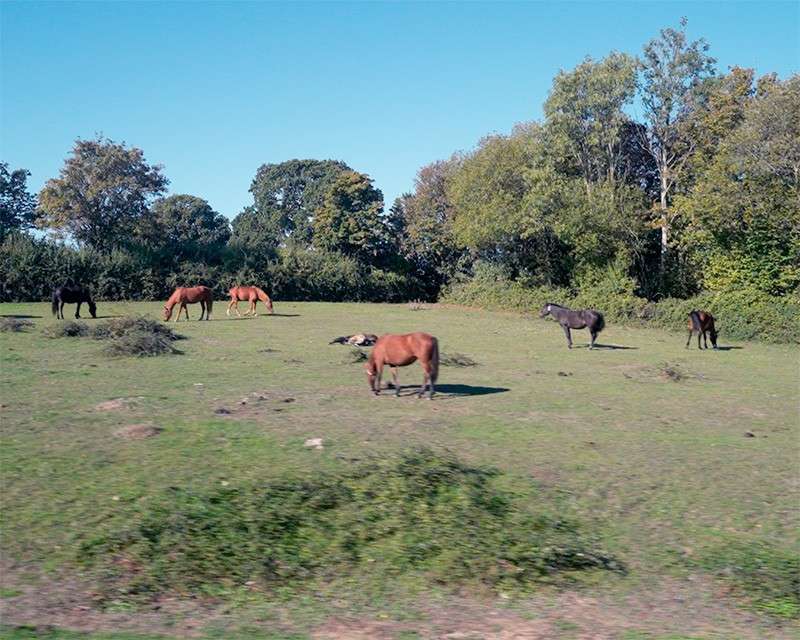
The New Forest is not new either. William the Conqueror declared it his royal hunting ground in 1079 and called it Nova Foresta. “Forest” then meant land under forest law, not necessarily land under trees, and much of it is still open heath.
Why is the street at Buckler’s Hard so wide?
The street is about 24 metres — 80 feet — wide because it was laid out in the 1720s as the main street of Montagu Town, a planned free port for sugar, with room for fairs and markets. The town never came. Later the shipbuilders used the width to store and move their oak timber.
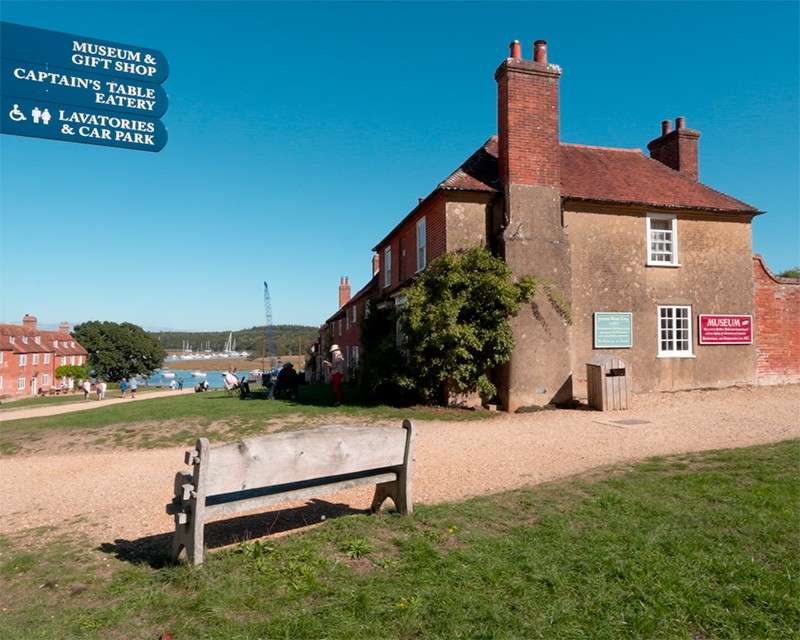
Standing in it, the width makes no sense at first: a row of brick houses on the left, a row on the right, and at the bottom the river.
In the early 1720s John, 2nd Duke of Montagu, planned a free port on this bend of the river for sugar from the West Indies. He had been granted the islands of St Lucia and St Vincent. In 1722 his expedition of seven ships reached St Lucia, but the French claimed the island, and within weeks the settlers were expelled. The sugar never came.
Building by the river began in 1724 all the same. The plan was generous: symmetrical blocks of houses, a chapel, an inn, storehouses, and the wide street. Plots were offered on 99-year leases. There was little interest. By 1731 seven houses stood here, most of them paid for by the Duke himself.
How many ships were built at Buckler’s Hard?
More than fifty warships were built for the Royal Navy at Buckler’s Hard between 1744 and 1815, most of them under the master shipbuilder Henry Adams and his sons — among them Nelson’s favourite ship, HMS Agamemnon, and three ships that fought at Trafalgar.
None of that was planned. In 1744 the Admiralty sent Adams, a shipwright from the royal dockyard at Deptford, to supervise the building of two warships here. The job should have ended with the contract. Adams married locally, took over the yard, and stayed until his death in 1805.
The reason lay all around: oak. Agamemnon alone took around two thousand oak trees. The New Forest supplied them, and the Beaulieu River offered what a shipyard needed — sheltered water, deep enough to launch, with gravel banks firm enough to carry slipways.
On 10 April 1781 the 64-gun Agamemnon was launched. Twelve years later a young captain took command of her: Horatio Nelson. She remained his favourite ship. Her crew called her Eggs and Bacon.
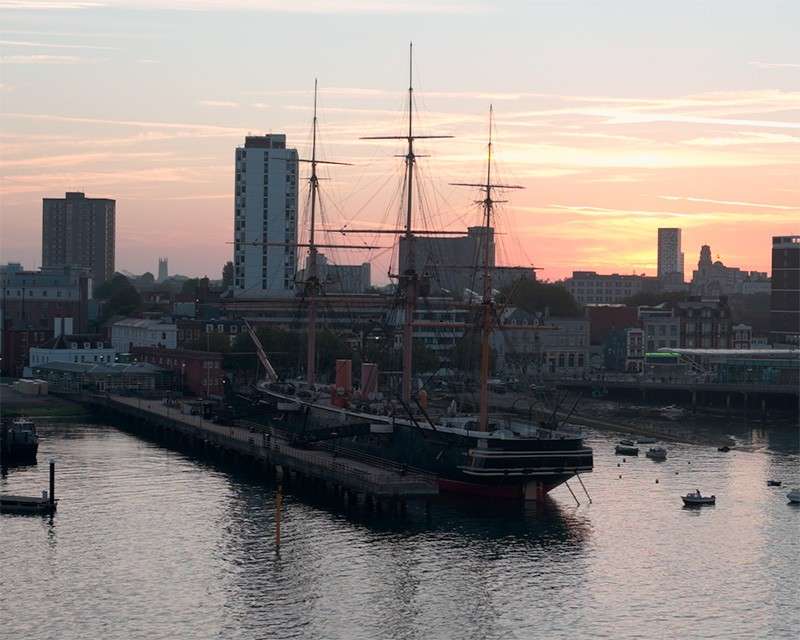
At Trafalgar in 1805, three ships from this village fought in Nelson’s fleet: Agamemnon, Swiftsure and Euryalus. Nelson’s own flagship, HMS Victory, lies today in the Historic Dockyard in Portsmouth — the port your ship has just left.
What to see at Buckler’s Hard in 90 minutes
We had an hour and a half, enough for the village and the museum. To study everything carefully, including the films the museum shows, you would need at least three hours.
Buckler’s Hard Museum
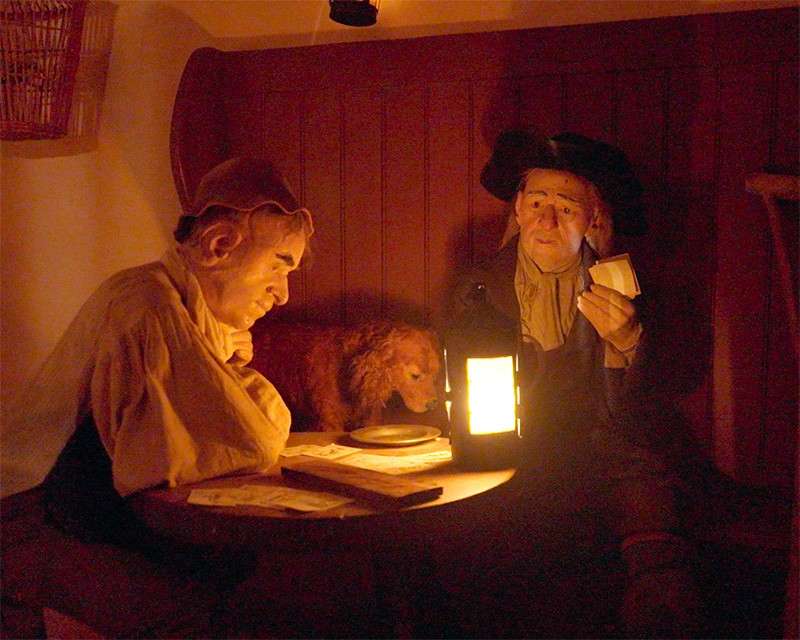
The museum, in the building that was once the village’s New Inn, tells the story of Montagu Town, the shipyard and the ships, with models, figures from village life and short films. Start here; the street makes more sense afterwards.
St Mary’s Chapel
The chapel, half hidden in the west terrace, was once a house and then the village school before it became a chapel in the 1880s. It seats forty. Beside the altar a small window looks down into a cellar that is believed to have been used by 18th-century smugglers.
The Master Builder’s House and the old slipways
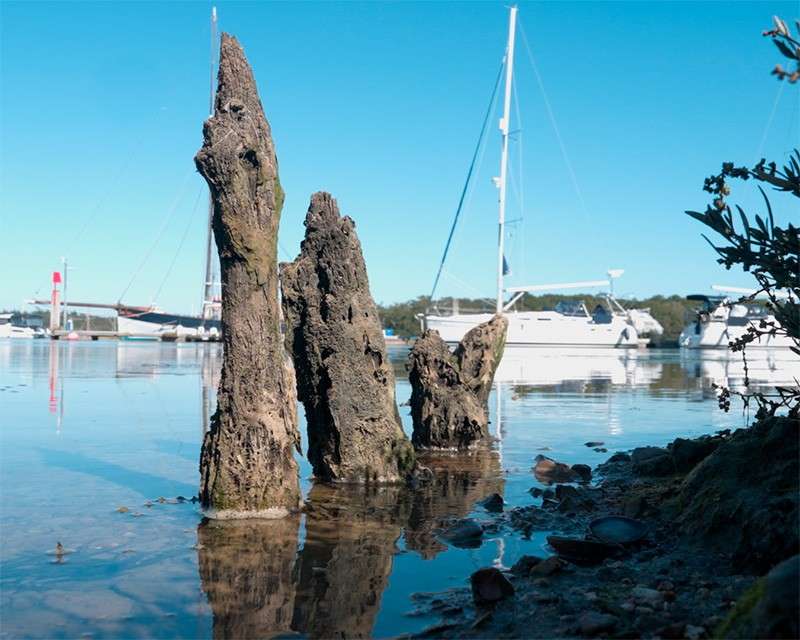
The large house at the bottom of the street, overlooking the water, was Henry Adams’s. Today it is a hotel. Down on the foreshore old timbers still rise from the water at low tide: the remains of the slipways on which the ships were built. On our morning they were still showing.
Also free to enter: the Shipwright’s Cottage, furnished as it would have been in the 18th century, and the Agamemnon exhibition in the Shipwright’s Workshop.
Buckler’s Hard in the Second World War
Once more it grew loud here. At the outbreak of war the Admiralty cleared the Beaulieu River of boats and closed its mouth with a boom. Buckler’s Hard became a repair base for motor torpedo boats. Downstream, in the old oyster beds, workers cast concrete sections for the Mulberry harbours that were towed to Normandy. Before D-Day in June 1944 the river was full of landing craft, and damaged ones were patched up on the old slips.
Then it was quiet again.
Photographing Buckler’s Hard
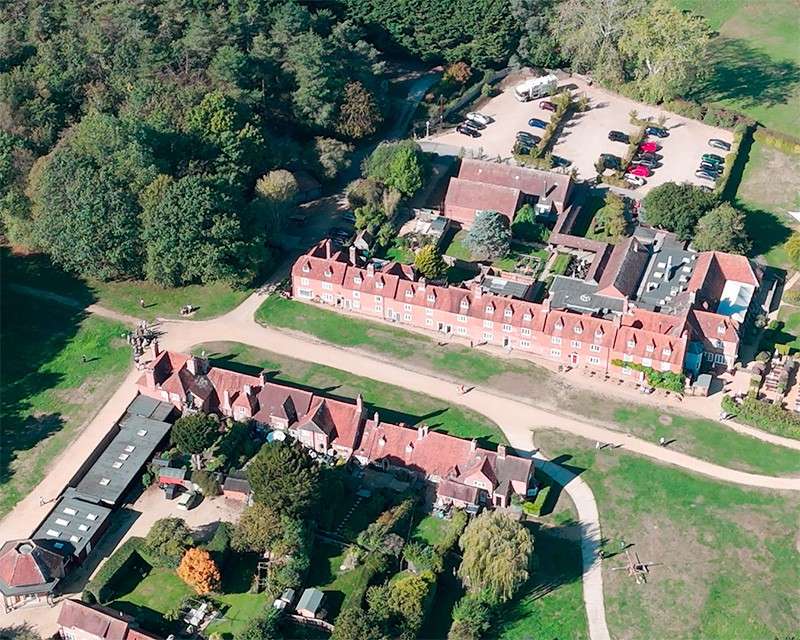
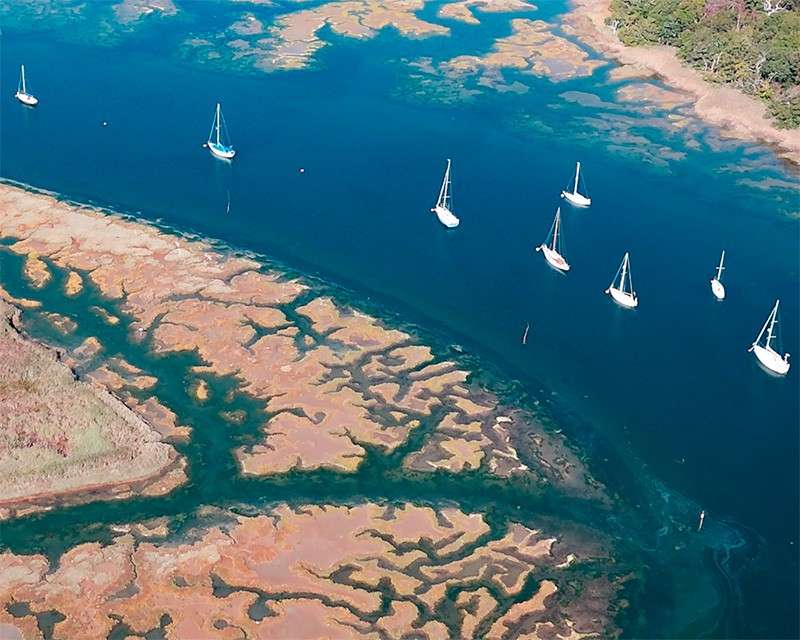
We had a warm, sunny morning without a breath of wind. That made it a good day for the drone: from above, the plan of the village — the one street, the two terraces, the river bend — is easier to read than on the ground. Before you fly, remember that the village and the river belong to the Beaulieu Estate; check the rules first.
On the ground, the wide street is the picture everyone takes, and it only explains itself once you know the story. That morning the tide was also low enough for the slipway timbers to show — worth checking the tide tables before you go.
What I would do differently
Ninety minutes was enough to see the village and the museum, but not to study them. The museum’s films alone need time. If you have the choice — on a private tour or a longer port day — plan three hours here.
What does Buckler’s Hard cost?
| Item | Price 2026 | Note |
|---|---|---|
| Buckler’s Hard village | Free | Includes St Mary’s Chapel, Shipwright’s Cottage and the Agamemnon exhibition |
| Buckler’s Hard Museum | £6.25 adults, £5.75 over-60s | Tickets at the museum; 20% off with a same-day train or bus ticket |
| River cruise (30 min) | £8.50 adults, £7.50 with museum entry | Season 28 March – 20 September 2026; pay on board by card |
| Taxi Brockenhurst station – Buckler’s Hard | around £20 each way | Figure given by Buckler’s Hard; confirm on the day |
Prices as published on the Buckler’s Hard tickets page in September 2026.
Is Buckler’s Hard worth it on a cruise call at Portsmouth?
Yes, if you are interested in ships, the navy or quiet places with a story. It is small: one street, a museum and a riverbank. Staying in Portsmouth gives you the Historic Dockyard and HMS Victory instead. Buckler’s Hard is the other end of the same story — the place where some of the ships that sailed with Victory were built, and where the oak came from.
Tips for Buckler’s Hard
Check the season if you come late in the year. In 2026 the river cruise stopped on 20 September; the village and museum stay open.
Look up the tide. The old slipway timbers show at low water; at high tide they are under the river.
Visit the museum first and walk down the street afterwards. What looks like a pretty village becomes a planned town that failed and a shipyard that worked.
A street too wide for what it became
Buckler’s Hard never became what it was built for. The town did not come. The shipyard went. The war moved on.
What remains is a street too wide for anything else.
Related: Totnes and Buckfast Abbey from Plymouth · All cruise ports on your own · England travel articles · Jurassic Coast from Portsmouth · Rye from Dover
Written by Jan Madeus — ship’s videographer at sea since 2008. I go ashore in the same ports as the passengers, with the same few hours and the same deadline. More about me.