
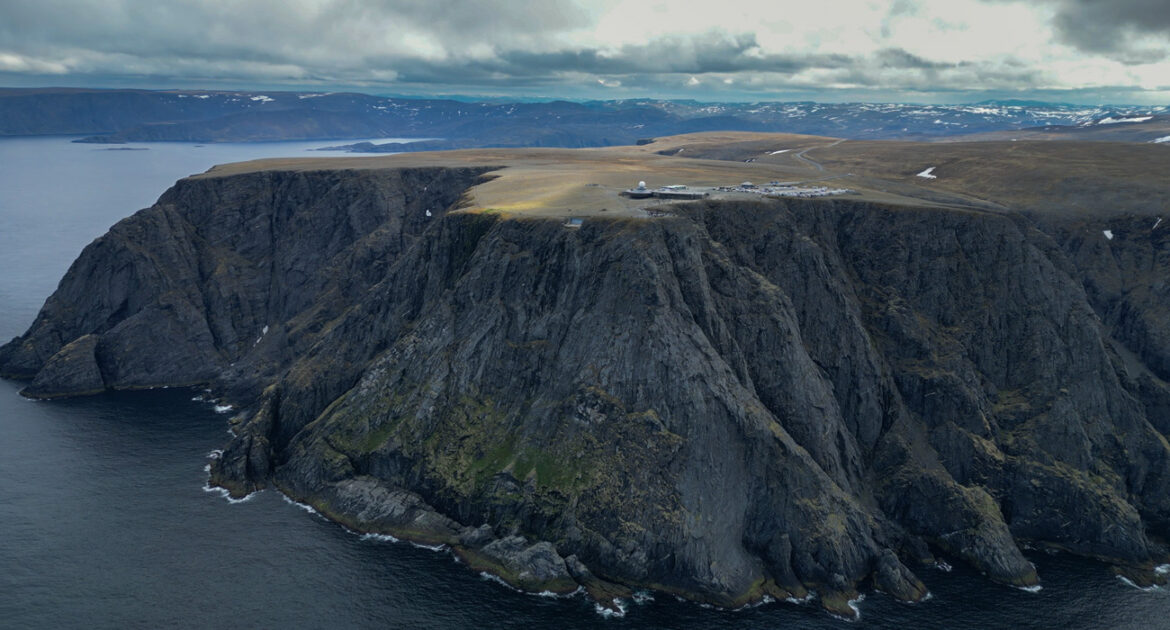
Yes — you can reach the North Cape from a Honningsvåg cruise call without the ship’s excursion. Local buses leave from the tourist information a short walk from the pier, take about 35 to 45 minutes each way, and cost around NOK 750 for the round trip with entry to the plateau included. The ship sells the same journey at roughly USD 105 to 225. Most visitors stay two or three hours at the cape, which is enough for the globe, the plateau walk and the panoramic film. Difficulty: 1 out of 5 — the only planning that matters is the seat on the return bus.
Prices and departures checked September 2026 — verify before you sail.
Honningsvåg to the North Cape: bus, tour or on your own?
Almost everyone who comes ashore here goes to the same place. The transfer runs about 35 to 45 minutes across Magerøya, through tundra where reindeer graze in summer, and the difference between the options is price and timing rather than route.
| Ship excursion | On your own | |
|---|---|---|
| Return transfer to Nordkapp | about USD 105–225 | local bus, about NOK 750 |
| Entry to the plateau | included | included in the bus ticket |
| North Cape Hall visitor centre | usually included | separate ticket, bought on arrival |
| Time at the cape | set by the coach | about 1 hour 20 on the standard run, longer on later departures |
| Risk if you are late | the ship waits for its own tour | the ship does not wait for you |
The one detail worth knowing before you pay: the bus ticket covers the plateau, not the North Cape Hall. That catches people out at the door, and it is the reason some visitors feel the cape is expensive. Book the bus online if you can — on a two-ship day the counter at the tourist office has a queue.
What is actually at the North Cape?
The plateau stands at 71°10′16″ N, 307 metres above the Barents Sea. The globe monument is the reason most people are there; everyone wants the photograph in front of it, and on a busy afternoon there is a queue for it. Inside the North Cape Hall a panoramic film runs through the four seasons of the region, mostly aerial footage, and it does what the weather often will not: it shows you the place in light you did not get. There is also a chapel, historical exhibits, a café and a shop, and outside the Children of the Earth reliefs stand along the cliff path.
Knivskjellodden, the headland next door, is geographically further north. It requires a hike of several hours and is not a port-day option.
Is the North Cape open in winter?
Yes, all year. In winter the road has to be cleared of snow, and in heavy weather it can close or run under escort, so a winter call is the one case where the ship’s excursion buys something real: it is the operator’s problem to get you back, not yours. In the same season Honningsvåg offers snowmobile trips out to the cape — a different arrival altogether, and for many people the more memorable one.
The alternative to the cape: king crab in Sarnes
Not everyone needs the northernmost point. From the harbour, boat trips run out to the fishing settlement at Sarnes, where the pots are pulled and the king crab is cooked and eaten on the spot. Local operators charge around NOK 1,600 for a three to three-and-a-half-hour RIB safari with the meal; the same outing sold on board runs to USD 328 and above. If you have been to the cape before, this is the better use of the day.
How much return buffer should you plan?
Be back in Honningsvåg an hour before all-aboard. The buses run to the ships’ timetable, but the cape is a single road with one way back, and coach traffic at the plateau exit builds when several ships are in. If you take the last scheduled departure from Nordkapp, you have no second chance.
We arrived in Honningsvåg, the northernmost town of Norway, located on the starkly beautiful island of Magerøya – meaning “Barren Island.” Though only about 6 kilometers from the mainland, the island feels like a world apart. The landscape here is raw, dramatic, and unmistakably Arctic. Endless skies, rolling hills, and quiet fjords set the tone for one of the most awe-inspiring destinations we’ve experienced in northern Europe.