
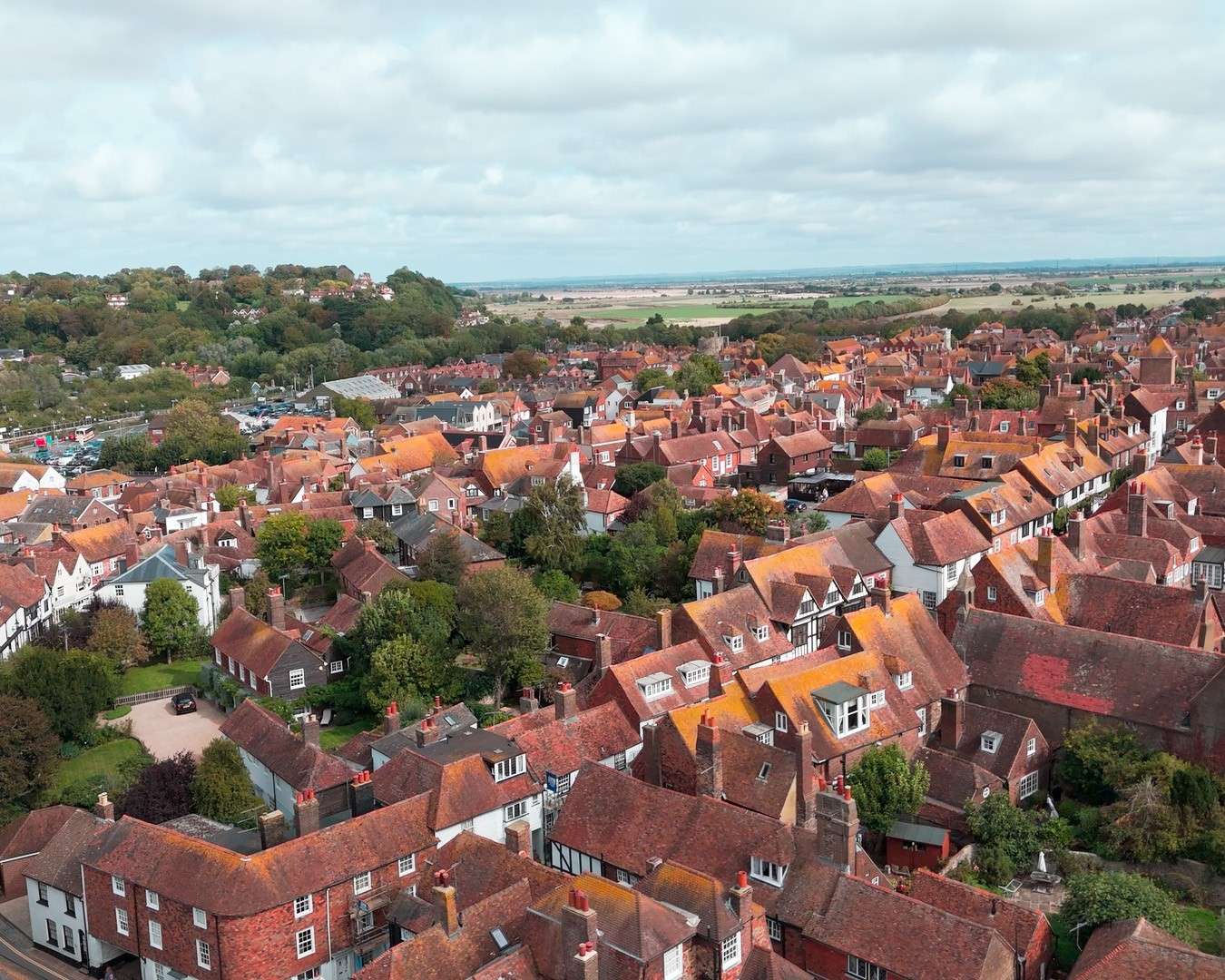
Visited: 19 September 2026, on a shore excursion from MS Amadea in Dover.
Rye is a hilltop town in East Sussex, a little over an hour’s drive west of Dover. It was once a Channel port; today the open sea is about three kilometres away. From a cruise call in Dover it makes a comfortable half-day: an hour on the road across Romney Marsh, then enough time to walk the cobbled old town, from the Landgate past the Ypres Tower and St Mary’s Church down Mermaid Street.
Rye at a glance
- Where: East Sussex, on a hill above the Rother, Tillingham and Brede rivers
- From Dover: just over an hour by coach, west along the coast and across Romney Marsh
- Time needed: 90 minutes covers the old town on foot; add an hour for the church tower and the Ypres Tower museum
- Highlights: Mermaid Street, the Mermaid Inn, St Mary’s Church and its clock, the Ypres Tower, Watchbell Street, Lamb House
- Good to know: the streets are steep and cobbled — wear shoes with grip
How to get from Dover to Rye
We came from the cruise ship MS Amadea, on a coach excursion run by a local travel agency. The drive takes a little over an hour, heading west out of Kent and into East Sussex. The last stretch runs through Romney Marsh: flat grazing land, ditches instead of fences, hardly a tree. In the Middle Ages all of this was seabed. Then a single hill rises out of the plain, crowded with houses, with three rivers meeting at its foot. That is Rye.
Without an excursion, the car or a taxi is the direct option. By public transport the journey is possible but slow, usually with a change — by train via Ashford International, or by the coastal bus with connections. On a cruise day, check the timetable against your all-aboard time before you commit, and plan to be back at the pier with at least an hour in hand.
Why Rye stands on a hill, three kilometres from the sea
Rye belonged to the Cinque Ports, the confederation of Channel harbours that supplied ships to the Crown and in return paid no taxes. Strictly speaking, Rye and neighbouring Winchelsea were the two “Ancient Towns” attached to the original five. The privilege had its price. The towns closest to the enemy were the first to be hit.
Then the sea withdrew. The harbour silted up, trade moved elsewhere, and with it the money. That is the reason the town looks the way it does. Rye was not preserved because someone decided to protect it. It survived because nobody had a reason to build anything new here.
A 90-minute walk through Rye
We had an hour and a half on our own. That is enough for the old town if you walk it as a loop and resist going into everything.
The Landgate and the Ypres Tower
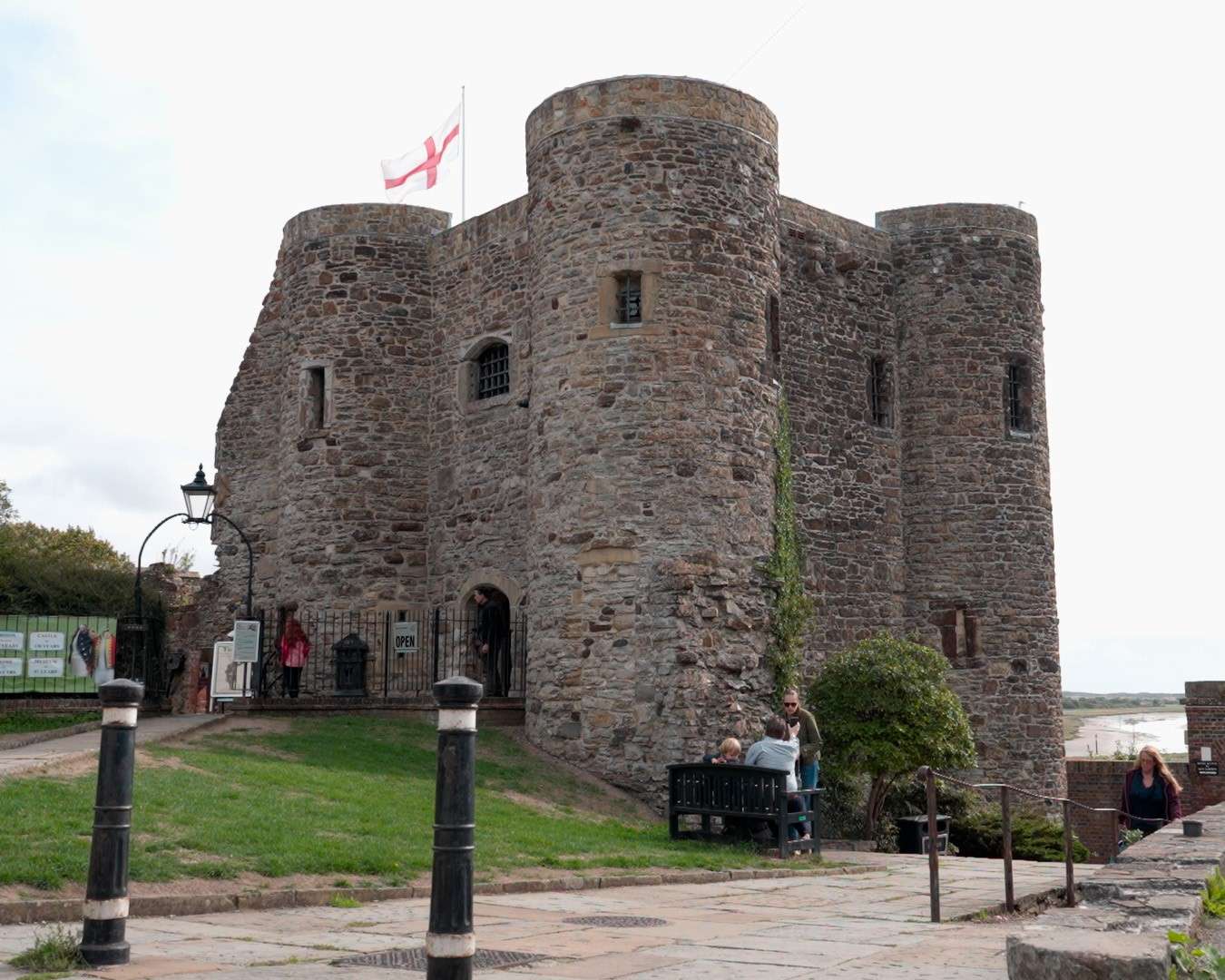
The Landgate dates from the 1320s, when Edward III licensed new walls for the town. Of Rye’s four town gates it is the only one left. A few minutes further, the Ypres Tower stands above the river. A castle for Rye was ordered under Henry III in 1249; the tower has since served as fortress, private house, courtroom and prison. Today it is the Rye Castle Museum, with a small medieval garden and the separate Women’s Tower beside it.
Watchbell Street and the French raid of 1377
In June 1377 the French landed and burned Rye to the ground. They took the church bells with them. The following year men from Rye and Winchelsea sailed to Normandy and brought the bells back. One of them was not rehung in the church tower but at the end of a lane, as an alarm bell in case the French returned. The lane is still called Watchbell Street.
St Mary’s Church and the Quarter Boys
St Mary’s stands at the top of the hill. The clock mechanism in its tower was installed around 1561 and still runs — one of the oldest working church turret clocks in England. Its long pendulum swings inside the church, above the heads of visitors. The dial on the outside wall and the two gilded figures beside it were added in 1760. They are called the Quarter Boys because they strike the quarters, not the hours. The figures on the wall today are replicas; the weathered originals are kept inside.
If you have time, the tower can be climbed past the bell chamber to the roof, with a view over the rooftops, the marsh and out towards the Channel.
Lamb House
A few steps from the church, on West Street, stands Lamb House, built in 1722 for James Lamb, wine merchant and many times mayor of Rye. A century and a half later the American novelist Henry James moved in. He lived here from 1897 and wrote The Wings of the Dove, The Ambassadors and The Golden Bowl in these rooms. Later E. F. Benson, author of the Mapp and Lucia novels, lived here too. The house belongs to the National Trust and opens on selected days in season.
Mermaid Street and the Mermaid Inn
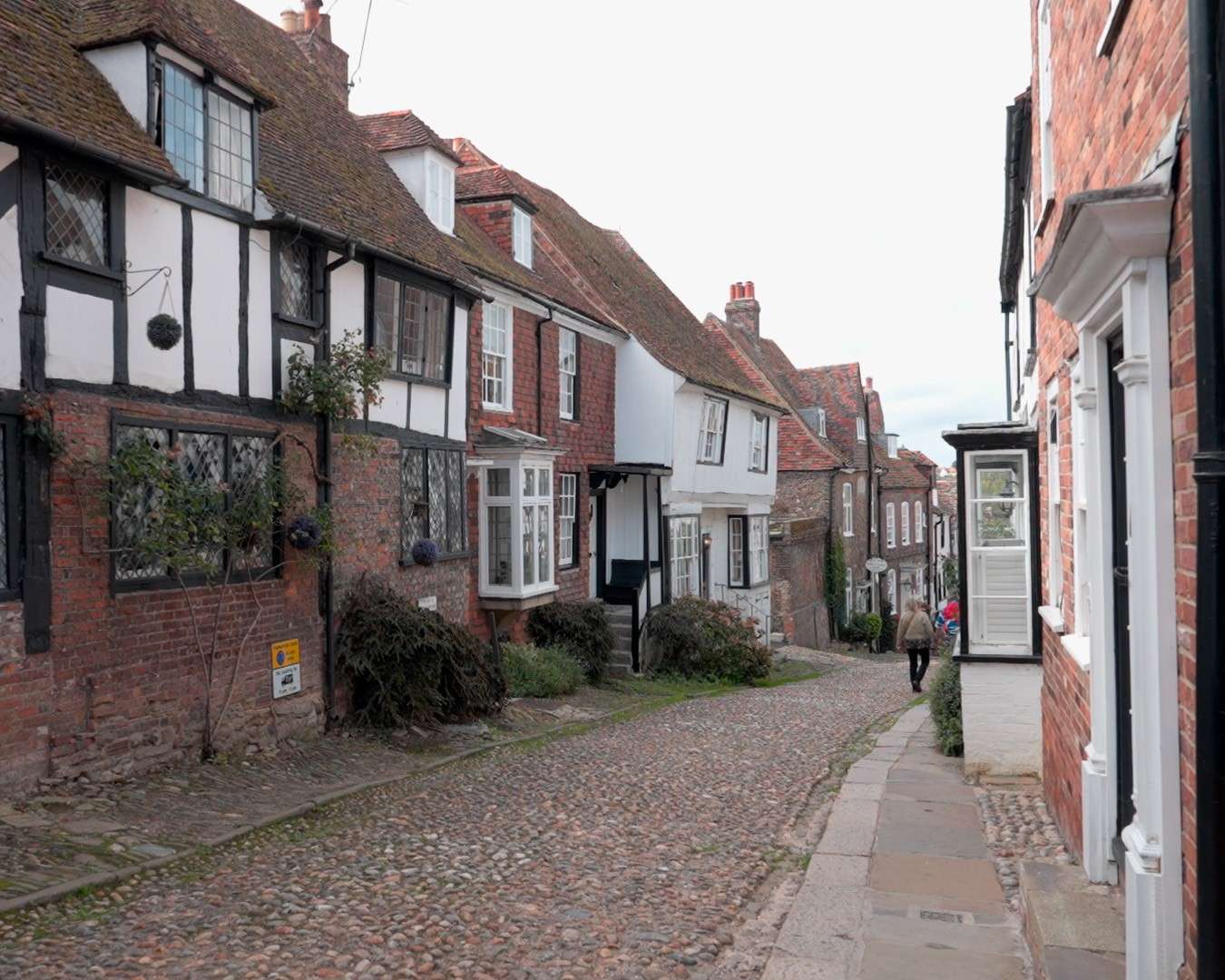
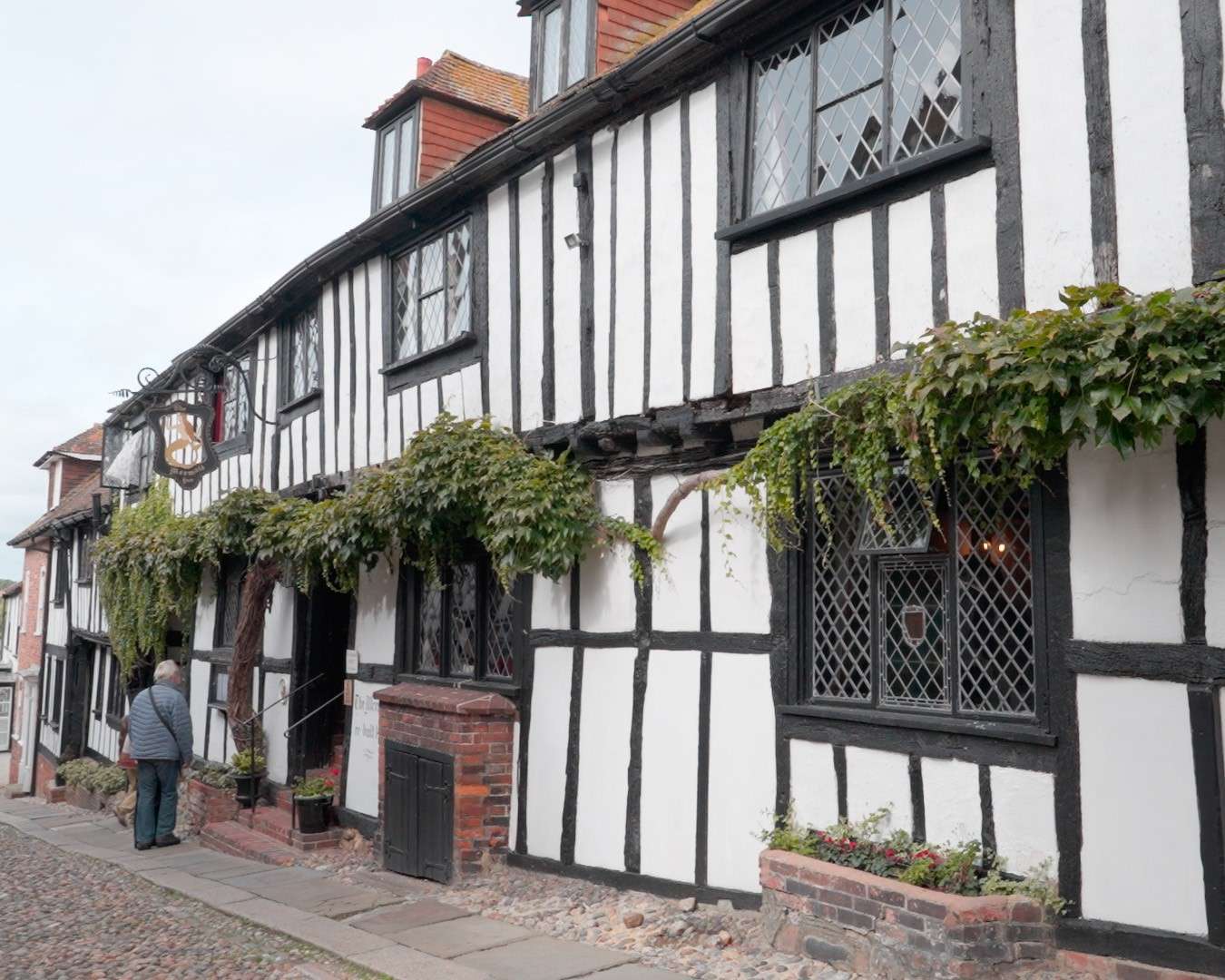
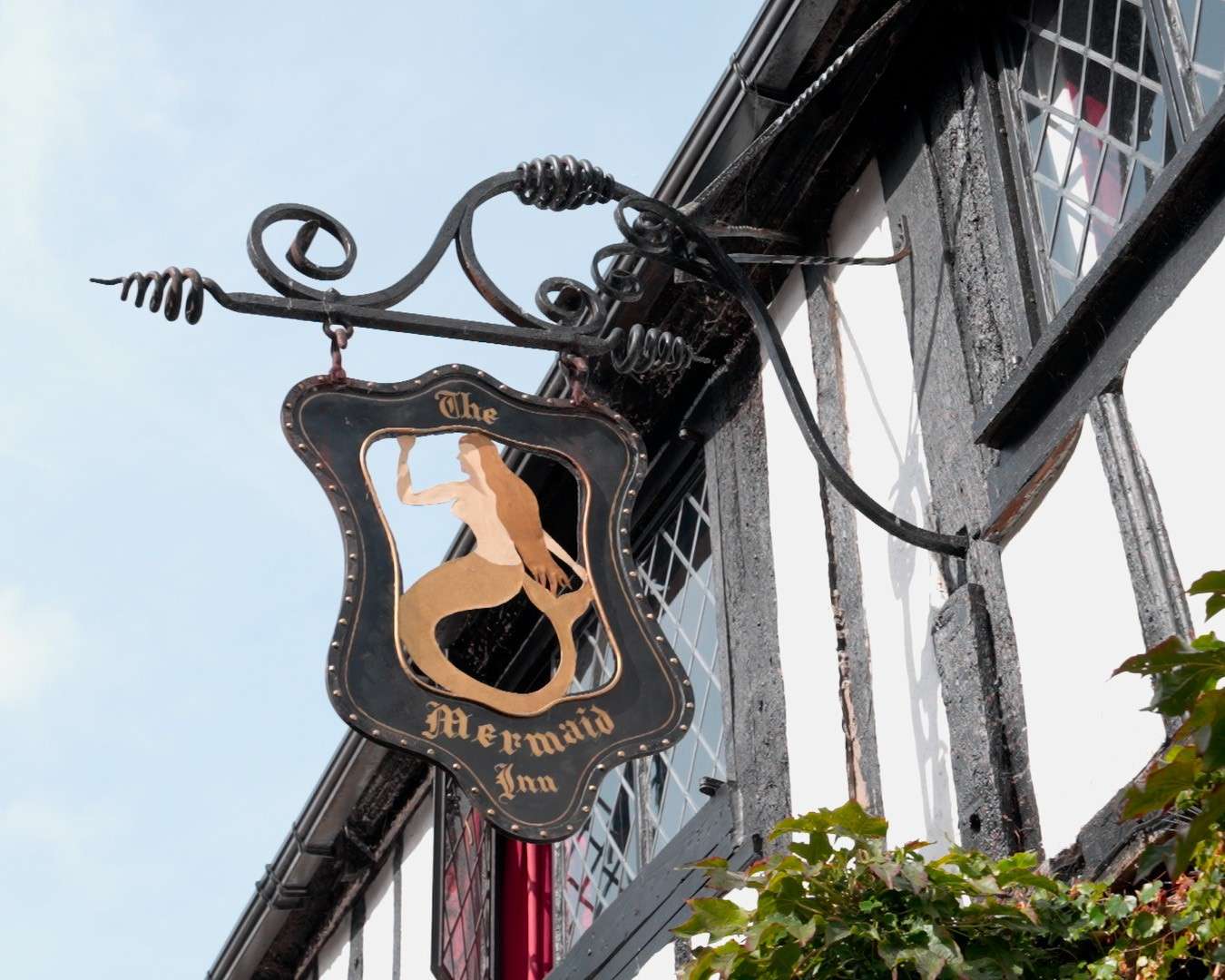
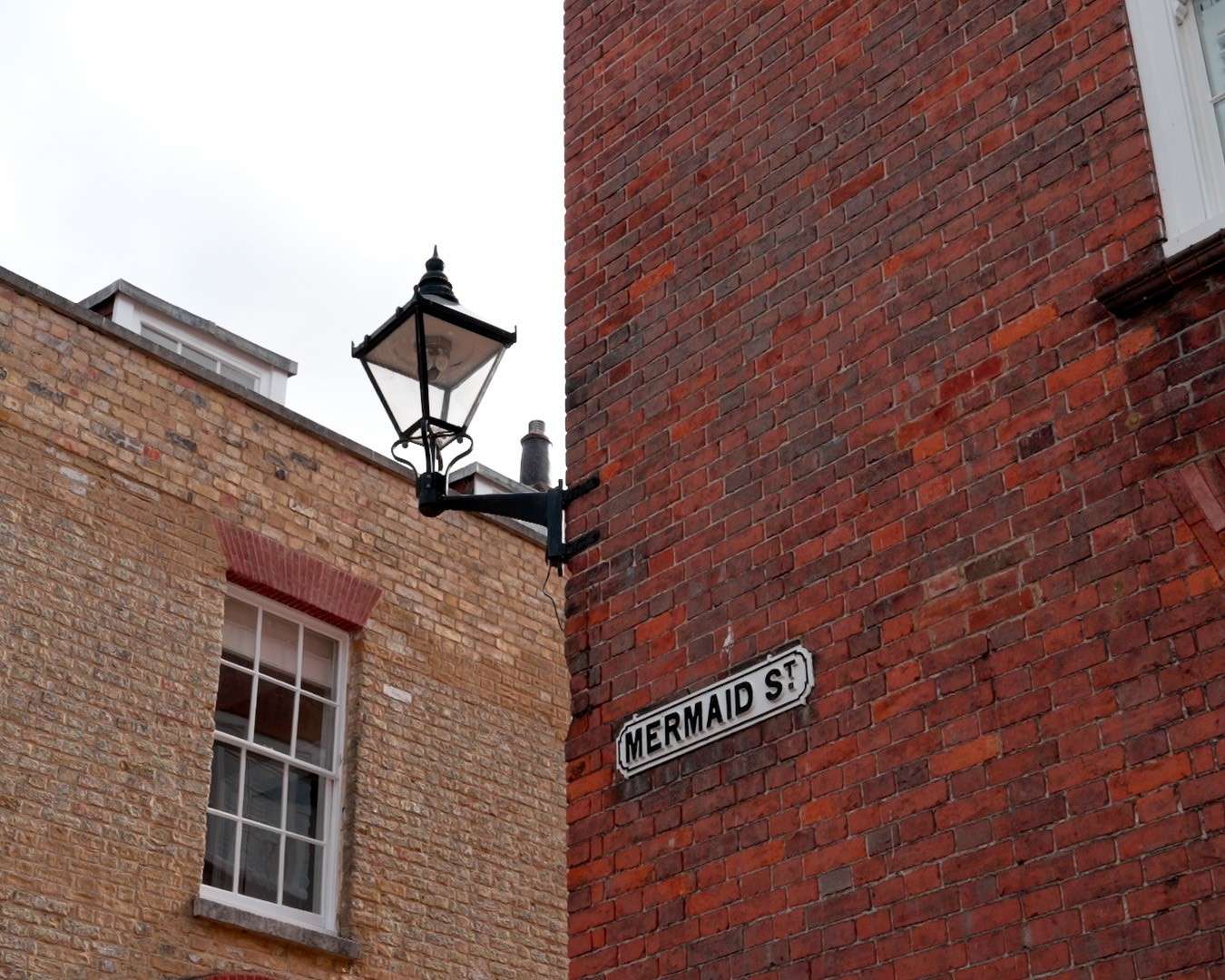
Mermaid Street is the best-known street in Rye: steep, cobbled, and no house quite at a right angle to the next. The Mermaid Inn has cellars dated to 1156. The building above them was rebuilt in the 1420s, after the French raid; local tradition says partly with timber from broken-up ships. In the 1730s and 1740s the inn was a haunt of the Hawkhurst Gang, smugglers who controlled long stretches of the south coast. A tunnel is said to have led from the cellars to the Olde Bell Inn next door.
Today the street is lined with tea rooms, second-hand bookshops and pubs. The escape routes are still there.
The murder in St Mary’s churchyard
In March 1743 Allen Grebell was stabbed in the churchyard of St Mary’s. He was not the intended victim. The butcher John Breads was waiting for James Lamb, the mayor, who had once fined him for cheating his customers. According to the story told in Rye, Lamb felt unwell that evening and sent his brother-in-law Grebell to a banquet in his place, wearing the mayor’s cloak. Grebell walked home, sat down by the fire and died of his wounds during the night.
The trial was held in Rye’s own court. The presiding magistrate was James Lamb. Breads was hanged, and his body was left in a gibbet cage on the marsh.
Photographing Rye: wind, low tide and brief sun
The day was windy and overcast. In those gusts, drone shots were barely possible.
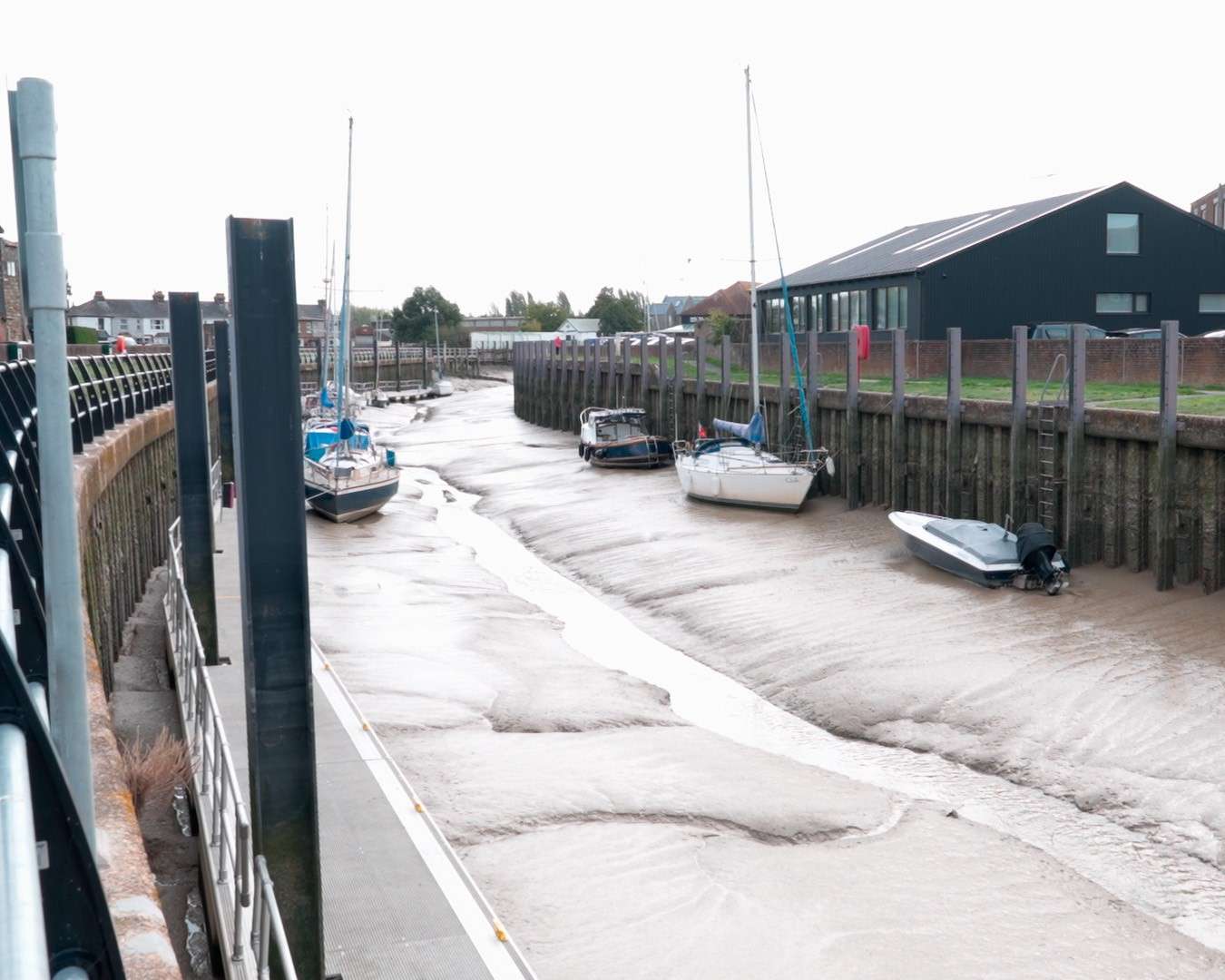
The morning made up for it. We arrived at low tide, and the river below the town had drained away, leaving the boats lying on the sand. The difference between high and low water at Rye is particularly large. If you can choose, come in the morning at low water.
Now and then the sun broke through the cloud. For a few seconds at a time it lit up the medieval houses, and then it was gone again.
Is Rye worth it on a cruise stop in Dover?
Yes, if you like small towns more than big sights. Canterbury and Dover Castle are the obvious excursions from Dover; Rye is the quieter one. Everything worth seeing lies within a few hundred metres, so the time on the ground is spent walking, not queuing. What 90 minutes will not cover is the town and the interiors: choose either the church tower and the Ypres Tower, or an unhurried walk through the lanes.
What it costs
| Item | Price 2026 | Note |
|---|---|---|
| St Mary’s Church | Free | Donations welcome |
| St Mary’s tower climb | around £5 | Paid inside the church; narrow stairs and ladders |
| Ypres Tower (Rye Castle Museum) | £5 adults, under-16s free | Daily 10:30–17:00 until 31 October, last entry 16:30 |
| Lamb House | National Trust admission | Free for members; check the opening days in advance |
Tips for a half-day in Rye
Walk the old town as a loop: Landgate, Ypres Tower, Watchbell Street, St Mary’s, Lamb House, Mermaid Street. Everything lies within a few hundred metres, but the lanes are steep, so the order matters more than the distance.
Keep an eye on the clock — the Quarter Boys will remind you every fifteen minutes.
The Ypres Tower has uneven floors, low doorways and no lift; the church tower involves narrow stairs and ladders. Neither suits everyone.
Related: England travel articles · St Mary’s, Isles of Scilly · Jurassic Coast from Portsmouth · Saint Peter Port on your own