
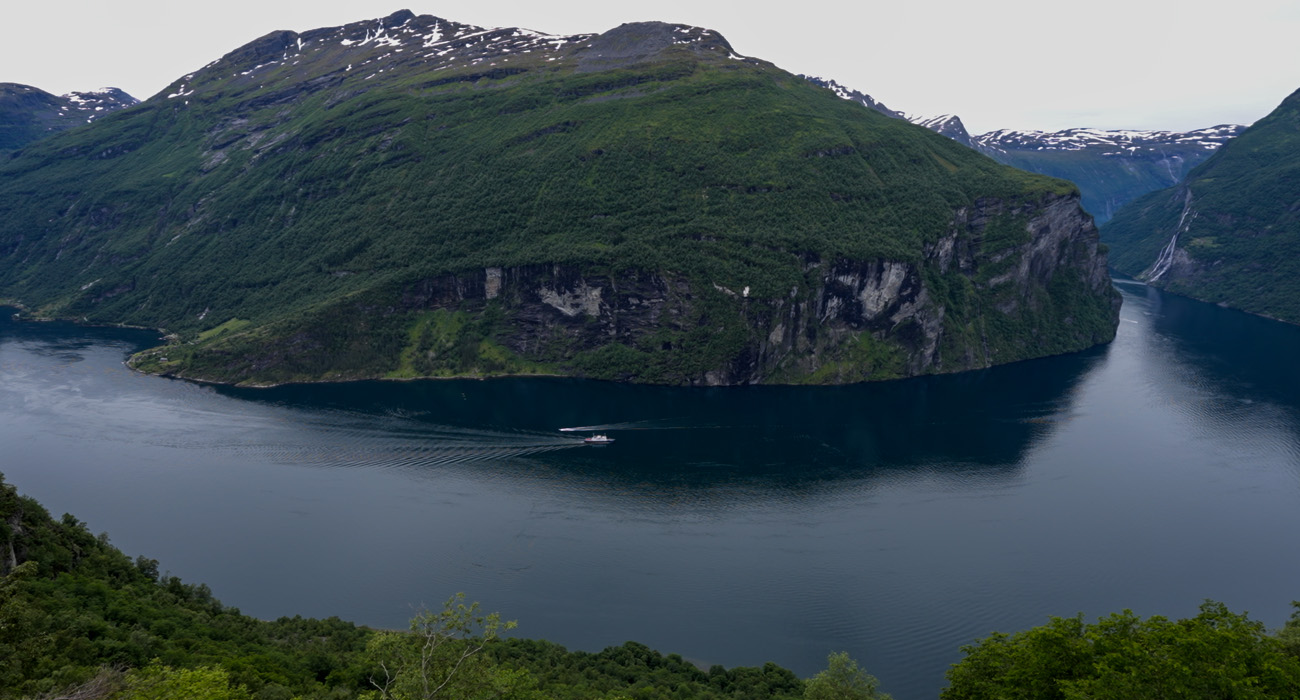
Tucked away in western Norway, Geiranger is one of the country’s most iconic destinations – and for good reason. This small village lies at the head of the Geirangerfjord, a UNESCO World Heritage Site known for its jaw-dropping natural beauty. Towering cliffs, snow-dusted peaks, deep-blue waters, and cascading waterfalls form a dramatic landscape that draws photographers, hikers, and cruise passengers from around the world. But beyond the fjord itself, the surrounding mountain roads offer equally unforgettable views – and that’s exactly what we set out to explore on our excursion to Dalsnibba, Flydalsjuvet, and the Eagle Bend (Ørnesvingen).
Yes — you can see Dalsnibba, Flydalsjuvet and the Eagle Bend from a Geiranger cruise call without booking the ship’s excursion. Local operators run the same route from the tourist office beside the tender pier, typically around 2 hours for the panorama loop and about 3.5 hours for the full Dalsnibba and Eagle Road tour, at roughly NOK 885 to 1,100 — against USD 110 to 169 for the equivalent tour sold on board. The village itself is small enough to walk in an hour. Difficulty: 2 out of 5 — the only real risk is the tender queue and the weather on the summit.
Visited on a cruise call. Prices and departures checked September 2026 — verify before you sail, as the mountain road is seasonal.
Where does your ship dock in Geiranger?
Mostly it does not dock at all. Your ship sails to the very end of the Geirangerfjord, where the harbour is small. Most ships anchor off the village and bring passengers ashore by tender; for some ships a floating pier is set up instead, and then you walk straight from the ship onto land. Either way you land in the village centre, with the tourist office and the bus departures a few steps from the landing. The practical consequence is the queue: on a tender day, allow time in both directions, and remember that the last tenders fill up.
Almost everything worth seeing lies above the village, and almost all of it is reached by bus. That is not a sales pitch from the excursion desk, it is the geography.
Ship excursion or on your own: what does Geiranger cost?
| Ship excursion | On your own | |
|---|---|---|
| Dalsnibba, Flydalsjuvet, Eagle Bend (3.5 h) | about USD 110–169 | local bus from the pier, about NOK 1,100 |
| Panorama loop, Flydalsjuvet and Dalsnibba (2 h) | rarely offered | about NOK 885 |
| Village, church, waterfront | — | free, about 1 hour on foot |
| Fjord Centre | sometimes included | separate ticket |
| Risk if you are late | the ship waits for its own tour | the ship does not wait for you |
The saving here is smaller than in most ports, because the local buses are not cheap either. What you gain is choice: a two-hour loop instead of a fixed three and a half, a seat booked for the departure you want, and the option to stay in the village if the summit is under cloud. Book the local bus online in advance if you can; on a two-ship day the counter at the pier sells out.
Can you reach the viewpoints without a bus?
Partly. Flydalsjuvet sits above the village on the road towards Stryn and is walkable, but it is a steady climb on a road that carries coach traffic all morning — fine if you are used to walking uphill, tiring if you are not. Dalsnibba at 1,495 metres and the Eagle Bend hairpins are not walkable in a port day; for those you need the bus, a rental car or a taxi. Anyone who wants the fjord rather than the heights can stay at sea level: the walk along the waterfront, the octagonal church of 1842, and the one proper hike of the port day described below.
The one walk you can do without a bus: Storseterfossen
If you would rather use your legs than a seat on a coach, this is the walk. The path leads from the village up past the Norwegian Fjord Centre to the Vesterås mountain farm and on to Storseterfossen, a waterfall you can walk behind on a secured path — chains and rope where it is narrow, and spray on the lens either way.
From the Vesterås farm it is about 3 km there and back with roughly 250 metres of climbing, an hour and a half to two hours at a steady pace. From the pier itself it is about 4 km each way, so allow three to three and a half hours for the whole round trip, more if you stop at the farm café on the way down. On a call of six hours that fits comfortably; on a short call it does not. Those with less time take a bus or taxi up to Hole bridge or the farm and walk only the upper section.
The rock is wet and slippery in and after rain, and the last stretch behind the falls is not for anyone unsure on their feet.
How much return buffer should you plan?
On a tender day, be back at the landing 90 minutes before all-aboard. The bus tours run to a schedule that assumes the ship’s timetable, but the tender queue does not. If the weather closes in, tenders can also be suspended entirely — a risk worth taking seriously in a fjord this narrow.
The Eagle Bend – Serpentine Views over the Fjord
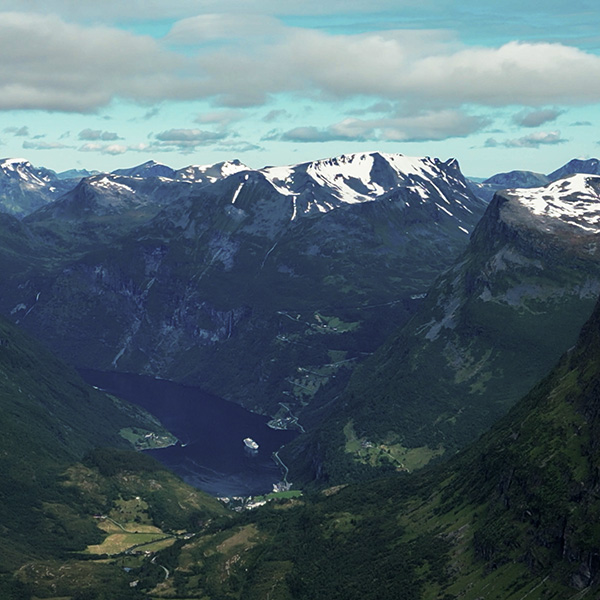
Our journey began with a scenic drive along the Geirangerfjord, heading toward Ørnesvingen, better known as the Eagle Bend. This viewpoint sits at around 600 meters above sea level and is reached via a winding road with 11 tight switchbacks – a true feat of Norwegian road engineering. As we ascended, every curve revealed a new panorama, until we reached the top: a viewing platform looking down on the village of Geiranger and across to the Seven Sisters waterfall, with our cruise ship sitting quietly far below. It’s a moment that captures the scale and majesty of this landscape better than any postcard ever could.
Through Geiranger Valley – Past Waterfalls and History
From there, we made our way back through Geiranger, passing the octagonal church from 1842, a quaint wooden building that reflects the simplicity and resilience of mountain life. Just outside the village, we stopped at the Storfoss waterfall, the largest in the Geiranger Valley – a thundering cascade of glacial water that crashes through the green hillsides. The lush valley is dotted with abandoned farms clinging to steep slopes, a silent reminder of a tougher past.
Flydalsjuvet – Iconic Cliffside Views
Next, we reached Flydalsjuvet, one of Geiranger’s most famous photo spots. From this cliffside viewpoint, you get a sweeping perspective of the entire village, the cruise ships in the harbor, and the fjord stretching into the distance. This is one of the most photographed places in Norway – and standing there, it’s easy to see why. The view is nothing short of majestic, a perfect blend of rugged terrain and tranquil water.
Summit Ascent – Dalsnibba Skywalk
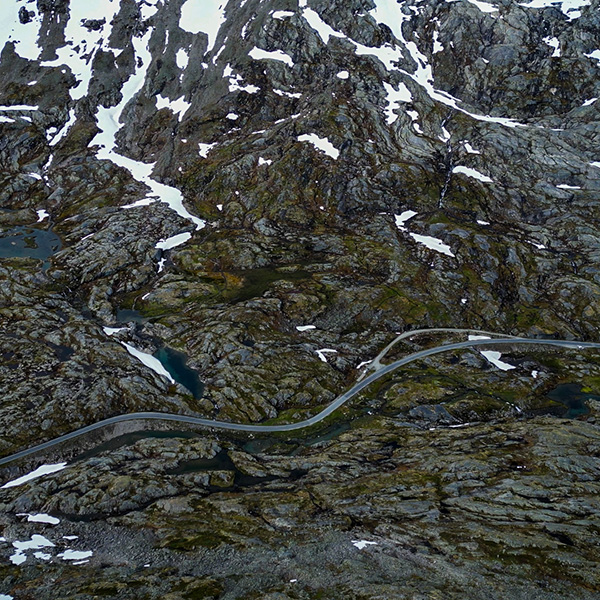
The highlight of the excursion came as we climbed even higher, toward Mount Dalsnibba, rising to 1,495 meters above sea level. If snow conditions allow, the drive up offers a stark and beautiful contrast: icy peaks, scattered snowfields, and sweeping views that stretch to the distant fjords and glaciers. From the Geiranger Skywalk at Dalsnibba, you can literally look down upon the fjord from above the clouds. It’s an unforgettable moment – to stand atop a mountain, breathe in the crisp alpine air, and feel like you’re on the edge of the world.
The Norwegian Fjord Centre – History Meets Nature
On our descent, we made one final stop at the Norwegian Fjord Centre. This interactive museum dives deep into the cultural and natural heritage of the Geiranger region. Through multimedia exhibitions and historical artifacts, we learned about life on remote mountain farms, the engineering behind Norway’s steep roads, and the natural forces – snow avalanches, landslides, floods – that have shaped this landscape. It added a deeper layer to everything we had seen along the way.
Practical Travel Tips for Geiranger Visitors
Budget Accommodation:
While Geiranger is small and seasonal, there are a few affordable options if you book early. Try:
- Lunheim Accommodations – simple rooms with spectacular views
- Vinje Camping – offers cabins and tent spots close to the village
- Geirangerfjorden Feriesenter – affordable self-catering units
Budget Eats:
Dining out in Norway can be expensive, but some local spots offer good value:
- Café Ole – cozy café with sandwiches, cakes, and great coffee
- Naustkroa – offers pizza, burgers, and simple dishes at fair prices
- Joker supermarket – ideal for picking up snacks or groceries for a picnic
Getting Around:
The village is walkable, but to explore viewpoints like Dalsnibba or Flydalsjuvet, consider:
- Guided excursions from cruise ships
- Local bus tours (like the Geiranger Skywalk Tour)
- Car rental for more flexibility
Best Time to Visit:
Late May to early September is ideal, with long daylight hours and open mountain roads. Weather can change quickly – dress in layers and always carry a rain jacket.
Final Thought
Geiranger isn’t just about the fjord – it’s about perspective. From sea level to mountaintop, every viewpoint tells a different story. This excursion gave us a deeper appreciation of the dramatic contrasts that make this region so unforgettable.
Related: All cruise ports on your own · A Day in Geiranger · Cruising the Geirangerfjord · All Norway stories
Written by Jan Madeus — ship’s videographer at sea since 2008. I go ashore in the same ports as the passengers, with the same few hours and the same deadline. More about me.