

Visited 3 and 4 March 2024, two full days on a call of HANSEATIC nature. I work on board as a videographer, so I get the same hours ashore as the guests.
Alta is the port where the honest answer to the question in the title is uncomfortable. You can see the town on your own without trouble. The best of Alta, you cannot. The ship berths at Terminalkaia, about four kilometres outside the centre, and the two sights that every port guide lists are both compromised in winter: the UNESCO rock carvings stay under snow until May and the open-air site is closed, while the Northern Lights Cathedral opens only Monday to Friday between 11:00 and 13:00 from October to mid-May. What carries the call — reindeer, huskies, the Finnmarksvidda plateau — lies far inland and needs a tour.
Prices, opening hours and distances checked November 2026 — verify before you travel.
Where the ship berths in Alta
Cruise ships lie alongside at Terminalkaia, 8.4 m depth, no tendering. It is roughly four kilometres to the town centre. The airport is 200 metres from the quay, which tells you what Alta is: a transport hub for Finnmark, not a picture-postcard harbour.
Those four kilometres are walkable in 45 to 60 minutes, on cleared but icy paths in March. Lines run a shuttle; one German port listing quotes around €12 return for a Phoenix call — that is the order of magnitude, not your price. Taxis exist (Alta Taxi, +47 78 43 53 53, or the TaxiFix app); Uber does not operate here.


The first impression from the quay is sober: containers, freight traffic, a road. Alta does not sell itself at the pier.
The rock carvings are closed in winter
This is where most port pages, and Google’s AI summary, get it wrong. Alta is on the UNESCO World Heritage list for the rock carvings at Hjemmeluft, about 7.8 km from the port, reachable by bus or taxi, and they are named everywhere as the main attraction.
But the open-air carving site is closed in winter. The museum says so itself: the area is not maintained in winter, access is not permitted, and the carvings lie under snow until May. That is deliberate rather than negligent — snow works as an insulating layer and protects the rock, while ice damages it, especially when moisture freezes inside cracks.
What stays open is the indoor exhibition, and it is not a consolation prize: seven loose stones with genuine rock art, carvings and paintings, plus exhibitions on Alta’s history.
| Alta Museum, winter rate (2 January to 30 April) | Price |
|---|---|
| Adults | NOK 115 |
| Seniors 65+ | NOK 110 |
| Students | NOK 95 |
| Children 7 to 16 | NOK 40 |
| Children under 7 | free |
| Guided winter introduction | NOK 400 extra |
| Audio guide | NOK 50 |
Winter opening hours (2 January to 17 May): Monday to Friday 09:00–15:00, Saturday and Sunday 11:00–16:00. The weekday rule is the catch — a call that starts at midday runs straight into closing time.
The Northern Lights Cathedral: two hours on five days
Nordlyskatedralen in the centre, the spiral building clad in titanium, is Alta’s modern landmark. Visible from outside at any hour, barely visible from inside in winter.
From early October to mid-May it opens Monday to Friday, 11:00 to 13:00, closed Saturday and Sunday. Two hours on five days. Arrive on a Sunday and you stand outside — and our first day, 3 March 2024, was a Sunday. Visits outside those hours can be arranged through Boreal Travel, which is rarely practical on a port day.
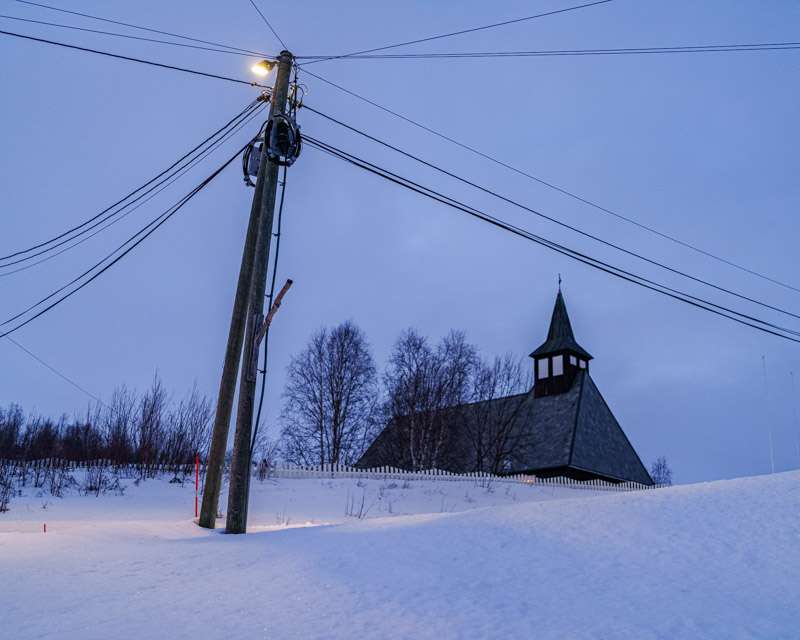
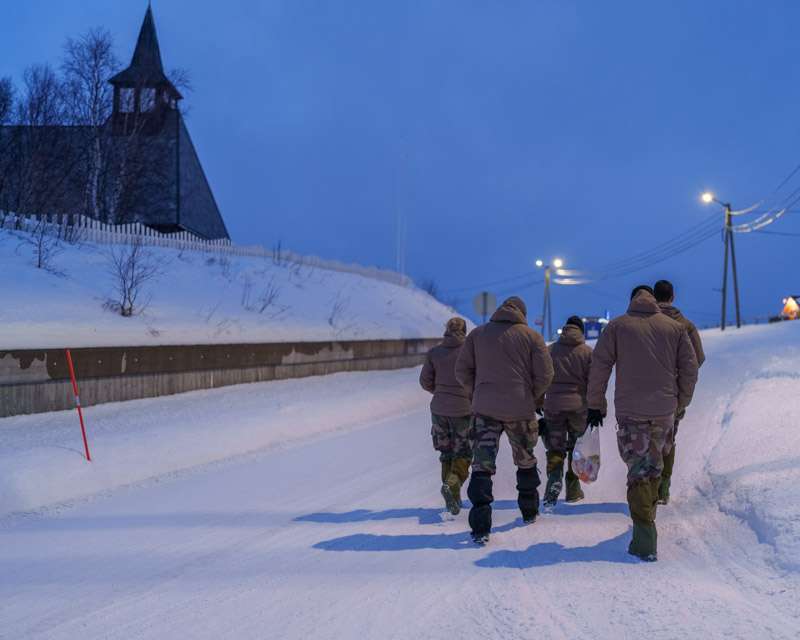
What else works on foot in town: Komsatoppen, Alta’s local hill at 213 metres, with a view over the Altafjord and the valley. Free, and in winter the most honest way to understand the place.
Day 1: two hours inland to a Sami settlement
The first day went a long way out. Around two hours by coach each way — not the Sami offerings on the edge of town that port pages list, but a settlement deep on the Finnmarksvidda. That is worth knowing in advance: in and around Alta there are reindeer and Sami programmes ten to fifteen kilometres away. Ours was a different scale, and four hours of the day were spent travelling.
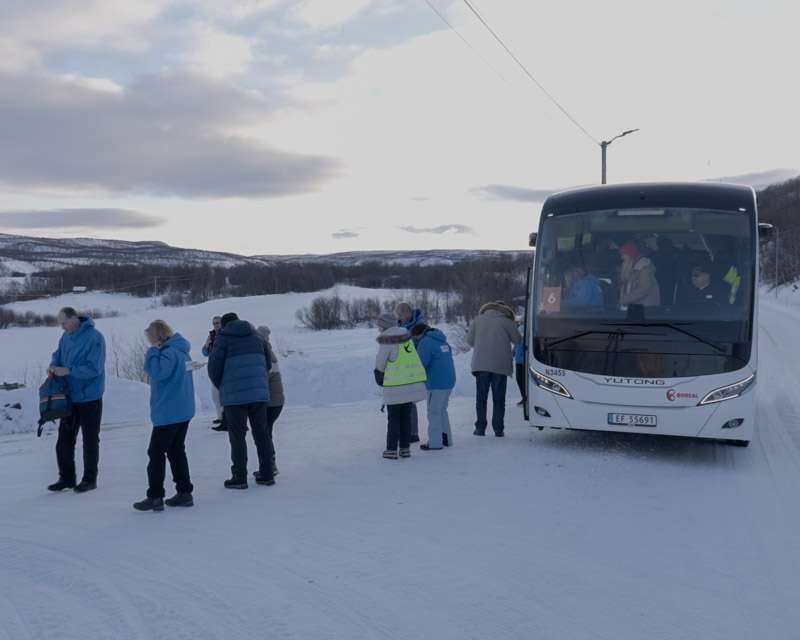

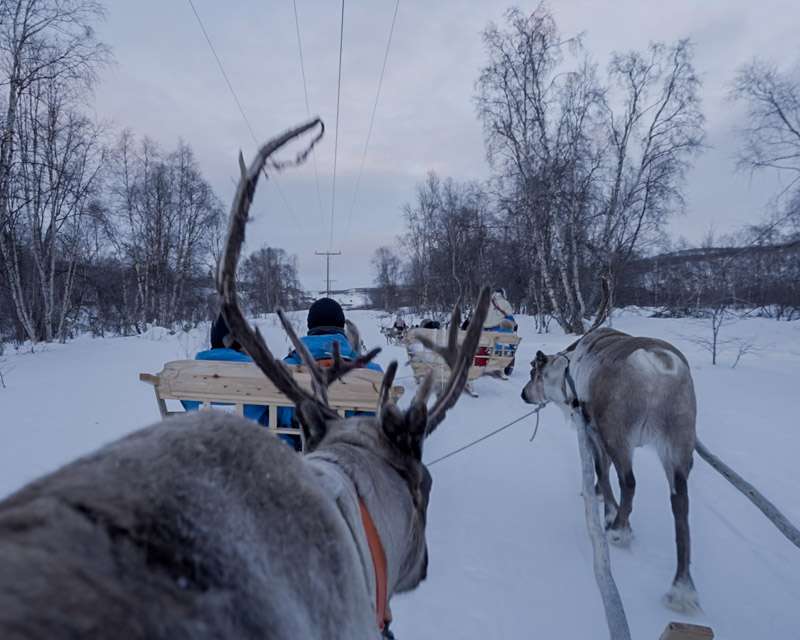
Then three things on site, in this order: reindeer sled rides, time together in the lavvu, the Sami tent, and a talk about Sami culture.
The reindeer ride is slower than you expect, and that is exactly what makes it. A reindeer does not pull a sled the way a dog team does; it walks, the sled creaks, and you hear your own breathing. If you want speed, this is the wrong thing. If you want to see how people moved through this landscape for centuries, it is the right one.

Inside the lavvu an open fire burns in the middle, the smoke draws out through the opening in the roof, and you sit on reindeer hides in a circle. Hot coffee or tea is handed round, and somebody talks. For us it was a young woman in traditional dress, and that was the part of the day that stayed with me — not the sled ride.
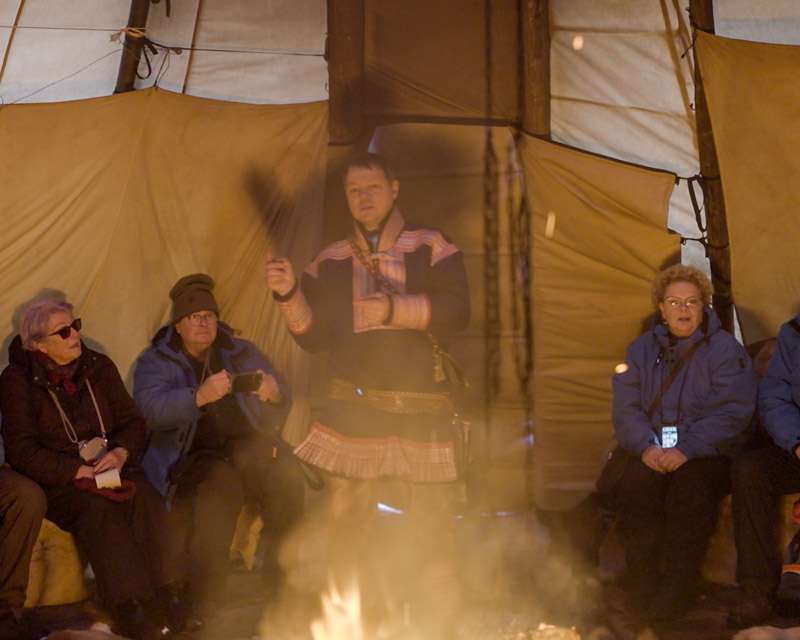
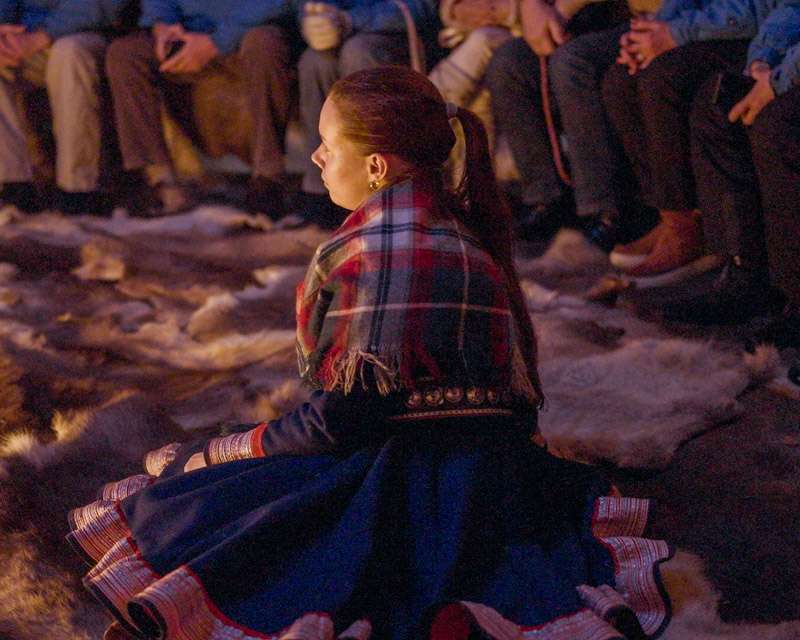
One remark that belongs here: Sami cultural programmes for tour groups walk a narrow line. This one did not feel like a performance but like a working place that lets visitors in. That difference is noticeable, and it justifies the two hours of driving.
Day 2: the husky farm
The second day was shorter to reach and louder on arrival. A farm breeding Siberian huskies — kennel next to kennel, dogs on the roofs of their houses, and a noise level that starts the moment the teams are harnessed.


Then the sled ride, and afterwards tea, biscuits and a talk by the operator in the tent. That last part is the one tour descriptions treat as an add-on and which actually holds the substance: somebody who makes a living from breeding explains how a team is put together, what a dog eats, how many kilometres it runs, and what happens in summer when there is no snow.
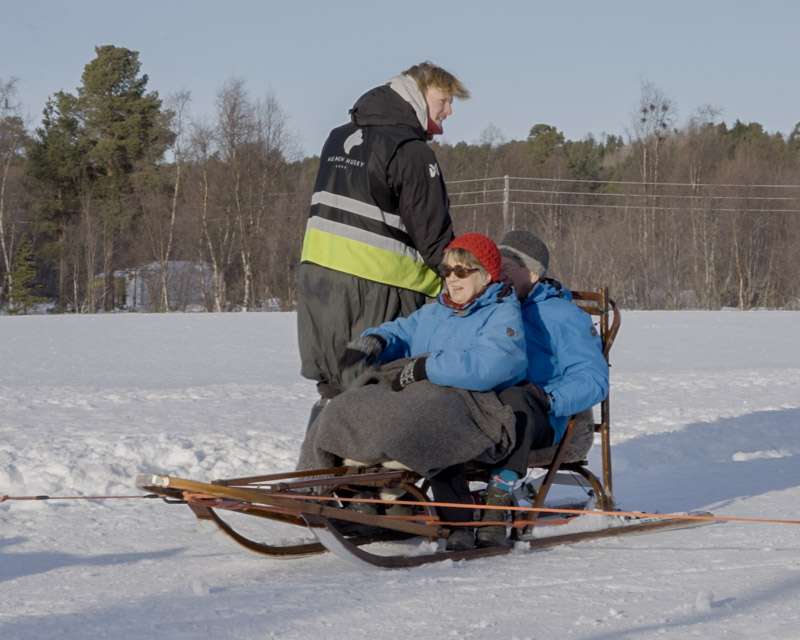
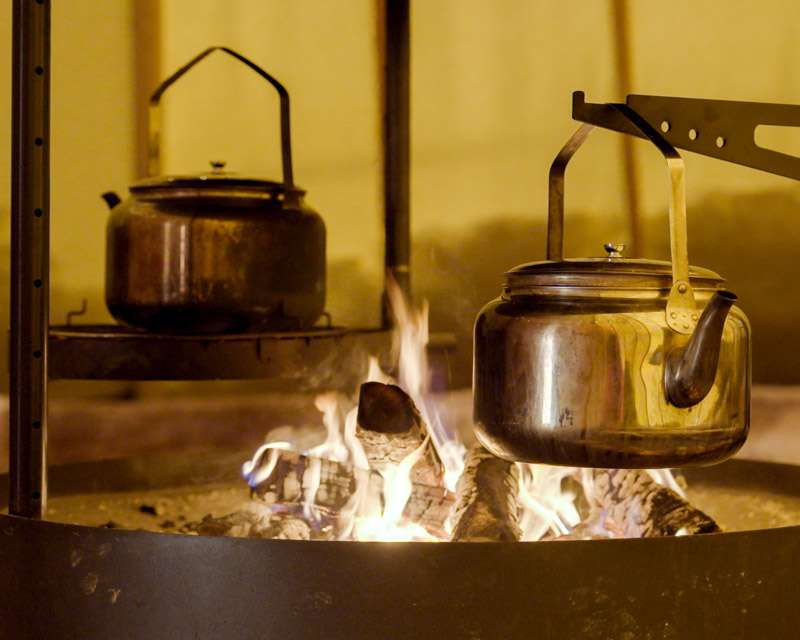
If this sounds familiar: Kirkenes, two days further east, has a similar dog yard, there combined with the snow hotel. The difference is the dog’s role — in Kirkenes we drove the sleds ourselves, here the focus was the breeding. If both ports are on your itinerary, do not book the same thing twice.
What does it cost?
Honestly: I no longer remember what our line charged for the two excursions. Rather than invent a figure, here are the direct prices of comparable local operators as of November 2026 — the yardstick against which you can measure your ship’s programme.
| Booked directly in Alta | Duration | Price |
|---|---|---|
| Dog sledding, Holmen Husky | 2.5 h, about 1 h on the sled | NOK 2,700 adults, NOK 930 children 5–12 |
| Transfer there | per direction | NOK 250 per person |
| Reindeer sledding with Sami programme | around 2 h | from about NOK 1,200 |
| Sami cultural programme with lavvu and joik | 1 h 45 min, November to April | price only via the booking page |
| Alta Museum, winter | open-ended | NOK 115 |
| Shuttle from the ship into town | 4 km | order of magnitude €12 return |
NOK 2,700 is roughly €235 at around 11.5 NOK to the euro, plus NOK 500 transfer both ways. Weigh that against your ship’s excursion price before you judge it. In Alta the comparison often favours the cruise line, and in this series that is the exception.
On your own or on a tour?
The town: on your own. Four kilometres, shuttle or taxi, then the centre, the Northern Lights Cathedral (if it is a weekday between 11:00 and 13:00) and Komsatoppen. That is half a day and costs almost nothing.
The museum: on your own, with expectations lowered. 7.8 km by bus or taxi, NOK 115, and seven stones indoors instead of the open-air site. Still essential for World Heritage collectors, skippable in winter for everyone else.
Reindeer, huskies, Finnmarksvidda: take the tour. There is no serious alternative here. The operators sit between ten and — in our case — well over a hundred kilometres out, the transfer costs extra, and there is no scheduled bus network that matches ship timings. This is one of the few ports in this series where the ship’s excursion is not the comfortable choice but the correct one.
And as everywhere: 60 minutes of buffer before all-aboard, counted backwards. Two days in port tempt you to be generous on the first evening — the shuttle still runs to schedule.
Light in March, and what follows from it
In early March the polar night has just ended, and the light returns like a promise being redeemed slowly. The day is usable, but the sun stays low — which means the hours around sunrise and sunset stretch across half the morning and half the afternoon. In practice: Alta in March does not give you a narrow window of good light, it gives you a wide one.

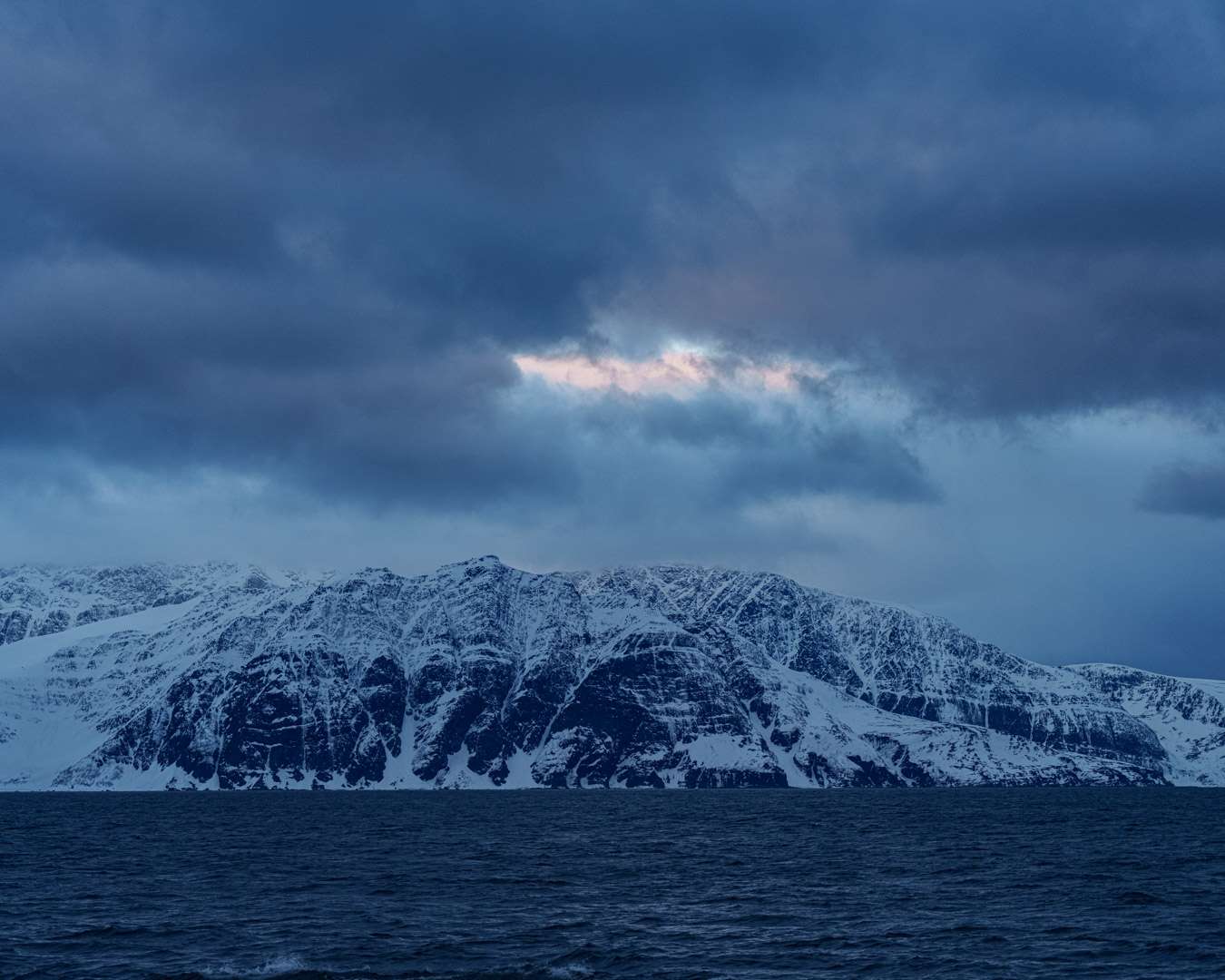
On the northern lights, since it is the question always asked about Alta: the town calls itself the city of the northern lights, and there is a reason — its inland position brings more clear nights than the coast. There are still no guarantees, and a ship that sails in the evening takes the best viewing hours away from you. In Tromsø on the same voyage we had solid overcast throughout and saw nothing at all.
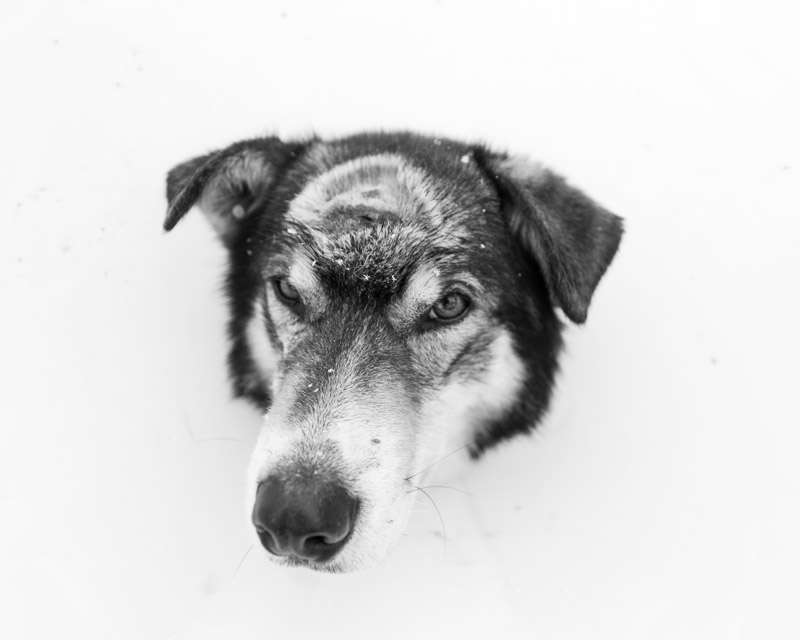
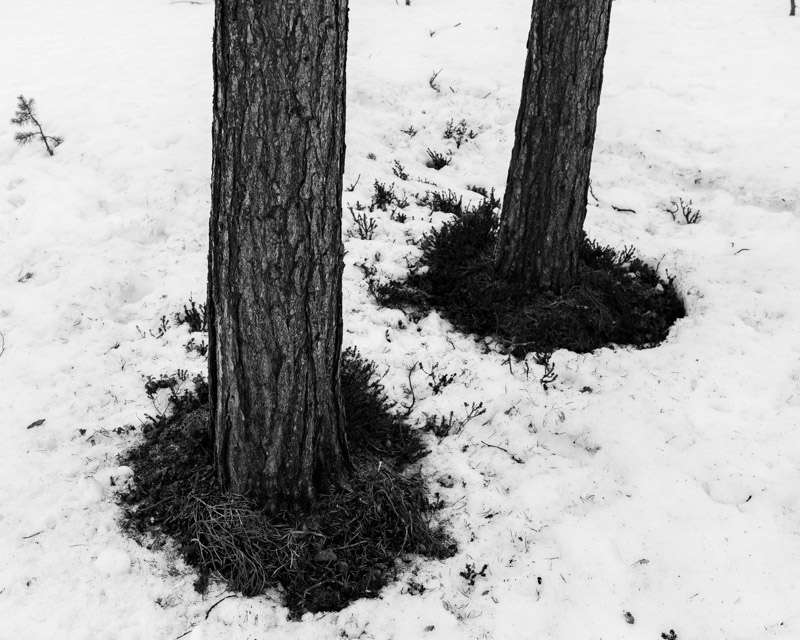
Photographically Alta rewards reduction. The landscape is white, grey and brown, and it carries black and white better than colour. The strongest images from both days are not the backlit reindeer but a dog’s head in the snow and two tree trunks with thawed holes around them.
What I would do differently
Keep one of the two days for the town. We had two full days in port — a luxury most calls do not offer — and gave both entirely to excursions. Four hours of coach travel on day one plus half of day two out of town means that of Alta itself I saw the harbour, a road and a church at dusk.
With a single day in port I would have to choose, and I would take the huskies: shorter transfer, denser experience. With two days: one excursion, one day for the town and Komsatoppen.
Ports on this route — the Norwegian coast in winter: Svolvær and the Lofoten Islands · Tromsø in winter from Breivika · North Cape from Honningsvåg · Kirkenes on the Russian border · Longyearbyen on Svalbard · All cruise ports on your own