
Visited 3 July 2026 aboard MS Amadea. The ship lay at anchor in the river all day. I work on board as a videographer, so I get the same hours ashore as the guests.
Fowey is the port where the answer is easy: do it on your own, without hesitating. The tender lands at Albert Quay in the middle of town, the centre starts fifty metres later, and the best of the day — the coast path south, the fort above the cove, and the way back inland through the fields — costs nothing at all. Four hours on foot, none of it booked. The one excursion that can justify itself is the Eden Project, and that is sixteen kilometres away.
Prices, opening hours and distances checked November 2026 — verify before you travel.
Where the ship lies — and why it doesn’t berth
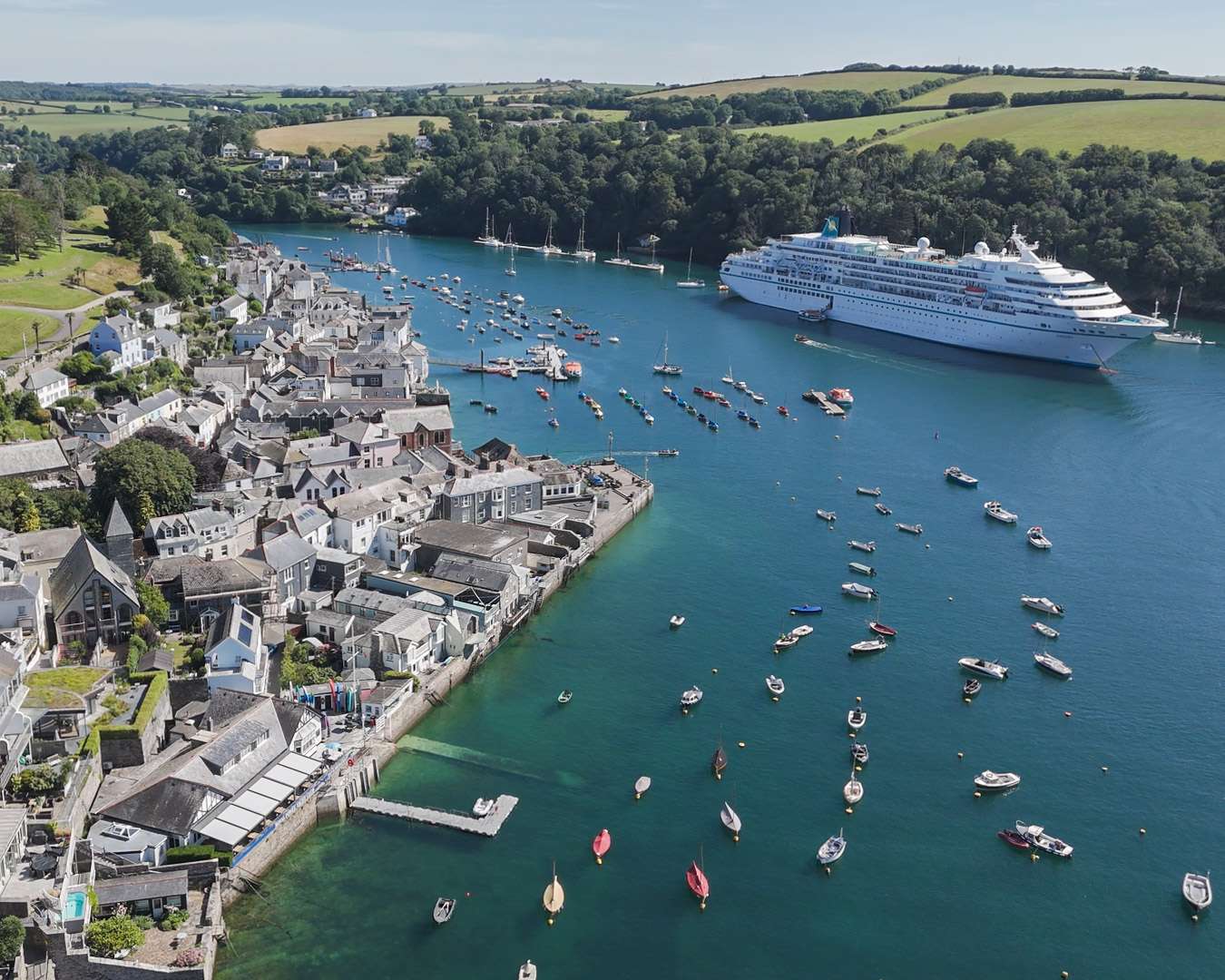
Fowey has no cruise berth. Ships anchor in the mouth of the River Fowey or lie at the commercial buoys further upstream; the harbour is deep enough and accessible at any state of the tide. MS Amadea — around 29,000 GT, 192 metres, built 1991, just over 600 guests — stayed in the river all day, among sailing boats and motor yachts.
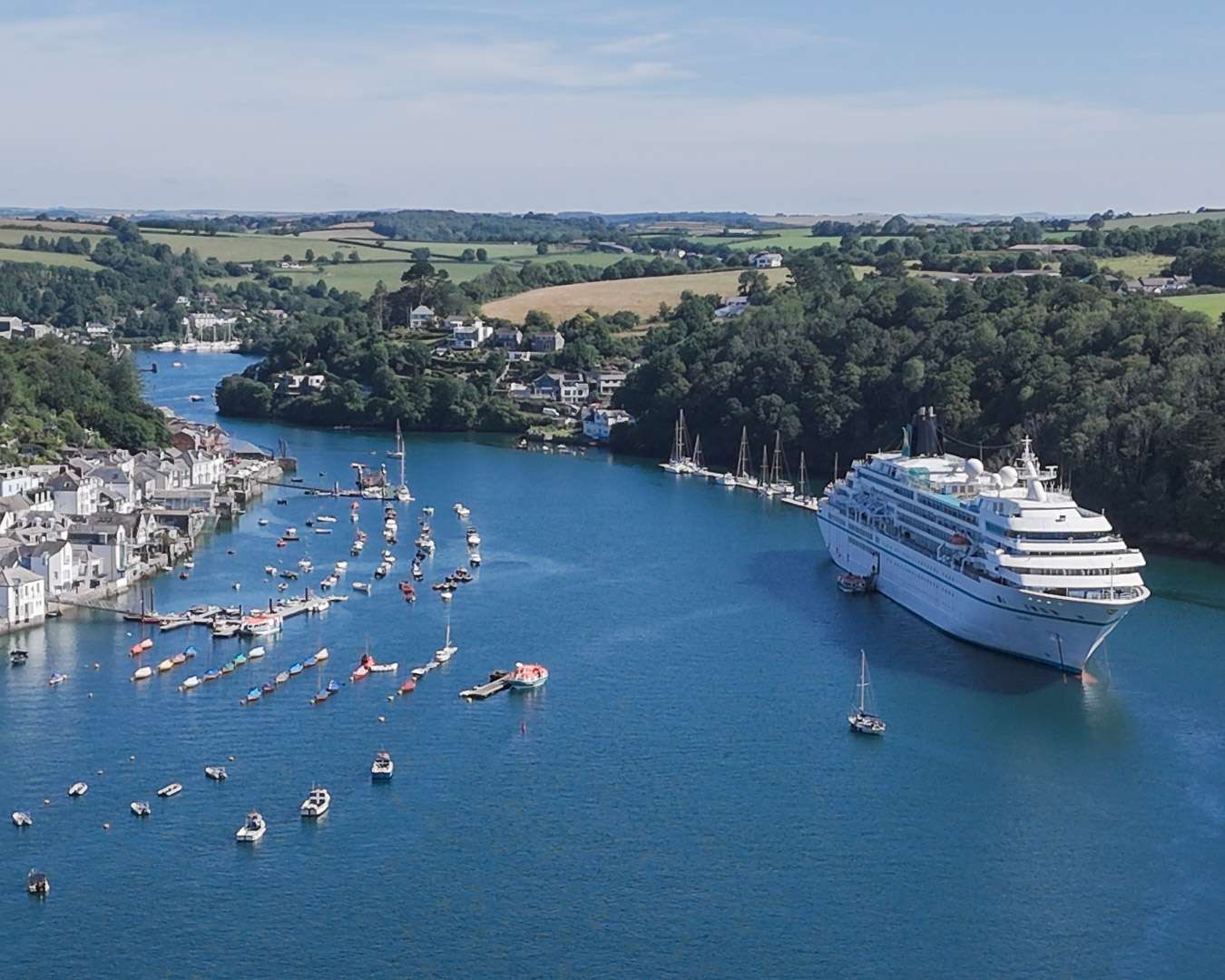

In practice that means tendering — but the shortest tender I know. Under ten minutes to Albert Quay, the official landing point for cruise passengers, and from there it is a few steps into Fore Street. No shuttle, no dock road, no industrial estate in between. Anyone who has been set down four kilometres outside town in a port like Alta or Oulu notices the difference at once.
What to keep in mind anyway: tenders depend on weather. The river itself is sheltered, but the run out to the anchorage is exposed, and a southerly can shorten the call. Count your way back from the last tender, not from all-aboard — they are not the same time.
The town takes half an hour
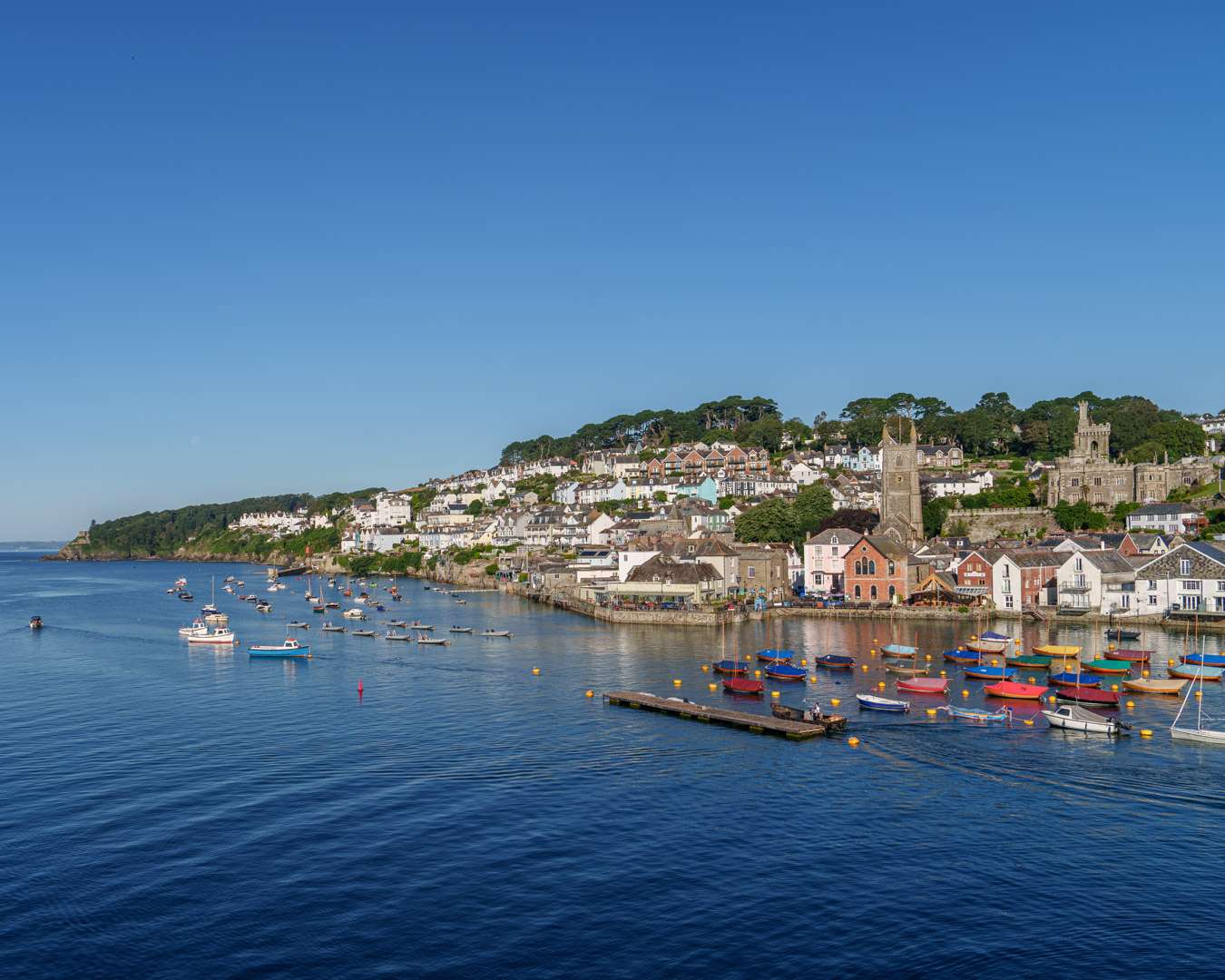
That is not a slight, it is a planning figure. Fowey is essentially one lane running along the hillside, with staircases going off it left and right. Fore Street and Lostwithiel Street are walked in twenty minutes, shops, bakeries and St Fimbarrus church included.

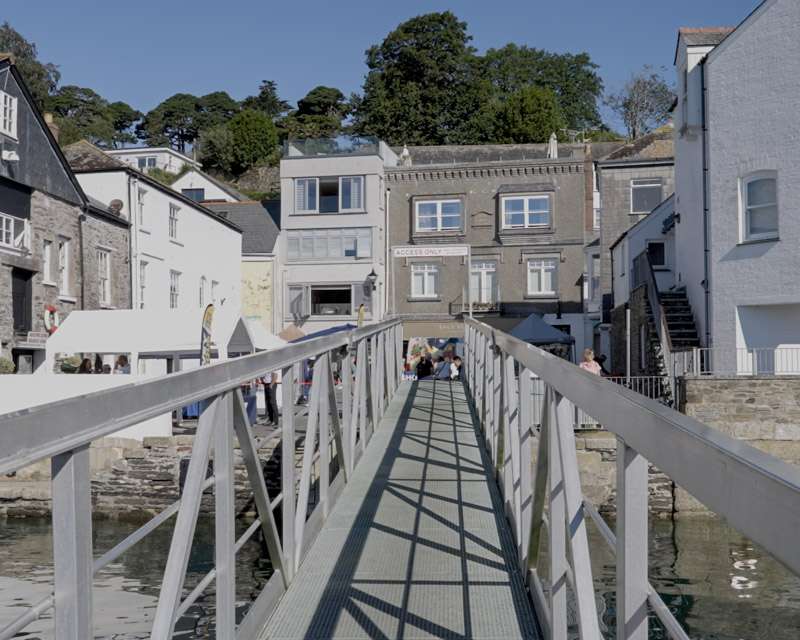
It is steep everywhere. If walking is difficult, stay sensibly on the waterfront between Albert Quay and Town Quay; everything else involves steps. The compensation is that every side lane is worth a photograph, because the houses stand directly above the water and the estuary opens up in places you don’t expect.


The walk: coast first, then the fields
This is the heart of the day, and it works without preparation. From Albert Quay you follow the Esplanade south, along the water, about a kilometre to Readymoney Cove — a small sandy bay with toilets, an old limekiln now used as a shelter, and room for perhaps thirty people once the tide is in. Ten minutes on foot from the town centre, English Heritage says. That holds if you are not taking photographs.
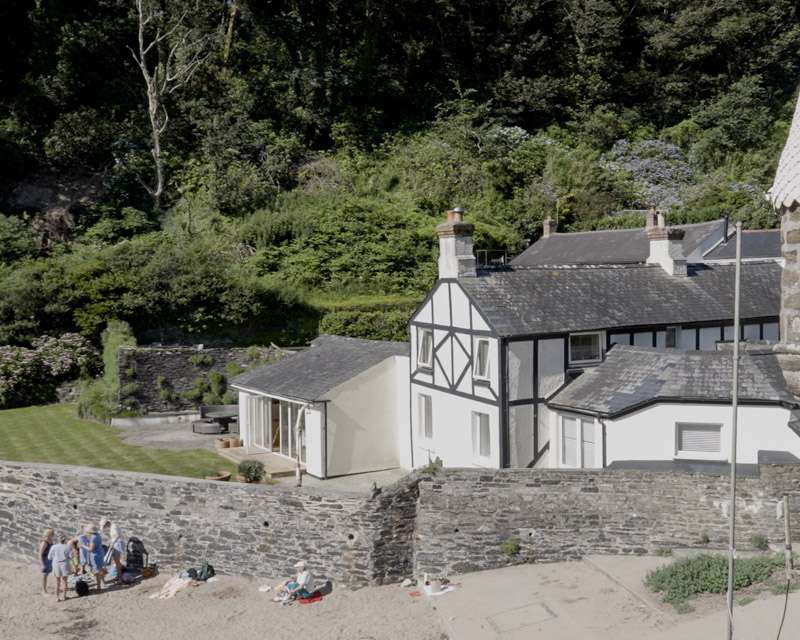
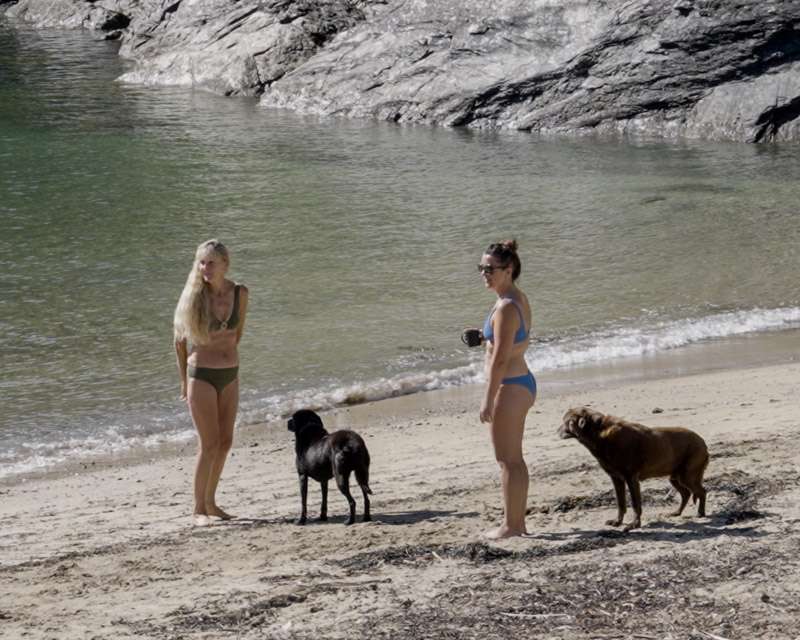
Behind the cove the climb through the woodland starts — short, but seriously steep, and slippery when wet. At the top stands the signpost that organises the whole port day: Readymoney Beach 150 yards back, Coombe Farm 575 yards inland, to the Coast Path through Covington Woods 300 yards.


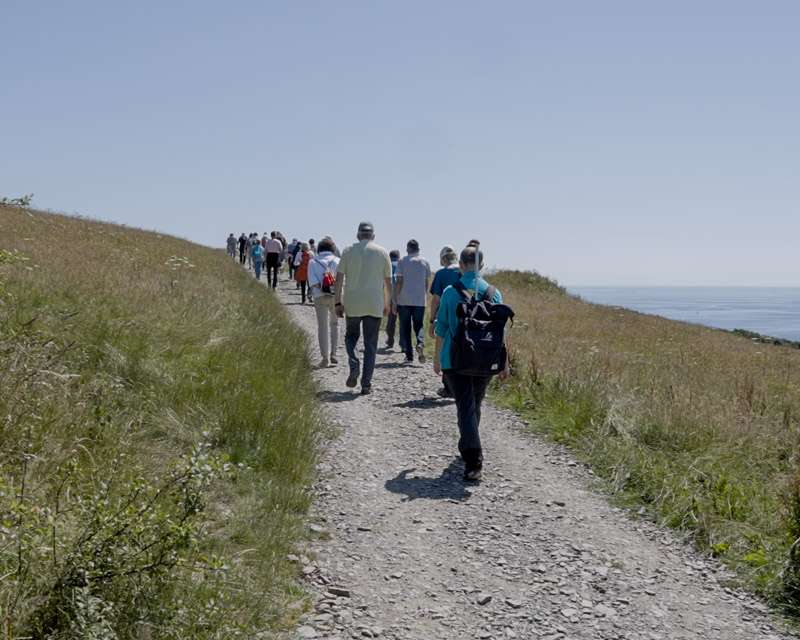
We went along the coast first, visited St Catherine’s Castle, and only then came back inland through the fields. I would recommend that order to anyone: the coastal stretch is empty in the morning and crowded by late afternoon, and the light sits right before noon.
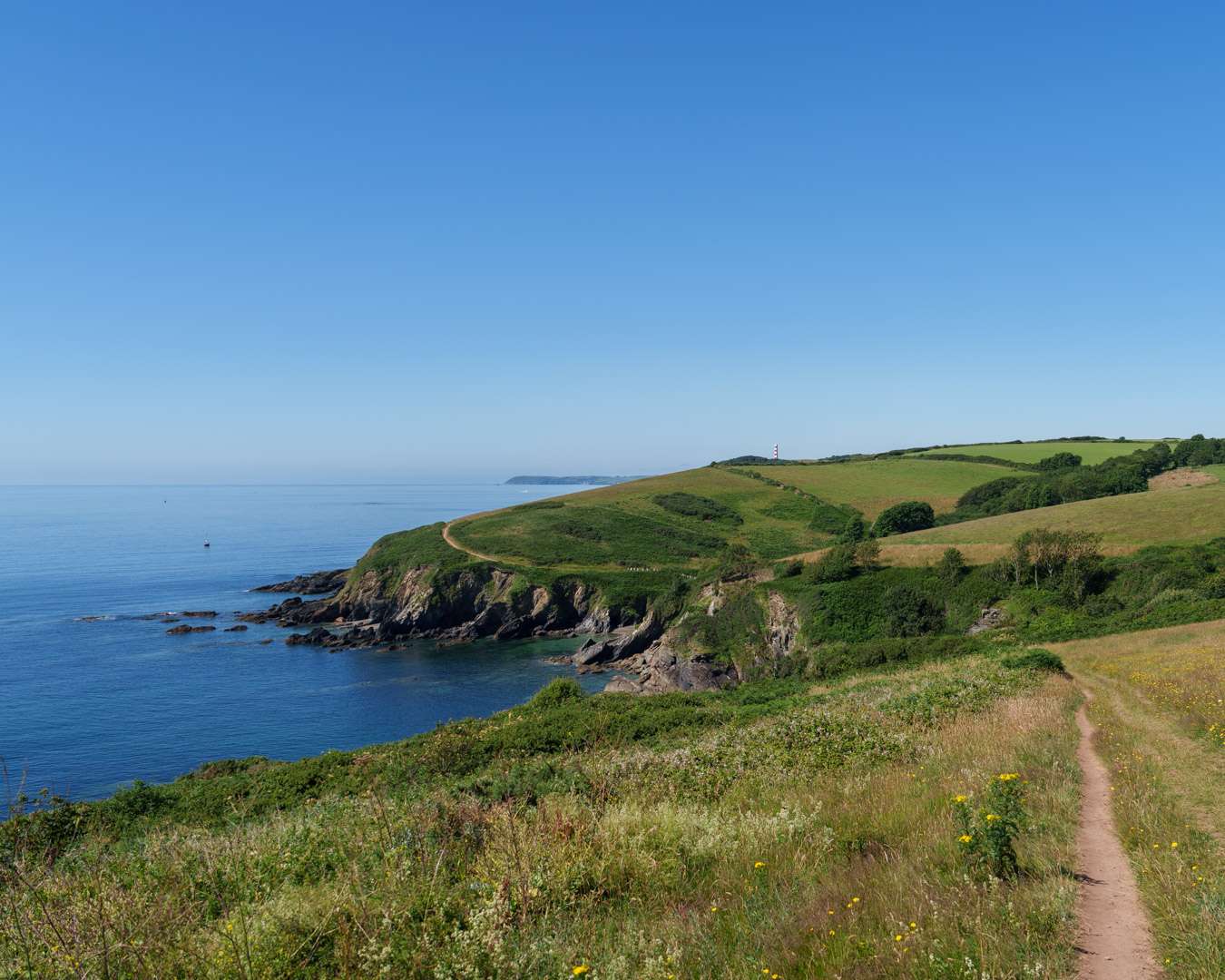
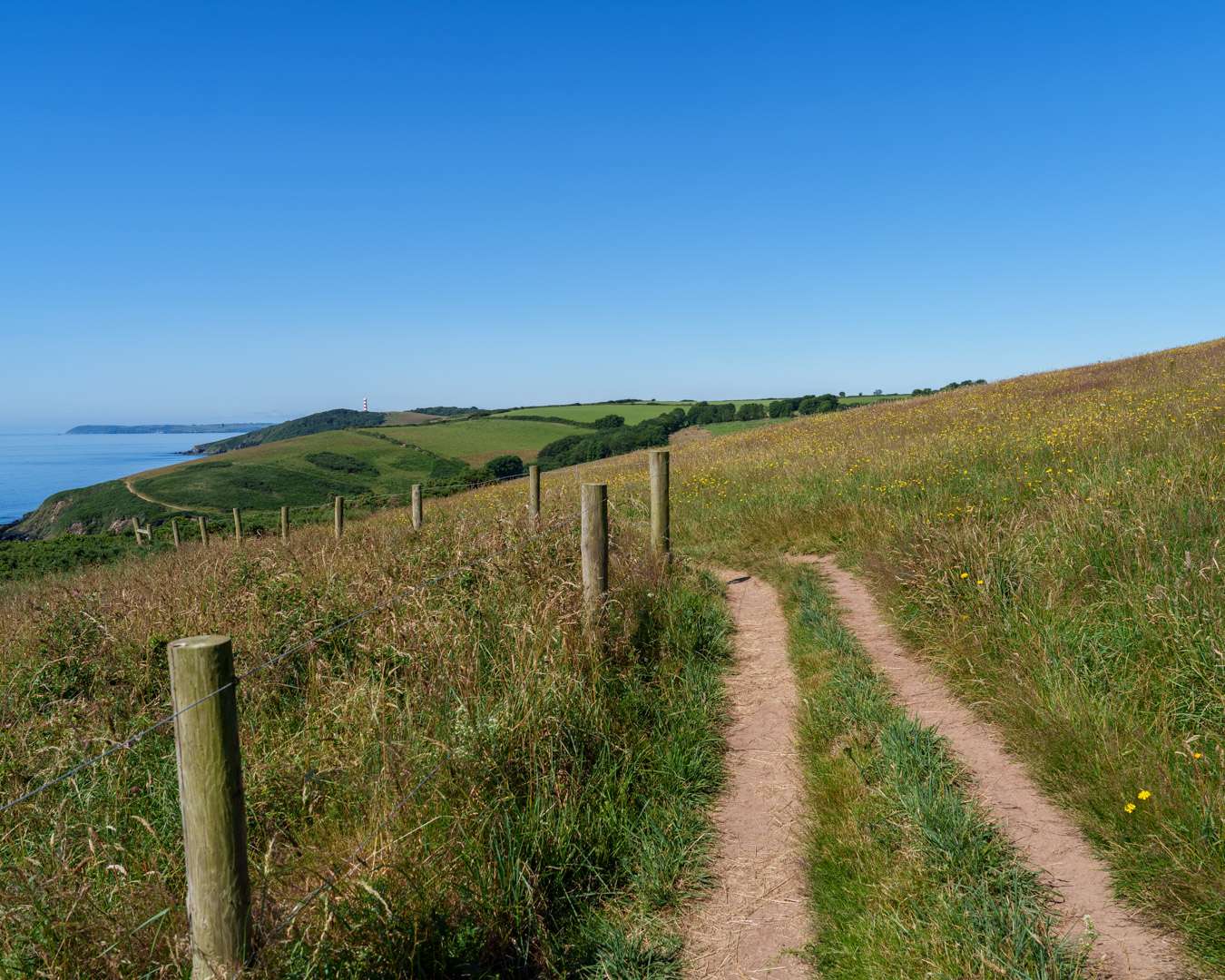
The official circular walk published by the South West Coast Path team is 2.6 miles (4.2 km) and rated easy, with the note that there are several short climbs and that the paths get muddy. It starts at the Coombe car park, though, not at the harbour. Starting from Albert Quay as we did makes it a good seven kilometres and, with stops and a camera, about four hours.
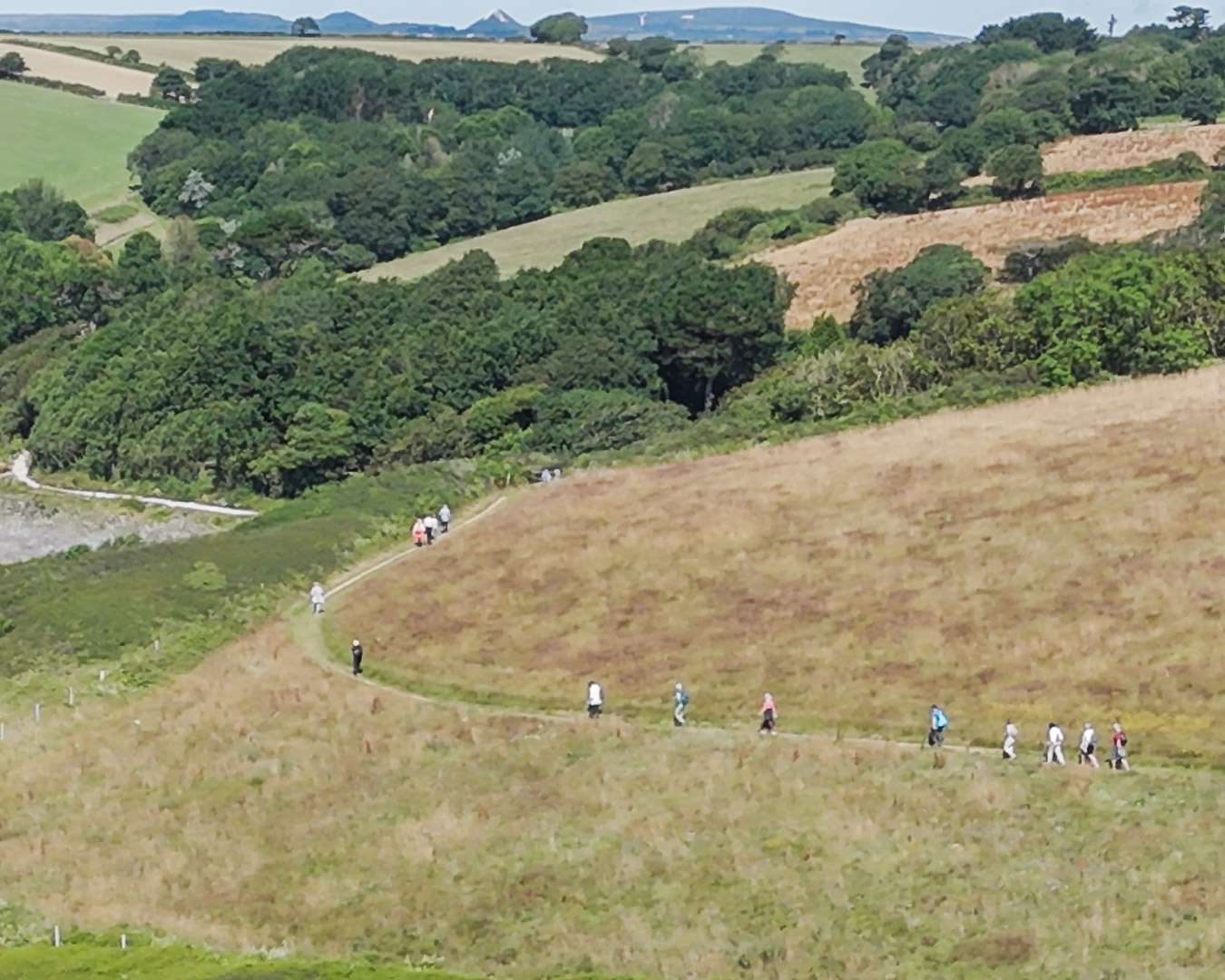
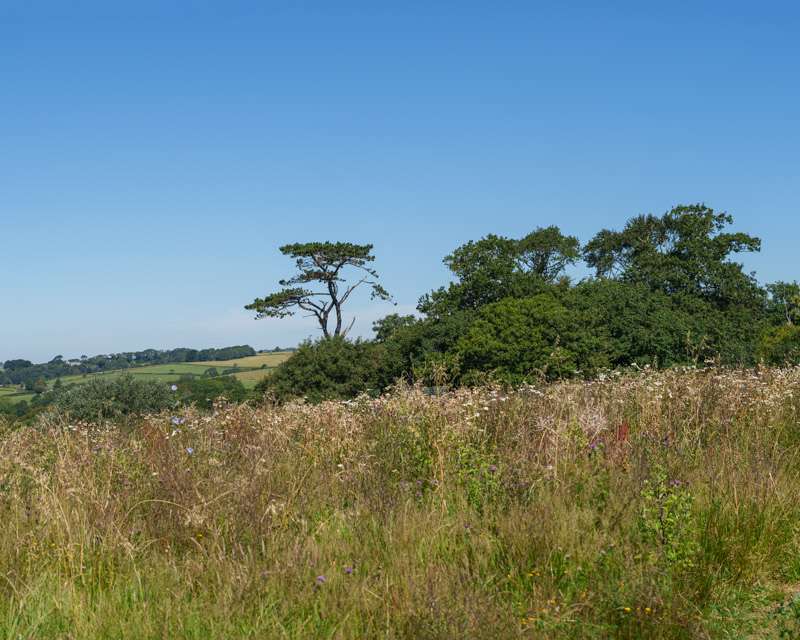
The inland half is the part no port guide mentions and the part that carries the day: sunken lanes between head-high hedges, pasture with wind-shaped pines, and now and then a gap with the sea in it. It is quieter than the coast and noticeably cooler in July.
St Catherine’s Castle: free, tiny, worth it
The fort sits on a rocky spur above Readymoney Cove, guarding the river mouth. Henry VIII had it built between 1538 and 1540, one of a pair of small artillery forts defending the harbour — Historic England gives those years, English Heritage says the 1530s. The D-shaped building had five gun ports. It was altered during the Crimean War, and in the Second World War it held an anti-aircraft gun and an ammunition store.

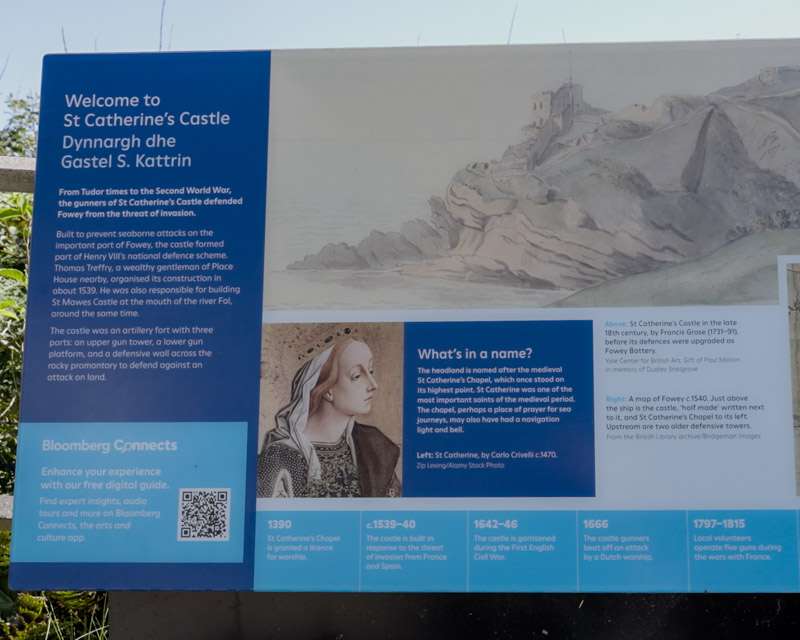
Entry is free. There is no ticket, no kiosk and no opening hours in the usual sense — English Heritage says “any reasonable time during daylight hours”. There is also no railing: inside the ruin the ground drops away steeply and unguarded in places. With children, look over the edge yourself before letting them run.
The site is not large. Twenty minutes is enough. What makes it worth the climb is the position: from here you see the whole estuary, the anchorage, and your own ship sitting in it.
What the day costs
Almost nothing. That is the exception in this series, so here is the full list rather than a comparison with the ship’s excursion.
| Fowey on your own | Price |
|---|---|
| Tender ashore and back | included in the fare |
| St Catherine’s Castle | free |
| Readymoney Cove and coast path | free |
| Polruan ferry, adult single | £3.20 |
| Polruan ferry, child 3–12 | £1.60 |
| Bicycle / dog on the ferry | £2.10 / £0.50 |
| Eden Project, about 16 km | bus 25 from New Road Hill changing at St Austell, or the ship’s tour |
The Polruan ferry sells singles only; there are no returns. It runs between Polruan Quay and Town Quay in Fowey, and in the summer timetable (30 April to 25 September) from at least 07:00 to 21:00, Sundays from 09:00. For a port day that means it is always there.
On your own or on a tour?
On your own, clearly. Fowey is one of the few ports where the ship’s excursion has little to offer that you cannot reach yourself. The tender lands in the centre, the coast path starts a kilometre further on, and everything in between is signposted.
The one exception is the Eden Project. Sixteen kilometres inland, reachable by service bus 25 from New Road Hill with a change at St Austell — in theory. In practice that eats so much of your buffer on a normal call that the bus becomes a gamble. If you want to see the biomes, book the ship. The same goes for the Lost Gardens of Heligan and Lanhydrock.
And if you have time left over: the ferry to Polruan. Ten minutes across, £3.20, and from the far bank you see Fowey the way it appears on the postcards — with your own ship in the frame. From Bodinnick the Hall Walk makes a circuit using both ferries; that is the classic Fowey walk, but it needs a full day.
Light, tides and where the pictures are
In early July the Cornish light is hard and the water is blue — a rare combination on this coast, and the reason the aerial shots from that day work. The best images are not in the town but from above and from outside: back towards the estuary from the coast path, down onto the anchorage from the fort, and across to the waterfront from the ferry.
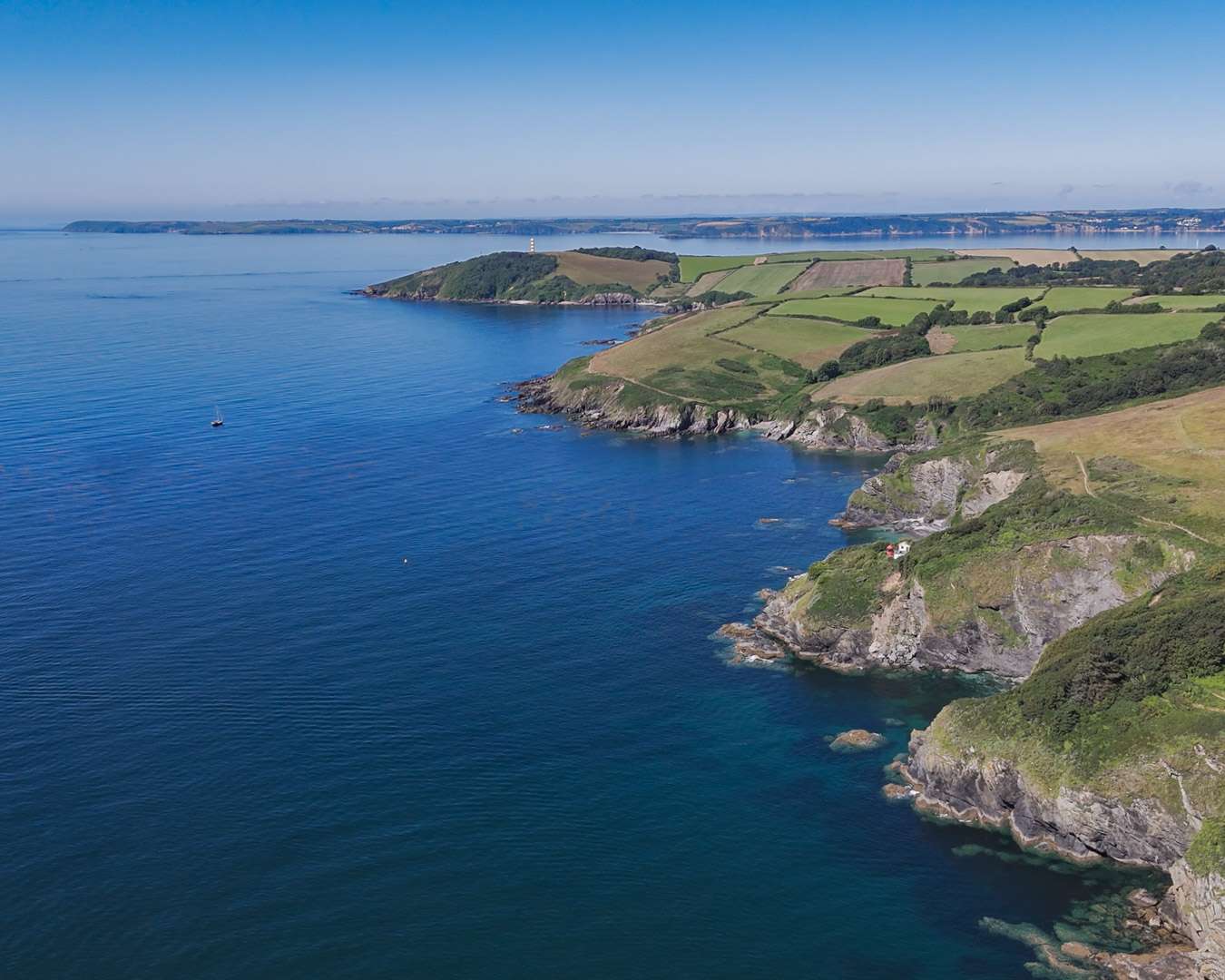
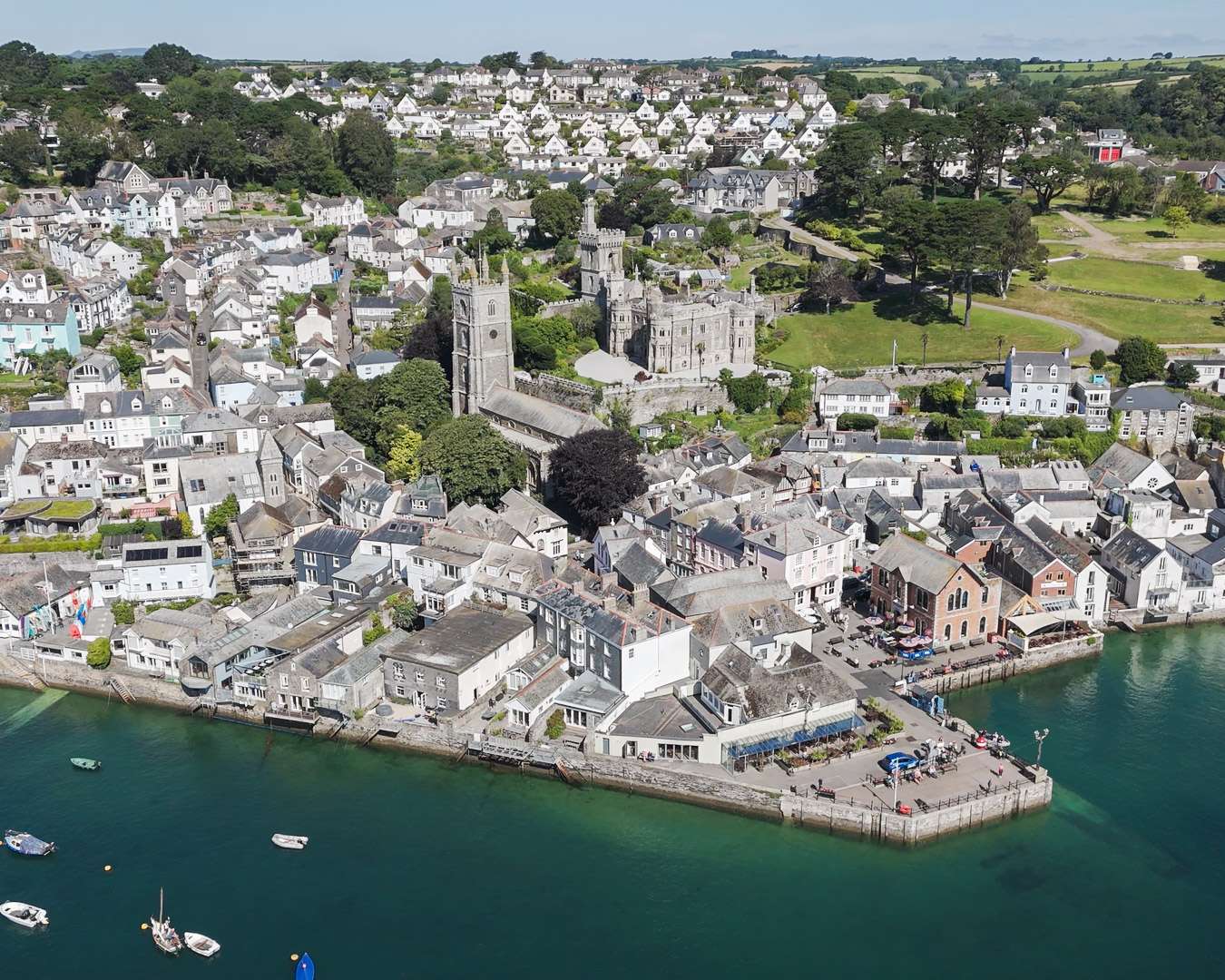
The tide decides what Readymoney Cove looks like: at high water there is barely any sand left, at low water it is twice the size. A look at the Fowey tide table before you travel is worth it — it changes nothing about the route and a great deal about the picture.
One more observation that belongs to this port: Fowey has around 2,000 residents, and a ship with 600 guests is not invisible here. You would never notice it in how visitors are treated, but larger calls are a contested subject in the town — one more reason not to add to the queue in Fore Street, and to take the coast path after half an hour.
What I would do differently
Take the Polruan ferry first, not as an afterthought. The view of Fowey from the east bank is the best of the day, and in the morning it is lit, while in the afternoon it is against the sun. Then come back and do the Readymoney and fields circuit — that would be the clean order.
Also: bring water. Beyond Readymoney Cove there is nothing to buy anywhere on the circuit.
Ports on this route — south England and Cornwall: Falmouth on foot · St Ives from Falmouth · Totnes and Buckfast Abbey from Plymouth · The Jurassic Coast from Portland · St Mary’s, Isles of Scilly · Portsmouth without a ticket · Chichester from Portsmouth · All cruise ports on your own